

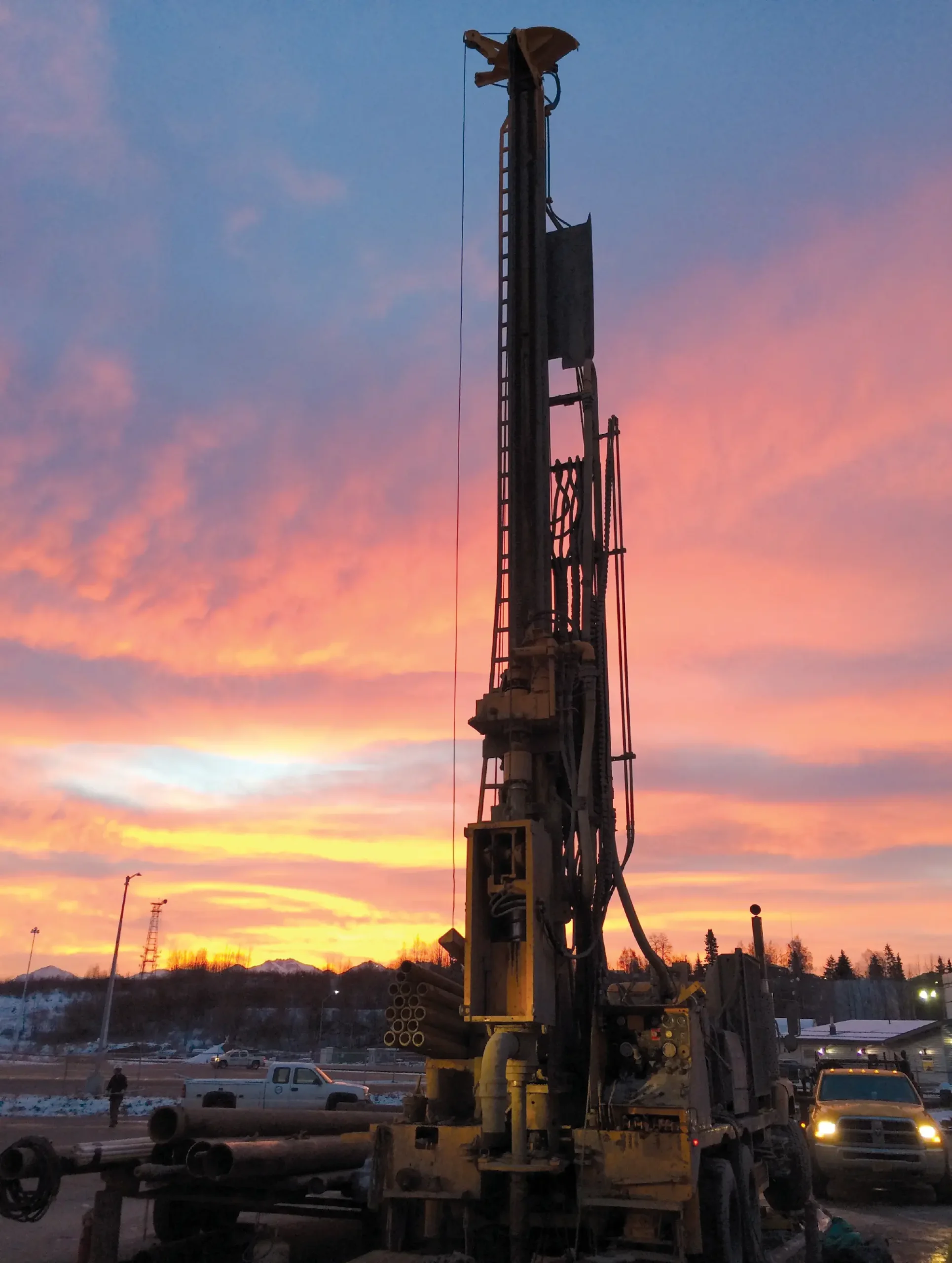
well being drilled at the Port of Alaska in Anchorage.
ayne Westberg had no idea a delay in construction of the Trans Alaska Pipeline System (TAPS) in the early ‘70s would launch the drilling company he’s still running almost sixty years later.
Westberg and business partner Mike Miller started M-W Drilling in 1968, buying their first drill rig with the intent to do foundation and piling work for the startup of TAPS. Miller dropped out of the partnership shortly after it was formed. Without an established reputation in Alaska, the fledgling drillers found themselves facing a hefty rig payment and no work to pay for it when pipeline construction was delayed. So, what to do, except start drilling water wells?
The company grew exponentially when TAPS construction resumed in 1974, and by 1976 it was operating three drill rigs full time. Wayne Westberg died in 2023 and M-W is now under the second-generation direction of his son, Kris Westberg.
“M-W Drilling is a very diverse company, specializing in drilling projects for the construction, mining, oilfield and pipeline industries,” says 49-year-old Kris Westberg, president and owner of the company. “We’ve completed over 5,000 new wells for private land developers, construction companies, oilfield companies, municipalities, and the federal government.”
In addition to drilling water wells, M-W also offers cathodic protection wells, as well as grounding, geothermal, cooling, and dewatering wells.
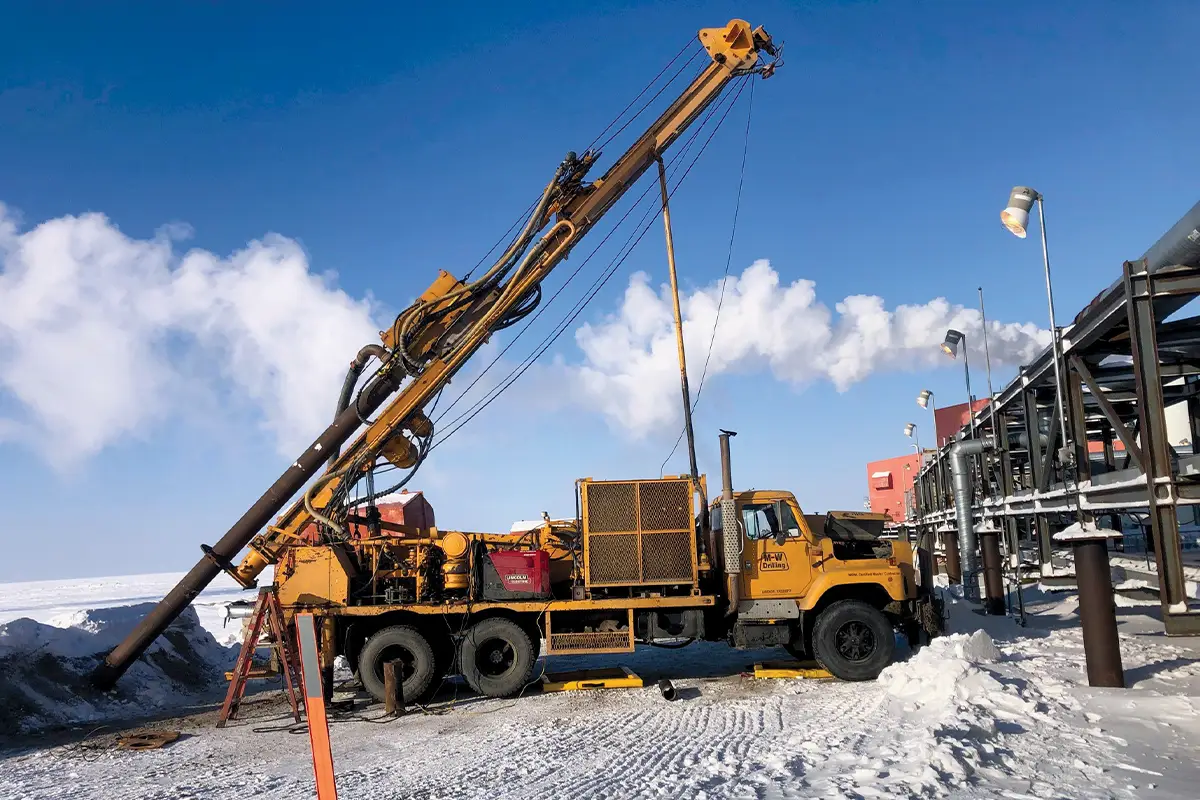
“When a thaw-bulb aquifer is identified, a drill rig can be set up on the bank of a lake or river and drill at an angle into the bulb to construct a producing water well,” Westberg explains. “We made it possible to construct wells in areas previously thought incapable of producing a viable subsurface source of water.”
Westberg has witnessed significant changes in the water well drilling profession since his father started the company.
Top drive rotary rigs have replaced the ‘60s-model cable tool drill rigs, resulting in safer, more efficient operation. However, the price tag for top drive rigs can run between $800,000 and $1.5 million.
Drilling commercial and public drinking water wells has also become more engineered and standardized, with emphasis on maximizing well efficiency and protecting aquifers from surface and cross contamination, Westberg says. Testing water quality after drilling a well is more common, too.

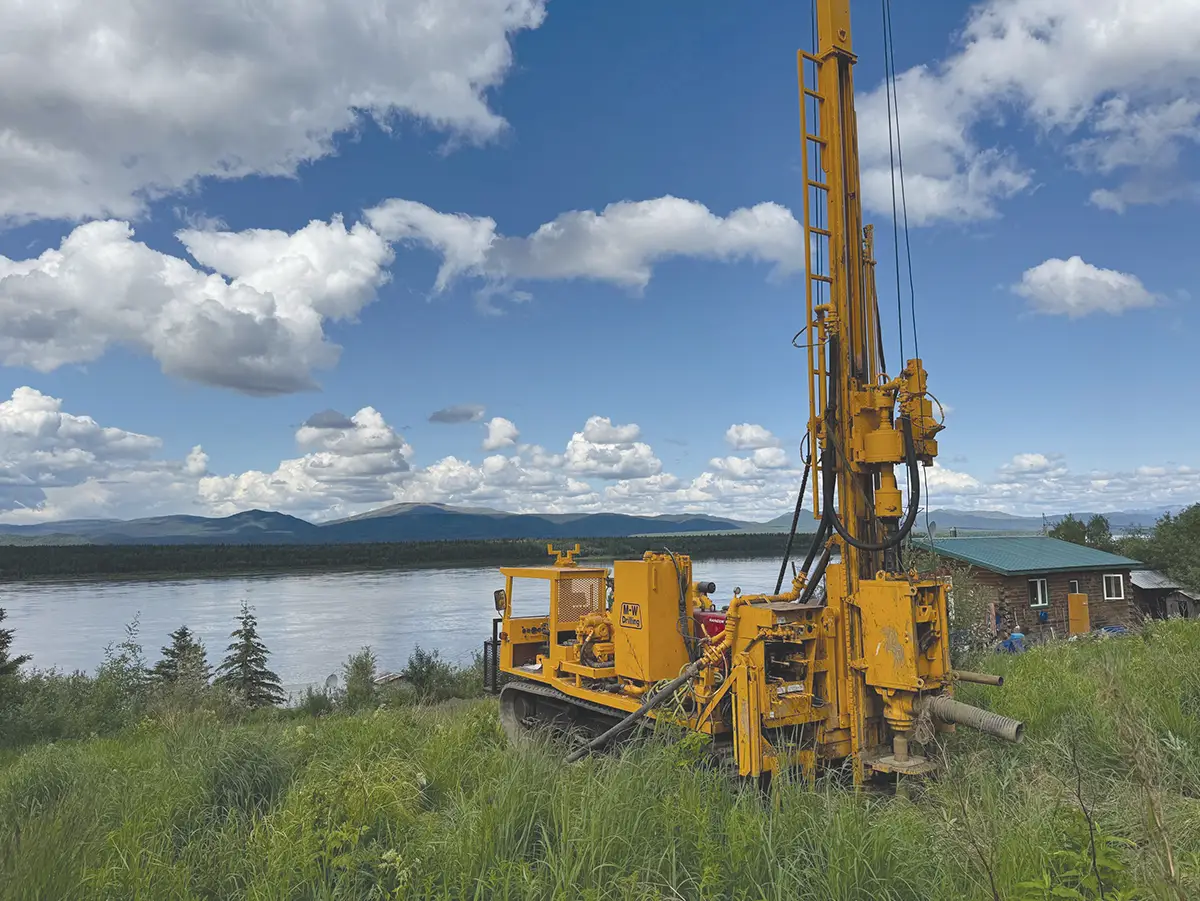
One challenging project was in the village of Koyukuk, located on the Koyukuk River, 90 miles south of the Arctic Circle.
“The project required careful planning and execution due to its remote location, limited access, and reliance on river transportation for personnel, equipment, and materials,” Caldwell recalls. “M-W Drilling’s crew demonstrated strong field experience and adaptability, successfully performing under constraints.”
“M-W Drilling’s knowledge and technical capacity is what keeps clients coming back for complex and highly technical projects where failure is not an option,” says Kranich.
M-W contracted with the Alaska Department of Natural Resources to drill three exploratory wells for the Nenana-Totchaket Agricultural Project, overcoming challenges of access to undeveloped areas, saturated soil conditions, and variable groundwater resources.
“M-W Drilling was highly communicative and professional throughout the test drilling process,” says Dan Jenkins, a natural resource specialist with the Division of Mining, Land, and Water (DMLW). “Kris also spent time with DMLW after the project was completed to debrief the project with state specialists.”
Tammy Kellard has held the job of office manager for the past eight years and works closely with the crew.
“M-W has a niche because we do the challenging logistics of getting our equipment and crews to rural villages,” says Kellard. “This includes coordinating short summer barge schedules, sparse village accommodations and resources, and crew travel with clashing flight schedules.”
“We have a great group of guys,” Kellard says of the company’s eight employees. “Well drilling can encounter all kinds of difficulties, whether within the well, the rigs and equipment, severe weather, and more. Oftentimes they are in remote locations with limited resources, yet with their vast skill-sets and creativity, they figure it out.”
“When I applied for this ‘specialty construction’ company, I envisioned winter vacations,” she adds. “Surprisingly, winter is great for well drilling with better access in some areas. We’re busy year-round.”

“It provides our company with critical advantages in safety, workforce development, and project execution,” says Westberg. “Membership also ensures access to industry specific training, regulatory guidance, and advocacy on contract and labor rules, helping us manage risk in Alaska’s challenging and remote environments. It also connects us to engineers, project managers, and peers, improving project planning, logistics, and bid competitiveness.”