


QAP performed earthwork and construction of several culverts as part of the Deadhorse Airport renovations to mitigate against wildlife disruptions on runways and taxiways.
n July 2017, a Boeing 737 approached Deadhorse Airport on the North Slope. As the plane began its descent, the landing gear deployed.
Then the flight crew spotted the caribou on the runway.
The pilot aborted the landing and maneuvered the plane for a “go-around”—but not in time to avoid hitting the animal with the plane’s landing gear and killing it.
Nearly ten years after the incident, QAP is one year into a three-year project to control wildlife access to Deadhorse Airport. It’s an essential upgrade long in the making at an airport that serves as a crucial connection between the North Slope’s oil and gas industry and the rest of the state.
It’s a generally effective method, but it takes a lot of work, says Deadhorse Airport Manager Tim Parault.
“You have multiple people babysitting caribou, so it eats up all your manpower. You can’t get anything done.”
If it’s not caribou, it’s bears. Last year, when Matt Schram of QAP was on site as superintendent for the airport upgrade, he says he saw more bears than he’d ever seen in one place in his life, even compared to jobs he’s worked in Kodiak.
At one point, a pair of bears broke into several trucks and ripped them apart, adds Steve Oswald, construction project engineer with the Alaska Department of Transportation and Public Facilities.
Then there are the birds.
“It kind of shocked me,” Oswald says. “I mean, I grew up duck hunting. Watching people caribou hunt [in the region], I’m like, what are you caribou hunting for? There’s ducks everywhere!”
Migratory waterfowl of all kinds are drawn to the airfield by the infill ponds—which happen to be just 250 feet from the runway. When airport staff aren’t chasing caribou and bears off the runways, they’re shooing the birds from one pond, only to watch them land in the next one.
“You just chase them up and down all day long—the same birds—and then they cross in front of aircraft,” says Parault. “You can’t really do much with them except modify the habitat and get rid of the water.”
Local fauna on the runway is a headache and a nuisance—but it’s also a danger for the planes, their passengers, and the animals themselves. For years, Deadhorse Airport has been awaiting the go-ahead to construct a much-needed fence on the east, west, and south sides of the airfield.
Parault estimates that roughly 130,000 passengers depart the airport annually, most of them on charter planes.
“I don’t think this airport would really be its size without the oil field,” he says. “We move a lot of people.”
Closing a runway—even temporarily—due to wildlife is a major disruption to the airport and the oil and gas industry. Parault says it’s been a few years since he’s had to close runways for a long duration, but brief closures due to wildlife happen every year, especially when caribou herds are migrating.
The 2017 caribou strike triggered action on a “correction item” the FAA had previously identified: the lack of a perimeter fence to mitigate against wildlife. An environmental impact analysis and further investigation to identify other FAA discrepancies at the airport led to a 2024 request for bids to build a perimeter wildlife fence and a maintenance service road, fill in ponds, complete drainage improvements, and complete associated work.
QAP won the $44.7 million contract and is performing the work alongside its subcontractors, which include Associated General Contractors of Alaska members Alaska Electrical Contractors and Pacific Asphalt.
Last year, a portion of QAP’s work focused on placing the first lift on a perimeter road that will flank the wildlife fence. FAA requirements prevent the placement of frozen material, so QAP must build the gravel perimeter road on thawed tundra during Alaska’s short summer season.
“Which isn’t necessarily the optimum time to do it, but we make it work,” Schram says. “It’s basically a swamp that you’re putting material on.”

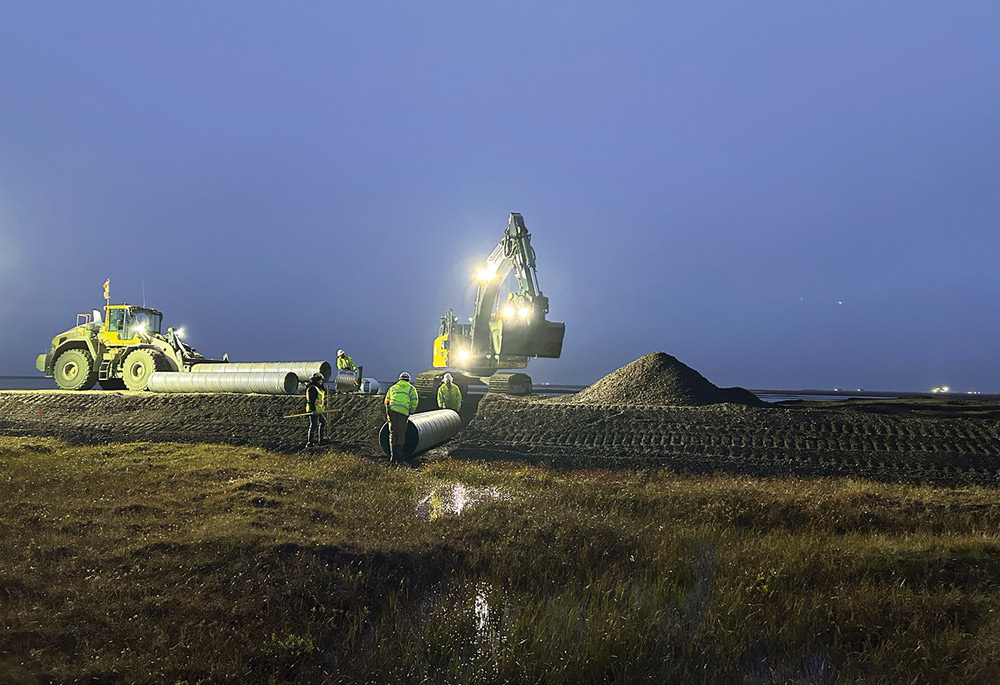
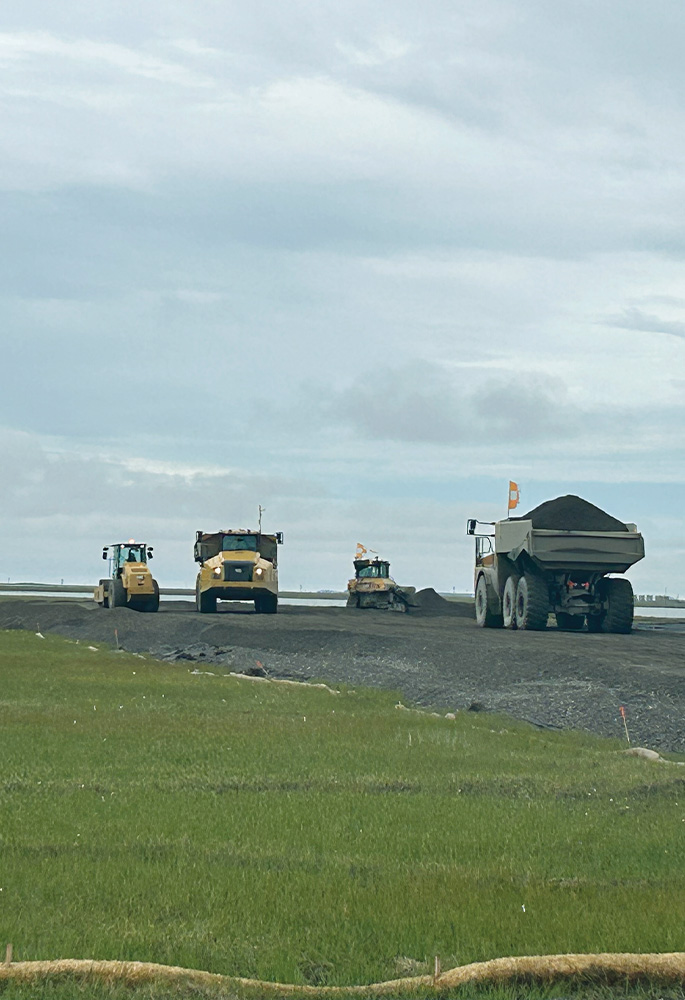
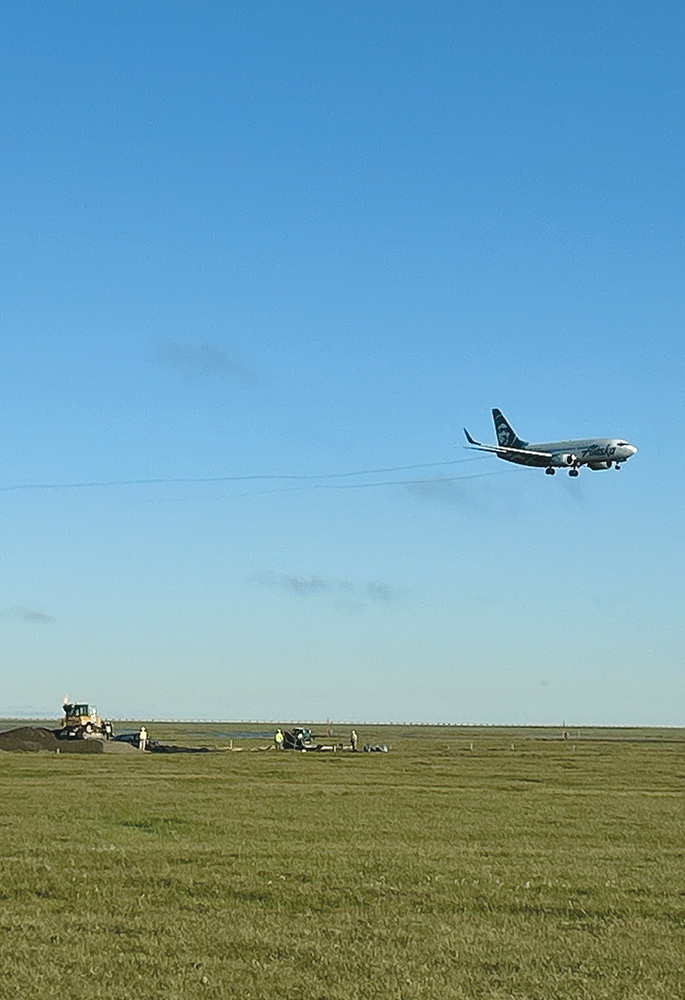

In addition to the complication of building a road on wet ground, the gravel QAP mines to pave the road is mixed with permafrost. Workers have to scrape layers of ice and gravel, let it thaw, then put the gravel in a pile and allow it to drain so it’s usable.
Last summer, contractors placed 160 “equalizer” culverts needed to prevent water from flooding on either side of the road. Thanks to some Alaska Department of Transportation and Public Facilities funding that was received unexpectedly early, QAP was also able to start placing fill in some of the infield ponds frequented by waterfowl.
The project has another complication beyond working on wet land with wet material; contractors must complete work at night to avoid interfering with air traffic.
“It shortens down your work window to haul that much material—1.2 million tons. It’s quite a haul,” Schram says.
When they’re able to return to work this year, QAP will continue building the perimeter road, letting it settle for a final season before completing it in year three of the project. The 9-foot perimeter fence will also be completed in year three. The contractor will also build a temporary taxiway for Alaska Airlines aircraft to access a hangar temporarily blocked by culvert work.
When work is complete in 2027, Deadhorse Airport may not look significantly different, but airport staff will feel palpably relieved.
“Wildlife has probably been the most stressful part of running this airport,” shares Parault. “With the new fencing and everything, we can breathe a sigh of relief working here.”