

Photo provided by the Alaska Department of Environmental Conservation
Photo provided by the Alaska Department of Environmental Conservation
hree years after Typhoon Merbok—billed as the strongest storm to hit Western Alaska in seventy years—wreaked havoc in Western Alaska, the region was hit by another rogue extratropical cyclone. Typhoon Halong struck on October 8 and continued causing damage for four days across the Yukon-Kuskokwim Delta, up to Norton Sound, and into the western Interior.
The Alaska Organized Militia, which includes Alaska Air National Guard, Army National Guard, Alaska State Defense Force, and Alaska Naval Militia, activated more than 150 members to assist with response operations, transporting more than 600 evacuees out of the region—where many remain today.
The typhoon left devastation in its wake, prompting several state agencies and Alaskan contractors to launch recovery efforts to restore communities to functionality before the start of the cold, dark winter season.
“As with any event of this kind, the first thing we do is determine scale and scope of the damage,” says Eshleman. “We go out and survey the impacts to communities, collecting high-quality aerial and ground photos of the destruction to guide recovery efforts.”
Once surveys and imagery are collected, DOT&PF compares them with pre-storm information to determine the type and extent of damage and the best way to prioritize its workforce. Afterwards, an initial work order is created to direct repairs to facilities and infrastructure.
Once DOT&PF’s pre-construction unit has completed its assessment, the construction unit begins implementing the plan. DOT&PF deploys a mix of staff and contractors to tackle recovery efforts as quickly as possible. Emergency procurement procedures allowed DOT&PF to mobilize contractors to different worksites throughout Western Alaska. Early in November, the Federal Emergency Management Agency (FEMA) provided $1 million in up-front funding for recovery efforts. A federal disaster declaration for Typhoon Halong authorized federal participation for eligible emergency work for ninety days from the date of the declaration.
According to DOT&PF’s West Coast Alaska Storm Response 2025 website, more than fifty communities were impacted by Typhoon Halong. Eshleman says coastal communities near Kipnuk were hit the hardest.
“They basically lost all their board roads that are used by residents to travel along the unstable terrain,” says Eshleman. Unlike a narrow boardwalk, board roads are about eight feet wide and are used daily for essential travel. “Homes were moved or completely destroyed, and utilities, water, septic systems, and roads were damaged.”
More than 250 DOT&PF employees statewide were active in Incident Command System operations, logistics, planning, finance, community engagement, and data-assessment efforts for all agencies. Joining them were more than fifteen contractors rebuilding infrastructure, eleven air carriers delivering critical supplies, and fifty-five suppliers. Many of those who pitched in were Associated General Contractors of Alaska members.
Following the governor’s direction, all impacted communities were treated as priorities for assessment. DEC worked closely with tribal health consortiums and partner agencies to evaluate every affected community. Once assessments were complete, DEC focused efforts on public health and environmental risk. That meant restoring critical infrastructure for safe drinking water, stabilizing landfills, and addressing fuel or hazardous material spills that posed immediate risks to residents and the environment.

Photo provided by the Alaska Department of Environmental Conservation
The work was managed collaboratively with tribal health organizations, contractors, and sister agencies to ensure responsibilities were clearly defined and resources were used efficiently.
“When drinking water systems are compromised, or fuel spills threaten land and waterways, timely response is essential,” says Dapcevich. “Supporting recovery in rural Alaska ensures that basic environmental protections and community safety are upheld statewide.”
Knik Construction also assisted with many other relief projects in the region. In Bethel, Knik Construction supplied certified drivers and vehicles to support DOT&PF airlift operations from Bethel Airport to surrounding communities and managed camp facilities for personnel and contractors. In Kotzebue, Knik crews implemented stormwater pollution prevention measures to protect local waterways. The company delivered more than 1,300 tons of aggregate by barge to support urgent airport repairs in Tuntutuliak. In Akiak, Knik Construction workers graded and shaped damaged barge landing ramps and stabilized vulnerable riverbanks ahead of spring ice breakup. Crews repaired and replaced critical board roads throughout the village of Chefornak. In Napakiak, they repaired washed out road with new aggregate, restoring public access. And in Nightmute a new landfill trail was constructed to support community cleanup efforts.
“Response work is meaningful to all of us and a testament to the values that define our company. We’re proud of our team’s unwavering dedication and the meaningful difference they’ve made in the lives of Alaskans,” says Huhndorf.
Lynden also assisted with other relief efforts coordinated by the Los Angeles, California-based, veteran-led humanitarian aid organization Team Rubicon. Thomas Brown of Team Rubicon in Anchorage says Dan Marshall and Lynden Air Cargo were instrumental in helping move donations to the communities that needed them most.
“Lynden was an essential partner during the typhoon response,” says Thomas. “The compassion shown by businesses like Lynden allowed our volunteers to provide crucial items to storm survivors.”
“Over seventy-five homes between the two villages were affected,” says Harold Baysinger, GHEMM vice president, of the homes in Kipnuk and Kongiganak. “That is a substantial amount.”
In addition to restoring structures, GHEMM also worked on a two-mile temporary water line in Kongiganak. Matt Chacho, an engineer and GHEMM vice president, says working in Western Alaska was logistically challenging due to uncooperative weather and the difficulty of housing people in remote locations. Since housing was limited, crews shared rooms until additional facilities were found. Infrastructure damage required crews to ration water for drinking, showering, and toilet facilities. Food was sent out in coolers from Bethel until recovery efforts allowed for more localized preparation.
“We certainly want to thank people in the community,” says Chacho. “Without their assistance, we couldn’t have accomplished what we did. We were there to help them, but they were also great at helping us.”

“Remote communities have unique challenges and limited access to resources, services, and infrastructure,” says Thibault. “They deserve support and an emergency response like that provided in urban areas.”
An initial flyover of the affected villages of Kasigluk, Atmautluak, and Nunapitchuk revealed a situation that was extremely concerning, says Thibault. Mass X crews observed widespread structural shifting along the boardwalk system, which serves as the only route of travel for the communities. After the storm surge, high waves and strong winds moved large sections of the boardwalk, uprooting them and making them impassable.
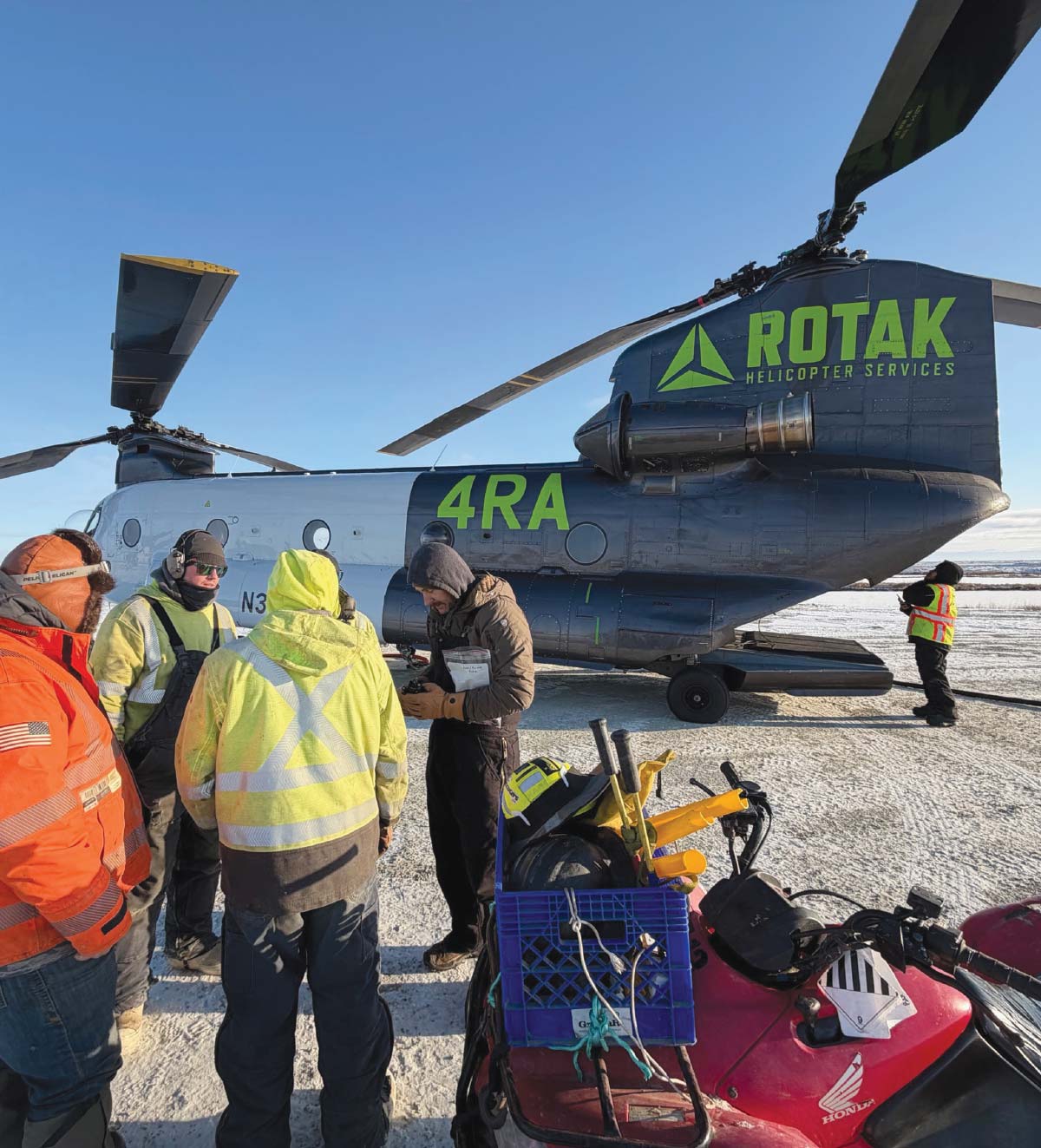
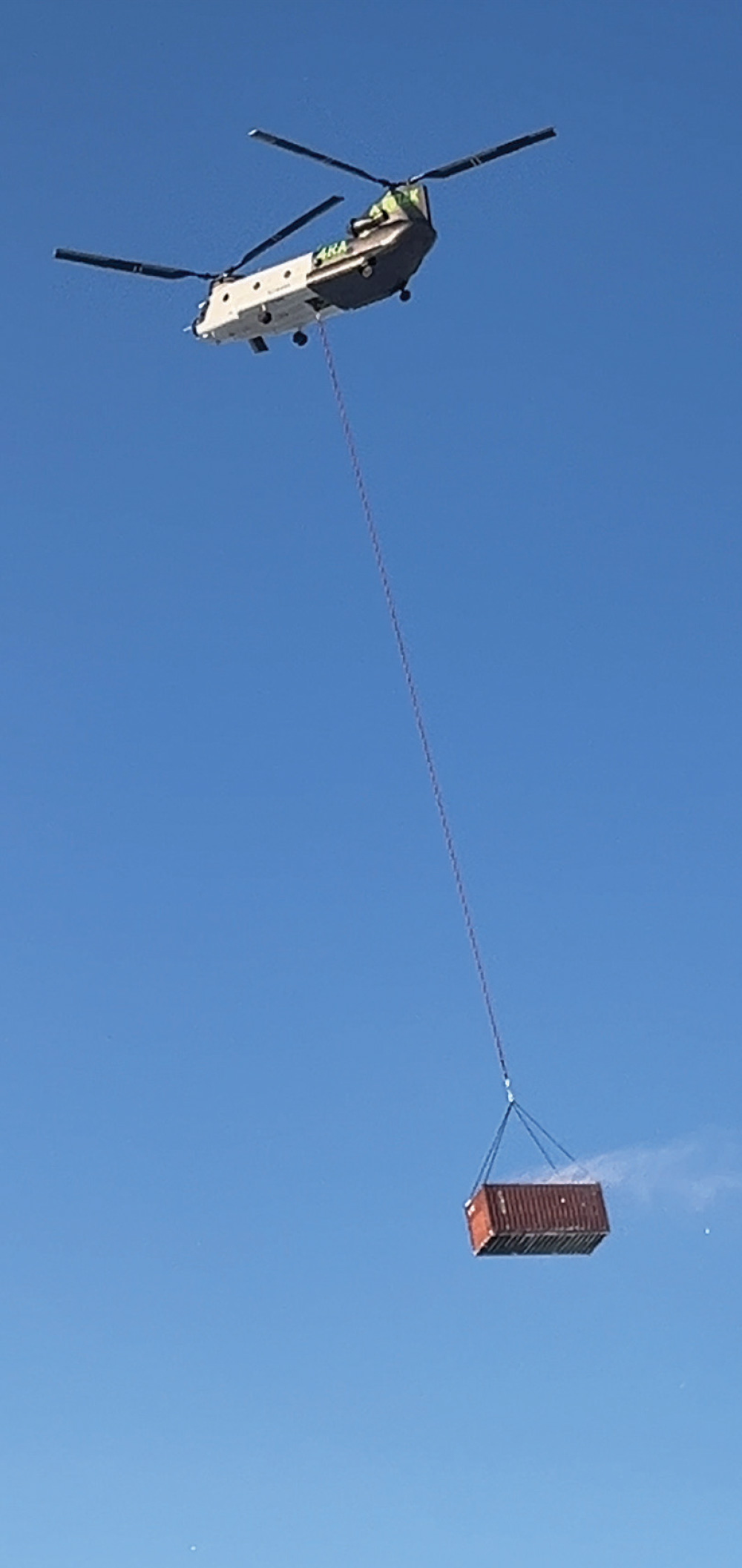
Mass X managed logistics and freight for most materials delivered from Bethel to surrounding communities. DOT&PF transported 8 million pounds of materials and lumber by air to the village hub of Bethel for use across Kasigluk, Atmautluak, and Nunapitchuk, as well as other coastal communities. Crews rebuilt safe, reliable access for residents by removing damaged sections of the board road and installing helical pilings to reestablish the structural stability needed for new elevated travel systems. From there, they reconstructed and raised the board roads so the communities could regain dependable daily travel routes.
“What really stood out to me throughout this project was how grateful I felt to be able to help,” says Thibault. “Spending time in these communities gave me a whole new appreciation for the infrastructure we sometimes take for granted in Anchorage. Being on the ground and engaging with residents and learning about their culture, traditions, and daily challenges made an impact.”
Mass X crews are still installing helical piles, rebuilding sections of board road, and completing stabilization work. Each community has roughly 1,500 feet of board road that requires repair, much of which had to wait for the ground to fully freeze before crews could drill for the helical pile installations.
“The coastal erosion was 10-plus feet of exposed bluff eaten away at the coastline in Tooksook Bay,” says Blake Anderson, Qayaq general manager. “We used 2,000 gravel-filled Super Sacks to protect the area.”
Similar erosion occurred in Scammon Bay along the north side of the airport runway that faces the sea inlet of the river. Crews had to coordinate air traffic with the airport manager to safely install geotextile fabric under new riprap to prevent underlying soil from eroding through the stone and causing the riprap to sink.

Photo provided by the Alaska Department of Environmental Conservation
In Mekoryuk, most recovery efforts focused on culverts and realigning power poles from the airport into the city.
“We wanted to help wherever we could,” says Anderson. “We saw the storm as it happened, and so many villages were impacted. As a native-owned company, we wanted to make sure these villages, many of which are mostly native, were taken care of.”
DEC is finalizing a comprehensive scope of work for the Department of Military and Veterans Affairs, which will outline the next phase of recovery. As conditions improve and the thaw begins, DEC will remain actively involved in spill cleanup, hazardous material management, landfill stabilization, and infrastructure issues that could not be addressed during freeze conditions. Its spring plan, with scopes of work outlined for affected communities, is available at its website.
DOT&PF also continues to support recovery efforts across affected communities. Department staff say 2026 work will be closely aligned with scopes of work approved by the Department of Military and Veterans Affairs and FEMA, particularly as they relate to long-term community and residential infrastructure recovery. In parallel, DOT&PF and its contractors are actively repairing community transportation infrastructure, including extensive boardwalk and board road systems that are critical for daily access and safety. This work is logistically complex, requiring significant material delivery, specialized installation, and careful timing around seasonal ground conditions. To maximize progress before spring thaw, DOT&PF staff say the department is supporting extended and 24-hour operations in several communities and will continue advancing this work as conditions allow. Projects are expected to continue through 2026.
Meanwhile, leaders in several affected communities have begun meeting to discuss whether to rebuild at their current locations or whether their communities should focus instead on rebuilding further inland, where they might be sheltered from the next extratropical cyclone.