

or years, families in Kotlik watched the edge of the Kotlik River creep nearer to their homes as the river chewed away at its bank. Houses that once sat a comfortable distance from the water were in some cases now teetering above it. Erosion undercut foundations with no sign of slowing.
By 2025, that slow-motion crisis had a solution. Drennon Construction & Consulting Inc., working under CRW Engineering Group, Inc.’s project management, relocated twenty houses from the eroding riverbank to a new subdivision built on the village’s former airport runway. Drennon crews slid them across the frozen Kotlik River on steel skids in the dead of winter without losing a single house to the water.
“With the community support and resources, what may seem impossible is possible,” says Eric Hohmann, construction administrator with CRW Engineering, which managed the project under a contract with the village.
CRW managed the project under an existing contract mechanism with the village, coordinating with residents to prioritize which houses faced the greatest risk. Not everyone wanted to move, Hohmann says. The new subdivision sits on higher ground, but it lacks the direct river access that has shaped life in Kotlik for generations. Some families chose to stay rather than relocate.
The original plan called for wood post-and-pad foundations for the relocated houses, along with a new boardwalk, already designed with helical piles, connecting the subdivision to the rest of the village after the previous boardwalk failed and became submerged. But Drennon proposed a change to the house foundations early on.
“We believed this would offer a far superior foundation lasting generations,” says Drennon Construction president Roy Drennon of the company’s pitch to switch the houses from wood foundations to steel helical piles.
Working with CRW’s structural engineers, Drennon used a custom 6-inch helical pile system for the houses, to go alongside the boardwalk’s lighter 3-inch helical piles already called for in the original design.


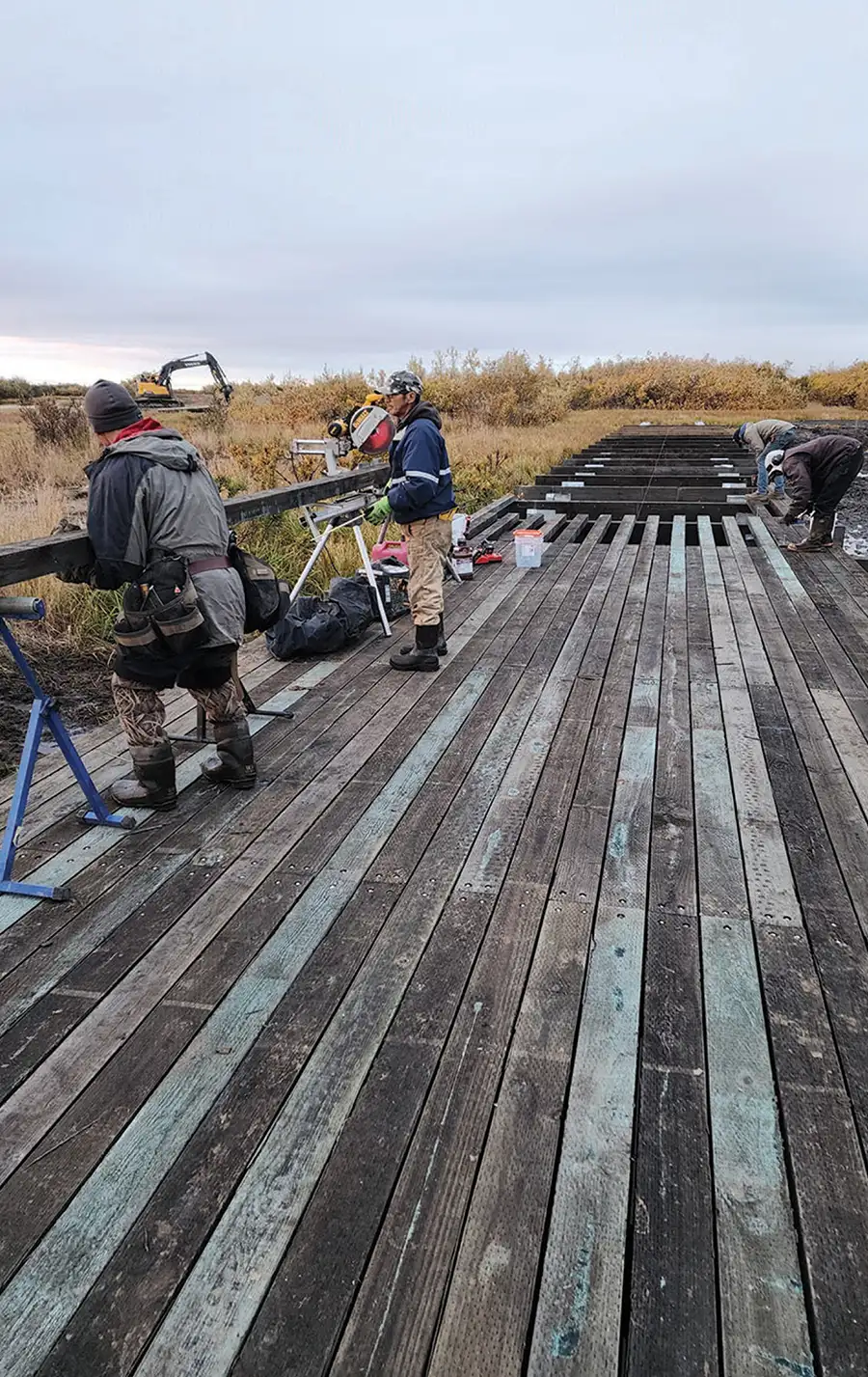
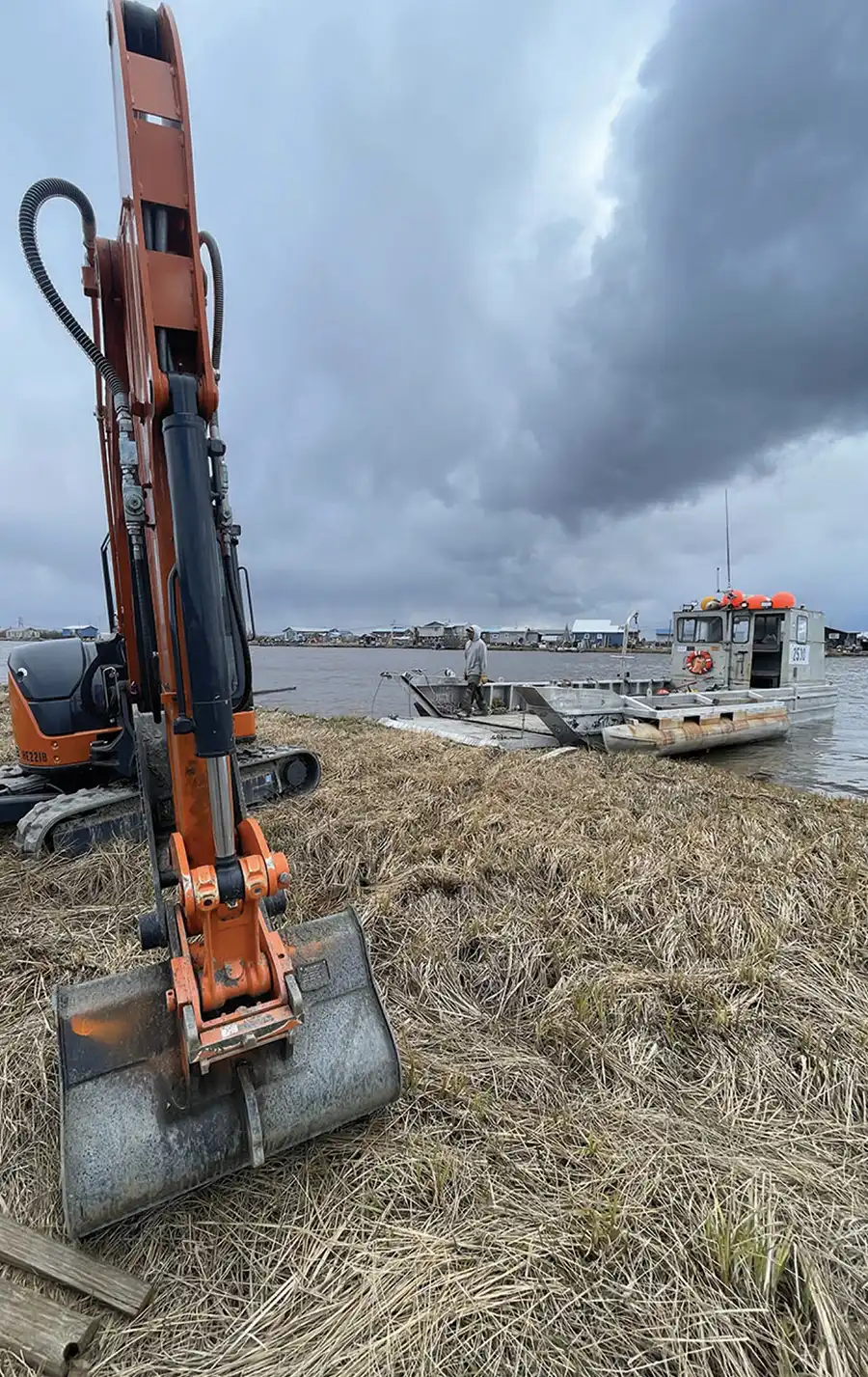
The process repeated itself for each of the twenty houses, Hohmann says. Families moved into temporary housing. Crews disconnected utilities, raised the house, removed the foundation, lowered the house onto a steel I-beam skid, and towed it across the ice road using an excavator and skid-steers. At the new subdivision crews set the house on its new piles, welded and cross-braced the foundation, built new stairs and decks, and reconnected power before moving the family back in. The whole process of moving each house took three to four days, Hohmann says, though larger houses took longer.
The sequence mattered just as much as the speed. Drennon had to move houses in the exact order they’d been prioritized because the ice road gave crews access to each new site from only one direction. Once a house was set in its spot, there was no way to get equipment back in to place another house behind it.
“We didn’t have options,” Drennon says of the sled approach. He added that his crews built a chain system to keep the process moving within the brief winter window when the river stayed frozen solid enough to bear the weight of the equipment and houses.
Power was also critical to the timeline. CRW facilitated contracts between the village and Alaska Village Electric Cooperative to install additional mainline overhead power to the subdivision before relocation began. Houses needed to be reconnected quickly in the middle of winter. As AVEC’s local crews worked alongside Drennon workers throughout the move, Hohmann says the AVEC employees discovered that some houses required minor electrical upgrades to meet code before reconnection.
“AVEC worked extremely well with us,” says Hohmann. “They have local utility people who live there, and they had to bring in additional crews to efficiently connect services as quickly as possible as each home was moved.”
Drennon demobilized at the end of June 2025, leaving local hire to finish the remaining punch-list work over the summer. AVEC signed off on electrical service for the last house by early September.
Every relocated house stayed dry, says Hohmann. A few had wind damage to their roofs—nothing tied to the move itself—but none flooded, and none moved on their new foundations. One house elsewhere in the village that hadn’t been part of the relocation was flipped over in the storm.
“It was extremely satisfying to know that every house we impacted could have been severely damaged, and it wasn’t,” Hohmann says.
Drennon says he sees the storm as proof his crew made the right call on foundations.
“We are thankful the decision was made to change to a raised helical pile foundation,” he says. “Elevating the homes proved beneficial in adding elevation and strength to the foundations. We are not aware of any issue from the new relocations we provided.”
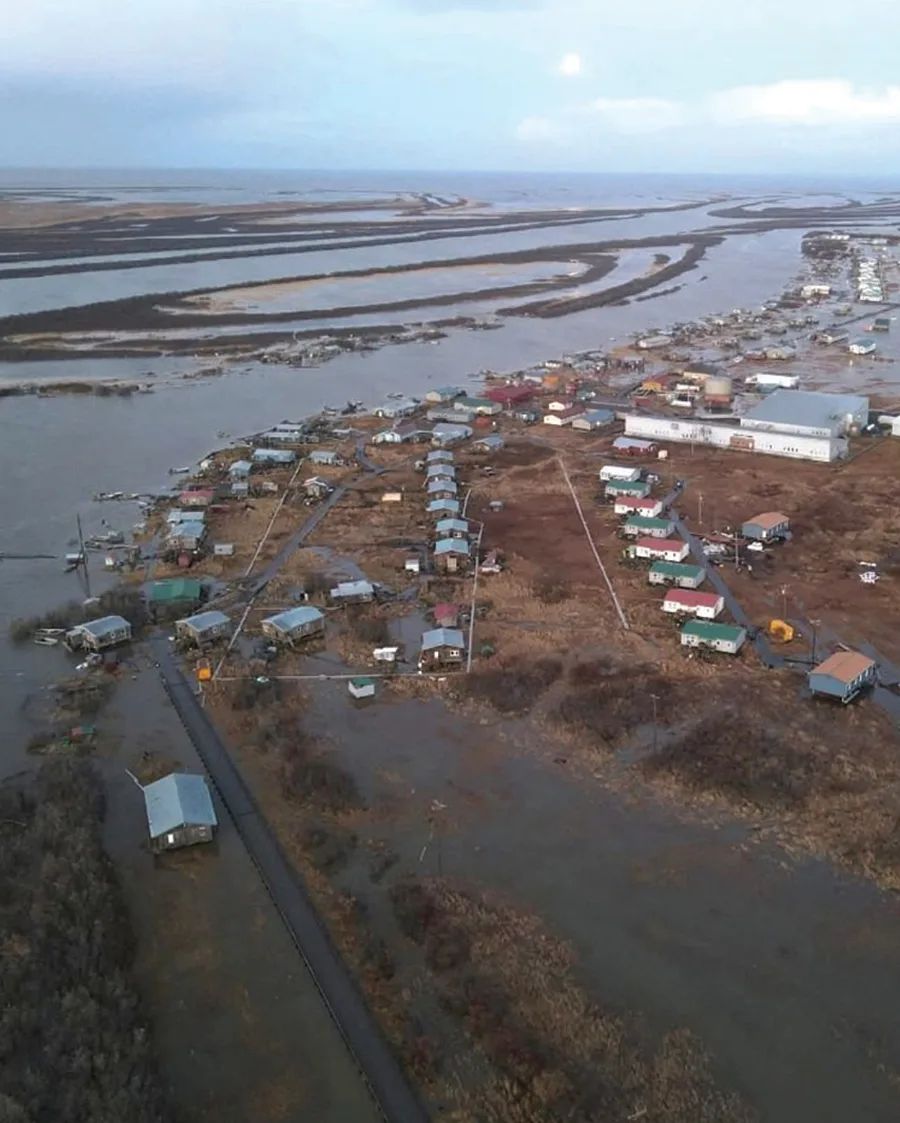
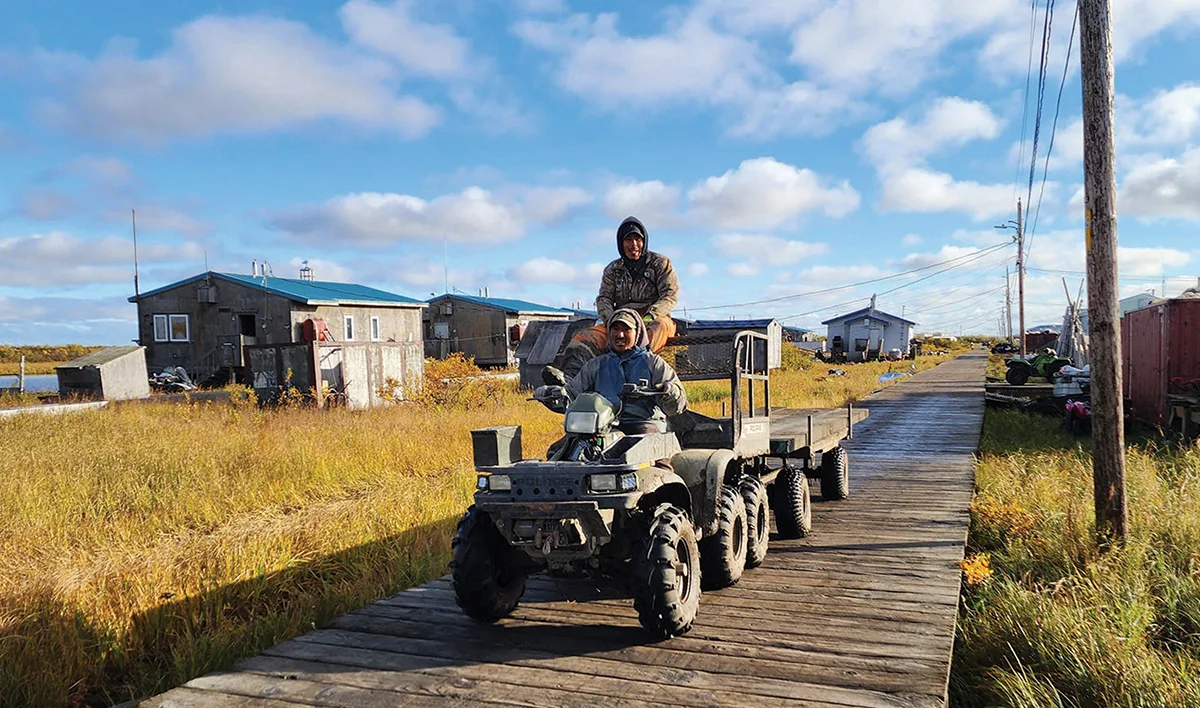

Separately, the Alaska Native Tribal Health Consortium is designing a water and sewer extension to the new subdivision, with construction possibly going out to bid in 2027, says Hohmann. Just seven of the twenty relocated houses had public water and sewer before the move. They gave that up for a safer place to live.
Hohmann has spent nearly three decades working in Alaska construction and engineering. This project sticks with him for what it proved: given the right funding, the right engineering, and a community willing to buy in, even the most impossible-looking puzzle can get solved, one house at a time.
“I think, as a community, they were able to really step up and come together,” Hohmann says.