



Associated General
Contractors of Alaska


8005 Schoon St.
Anchorage, AK 99518
907-561-5354
Fax: 907-562-6118
www.agcak.org
Associated General Contractors of Alaska
Jenith Ziegler
ChemTrack Alaska, Inc.
Pearl-Grace Pantaleone
STG, Inc.
Alicia Kresl
Associated General Contractors of Alaska
Christine A. White
R&M Consultants, Inc.
Heather Sottosanti
Big State Mechanical, LLC
Carrie Jokiel
ChemTrack Alaska, Inc.
Johnathon Storter
Meridian Management, Inc.
Tasha Anderson
Managing Editor
Rindi White
Editor
Monica Sterchi-Lowman
Art Director
Fulvia Lowe
Art Production
Patricia Morales
Visual Content Designer
BUSINESS STAFF
Charles Bell
VP Sales & Marketing
907-257-2909 cbell@akbizmag.com
Weston Giliam
Account Manager
907-257-2911 wgiliam@akbizmag.com
Joshua Wilks
Account Manager
907-257-2911 joshua@akbizmag.com
Tiffany Whited
Marketing & Sales Specialist
907-257-2910 tiffany@akbizmag.com
501 W. Northern LIghts Blvd., Ste 100
Anchorage, AK 99503
The Alaska Contractor is published by Alaska Business Publishing Co. Inc. for the Associated General Contractors of Alaska. Contents of the magazine are not necessarily endorsed by AGC of Alaska or Alaska Business Publishing Co. All rights reserved. Copyright 2026 by the Associated General Contractors of Alaska. For information about articles in this edition or for permission to reproduce any portion of it, contact Alaska Business Publishing Co.
Design by: Patricia Morales
8005 Schoon St.
Anchorage, AK 99518
907-561-5354
Fax: 907-562-6118
www.agcak.org
Associated General Contractors of Alaska
Jenith Ziegler
ChemTrack Alaska, Inc.
Pearl-Grace Pantaleone
STG, Inc.
Alicia Kresl
Associated General Contractors of Alaska
Christine A. White
R&M Consultants, Inc.
Heather Sottosanti
Big State Mechanical, LLC
Carrie Jokiel
ChemTrack Alaska, Inc.
Johnathon Storter
Meridian Management, Inc.
Tasha Anderson
Managing Editor
Rindi White
Editor
Monica Sterchi-Lowman
Art Director
Fulvia Lowe
Art Production
Patricia Morales
Visual Content Designer
BUSINESS STAFF
Charles Bell
VP Sales & Marketing
907-257-2909 cbell@akbizmag.com
Weston Giliam
Account Manager
907-257-2911 wgiliam@akbizmag.com
Joshua Wilks
Account Manager
907-257-2911 joshua@akbizmag.com
Tiffany Whited
Marketing & Sales Specialist
907-257-2910 tiffany@akbizmag.com
501 W. Northern LIghts Blvd., Ste 100
Anchorage, AK 99503
The Alaska Contractor is published by Alaska Business Publishing Co. Inc. for the Associated General Contractors of Alaska. Contents of the magazine are not necessarily endorsed by AGC of Alaska or Alaska Business Publishing Co. All rights reserved. Copyright 2026 by the Associated General Contractors of Alaska. For information about articles in this edition or for permission to reproduce any portion of it, contact Alaska Business Publishing Co.
Design by: Patricia Morales



 AGC MEMBER
 STG, Inc.
$8,949,700
BUECI Utility Pole Relocation for USACE Seawall Construction
Northern Powerline Constructors, Inc.
$2,058,556
Dalton Highway MP 315.5 Permanent Repairs
Cruz Construction, Inc.
$2,057,442
Nome-Council Highway Permanent Repairs
Knik Construction Co., Inc.
$1,731,505
MKEC 2026 DERA Upgrade Project
Sturgeon Electric Company, Inc
$1,247,900
Additional Gravel for the USACE Sea Wall Project
UIC Sand and Gravel, LLC
$732,260
Napaskiak Distribution Upgrade Project
Alaska Line Builders LLC
$382,458
BCSF Food Pantry Gravel Pad
Dale Construction, LLC
$172,006
 HC Contractors LLC
$39,509,885
Parks Highway MP 206-209 Reconstruction
Great Northwest, Inc.
$19,108,363
Northern Region Seismic Bridge Retrofit FFY2023
Swalling General Contractors, LLC
$6,540,825
Donnelly FLS Taxiway Repairs and Upgrades
Qayaq Construction LLC
$912,500
Hilling Avenue GHU Water Main Replacement
Exclusive Paving/University Redi-Mix
$407,800
AIP Spreader Truck
RWC International
$355,489
Tanana Exploratory Water Supply Well
Hefty Drilling Inc
$334,500
Richardson Highway MP 210 Rockfall Mitigation
Granite Construction Company
$325,000
4 Home Well Development Project – Ruby
M-W Drilling Inc
$171,520
Road Service Area Group: North Fairbanks Service Area Maintenance – Wildview
Bartlett Industries
$168,183
AIP Cupping Plow, 33-foot
M-B Companies Inc.
$160,717
AIP Cupping Plow, 27-foot
M-B Companies Inc.
$154,945
Asphalt Crushing Services for City of Fairbanks
North Star Industrial, LLC
$119,995
Road Service Area Group: North Pole/Salcha Area Service Area Maintenance – 23-Mile Slough Area
Better Way Construction, LLC
$111,290
Road Service Area Group: Chena Hot Springs Area Service Area Maintenance – Birch Hill
Groundhogs LLC
$103,296
 SERB / Southeast Road Builders
$7,388,997
Wrangell Schools Renovation Three Sites and Swimming Pool Roofs Replacement
McG Constructors, Inc.
$6,330,400
CBJ Interior Improvements – Burns Building
Carver Construction LLC
$4,416,700
Wrangell Public Safety Building Rehabilitation
Dawson Construction LLC
$3,125,686
McKinnon Street Rehabilitation
Ketchikan Ready-Mix & Quarry
$1,894,550
HSIP POW Rumble Strip Improvements
Specialized Pavement Marking, LLC
$980,290
YAK Ahrnklin River Bridge (No.1229) Abutment Slope Restoration
TM Construction Inc
$669,060
2026 Ketchikan High School UST Removal and AST Installation
Marble Island LLC
$525,170
JNU Mendenhall River GLOF ER 8-2025 Stage 2 Riprap Repairs
Island Contractors, Inc.
$393,650
Paving of Upper Atkinson Street
Logjam Construction LLC
$319,200
2026 Valley Park Field & Playground Sitework
Ketchikan Ready-Mix & Quarry
$269,225
Sunrise Apartments Bedroom Windows
Endicott Construction LLC
$249,400
Wastewater Outfall Repair Project
Rock-N-Road Construction
$222,000
Mosquito Lake SRS Sanitary Improvements
Chilkat Custom Contractors LLC
$218,954
2026 Rainbird Trail Improvements: Staircase and Viewing Platform Construction
Southeast General Contractors
$179,800
Harbor Mountain and Gavan Water Reservoir Recoating
Highmark Marine Fabrication
$152,064

Tutka, LLC
$21,583,007
Big Lake Road MP 0-3.6 and Church Road Pavement Preservation
QAP
$16,747,181
Lift Station 5 Wetwell Replacement
Brechan Construction LLC
$16,319,570
AMATS: Downtown Trail Connection
Granite Construction Company
$12,085,500
Provide Year-round Road Maintenance to Chugiak-Birchwood-Eagle River Rural Road Service Area
McKenna Brothers Paving Inc
$10,873,990
New Residential Housing Construction in Seward
Orion Construction Inc
$9,757,169
Palmer Courthouse Expansion
YH Constructors, Inc.
$5,198,222
PTSS 322 Feeder Reconductor SI – Portage Overhead Primary System Improvement
Sturgeon Electric Company, Inc
$4,224,227
Gambell St OH/UG & Transmission Pole Relocate
LineWorks LLC
$4,219,691
Susitna Landing Boat Launch and Facility Renovation
Nodak Electric & Construction Inc.
$3,583,196
Talkeetna Airport Lighting Improvements
Nodak Electric & Construction Inc.
$3,393,479
Jakolof Bay Dock Replacement Project
Knik Construction Co., Inc.
$3,125,000
2525 C Street Renovations Project
Roger Hickel Contracting, Inc.
$3,123,812
ARL Tipping Building Replacement
YH Constructors, Inc.
$2,988,426
ARRC Bridge 158.7 Replacement
Granite Construction Company
$2,752,385
2026 Kenai Municipal Airport Airport Perimeter Fence & Gate Improvements
QAP
$2,475,100
Iditarod Elementary School Cladding Replacement
YH Constructors, Inc.
$1,921,174
Downtown Sidewalk Improvements
Pruhs Construction Co., LLC
$1,773,605
Construct Bradley Road Bridge Replacement
Swalling General Contractors, LLC
$1,770,440
DPS Anchorage Headquarters Roof Replacement
Orion Construction Inc
$1,384,300
Matanuska Experiment Farm Wind Damage Repair – Main Repairs
H Construction LLC
$1,280,841
Downtown Anchorage Branch Library
Roger Hickel Contracting, Inc.
$1,259,194
ANC South Terminal Pavement Repairs
Granite Construction Company
$1,186,060
Jay-Brant General Contractors
$1,176,276
Furnish Asphalt Concrete Hot Mix to the Municipality of Anchorage, Street Maintenance Department
Granite Construction Company
$1,150,000
Road Service Area 21 Big Lake Annual Road Maintenance
Tew’s Inc
$1,104,153
Construct Cell 3 Gas Collection and Control System Expansion
Professional Trails LLC
$965,270
88th Avenue Warehouse HVAC Upgrades
KC Corporation
$915,772
CBERRRSA Asphalt Paving Services 2026
McKenna Brothers Paving, Inc.
$700,000
Road Service Areas Pavement Preservation – Package 1
McKenna Brothers Paving, Inc.
$661,087
Furnish Gravel and Crushed Recycled Asphalt Pavement to the Municipality of Anchorage, Anchorage Water & Wastewater Utility
Anchorage Sand & Gravel Co., Inc.
$610,014
Construct Burma Road Safety Improvements
Ficklin Construction LLC
$585,000
East Kepler Drive Bridge Replacement
Bristol Infrastructure Design Services, LLC
$553,408
Fencing Services
Acme Fence Company
$500,000
Fencing Services
McKinley Fence Co of Alaska Inc
$500,000
2026 Aliak Storm Water & Paving Repair – Construction
Caliber Construction Alaska, LLC
$497,334
Don Young Port of Alaska Provide Waterfront Condition Assessment Services
Marine Solutions, Inc.
$480,500
North Floating Dock Installation
Swalling General Contractors, LLC
$463,750
MSBSD Nutritional Services Steam System Repair
Frawner Corporation
$455,000
MSBSD Administration Boiler Room Improvements and Boiler Replacement
JGH Plumbing & Heating
$444,021
Peter’s Creek Dog Park Construction
Bristol Infrastructure Design Services, LLC
$410,587
Railroad Tie Disposal Services for Alaska Railroad Corporation
Eagle River Fill & Transfer
$400,500
Air Handler Replacement
General Mechanical Inc
$377,442
Provide Crushed Recycled Asphalt Pavement to the Municipality of Anchorage, Public Works Department
Pruhs Construction Co., LLC
$367,000
Septic Replacement Nikiski North Star Elementary School
Foster Construction LLC
$365,500
ARRC Clear SFS Paving
Granite Construction Company
$344,250
Northern Asphalt Construction, Inc.
$330,800
Construct S. Adele Circle and S. August Circle Improvements
Northern Asphalt Construction, Inc.
$327,234
San-I-Pak Refuse Disposal Services for Joint Base Elmendorf-Richardson
Environmental Compliance Consultants, Inc.
$309,491
Kenai Votec Parking Lot Upgrade
Peninsula Construction, Inc.
$306,890
Controls Installation
Alaska Integrated Services
$303,551
Provide Site for Disposal of Organic/Tree Stump Material within the CBERRRSA Service Area
Eklutna, Inc.
$290,000
Provide Equipment Rentals to the Municipality of Anchorage, Street Maintenance Department
ABC Rentals, LLC
$281,520
Goldenview Guardrail Improvements
Roger Hickel Contracting, Inc.
$274,730
Levelock & Hughes M&I Engine Generator & Accessories Purchase
Northern Generation & Power LLC
$269,179
Performing Arts Center Glycol Replacement
Goertz Construction Inc
$262,562
2026 Street Crack Sealing Upgrades
Alaska Sure Seal
$261,421
Boiler Room Upgrade
Mechanical Specialist Inc
$207,881
Demolition – Big Timber Motel
CYS Enterprises, LLC
$202,468
Provide Summer Hauling Services to the Municipality of Anchorage, Public Works Department
Alaska Asphalt Services, LLC
$177,300
Furnish Sodium Fluorosilicate on an “As-Needed” Basis – Eklutna Water Treatment Facility to the Municipality of Anchorage, Anchorage Water and Wastewater Utility
Riverland Trading LLC
$162,720
2026 Park Pavilion Construction
Crave Alaska Cabin Company LLC
$157,500
Replace Septic System at Butte Elementary School
Dirtworks, Inc
$138,700
Provide Track Excavator Equipment Rental to the Municipality of Anchorage, Public Works Department
ABC Rentals, LLC
$136,116
2025 Windstorm Debris Removal
Battleground LLC
$113,300
2026 Street Light Repair & Maintenance with Utility Locates
Kachemak Electric Co, Inc.
$110,410
Annual Lead Dust Removal and Cleaning Services – USCG Kodiak Small Arms Firing Range
Kadaj Alliance LLC
$107,760
Egan Convention Center Solar Array Expansion
Alaska Solar, LLC
$100,300




It’s Time to Partner.
his may not be a popular thing to say, but the opportunities in front of Alaska’s construction industry may require us to look through a different, broader lens.
For many years, AGC of Alaska has advocated for more work, investment, and opportunities for Alaska contractors and workers. We’ve fought hard for our industry and, understandably, we’ve been protective of our turf. Alaska businesses should benefit from the work happening in our state. But when we look at the amount of work potentially coming our way, the bigger question may be:
How are we going to get all of this work done? This is a good problem.
Between military construction, transportation, energy, resource development, and other major projects on the horizon, Alaska could be entering one of the busiest periods our industry has seen in a long time. At the same time, our workforce and contractor resources are already tight. There are only so many superintendents, project managers, estimators, operators, and tradespeople to go around. Equipment, bonding, and management capacity have limits as well. We need to keep growing our resources while being realistic about how much work our industry can absorb at once.
That’s not giving away our turf. It’s understanding the landscape in front of us.
We’re also going to see more national contractors looking north, and we may need some of the capacity they bring. But that works both ways. Alaska is not a market that can be fully understood from a set of plans or a few trips north. Our logistics, weather, workforce, communities, supply chains, and construction seasons are different. Alaska contractors have spent decades learning how to successfully build here.
That’s where a little Northern attitude belongs. The message doesn’t need to be, “Stay off our turf.” It should be, “If you’re coming north, come ready to partner.”
Small and medium-sized Alaska businesses should be paying particular attention. Federal acquisition methods continue to evolve, including the use of Other Transaction Authorities, or OTAs. These approaches can create different paths for participation than traditional federal contracting. It’s important to understand opportunities early, know what your company brings to a team, and develop relationships before a solicitation hits the street. The role a company has traditionally played doesn’t have to be the role it plays going forward.
This is bigger than us.
The infrastructure supporting our military installations isn’t being built simply to create construction opportunities. Alaska plays an important role in our nation’s defense, and these investments support readiness, capability, and national security. Alaska businesses and workers should have a significant role in delivering that infrastructure, but our responsibility as an industry is also to make sure the mission gets accomplished.
The US Air Force’s Fighter Town Recapitalization Program at Joint Base Elmendorf-Richardson is a good example. This multi-year, multi-billion-dollar effort represents an enormous opportunity for Alaska’s construction industry and demonstrates the scale of what’s ahead. AGC of Alaska hosted an Industry Day on August 27, bringing together industry, government, and potential teaming partners to talk about what it will take to deliver this work.
Companies should approach the topic thinking beyond, “What can we bid?”
Think about what your company brings to the table and where its capacity ends. Consider who complements those capabilities. For a small business, that may mean finding a larger partner. For an Alaska prime contractor, it may mean working with a traditional competitor. For a national contractor, it should mean finding Alaska partners whose knowledge, workforce, and experience can help make the project successful.
We’ve spent years working to create more opportunity in Alaska. We may be entering a period when opportunity isn’t the biggest constraint; capacity may be.
That’s a good problem to have, but it’s still a problem we need to solve. Doing that may require us to look beyond the traditional lines between prime and sub, large and small, local and national, and even competitor and partner.
The question isn’t simply who gets the work. It’s how we’re going to get all of this work done.
It’s not time to turf. It’s time to partner.



ver the past several months, one topic has dominated conversations with partners across the nation: Alaska.
The US Department of War is making major investments across our state, and the amount of military construction work headed our way is unlike anything we’ve seen. From infrastructure and utilities to housing, airfields, ports, and mission-critical facilities, the opportunities on the horizon are substantial. Just as importantly, they will impact every corner of our industry.
At AGC, we’re fielding questions from every corner of the industry; from local members, federal agency staff, and contractors across the nation. Everyone is trying to understand what’s coming and how to position themselves to gain a competitive advantage.
This is why connection to an organization like AGC matters. We bring people together, facilitate relationships, create opportunities for contractors to meet potential partners, build networks, and stay informed about what’s happening across Alaska.
There has never been a better example of this membership value proposition than what we’re seeing right now, which you’ll hear about throughout this magazine issue.
The conversations that matter are happening. Partnerships are already being explored, teams are being formed, and questions are being asked about workforce, training, resources, housing, logistics, and capacity. Companies are evaluating where they fit and who they need to know. That doesn’t mean every contractor needs to have all the answers, but it does mean contractors need access to the people and information that can help navigate what’s ahead.
If you’re already an AGC member, now is the time to lean in, attend events, participate in committees, take advantage of opportunities to connect with state and federal partners, and come to our annual conference in November. Sign up for AGC’s newsletter, enroll in professional development with AGC of Alaska or our national partner, AGC of America, and make sure to bring your team along with you. The value of membership has always been relationships, and relationships are going to be critical over the next several years.
If you aren’t a member, joining and engaging with AGC helps ensure you’re receiving information about upcoming opportunities and issues that could impact your business. Members have access to a network of experienced professionals who are all working toward the same goal: delivering successful projects in Alaska.
Membership does more than provide access to information. It also strengthens the industry’s collective voice.
That dialogue is already happening, and it will become even more important as project activity ramps up.
The years ahead present tremendous opportunities for Alaska’s construction industry. Capturing those opportunities will require strong businesses, a capable workforce, and a construction community willing to engage in complicated conversations.
AGC’s role is to make sure those conversations happen and that Alaska contractors are represented.
Because when opportunities of this magnitude come to Alaska, you do not want to be searching for a seat at the table—you want to already be sitting there.


4261 Edinburgh Drive
Anchorage, AK 99502
907-450-9879
clayton.stotesbery@cgs-service.com
724 30th Avenue
Fairbanks, AK 99701
907-855-9047
roger@middleforklogistics.biz
PO Box 871971
Wasilla, AK 99687
907-606-0911
prolineconcretepumping1@gmail.com
7828 Lake Otis Parkway
Anchorage, AK 99507
907-245-2089
Contact@akadriving.com
480 Commercial Drive
Palmer, AK 99645
907-792-4600
admin@alasconnect.com
2550 Denali Street, Suite 950A
Anchorage, AK 99503
907-561-4300
clewis@aleutventures.com
1120 E 35th Avenue
Anchorage, AK 99508
907-777-1500
dwhite@capital-office.com
1941 Abbott Road
Anchorage, AK 99507
907-339-9485
mastrej@cu1.org
3100 West Ray Road, 201
Chandler, AZ 85226
872-870-0631
marketing@ethosystems.com
2525 C Street, Suite 250
Anchorage, AK 99503
907-268-4491
jpenny@gamedaymenshealth.com
43385 Kenai Spur Highway
Kenai, AK 99611
907-335-6305
kenaiadmin@magtecalaska.com
5710 LBJ Freeway
Dallas, TX 75240
720-405-2671
jarrod@mccauleybonds.com
721 Depot Dr.
Anchorage, AK 99501
907-306-5463
Lori.davey@bedrockpcl.com
2090 E Palmer-Wasilla Hwy Suite B
Wasilla, AK 99654
907-232-6670
Outreach@PTRAlaska.com
100A Union Square Drive
New Hope, PA 18938
310-357-6073
etorrez@tenna.com

provided by AGC of Alaska.


Carin Currier | Alaska Miners Association
Carin Currier | Alaska Miners Association
n July, AGC of Alaska leaders met with leadership from the US Army Corps of Engineers (USACE) and the Federal Highway Administration (FHWA) to discuss several proposed Alaska-based construction projects.
“These types of meeting opportunities do not come along every day,” says Heidi Olson, AGC of Alaska membership director. “We are grateful for the chance to connect our members directly with federal leaders and provide insight into the significant projects and investments being considered for Alaska.”
Alaska is poised to see a boom in military construction over the next three years, thanks to a series of projects potentially bringing billions of dollars into the state.
Renewed federal interest in Alaska’s resources and infrastructure has focused a spotlight on the state. So have efforts on the part of US Senator Dan Sullivan to include the Joint Base Elmendorf-Richardson (JBER) Recapitalization, totaling about $7 billion in the federal 2027 fiscal budget. In two separate meetings FHWA leadership—including FHWA Administrator Sean McMaster and USACE Pacific Ocean Division Brigadier General Joseph C. Goetz—conferred with AGC on the logistics of construction work in Alaska and the potential for developing the state’s military capacity.
“Investments are being considered across a broad range of military facilities, from major installations like JBER and Fort Wainwright to smaller sites throughout Alaska,” Olson explains. “These discussions reflect a significant focus on modernizing and strengthening military infrastructure across the state.”
The meeting with USACE and Brigadier General Goetz focused on the Fighter Town Recapitalization Build-Out at JBER. Under the National Defense Authorization Act (NDAA), the build-out would bring more than $2 billion in federal fiscal year 2027 in military construction to the base for projects, including $93.8 million for a flight simulator, $451.5 million for dormitories, $422.1 million for infrastructure and utilities, $132.3 million for a conventional munition complex, and $359.1 million to relocate precision guided munitions. Additional NDAA provisions will support projects at Fort Wainwright, the Pacific Spaceport Complex on Kodiak Island, and Eielson Air Force Base.
The NDAA, which passed the house in July but is still awaiting passage in the Senate, represents the largest investment the federal government has ever made in Alaska’s military infrastructure, Senator Sullivan’s office said in June.
Although the bill had not yet passed the Senate in September, the first request for proposals has already been released. More are expected this fall, kicking off a surge in construction projects likely to benefit contractors from every sector of the industry: subcontractors, service providers and suppliers, trucking and shipping companies, and others.
“The scale of these investments has the potential to benefit businesses throughout the construction ecosystem,” Olson says. “From contractors and subcontractors to suppliers, manufacturers, and logistics providers, there could be meaningful opportunities across many sectors of Alaska’s economy.”
AGC of Alaska

Carin Currier | Alaska Miners Association

Carin Currier | Alaska Miners Association
Carin Currier | Alaska Miners Association
The US Department of War was authorized last year to procure and execute military projects using PDB. In the July meeting with AGC staff and members, USACE leadership clarified how local contractors can be competitive under the PDB method.
A separate meeting with FHWA gave AGC members an opportunity to engage with FHWA Administrator McMaster to discuss Alaska’s infrastructure potential. FHWA sought to better understand the constraints and logistics of delivering federal-aid transportation projects more effectively across the state.
“The power of a collective industry voice is a valuable benefit of AGC membership,” Olson says. “Individual companies may not always have the opportunity to engage directly on major policy and procurement issues, but together our members can help inform project owners about Alaska’s unique operating environment, challenges, and capabilities.”
AGC of Alaska

Carin Currier | Alaska Miners Association
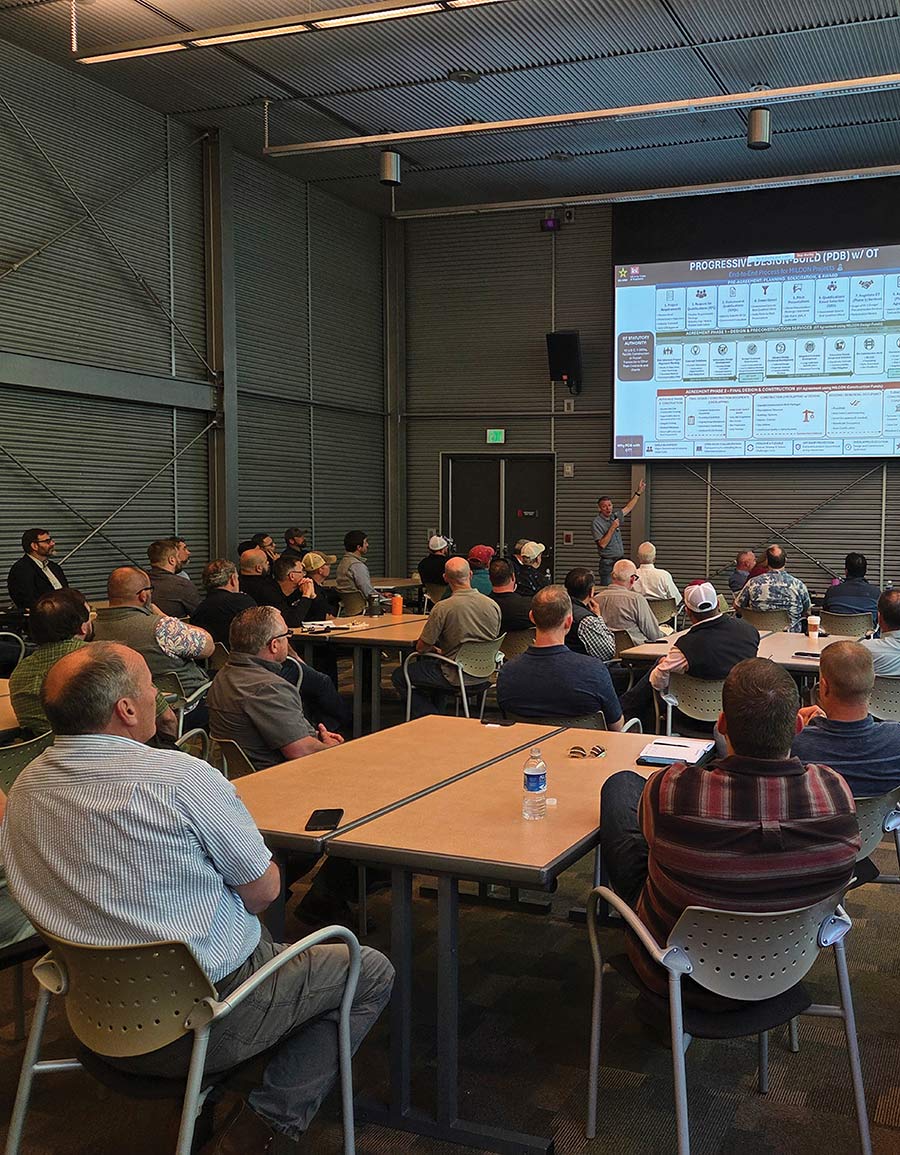
Pacific Ocean Commission photos: AGC of Alaska
“AGC was able to quickly notify federal contractors in the membership of the opportunity to meet with GSA. Contractors were then able to prepare questions and have a meaningful discussion with GSA staff regarding how upcoming projects can be completed most efficiently,” Olson says.
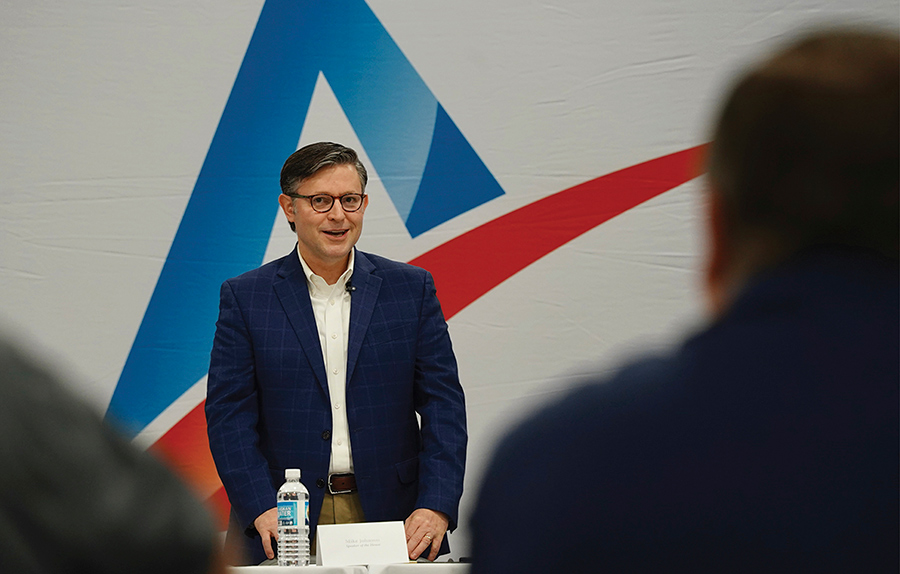
On August 7, AGC of Alaska Executive Director Alicia Kresl joined Alaska business leaders, Representative Nick Begich, US House Speaker Mike Johnson, and other federal representatives for an Alaska Business Roundtable focused on federal policies affecting Alaska employers. Kresl highlighted the importance of long-term federal infrastructure investment, emphasizing the critical role transportation funding plays in connecting Alaska communities and strengthening the state’s economy. She also reinforced the need for permitting reform to ensure that infrastructure projects can move from funding to construction more efficiently.
Meetings like these are relatively unusual, but AGC maintains year-round relations with the Alaska DOT and regional USACE staff, hosting both a DOT steering committee and a USACE steering committee. AGC’s annual Legislative Fly-In is another crucial connection to local lawmakers the agency provides for its members, bringing them to Juneau each year to meet with legislators and to educate and advocate for AGC’s legislative priorities. Olson pointed out that these activities reflect AGC’s founding values and a major benefit of AGC membership: the ability for members to participate in conversations as a powerful collective, helping to shape the future of Alaska and its infrastructure.



inning a judged category for construction excellence is feedback that lets companies know their hard work designing, engineering, and building a project is paying off. Being voted as “best” in a category that relies on customers and clients to write in your name as the top in a particular field lets companies know their community outreach, commitment to customer satisfaction, and marketing efforts are on the right track.
AGC members made an impressive showing in the 2026 Best of Alaska Business Awards, published by Alaska Business magazine. Each year, the magazine asks readers to share their opinions about who excels across an array of categories, from best shipping company to best food truck. In each category, the top three winners are awarded the Denali, St. Elias, and Foraker awards in order of votes received.
“Winning in the Best of Alaska Business awards is important recognition, and it’s especially meaningful because it shows the support we get from our employees,” says Ben Momblow, vice president, managing principal, Coffman Engineers. “We want to thank everyone who voted for us, and those who put their energy and investment in us—it’s what makes this a great place to work.”

Coffman Engineers


Coffman Engineers
“Leadership and the management structure tries to support a healthy culture for employees, but ultimately it’s the employees that make this place so great,” Momblow says. “They take ownership of creating a super healthy, fun culture.
“’Work hard, play hard’ is a little cliché, but it’s also true,” he adds, noting that employees are excited to come to work because of the people they work with. “While our employees show a high level of respect for each other and a high degree of professionalism, they also know if they work hard and put energy into the office space, it’s more fun for everybody. And when you spend a lot of your time at work, you need to have fun, too.”
According to Momblow, its mission is measured by its clients’ success. “Everything we do day-to-day is guided by our mission/vision/value statement, which, boiled down, focuses on client success and doing the right thing,” he explains.
During its forty-seven years in Alaska, the company has worked on a range of projects for the military, oil and gas, and commercial sectors, among other clients.
“The first big project I worked on was Concourse C, at Ted Stevens [Anchorage] International Airport in the late 1990s; we did the structural design, which was a flagship project for us,” says Momblow. “More recently, we’ve been supporting military projects at Joint Base Elmendorf–Richardson (JBER), Fort Wainwright, and Eielson Air Force Base. We’ve also been working with oil and gas developers on projects on the North Slope and in Cook Inlet.”
According to Momblow, the company relied mainly on word-of-mouth to promote its inclusion in the BOAB list, announcing at a staff meeting that voting was open and sending out an email as a reminder. He added that this recognition helps with recruitment, leading to even more satisfied employees.
For RSA Engineering Inc., which earned the St. Elias Award in the same category, the win came as a big surprise.
“This was our first-time win, and we didn’t do outreach, advocating, or advertising for the award,” says Marketing Director Lisa Anglen. “Reflecting on it, we believe that we won because we’ve built a reputation of long-term responsiveness and technically competent work over the last forty years in business. Our clients and colleagues, and the businesses that we’ve worked for, recognized our contributions to the industry, and we want to thank them for voting for us and believing in us.”
For this reason, RSA principals and management stay involved throughout the life of each project, either visibly present or in the background. “We have an open-door policy if there are any questions or concerns related to a project,” says Anglen. “We also have senior engineers providing oversight and quality control.”
Staff members share lessons learned and also collaborate on new approaches, design standards, and client care. Biweekly staff meetings enable employees to review ongoing projects, air questions and concerns, and request support when needed.
“Our staff is very teamwork-focused; if we need to transition staff to a project that needs more time and attention, our culture promotes being ready to jump in and help out wherever needed,” says Anglen.

RSA Engineering, Inc.
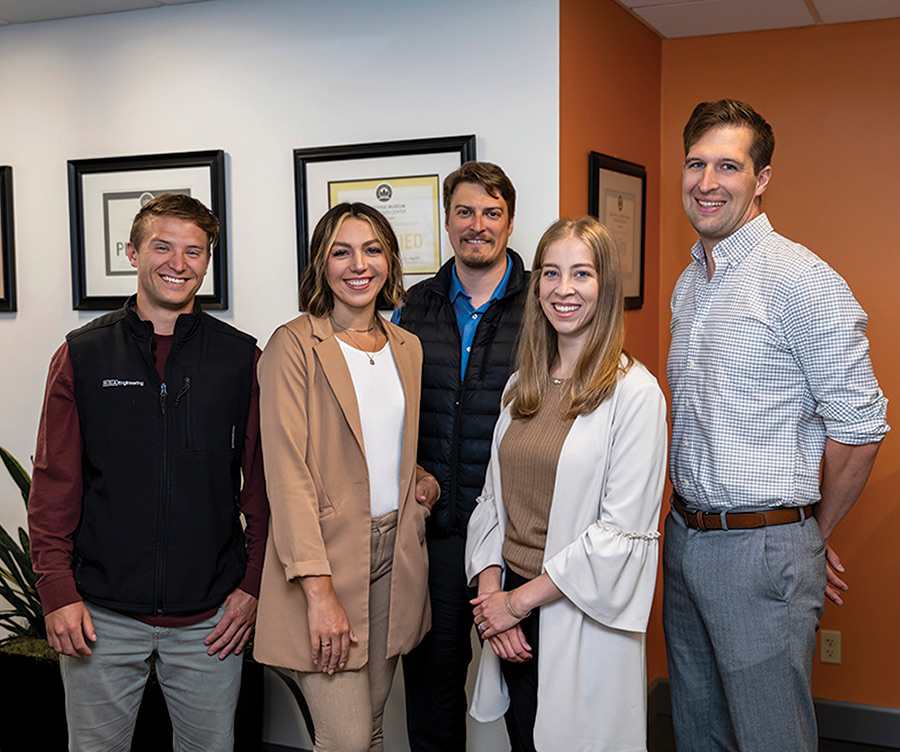
While RSA works in all regions of Alaska, it is best known for its experience leading rural Alaska projects.
“Our staff members are very nimble and willing to travel to any location in Alaska,” Anglen says. “They are willing to jump on small planes, work in any weather, and go to unfamiliar locations. They understand that durability and long-term maintenance are extremely important and they are very energy conscious, understanding the high price of energy or a lack of access to energy in some locations.”
During its four decades in business, RSA has built a reputation working with building owners, municipalities, private industries, and architectural firms on projects including airports, schools, seafood processing facilities, ports, harbors, commercial facilities, and more. The company is currently focused on a number of industrial projects, including the Port of Anchorage.
According to Anglen, receiving votes from the business community when everyone is so busy is especially meaningful. “Recognition is one of the last things that happens,” she says. “It’s hard to stop and pause and find the time to say congratulations to each other.
“One of the biggest things this award does is provide validation for our staff members,” she adds, noting that the company is much smaller than a number of its competitors. “We work so hard day in and day out, focused on client care and project delivery, that we often don’t look around and think about what we’ve done. This award is just as important for internal validation, telling us that we’re doing the right things, making the right choices, and taking the right approaches.”

BDO USA – St. Elias
Bank/Credit Union
First National – Denali
Global Credit Union – Foraker
Wealth Management
First National – Denali
Cargo/Logistics
Span Alaska Transportation – Denali
Lynden – St. Elias
Carlile Transportation – Foraker
Engineers
Coffman Engineers – Denali
RSA Engineering – St. Elias
CRW Engineering Group – Foraker
General Contractor
Davis Constructors & Engineers – St. Elias
Criterion General – Foraker
Construction Supplier
Spenard Builders Supply – Denali
Landye Bennett Blumstein – St. Elias
Birch Horton Bittner & Cherot – Foraker
Telecommunications Provider
GCI – Denali
IT/Cybersecurity
Stratus Services – St. Elias
Conference Venue
Hotel Captain Cook – St. Elias
Hotel
Hotel Captain Cook – Denali
Best Place to work,
250 employees or more
First National – Denali
Chugach Alaska Corporation – St. Elias
Best Corporate Citizen (unranked)
First National


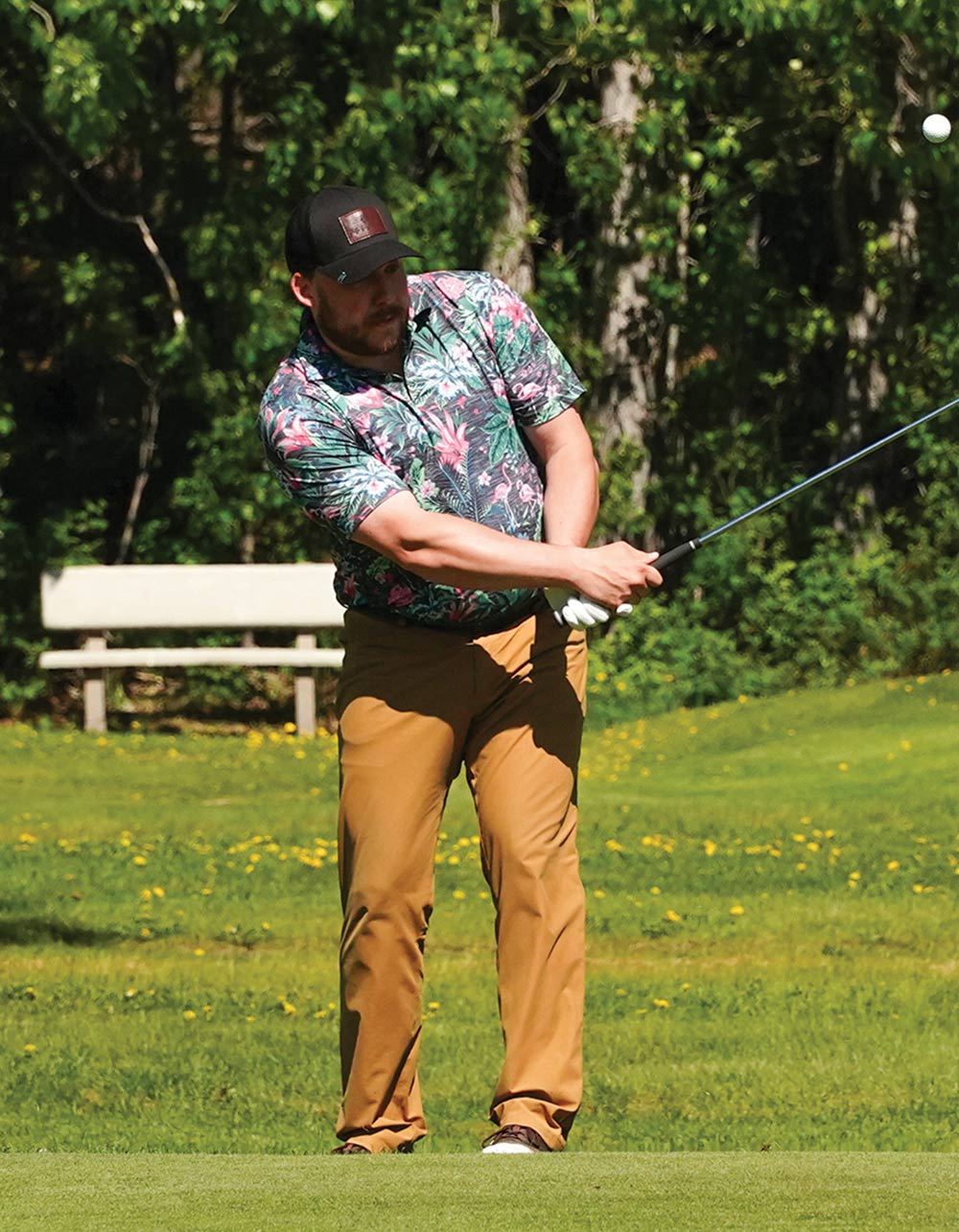
GC of Alaska members took over Moose Run Golf Course June 12 with a full day of team competition. Fifty-four teams strode the course across the morning and afternoon flights under sunny skies. The top five teams, along with Closest to the Pin and Longest Drive winners (men’s and women’s divisions), were honored during the CLC Grill & Chill celebration June 25.






Hole #4
Hole #18
Hole #10
Hole #12
Afognak Commercial Leasing
Alasconnect
Alaska Business Publishing Company
Alaska District Council of Laborers
Alaska Industrial Hardware, Inc. (AIH)
Alaska National Insurance Company
Alaska Railroad Corporation (ARRC)
Alcan Electrical & Engineering, Inc.
All Pro Alaska
Anchorage Sand & Gravel Co., Inc.
Aurora Construction Supply, Inc.
Autodesk
Black Gold Express, Inc.
BrandSafway
ChemTrack Alaska, Inc.
Colaska, Inc.
Construction Machinery Industrial, LLC (CMI)
Craig Taylor Equipment Co.
Davis Constructors & Engineers, Inc.
Denali Industrial Supply, Inc.
Equipment Source, Inc.
Excel Construction, Inc.
First National Bank Alaska
GMG General, Inc.
GPS Alaska, Inc.
Gameday Men’s Health Anchorage
Granite Construction Company
Holmes Weddle & Barcott, P.C.
IMA Financial Group
Knik Construction Co., Inc.
KLEBS Mechanical, Inc.
Lynden
Manson/Michels Joint Venture
Marsh McLennan Agency
Mass Excavation
Meridian Management, Inc.
MTA
NANA Construction, LLC
N C Machinery Co.
North Star Equipment Services
Northrim Bank
Petro Marine Services
Quality Asphalt Paving (QAP)/Aggpro
Rain for Rent
Roger Hickel Contracting
STG, Inc.
STG Pacific, LLC
Sandpiper Telecom LLC
Shoreside Petroleum, Inc.
Sourdough Express, Inc.
Specialized Transport & Rigging, Inc.
Spenard Builders Supply
Summit Windows & Doors, Inc.
Swalling General Contractors LLC
TOTE Maritime Alaska, Inc.
Turnagain Marine Construction
UNIT COMPANY


laskans are accustomed to rolling up to local shops and buying the heating devices they need. Among the most popular are Toyo stoves, Rinnai gas furnaces, and maximum efficiency water heaters. But getting those units into retail stores that can’t afford to maintain large inventories of products requires an in-state supplier, one that can keep stores in communities both large and small stocked and able to meet local needs.
That’s what Rural Energy Enterprises does.
“We’re basically a wholesaler of high-efficient heating products in Alaska, Pacific Northwest, and western Canada,” says CEO Jason Evans.
“We import products from around the world, whether it’s Japan, Sweden, South America, or North America,” he explains, mapping the important niche Rural Energy fills. “We warehouse them here in Anchorage. We also have a warehouse in Canada and a warehouse in the Seattle, Washington area.”
Evans says Rural Energy works hard to always be dependable for small retailers. “We have to plan a year to 18 months out what our inventory levels need to be to make sure that when, for instance, [Fairbanks-based] Woodway wants ten Toyo stoves, we load them up the next day and ship them up to them.”
And if those dealers are in the Anchorage area, “They just come to our warehouse and pick it up.”
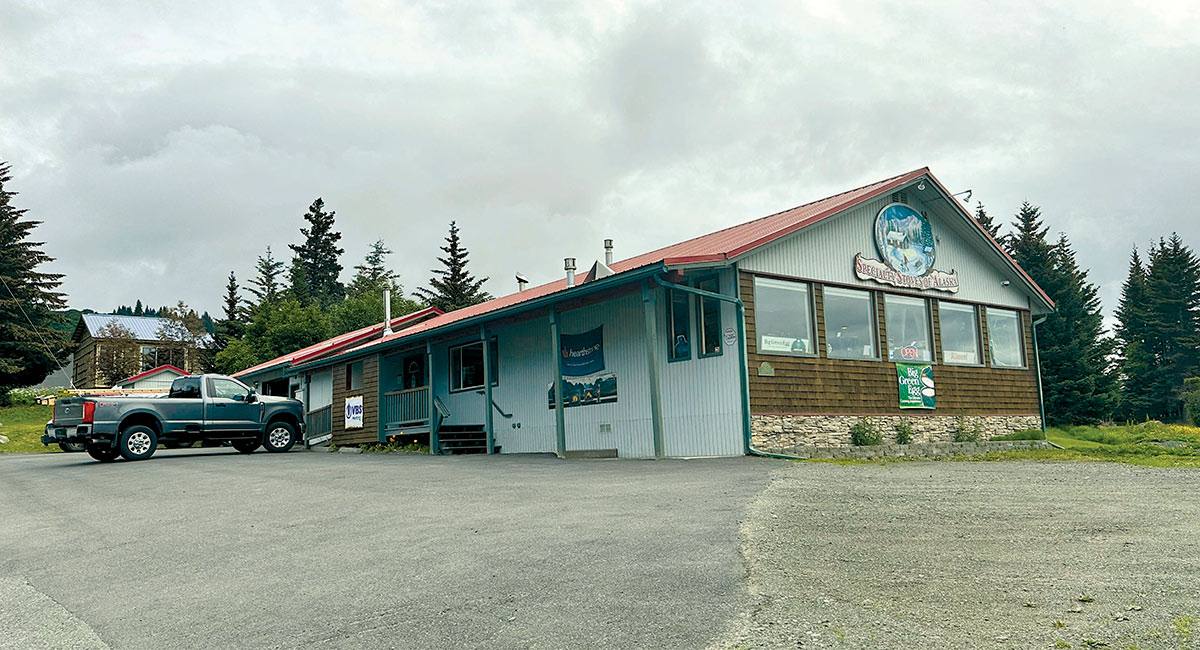
Rural Energy now works with about 200 dealers across those states and territories. The company also owns the retail outlet VBS Heating in Homer, which sells boilers, hot water heaters, wood stoves, pellet stoves, and more.
Additionally, Rural Energy is the exclusive Toyo stove dealer in the region. Rural Energy was “looking at energy efficient products when they first started,” Evans says. Toyo stoves, he adds, were found to be “an efficient way to heat your home or to add supplemental heat to your home.”
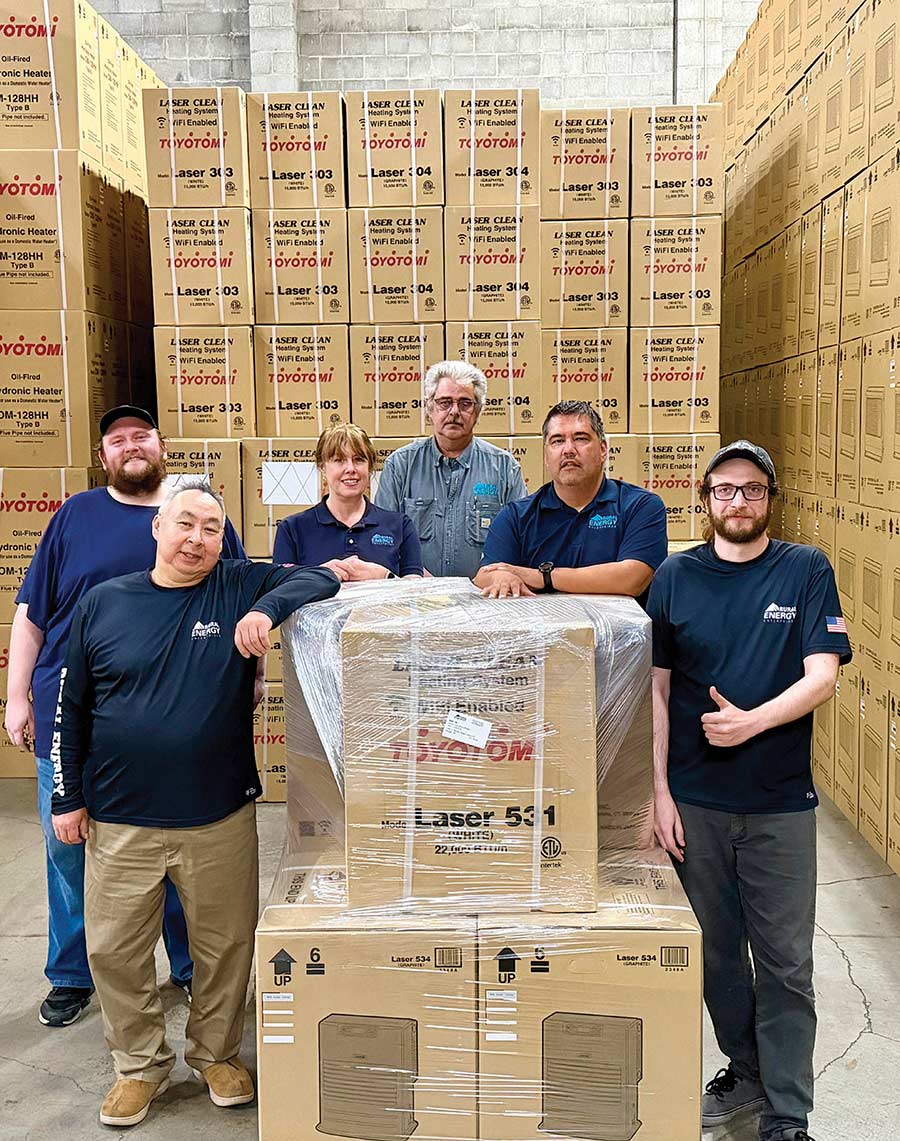
“I didn’t know anything about journalism until I bought them,” he says with a laugh. “I figured it out.”
Evans came on board as CEO for Rural Energy Enterprises in 2012 and has overseen its growth ever since. He says it can sometimes be a challenge to coordinate importing products from as far away as Sweden, Japan, and South America.
“It takes us about four to eight months to get a product once we order it, to get it into our warehouse,” he explains. “So, we warehouse millions of dollars of product to have available when Alaskans want to buy it on demand today.”

Rural Energy Enterprises, Evans says, will do whatever it takes to move critically needed heating products.
“We have dealers in all the hubs and a handful of villages,” he says. “We’re taking it from our warehouse and getting it into rural Alaska.”
Steve Smith, owner of Tundra Toyo in Nome, says Rural Energy’s multi-faceted approach is why he’s a loyal customer.
“I’ve worked with Rural Energy for many years and they’ve always been a dependable partner. They provide quality heating products, excellent support, and understand the unique needs of rural Alaska. Their team helps us serve customers across Nome and the surrounding region with confidence. I’m proud to be a Rural Energy dealer.”




Photo provided by Sturgeon Electric
Photo provided by Sturgeon Electric
tility costs are at the forefront of many discussions in Alaska; the state is attempting to increase efficiencies in the face of rising costs and dwindling natural gas supplies in Cook Inlet, which most Railbelt power producers rely on for electricity.
Utility projects aren’t just power lines and electrical systems. They also include building or repairing water supply mains, sanitary sewers, and stormwater management systems—essential projects that contribute to residents’ health and safety. Several such projects are currently underway across Alaska and will have a positive impact on communities big and small.
The Quartz Creek transmission line has been modernized through a series of individual construction contracts awarded over more than a decade. Each completed segment improves system reliability, while the full benefits of the projects will be realized as the remaining sections are completed. This project is part of Chugach Electric Association’s long-term investment in replacing aging transmission infrastructure and strengthening the reliability and resiliency of Southcentral Alaska’s electrical grid. While individual contract values vary, T-line construction in Alaska typically costs between $1.25 million and $1.5 million per mile, including engineering, materials, and construction.
“Most people never think about the transmission system until the lights go out,” says Sturgeon Electric Line General Foreman Josh Henrick. “Collectively, these transmission improvements represent one of the most significant long-term investments in Southcentral Alaska’s electrical infrastructure.”
The transmission line corridor crosses avalanche terrain, wetlands, anadromous fish streams, major transportation corridors, and lands managed by multiple federal, state, and local agencies. Within this single project, crews work adjacent to the Seward Highway and Alaska Railroad, access remote mountain slopes by helicopter, and build through environmentally sensitive habitats. Henrick says the project demonstrates that reliable infrastructure and environmental stewardship are not competing objectives. Through thoughtful planning and collaboration, critical utility improvements can be delivered while protecting Alaska’s natural resources for future generations.
Sturgeon Electric crews are also installing two miles of new highway lighting, five signalized intersections, fiber-optic interconnect systems, and two automatic traffic counter stations to support traffic monitoring for future transportation planning as part of Phase II of the Seward Meridian Parkway Road Improvements. The electrical improvements are part of a larger roadway extension designed to improve traffic flow, increase safety, and accommodate continued growth in the Matanuska-Susitna Borough.
Seward Meridian Parkway is a primary north-south connector near Wasilla and serves thousands of motorists every day, including families traveling to and from four schools along its eventual length.
“Transportation infrastructure affects many Alaskans every day, whether they’re commuting to work, taking children to school, or traveling between communities,” says Sturgeon Electric Superintendent Jeremy Lutz.
The $43.5 million project is federally funded through transportation improvement programs administered by the Alaska Department of Transportation and Public Facilities. As of publication, construction is currently underway and scheduled for completion by August 31, 2026.
The Chugiak facility treats water from Eklutna Lake and sends it via pipeline to Anchorage, supplying most of the city’s drinking water. It’s one of the municipality’s most critical pieces of public infrastructure. Modernizing its electrical infrastructure helps ensure the continued reliability of the systems that treat and deliver safe drinking water to homes, businesses, schools, hospitals, and public facilities throughout the municipality.
While the project appears simple on paper, Sturgeon Electric Project Manager Chris Stafford says these systems serve as the electrical backbone of Anchorage’s primary water treatment facility. Each phase of construction must be carefully sequenced to replace critical equipment while maintaining continuous operation of the treatment process. Electrical systems are isolated, replaced, tested, and commissioned individually before the next phase begins, ensuring uninterrupted treatment operations throughout the project.
“Many infrastructure projects are highly visible,” says Stafford. “This one is different. Success is measured by what doesn’t happen: no interruption to water service, no disruption to treatment operations, and no impact to the community while critical infrastructure is upgraded behind the scenes.”
The $5 million project is funded by the Municipality of Anchorage through Anchorage Water and Wastewater Utility’s ongoing capital improvement program to modernize and maintain critical public infrastructure.

Photo provided by STG, Inc.

Photo provided by STG, Inc.

Photo provided by STG, Inc.
This project will provide a lasting bulk fuel system for the community’s only power plant. It will also provide diesel and heating oil for community residents to heat their homes and run the equipment that keeps the roads and airport operational, as well as gasoline to power the boats, ATVs, snowmachines, and other equipment that allow residents to subsist and transport themselves. The new infrastructure will also be a significant environmental protection upgrade from the current, aged-out system.
STG Program Manager Collin Pennington says constant interaction with community members is critical to minimizing day-to-day disruption to residents during such a project. STG hired community members to help keep residents informed about the work they’re doing, as well as with construction.
“STG is also working closely with the group from the other [water and wastewater upgrade] project to share both resources and the limited space within the community,” says Pennington. “We have organized joint site visits, shared lay-down space, shared equipment, and continued to coordinate schedules and give project updates. Both projects are important to the village, so ensuring their success is the goal above all else.”
This $15 million project is funded by the Denali Commission. Design began in February 2026. Construction began in early June 2026 and is anticipated to be completed in July 2027.
The Deltanet Phase 3 Upgrades managed by STG crews affect several villages in the Yukon Region. The removal and replacement of radios and antennas to increase bandwidth will ultimately bring higher-speed data to Tununak, Mekoryuk, Toksook Bay, Marshall, Pilot Station, Nunam Iqua, Chevak, Hooper Bay, Nightmute, Akiak, Akiachak, Scammon Bay, St. Mary’s, Mountain Village, Twin Hills, Togiak, Bethel, Kwethluk, Napaskiak, Napakiak, Platinum, and Goodnews Bay.
“This benefits the local population with better internet speeds,” explains STG Program Manager Jay Ubben. “It also gives the clinics and schools more capability for higher-speed virtual calls, allowing for better education and better healthcare for residents.”
Working in multiple locations requires a different approach to logistics. Ubben says STG has been working in these locations for more than thirty years and knows roughly when an area is likely to see better weather. They created camps at a couple of sites to prevent delays and also planned at least a week in advance to ensure resources were available. This allowed them to pivot between sites rather than stop and delay the whole project. STG partnered with helicopter companies to receive priority scheduling.
This project is privately funded and serves as a precursor to another project to upgrade cell service to higher bandwidth, which is required to improve service.
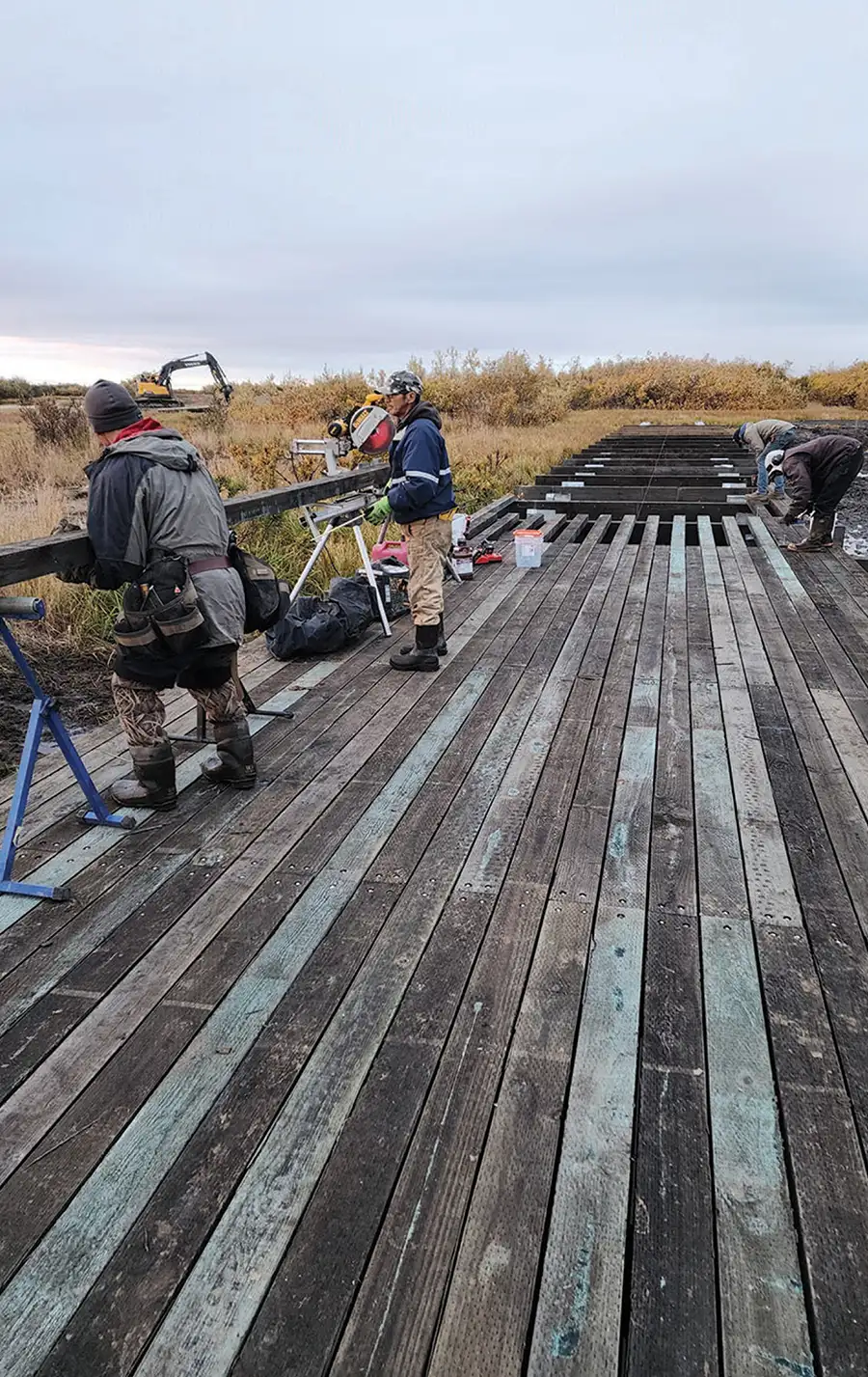
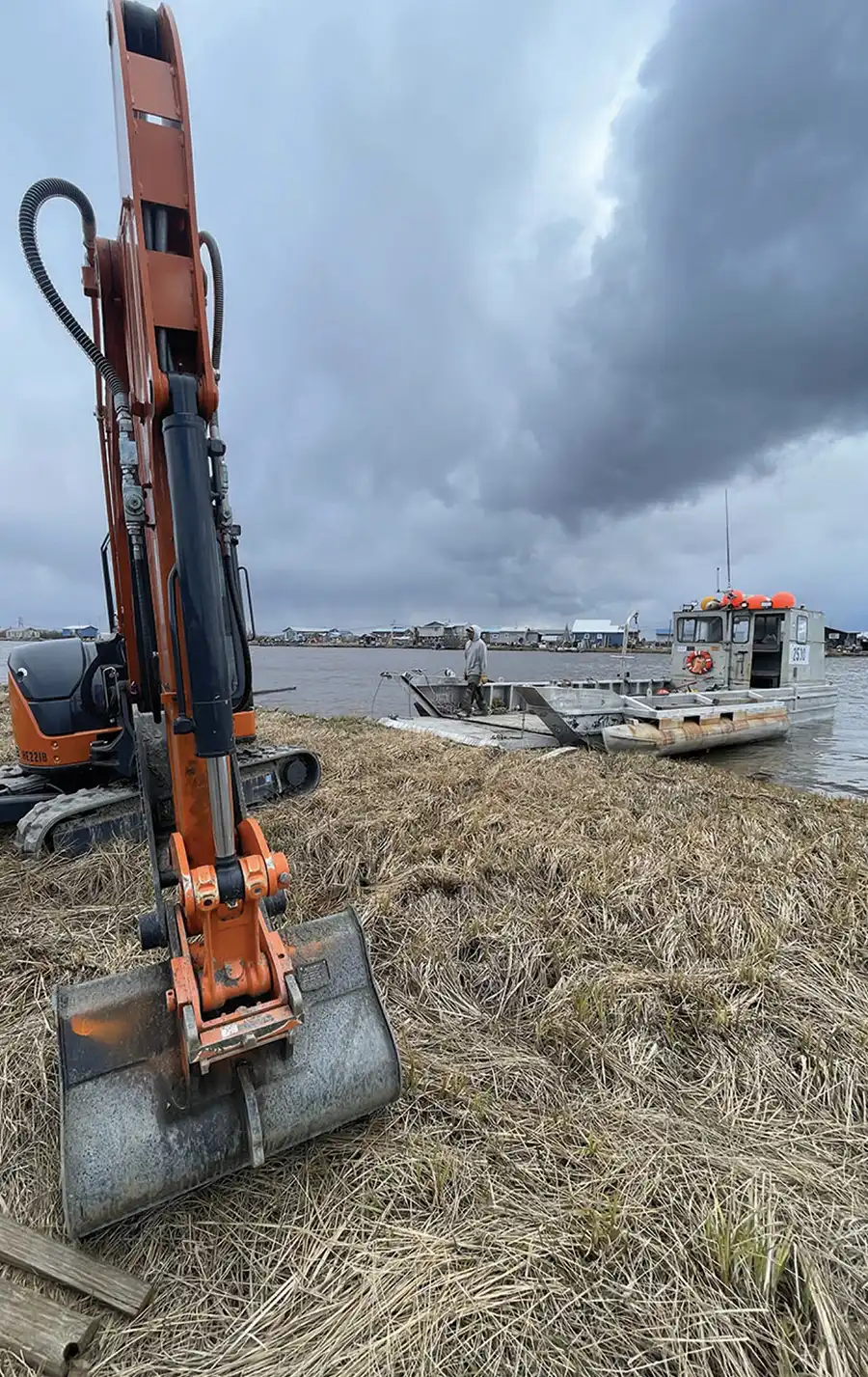
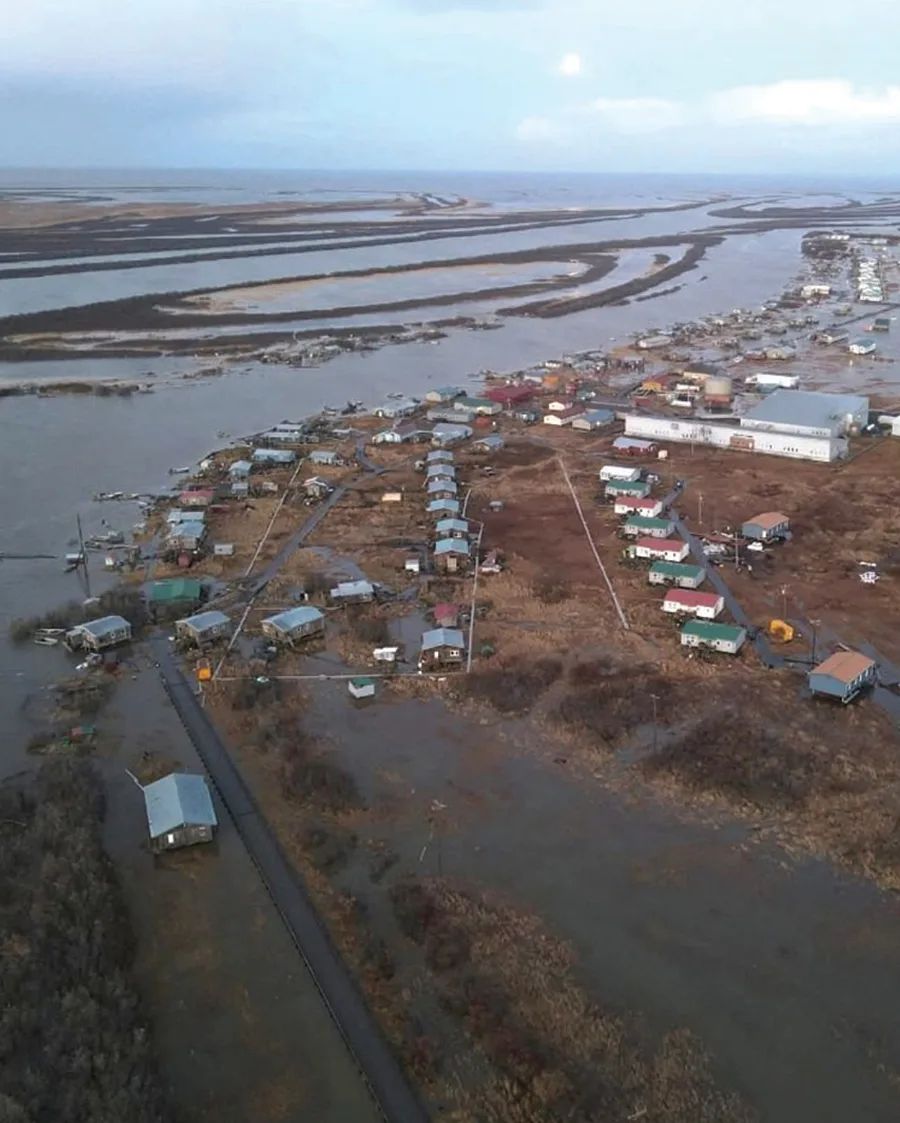
Other STG projects are focused on helping Western Alaska communities recover from the disastrous effects of Typhoon Halong in October 2025. In Kongiganak, Kipnuk, and Kwigillingok, crews continue to rebuild boardwalks and critical infrastructure. STG started reconstruction during the first wave of recovery efforts and wrapped up in July.
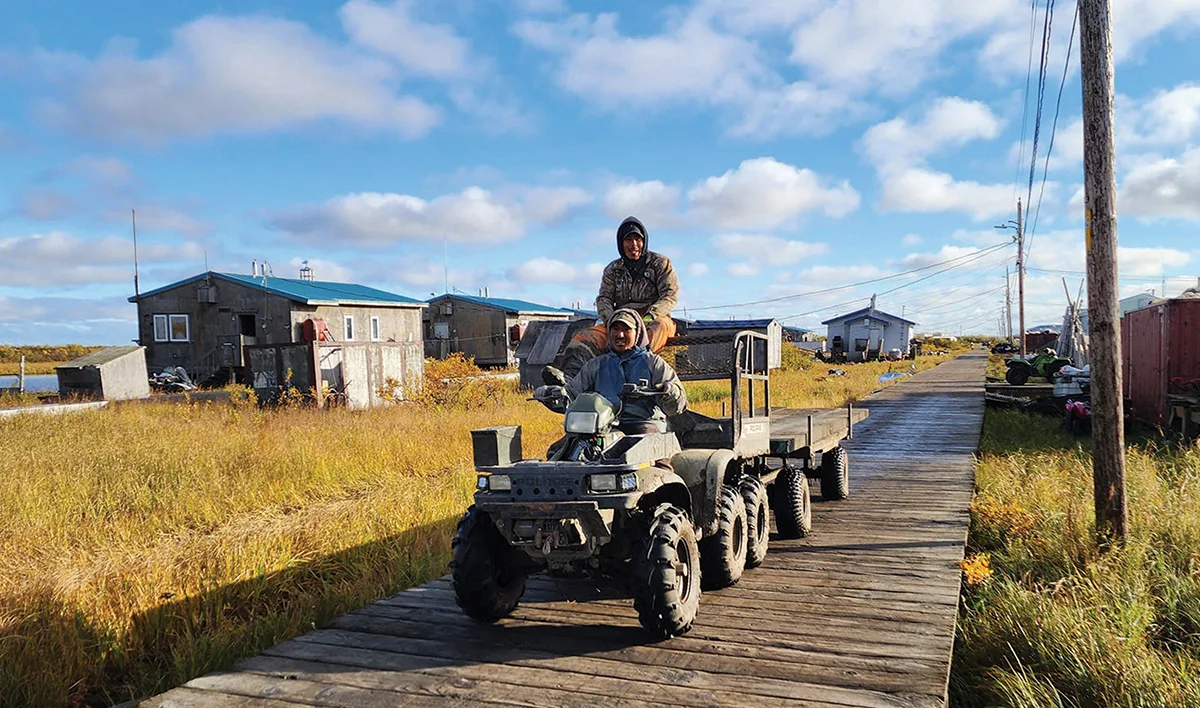
STG Program Manager Alex Lutton says boardwalks are the only means of transportation within the communities in spring and summer. In Kongiganak, STG was also tasked with building a boardwalk and path to the village’s raw water location. The community had been relying on shipped water, so establishing a path to locally available water was a priority. Crews worked seven days a week, twelve hours a day or more, living in locations without running water until the paths were built.
“Logistics teams in Bethel worked around the clock to load and coordinate charter flights to move people and supplies in and out of villages,” says Lutton.
“Some of these homes have five children and two generations of parents, and they don’t have running water or sewer,” says Branson. “By connecting water and sewer to these homes, they can have water at home with a turn of a valve. It seems very simple when you live on the highway system. But when you’re somewhere where nobody has that ability, it’s new for remote residents.”
The $1.5 million project is managed by the Alaska Native Trial Health Consortium and is expected to be completed by September.
Branson says Frostline Drilling and Construction has several other utility projects currently in the works, including a $196,660 residential water service line and sewage holding tank installation project in Galena; a $183,390 residential well and septic system installation in Glenallen; and a $431,400 residential water and sewer service line installation project in Kotzebue.



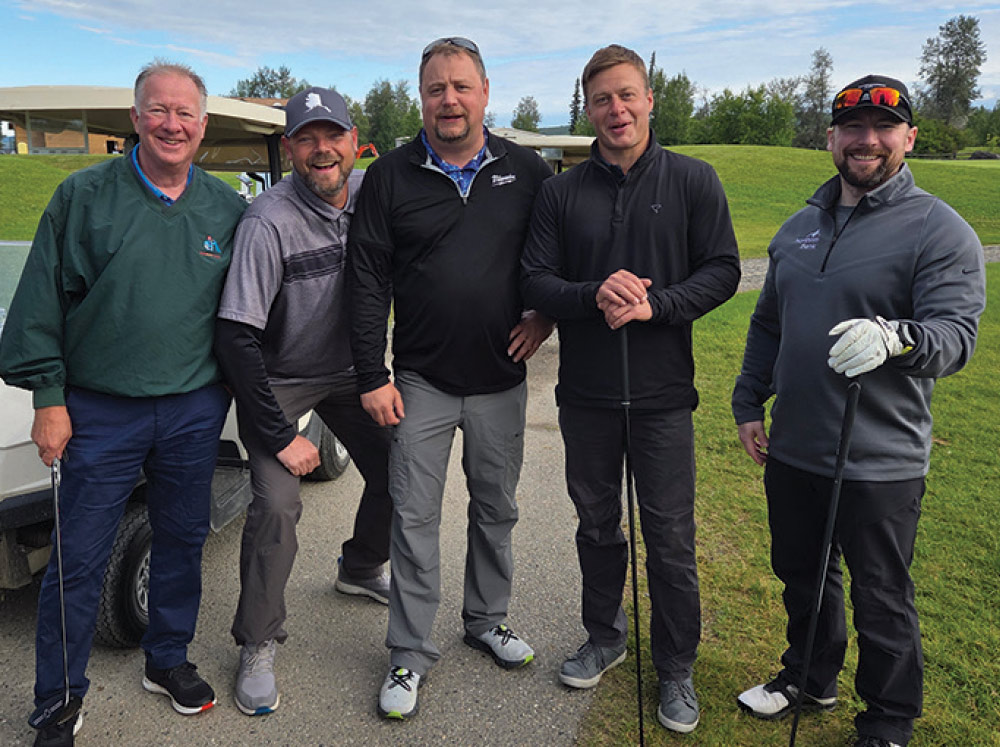
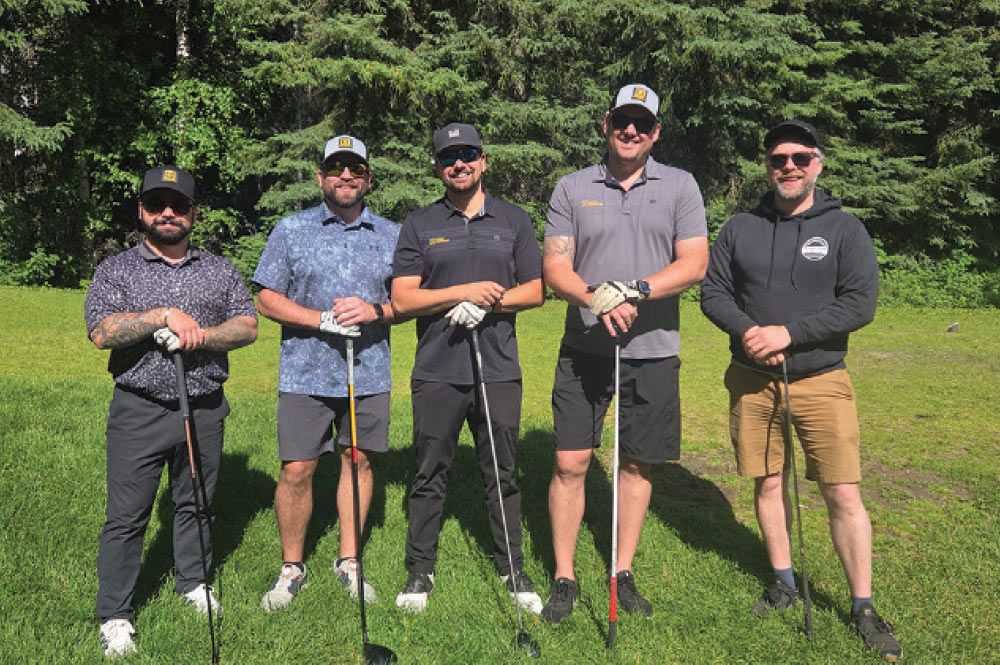
he roster was completely full for a beautiful day at Chena Bend Golf Course July 17. More than 180 golfers on thirty-six teams roamed the greens at the 47th Annual Golf Tournament in Fairbanks. The golf tournament capped a roster of AGC of Alaska events in Fairbanks, beginning with an insightful AGC Executive Board meeting July 16, followed by the Construction Leadership Committee’s annual Par-Tee, held at Latitude 65 Brewing Company.
AGC of Alaska would like to thank the more than twenty volunteers and more than thirty event sponsors who made the events a success.







Acrisure
Alasconnect
Alcan Electrical & Engineering, Inc.
Brice Pacific, LLC
Chevrolet GMC of Fairbanks
ConocoPhillips Alaska
Construction Machinery Industrial, LLC (CMI)
Denali Drilling, Inc.
Denali Industrial Supply
Equipment Source, Inc.
Exclusive Paving/University Redi-Mix
Fairbanks Materials, Inc.
Fullford Electric, Inc.
GHEMM Company, LLC
Hale & Associates, Inc.
Heritage General Contracting
IMA Financial Group, Inc.
Marsh McLennan Agency
Michael Baker International
Mountain Crane
MTA
N C Machinery Co.
North Star Equipment Services
Span Alaska Transportation
Spenard Builders Supply
STG Pacific, LLC
TOTE Maritime Alaska, Inc.



ig State Mechanical (BSM) is a relatively small plumbing and heating company, but its contributions to construction projects in Alaska are significant. In its ten years in operation, BSM has installed, repaired, and maintained systems in some of busiest establishments across the state. The company is dedicated to providing the best services by working with customers to determine the right plumbing solutions for every project.
Owner Ryan Sottosanti started BSM in 2016 after fifteen years working on commercial and industrial projects. He decided to start his own company when the amount of union work decreased. Right away, BSM was hired to complete a remodel of Everett’s Fine Dining and Bistro located within Mat-Su Resort. From there, BSM’s reputation for quality service spread throughout the industry, leading to more highly visible projects statewide.
“Once the name of a good plumber is out there, it spreads like wildfire,” says Sottosanti.
Sottosanti says BSM works with multiple contractors, which allows him to pick and choose projects and, ultimately, guide the company’s direction.
The list of commercial and residential services offered by BSM is long. Sottosanti says it takes experience to assess what a customer truly needs. Plumbing services aren’t cheap, but Sottosanti considers a comprehensive system that saves the client money on maintenance and energy costs over time to be a worthy investment.
“If we’re going to recommend something high level, we want to be able to back up that kind of expense,” says Sottosanti. “In the end, you always want to make sure the customer is happy.”

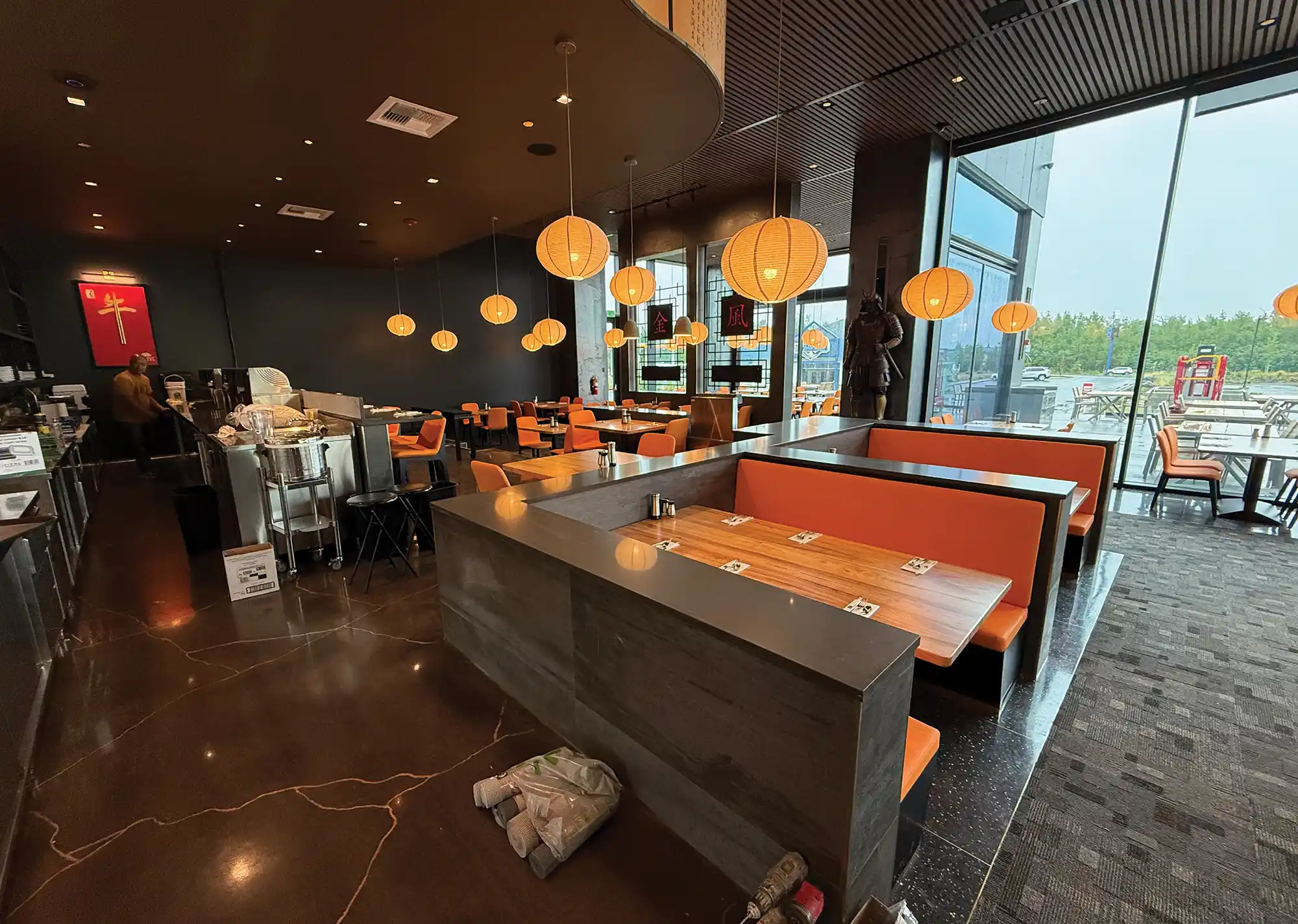
“That is a beautiful building,” Sottosanti says of the new $13 million restaurant, which took two and a half years to complete. “The mechanical side was just under $1 million. That’s a project we’re probably going to submit for an award.”
Currently, BSM is working directly with Mark Begich to renovate the 4th Avenue Marketplace in downtown Anchorage. Half of the big blue building will be torn down and replaced with a parking garage and fifteen high-end apartments on the upper floors; a new marketplace on the second floor; improved office spaces on the first floor; and upgrades in the basement area.
Sottosanti says projects like these allow BSM to showcase its ability to design plumbing and heating solutions for specific industries, such as restaurants and medical facilities. Prior to starting BSM, Sottosanti maintained the plumbing systems at Alaska Regional Hospital for six years and developed a deep understanding of the plumbing needs of specialized medical equipment. Likewise, after BSM completed its first restaurant project, the company had developed an extensive knowledge of kitchen equipment and the corresponding plumbing requirements.
Even with those areas of expertise, Sottosanti says his crew is ready to take on any challenge anywhere in Alaska.
“I like to keep them on their toes and keep them happy so they don’t get burned out,” says Sottosanti of his employees. “People reach out to us because we’ve got the experience to figure out solutions for the most unique jobs.”

“Big State Mechanical and Ryan Sottosanti can be a vital part of your construction team, working collaboratively to bring your project to a successful completion. You definitely want to consider Big State Mechanical for your project team,” says DuClos.
BSM has been an AGC member since 2020. Sottosanti says one of the best benefits of being a member is meeting other contractors in a casual environment. He says many AGC events offer an opportunity to build relationships and get to know people on a personal level, something that isn’t possible with a cold call.
“General contractors are constantly getting hammered by subcontractors trying to get their foot in the door,” says Sottosanti. “This allows them to let their guard down and open up a little bit more.”
As for the future, Sottosanti says he is not in a rush to become a larger company. He says BSM has developed a solid niche with an experienced crew, resulting in good profit margins. Rapid growth comes with increased stress of consistently finding work for a larger workforce. He adds that the construction industry seems to be in a holding pattern at this time.
“Everybody asks me if I want to get bigger,” says Sottosanti. “Eventually, when the industry warrants it. But right now, things seem slow, and I’m glad I don’t have a huge monster to feed every day.”


or years, families in Kotlik watched the edge of the Kotlik River creep nearer to their homes as the river chewed away at its bank. Houses that once sat a comfortable distance from the water were in some cases now teetering above it. Erosion undercut foundations with no sign of slowing.
By 2025, that slow-motion crisis had a solution. Drennon Construction & Consulting Inc., working under CRW Engineering Group, Inc.’s project management, relocated twenty houses from the eroding riverbank to a new subdivision built on the village’s former airport runway. Drennon crews slid them across the frozen Kotlik River on steel skids in the dead of winter without losing a single house to the water.
“With the community support and resources, what may seem impossible is possible,” says Eric Hohmann, construction administrator with CRW Engineering, which managed the project under a contract with the village.
CRW managed the project under an existing contract mechanism with the village, coordinating with residents to prioritize which houses faced the greatest risk. Not everyone wanted to move, Hohmann says. The new subdivision sits on higher ground, but it lacks the direct river access that has shaped life in Kotlik for generations. Some families chose to stay rather than relocate.
The original plan called for wood post-and-pad foundations for the relocated houses, along with a new boardwalk, already designed with helical piles, connecting the subdivision to the rest of the village after the previous boardwalk failed and became submerged. But Drennon proposed a change to the house foundations early on.
“We believed this would offer a far superior foundation lasting generations,” says Drennon Construction president Roy Drennon of the company’s pitch to switch the houses from wood foundations to steel helical piles.
Working with CRW’s structural engineers, Drennon used a custom 6-inch helical pile system for the houses, to go alongside the boardwalk’s lighter 3-inch helical piles already called for in the original design.


The process repeated itself for each of the twenty houses, Hohmann says. Families moved into temporary housing. Crews disconnected utilities, raised the house, removed the foundation, lowered the house onto a steel I-beam skid, and towed it across the ice road using an excavator and skid-steers. At the new subdivision crews set the house on its new piles, welded and cross-braced the foundation, built new stairs and decks, and reconnected power before moving the family back in. The whole process of moving each house took three to four days, Hohmann says, though larger houses took longer.
The sequence mattered just as much as the speed. Drennon had to move houses in the exact order they’d been prioritized because the ice road gave crews access to each new site from only one direction. Once a house was set in its spot, there was no way to get equipment back in to place another house behind it.
“We didn’t have options,” Drennon says of the sled approach. He added that his crews built a chain system to keep the process moving within the brief winter window when the river stayed frozen solid enough to bear the weight of the equipment and houses.
Power was also critical to the timeline. CRW facilitated contracts between the village and Alaska Village Electric Cooperative to install additional mainline overhead power to the subdivision before relocation began. Houses needed to be reconnected quickly in the middle of winter. As AVEC’s local crews worked alongside Drennon workers throughout the move, Hohmann says the AVEC employees discovered that some houses required minor electrical upgrades to meet code before reconnection.
“AVEC worked extremely well with us,” says Hohmann. “They have local utility people who live there, and they had to bring in additional crews to efficiently connect services as quickly as possible as each home was moved.”
Drennon demobilized at the end of June 2025, leaving local hire to finish the remaining punch-list work over the summer. AVEC signed off on electrical service for the last house by early September.
Every relocated house stayed dry, says Hohmann. A few had wind damage to their roofs—nothing tied to the move itself—but none flooded, and none moved on their new foundations. One house elsewhere in the village that hadn’t been part of the relocation was flipped over in the storm.
“It was extremely satisfying to know that every house we impacted could have been severely damaged, and it wasn’t,” Hohmann says.
Drennon says he sees the storm as proof his crew made the right call on foundations.
“We are thankful the decision was made to change to a raised helical pile foundation,” he says. “Elevating the homes proved beneficial in adding elevation and strength to the foundations. We are not aware of any issue from the new relocations we provided.”

Separately, the Alaska Native Tribal Health Consortium is designing a water and sewer extension to the new subdivision, with construction possibly going out to bid in 2027, says Hohmann. Just seven of the twenty relocated houses had public water and sewer before the move. They gave that up for a safer place to live.
Hohmann has spent nearly three decades working in Alaska construction and engineering. This project sticks with him for what it proved: given the right funding, the right engineering, and a community willing to buy in, even the most impossible-looking puzzle can get solved, one house at a time.
“I think, as a community, they were able to really step up and come together,” Hohmann says.



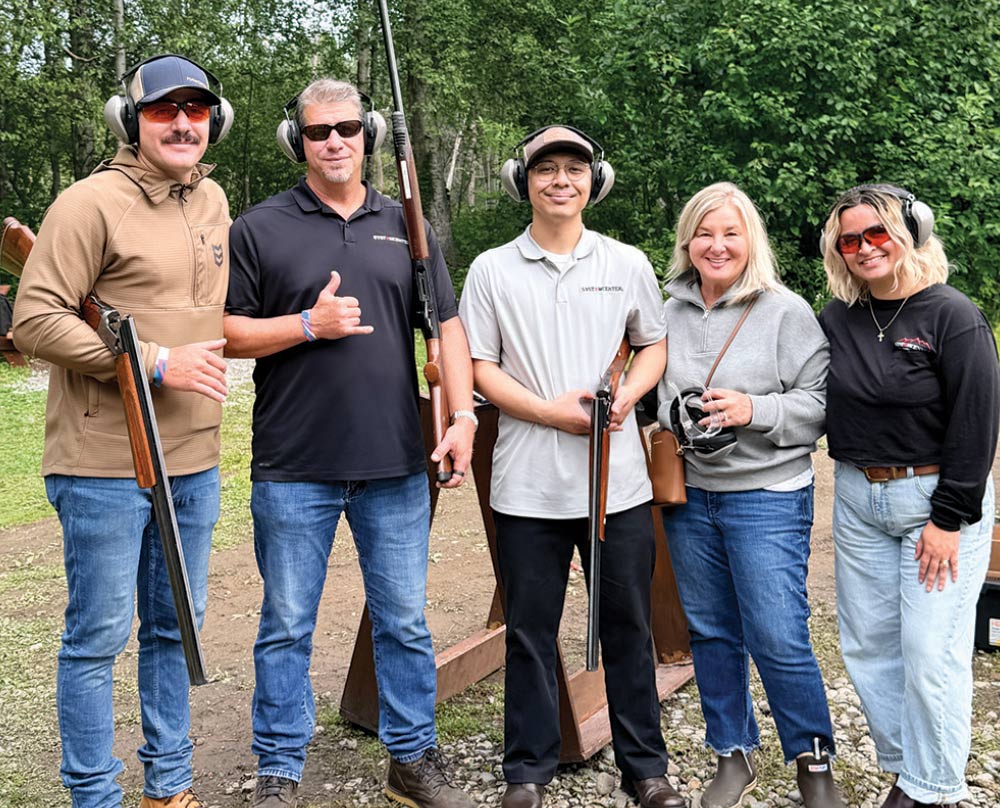
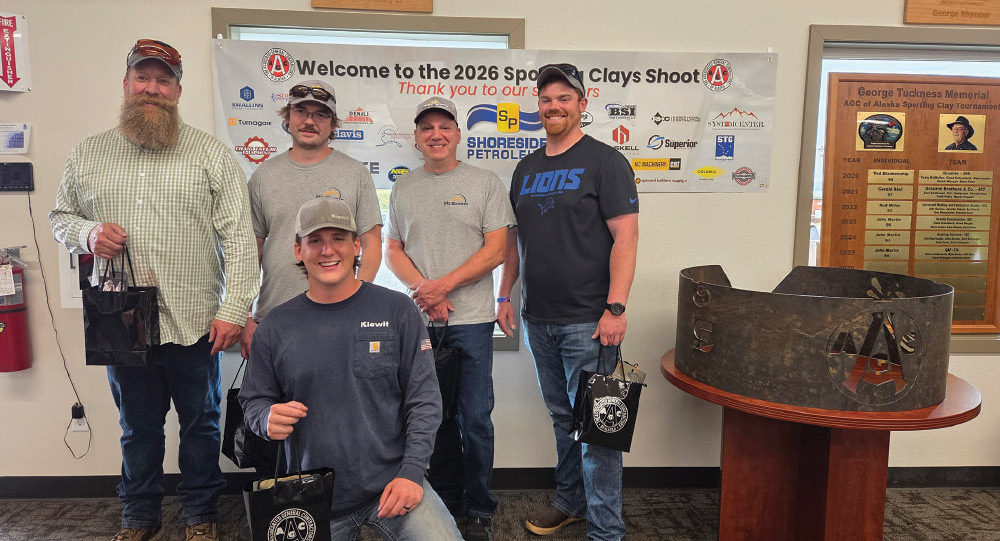
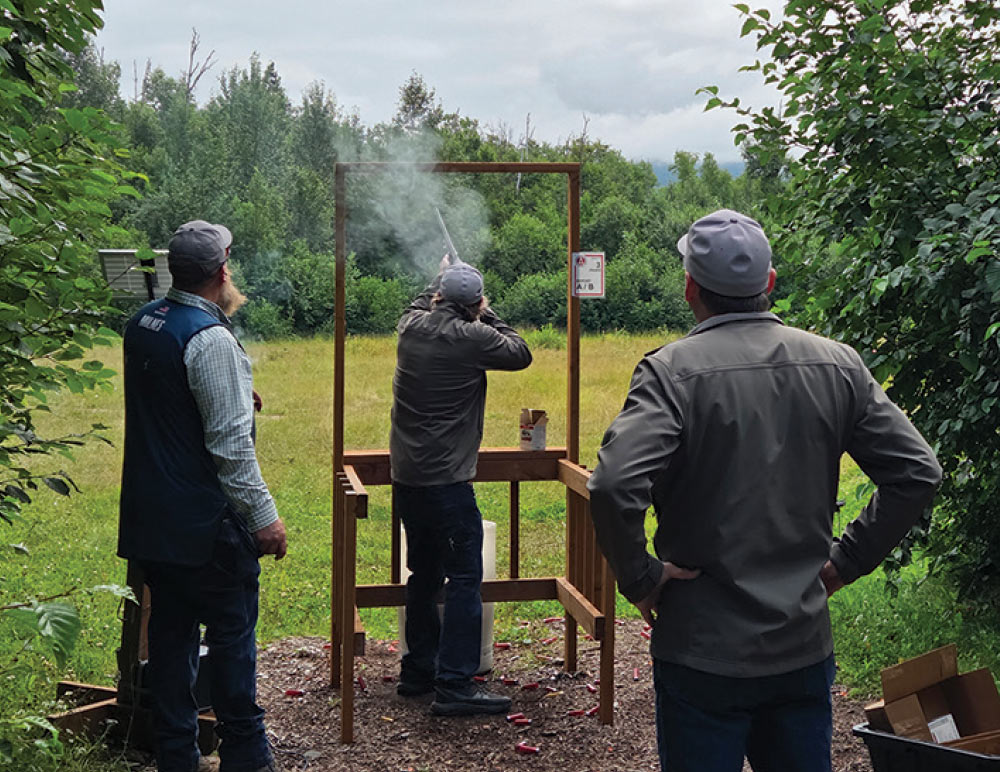
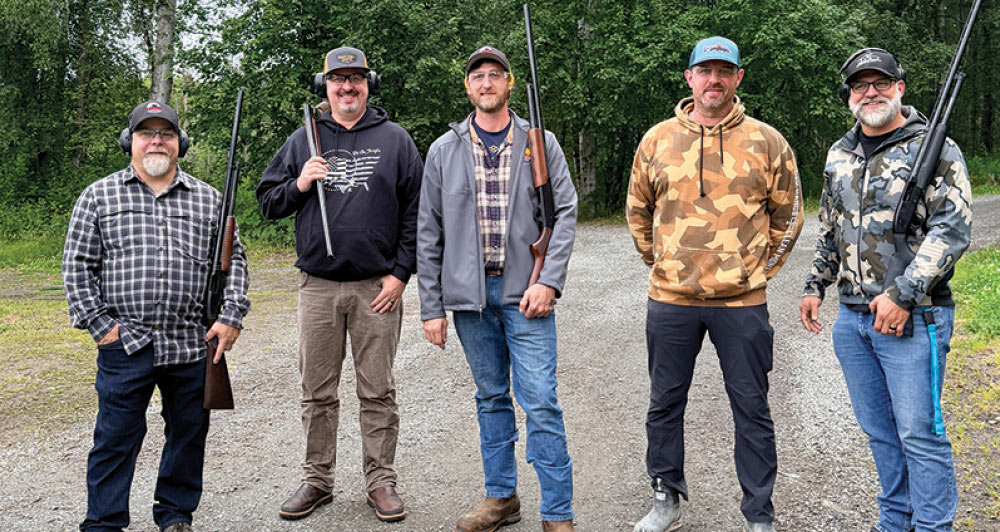
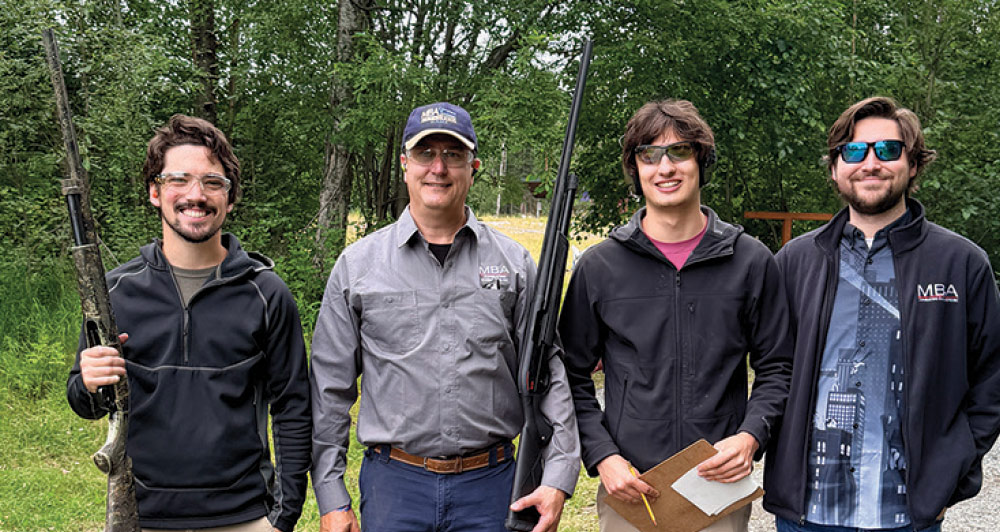
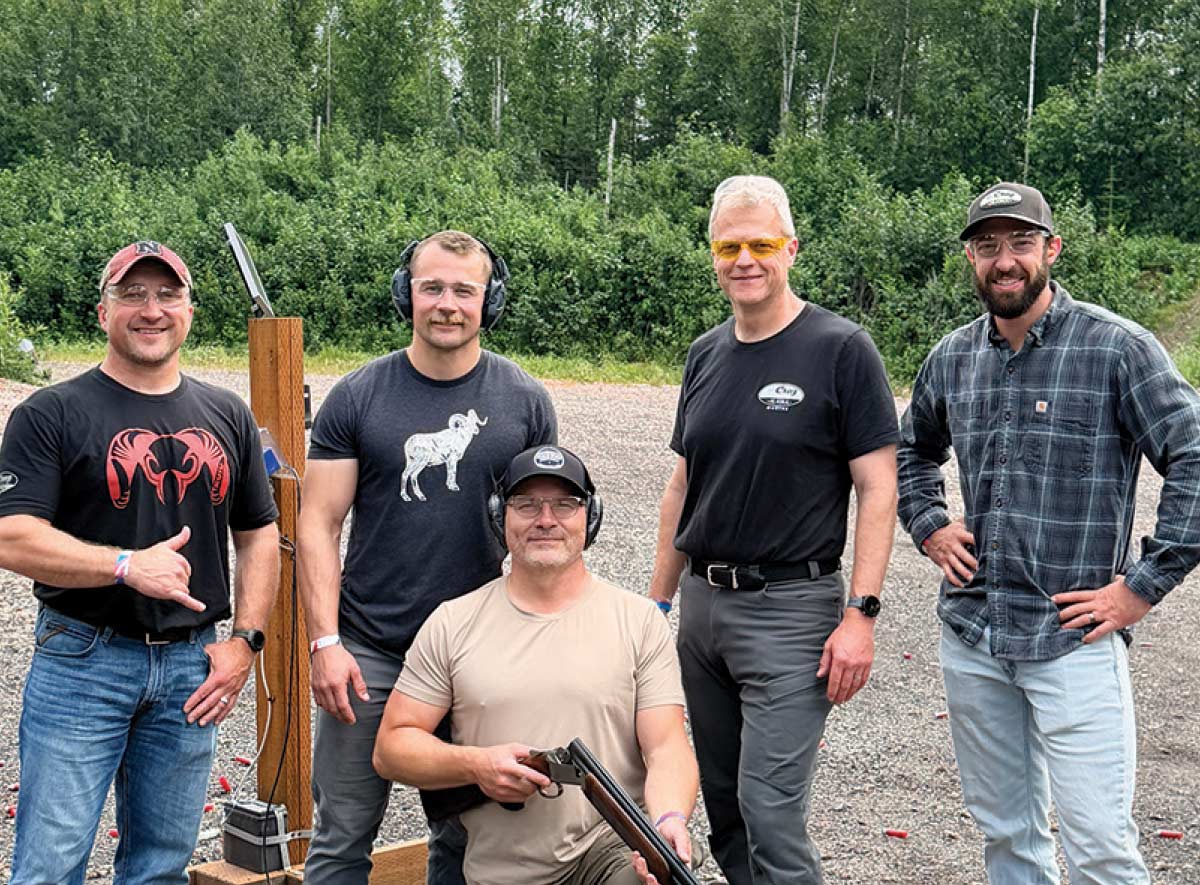
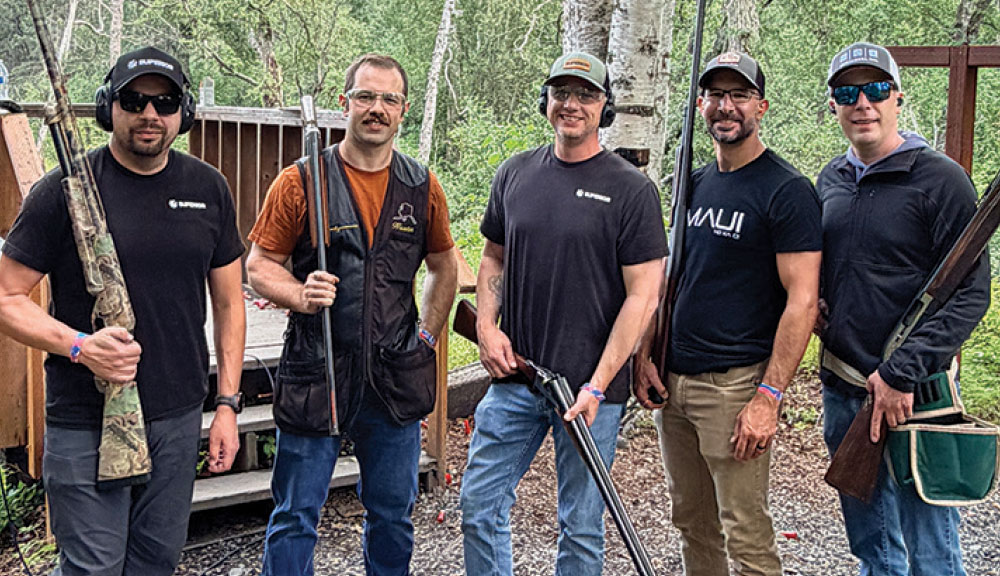
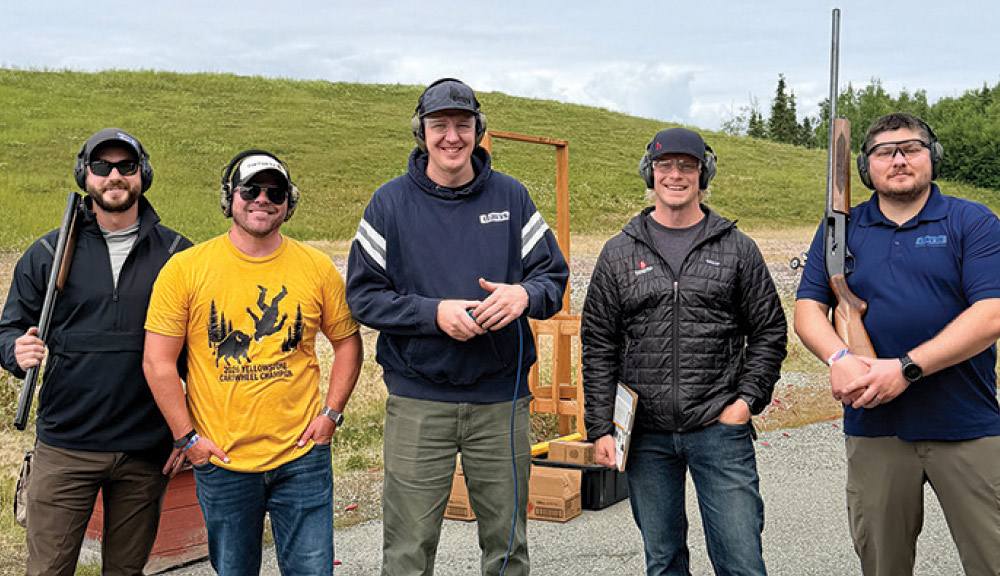
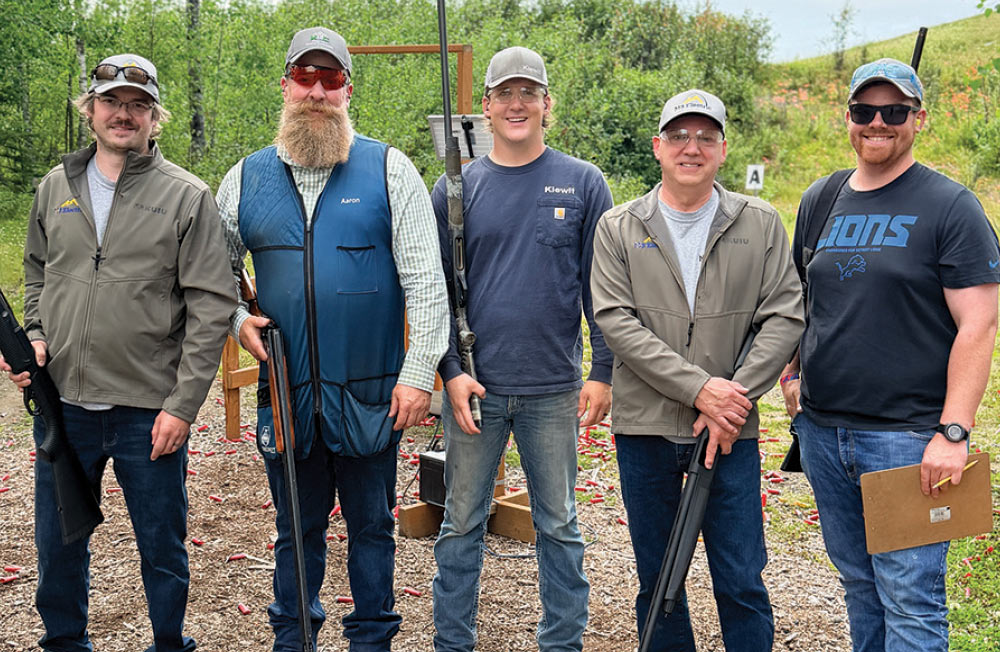
ompetition was hot, even if the temps were cool at the 2026 AGC Sporting Clays Shoot at Birchwood Recreation & Shooting Park on August 7.
Of the twenty-eight teams competing, Turnagain took home the first-place prize with 410 points, followed by KC Corporation with 405 and Spenard Builders Supply with 403. It was a three-way tie for top shooter, with John Carlson, John Martin, and Aaron Milnes each finishing with 97 points. After a scorecard countback, John Carlson claimed the title as 2026 Top Shooter.
Congratulations to all participating teams, and a special thank you to the AGC Clay Shoot Committee and sponsors who helped make the tournament a success. AGC would like to thank the major event sponsor, Shoreside Petroleum, along with food sponsors Granite Construction and Craig Taylor Equipment, prize sponsors Fullford Electric and SystemCenter Alaska, and ammo sponsor John Carlson of SteelFab.














or a young person trying to enter the workforce, getting a job involves much more than filling out an application. Obtaining a driver’s license, reliable transportation, stable housing, work clothes, a bank account, and mentorship can all be challenges to teens or young adults entering the workforce. For Alaskans experiencing homelessness or housing instability, the path to employment can be even more difficult.
Work Ready Alaska, a partnership between Covenant House Alaska, the Alaska Department of Transportation and Public Facilities (DOT&PF), and AGC of Alaska, is designed to address those challenges, connecting young people with careers in transportation, construction, and skilled labor.
AGC of Alaska was asked to partner with Covenant House Alaska and DOT&PF in recognition of AGC’s statewide initiatives to address Alaska’s workforce shortage and increase awareness of career opportunities in construction, transportation, and the skilled trades. AGC is helping amplify Work Ready Alaska by housing the program within its We Build Alaska website and leveraging its statewide membership network to connect young Alaskans with employers, training opportunities, and career pathways. Through this partnership, AGC is helping bring industry, workforce development, and young people together to strengthen Alaska’s workforce and create lasting career opportunities.
The Work Ready Alaska program launched in March with a focus on Alaskans between the ages of 16 and 24 who are experiencing housing instability or facing barriers to education and employment. Rather than focusing only on job placement, the program combines workforce preparation with support services intended to help participants remain employed and build long-term stability.
The partnership was a natural fit, says Covenant House CEO Alison Kear.
Covenant House has been serving young people experiencing housing instability and barriers to education and employment for more than thirty years. DOT&PF, meanwhile, was looking for ways to develop a stronger pipeline for Alaska’s transportation workforce.
“We saw a significant gap between young people’s potential and their ability to access training opportunities that lead to meaningful employment in good paying, high-demand occupations,” Kear says.
The teens and young adults were often ready and willing to work.
“Many of the young people we serve are unemployed and disconnected from education or the workforce, but the biggest barrier isn’t a lack of motivation,” Kear says. “It’s a lack of stable housing, transportation, life skills, and trusted adults to help them navigate the path to employment.”
Those barriers can include practical needs that many other job seekers may take for granted. Some young people are also navigating trauma, behavioral health challenges, or a lack of family support. Before a young person can succeed in a workplace, Kear says, those foundational needs often have to be addressed.
“That’s why Work Ready Alaska starts with supporting the whole person—not just placement in a job,” she says.
Schrage serves on AGC’s Workforce Development Committee. She and her husband own Signature Land Services, an Anchorage-based paving, concrete, landscaping, and snow-removal company. She has participated in AGC’s legislative affairs efforts, where she has heard repeated conversations about Alaska’s workforce needs. Workforce development is a top legislative priority for AGC.
“There has been a gap in skilled labor, a skilled workforce,” Schrage said.
She says the construction industry is facing a labor gap at the same time that Alaska is struggling to move infrastructure projects forward. Schrage says her own frustrations with trying to fill her company’s labor needs led her to look for ways to improve workforce development in Alaska.
“It became more important to become a part of the solution than it was to complain about the problem,” Schrage says.
Since Schrage is also an avid supporter of Covenant House, she saw an opportunity to bring together organizations approaching different parts of the same problem. The goal, she says, is to create stronger connections between schools, workforce programs, trade organizations, employers, and young people.
“We’ve got lots of great opportunities in Alaska,” Schrage says. “But we do really need to coordinate.”


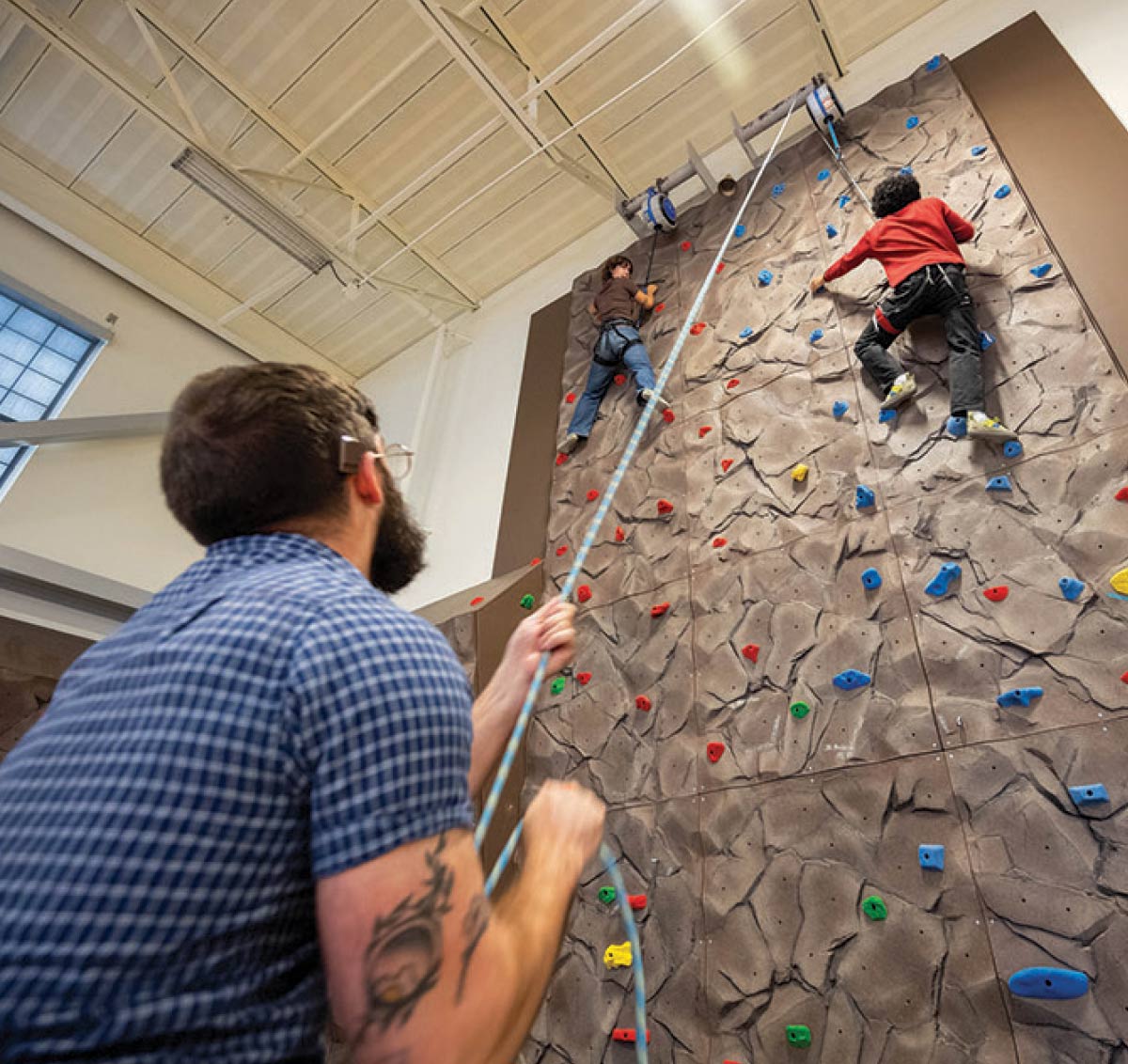
Participants can receive career guidance, industry-recognized training and certifications, transportation assistance, case management, behavioral health services, and housing support.
The program also connects participants to vocational training providers, postsecondary institutions, school districts, apprenticeship intermediaries, trade associations, youth-serving organizations, and employers.
Kear says the goal is to create a path that begins with career exploration and continues through training, credentials, and employment.
“We recognized during the planning phase of Work Ready Alaska that no single organization can prepare young people for long-term career success alone,” she says.
The program is designed to reach young people outside of those already receiving services from Covenant House. The statewide approach includes virtual programming and partnerships outside Anchorage, making sure geography does not become another barrier to opportunity.
During its first eight months, Covenant House reports that more than 200 young people completed an eligibility form, more than 400 were connected through outreach efforts, more than 140 entered the active pipeline, and more than 100 formally enrolled. The response has exceeded expectations.
“The demand continues to outpace capacity, which tells us there is a real need for this type of workforce development model in Alaska,” Kear says.
Kear sees participation as about more than completing a certification or securing a first job. It’s also about building confidence.
“One of the biggest changes we see is that young people begin to believe in themselves again,” she says.
She says one participant told the organization, “I’ve never had this amount of help in getting a job.” Another said, “For me, it is not being helpless—that is the precious thing.”
Those experiences are part of what Kear says the program is intended to accomplish: helping young people transition into adulthood with greater independence and self-determination.
The employment component is important, but so is helping participants develop the skills and confidence needed to remain employed over the long term.
“We’ve got to make sure that they’re well-skilled, well-trained, and inspired, and willing to stay in Alaska,” Schrage says.
Schrage says she sees Work Ready Alaska as part of a larger workforce development effort to connect those components together. For Covenant House, the same coordination is what makes the program different from a traditional workforce initiative. The goal is not simply to help a young person find a job, but to help remove barriers that can keep young people from keeping a job, and creating pathways toward a career in an industry that needs workers.
“We all need to do better by our children and our young people,” Schrage says.




Instructional Trainer
raditionally, incidents provide the most opportunities for learning. We investigate them, identify causes, implement corrective actions, and establish new requirements intended to prevent recurrence. But investigating an incident means harm has already occurred. Someone has been injured. Equipment has been damaged. A release has already happened. A community has been impacted. We are learning, but learning at a cost.
When we look back at incident investigations, we should ask an uncomfortable question: Did we truly address the conditions that led to the event, or did we arrive at a “safe conclusion,” one that was easy to administer, allowed us to say we took action, and enabled us to move on? Did we take the necessary time to truly address the many factors that led up to the event?
The challenge is that incidents are rarely created by a single decision, a single person, or a single failure. They emerge from conditions that often existed long before the event itself.
So, we look to near misses. We encourage people to report them. We have created systems to capture them, established targets, metrics, and key performance indicators. We wanted visibility into the events that could have resulted in harm but didn’t—these measurement tools indicated progress.
A near miss is fundamentally different from a hazard. A hazard is a condition with the potential to cause harm; a near miss is an undesired event—something actually happened. Energy interacted and was released. A control failed. Maybe a shortcut was taken. A person found themselves one step away from an injury, a release, or a serious consequence. The outcome may not have resulted in an incident, but the exposure was real. This distinction matters because near misses often require something difficult from the people involved: it requires honesty.
Maybe someone chose a shortcut. Maybe the person performed a task the same way everyone else has been performing it, even though everyone on the team knew it wasn’t the preferred method. Maybe production pressure influenced a decision. Maybe they simply made a mistake.
Owning up to those realities takes courage. It takes even more courage when people are unsure how the organization will respond. Will they be blamed? Will they be judged? Will they create trouble for themselves or someone else? Does the organization genuinely want to learn?
At the same time, there are hazards all around a typical job site that do not get reported, many lending themselves to regular, recurring near misses that employees are not aware of because they have become accustomed to them. For example, a leaking fitting, a damaged guard, an awkward access point, or a procedure that doesn’t quite match the reality of the work.
Over time, these conditions can become so familiar that everyone stops seeing them altogether. They become “just the way we do things.” That normalization of risk is one of the greatest challenges any organization faces. Which brings me to an important question: When someone says they want more near-miss reporting, do they actually hear about near misses or do they hear about hazards?
The answer is often both—and when numbers matter, near misses can drop off altogether, with only hazards being reported. This should raise an alert. Workplaces should absolutely want to hear about hazards. Recognizing and addressing hazards before an event occurs is one of the most powerful things managers can do. It is proactive and it’s where prevention begins. But company leaders need to ensure they hear about near misses and that they are reported.
Safety culture is not built by policies or posters. It is not built by reporting systems or dashboards. It is built every day through the questions leaders ask and the reactions they demonstrate.
When someone raises a concern, does leadership become curious or defensive? When a near miss is reported, is the first question, “Who made the mistake?” or is it, “What can we learn?” When a worker stops a job, are they thanked for protecting the team or challenged for impacting productivity? Workers pay close attention to those moments. They quickly learn whether speaking up is truly valued or merely encouraged in principle.
If leaders want a culture where people unreservedly report hazards, share near misses, challenge assumptions, and ask questions, then leaders must create an environment where curiosity is rewarded, vulnerability is accepted, and learning is valued more than blame. Because safety is not the absence of accidents—an organization can go years without an injury and still accumulate risk beneath the surface. Safety is the presence of learning.
It is the willingness and capability to recognize weak signals, discuss uncomfortable truths, challenge long-standing assumptions, and continuously improve how work is performed.
Most importantly, safety is a shared responsibility. No individual can compensate for a culture that accepts shortcuts, ignores warning signs, or discourages questions. The safest organizations are not ones that have eliminated human error but have created an environment where people are comfortable talking about it.
So perhaps the real measure of safety is not how many incidents a company has had, how many near misses have been reported, or how many hazards employees identified. Perhaps the real measure is this: When someone sees something that doesn’t feel right, do they speak up—and when they do, what happens next?
Every incident leaves us with lessons. Every near miss gives a warning. Every hazard gives an opportunity.
The organizations that become truly safe are the ones that learn before they have to, listen before they are forced to, and act while they still have the chance.



f the project is a human body, the project manager is the mind,” says Matt Gutacker, managing principal of Alaska Remote Imaging (ARI), offering an analogy for what his company provides. “In order for the mind to be healthy, it has to be receiving and disseminating information to all other parts of the body.”
Gathering that information is what Anchorage-based ARI does with cutting edge technologies that allow the company to collect vital information about job sites—information that could take days or even weeks to amass for a crew lacking access to the tools Gutacker and his associates have at their fingertips.
“There’s new technology that trades and engineers and architects can utilize,” he says. “But it’s moving so fast, who’s gonna pay attention to it?”
Then ARI furnishes its clients with data they can interact with in order to finalize crucial planning.
“We turn real things into digital things,” Gutacker says. “With an emphasis on serving construction and anything that requires geospatial data.”
To this he adds, “We do the what and the where. We don’t do the how.”
With the interactive data they provide, ARI can help architects decide where to place windows and doors, assist developers in determining the best site for a structure on a piece of property, or offer telecom companies accurate modeling of existing towers, showing precisely where pieces of equipment are placed.
“As the world increasingly is working digitally and as design is increasingly done in 3D,” Gutacker says,” the demand for geo-referenced, to-scale 3D modeling is rising.”
“Self-teaching is a part of that experience,” he explains.
After high school, he rode a bicycle across the country, passing through mountains, prairies, and other landscapes he’d never seen before. The following year he took a self-supported ride across 700 miles of Alaska. Along the way he says he realized, “I didn’t want to raise my family one day in New Jersey.”
After marriage, he and his wife decided to place their bets on Alaska. Gutacker found a job with a construction company and quickly worked his way up from apprentice to project manager. Near the end of his seven years there, “I started using 3D scanning to document my construction sites.” This is where the seed for ARI was planted.
Seeing the profound impact these tools had on his projects, Gutacker started running ARI out of his garage in 2021. Initially he ran the company full time while remaining with the construction firm, but success came quickly and the company grew rapidly. ARI served 420 projects for 70 organizations in 170 different Alaskan communities last year alone.
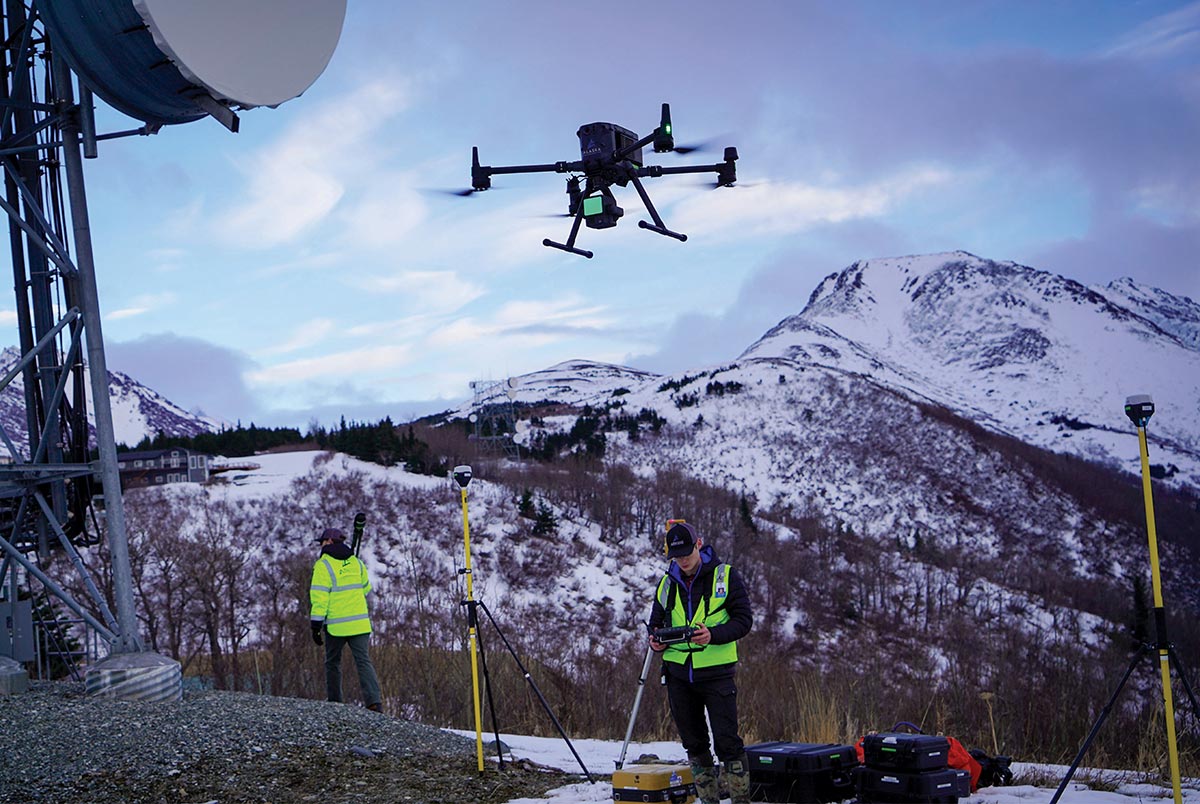


As land survey firm, ARI often finds itself in the balance between the modern and the traditional. Conventional land survey is a trade within itself, and in many ways new technology has a more limited impact on what it means to be a surveyor that one might think. Finding, testing, and standardizing this balance requires a lot of attention and review from seasoned experts.
“If you’re a construction company, you might go out and buy a 3D scanner because you need one for a specific task,” Gutacker explains. “But if you want to have a whole suite of options and hardware and software to solve your problems, you can call up ARI. We have a whole staff dedicated in the field, in post-production, and we have access to more tools.”
Alaska Remote Imaging

Like any tool, there’s a learning curve in becoming adept at using imaging equipment and software. Having a partner with the tools and the knowledge base required to use those tools effectively can be an asset. That’s where ARI shines.
“We can buy more toys and dabble in more software. We have more depth on the bench than most companies would care to self-perform with,” Gutacker says. “We’re where the technology meets the job site.”
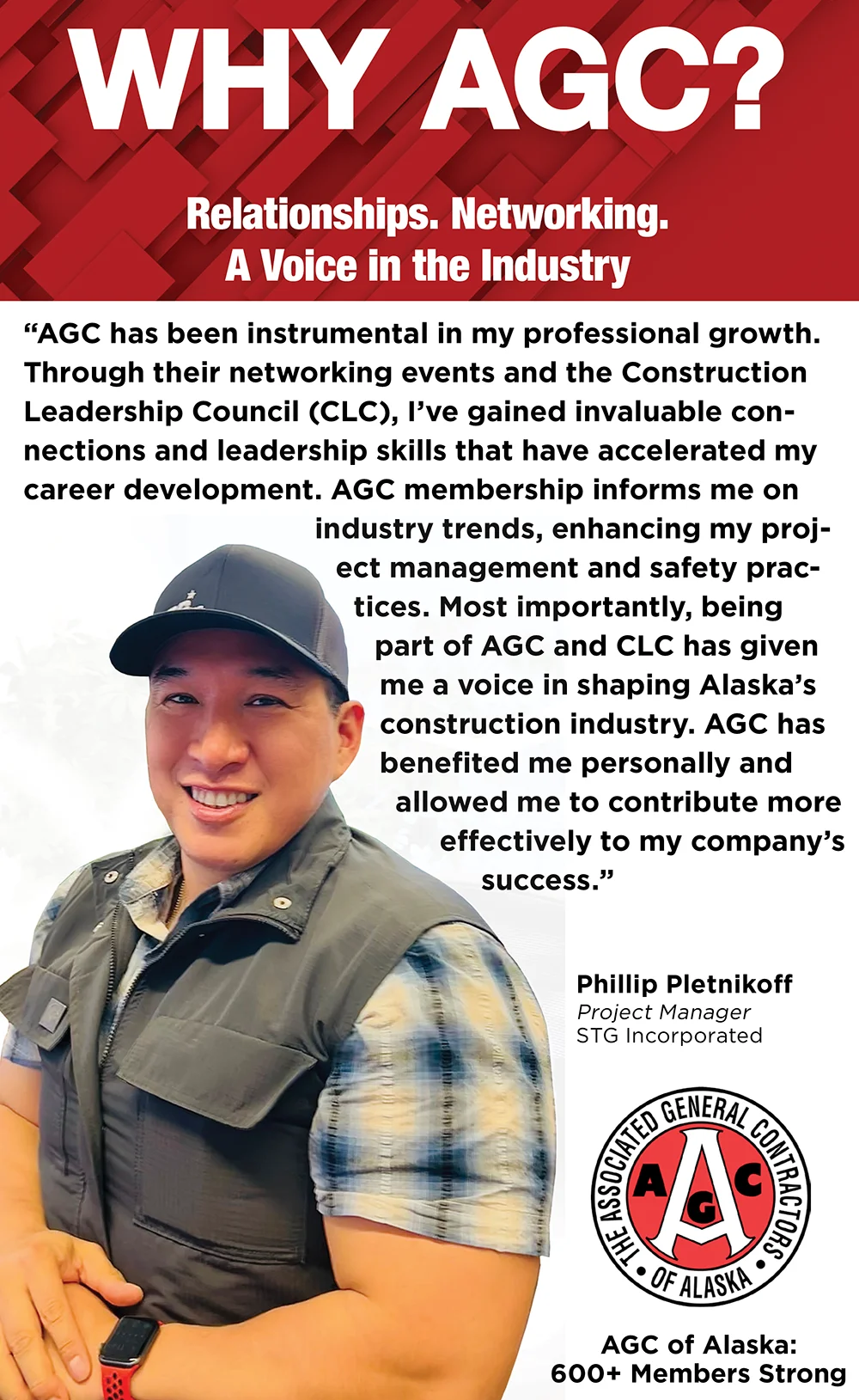

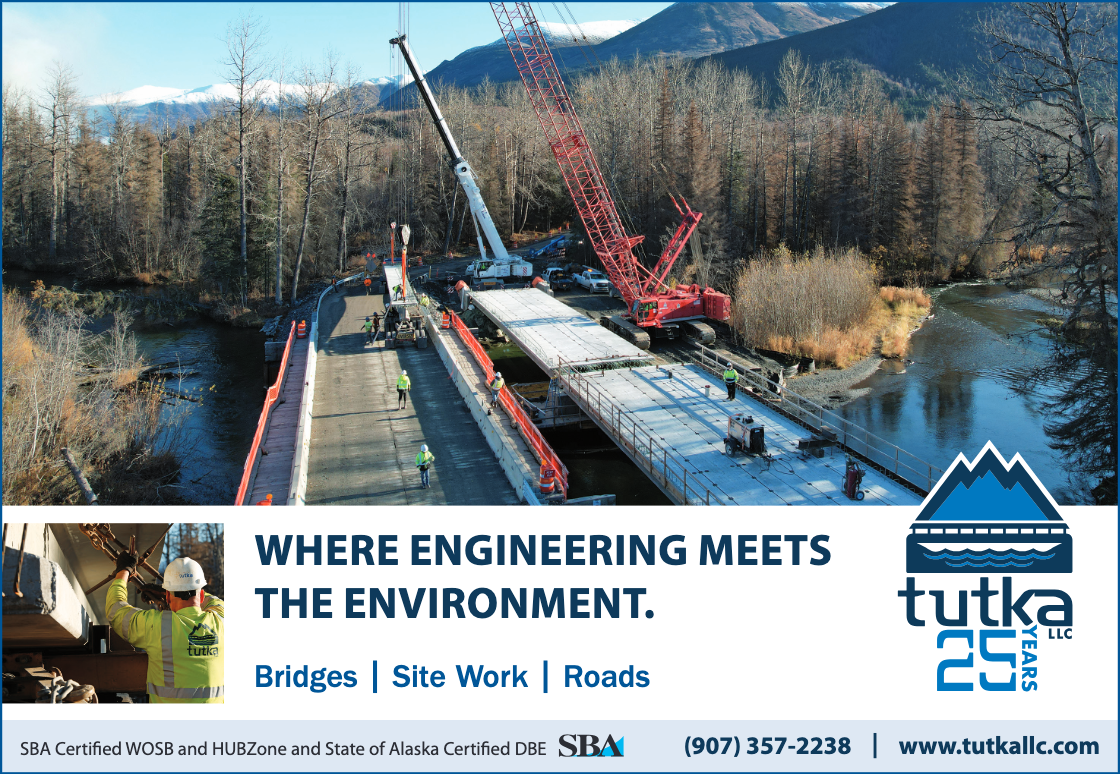


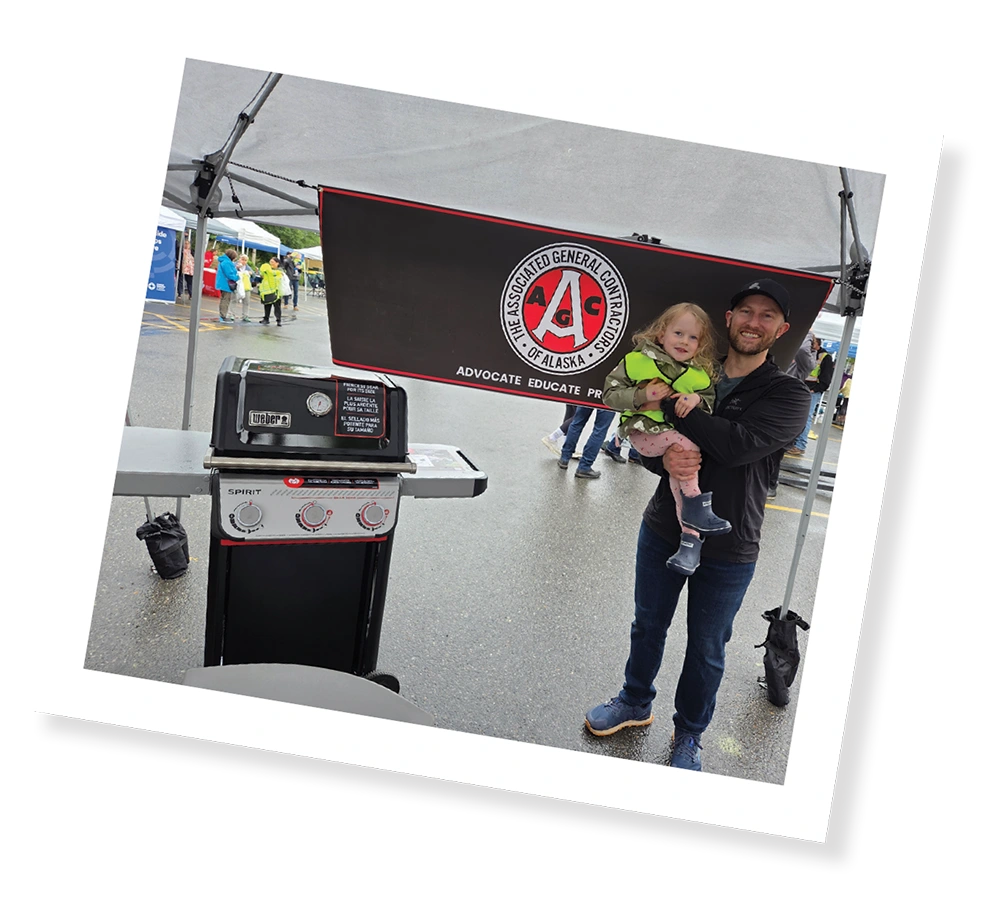
et weather didn’t dampen the fun at the 2026 AGC of Alaska Safety Fair, held July 22 at the Davis Constructors and Engineers property in Anchorage. Calista Brice sponsored free bike tune-ups, and families were able to explore interactive safety exhibits and meet local safety professionals from across the state.
New this year, Tia’s Food Stand served hot dogs, chips, and drinks, sponsored by Swalling General Contractors, LLC and AAA Alaska. Colaska, Inc. was the event’s signature sponsor.
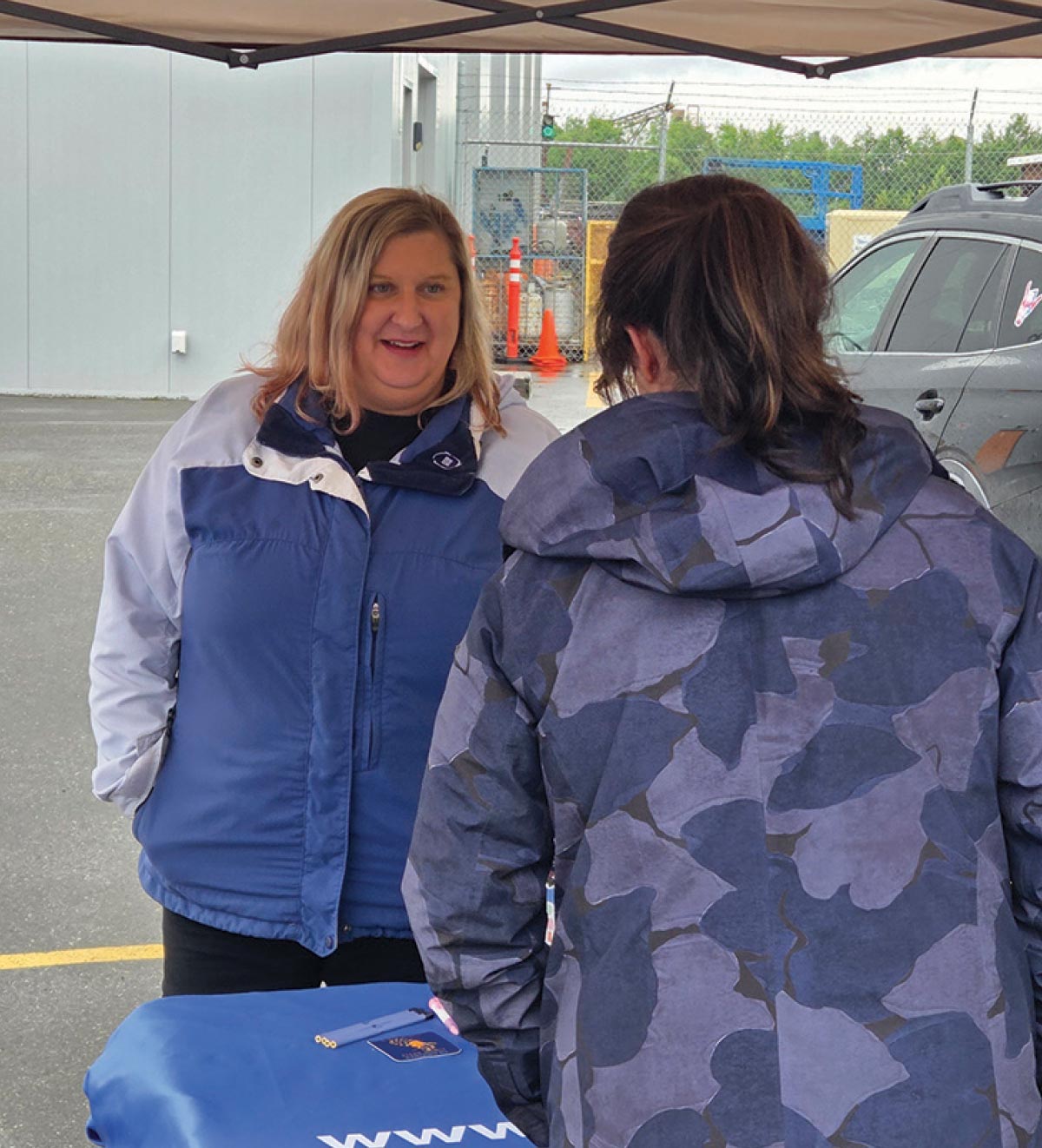


Dahlton Wasankari, Great Northwest, Inc.
Dahlton Wasankari, Great Northwest, Inc.
tretching through the heart of Interior Alaska, the Richardson Highway carries everyone from daily commercial freight operators to military traffic, tourists, and outdoor enthusiasts.
While the route offers breathtaking views, portions of the highway have also posed longstanding safety challenges: sharp curves, changing elevations, and environmental conditions that can quickly become hazardous. As traffic volumes have increased and modern transportation demands have evolved, improving these sections of roadway has become a priority for the Alaska Department of Transportation and Public Facilities (DOT&PF) and its construction partners.
DOT&PF is currently addressing those concerns through the multi-phase reconstruction of the Richardson Highway between Mileposts 148 and 173. Fairbanks-based Great Northwest, Inc. is leading construction on the approximately $33.5 million project to rebuild the road between Milepost 167 and 173, the third phase of a multi-year effort to enhance safety, improve roadway geometry, and create a smoother, more reliable driving experience for the motorists who travel the corridor.
“The existing roadway through this section of the Richardson Highway was last reconstructed in the early 1950s and paved in 1957. While it continues to serve as a major transportation corridor, it no longer meets current design standards,” says Guan Griffin, project manager, Northern Region Construction for DOT&PF. “The roadway is narrow, lacks paved shoulders, contains numerous sharp curves and steep grades, and has experienced settlement that has affected both the pavement and embankment due to the underlying permafrost foundation. Nearly half of the horizontal curves do not meet today’s minimum design standards, and many aging culverts are undersized for spring runoff. Numerous crashes have been recorded along the corridor, with approximately half involving wildlife collisions and the other half consisting primarily of run-off-the-road crashes.”
“This year, we’re focused on the dirt work, which involves moving and reshaping earth and rock to rebuild these six miles,” explains Tyler Quakenbush, Great Northwest project superintendent. “A settlement period is necessary after this phase before we can complete the project next year.”
- Adding 6-foot paved shoulders on both sides of the road, flattening curves, and reducing grades to improve sight distance and overall safety. The wider shoulders will also accommodate bicyclists traveling along this corridor.
- Rebuilding the road using shot rock generated from a major cut within the project limits, at Mile 171. This more stable foundation will reduce future settlement and provide a longer-lasting pavement structure.
- Replacing all culverts with larger structures and rebuilding roadside ditches to improve drainage and accommodate spring runoff.
- Installing new pavement markings, signage, and guardrail that meet current safety standards.
- Improving turnouts to reduce driver fatigue while providing safe locations for emergency stops and opportunities for slower vehicles to allow traffic to pass.
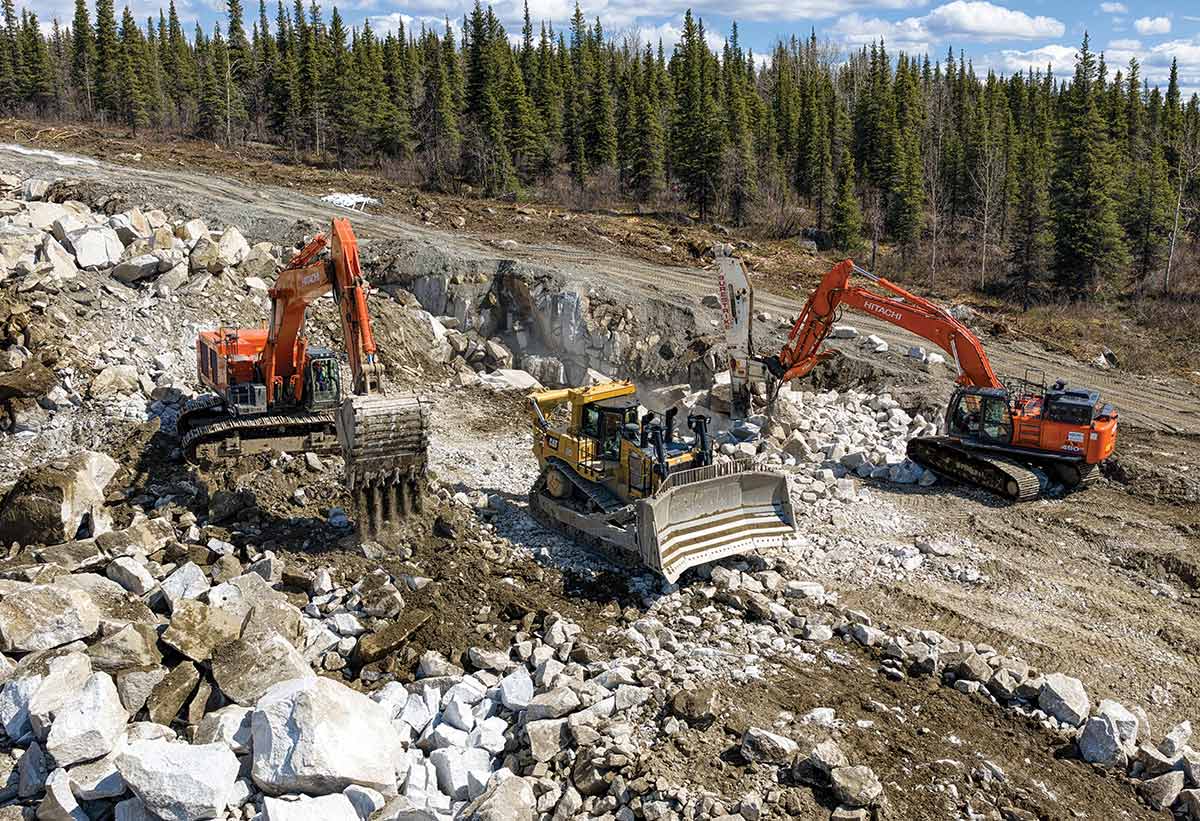
Phil Garvey, Great Northwest, Inc.
“Shot rock makes a great road, but it is challenging,” says Quakenbush. “We have a fleet of five drills working double shifts, 24 hours a day since May 11 in an effort to complete this phase in one season, so we can finish the project next year.”
As with any Alaska road project, managing traffic during construction delivers its own set of logistical challenges. “We run two pilot cars that help keep the public wait times to a maximum of twenty minutes, if possible,” explains Quakenbush. “Also, for this project, we are able to keep traffic on old alignments while building new alignments. We don’t always have that luxury.”
The project also incorporates lessons learned and cost-saving measures identified during the two previous phases of rebuilding portions of the Richardson Highway. The Milepost 148–159 project was completed in 2013, and the Milepost 159–167 project was completed in 2023. “By applying those best practices, Alaska DOT&PF is maximizing the value of this investment while improving safety, increasing long-term reliability, and ensuring this critical transportation corridor continues to support Alaska’s economy, freight movement, tourism, military operations, and community connectivity for decades to come,” says Griffin.
“Drivers will notice improved sight distance, flatter curves, and reduced grades. These geometric improvements will make the highway more predictable and easier to navigate, particularly during Alaska’s long winter driving season and in periods of reduced visibility,” explains Griffin. “The reconstructed highway will feature two 12-foot travel lanes with 6-foot paved shoulders, giving drivers additional recovery space while providing room for disabled vehicles and emergency stops.”
Improved turnouts will provide safe locations for drivers to pull over, reduce fatigue, make emergency stops, and allow faster vehicles to pass safely.
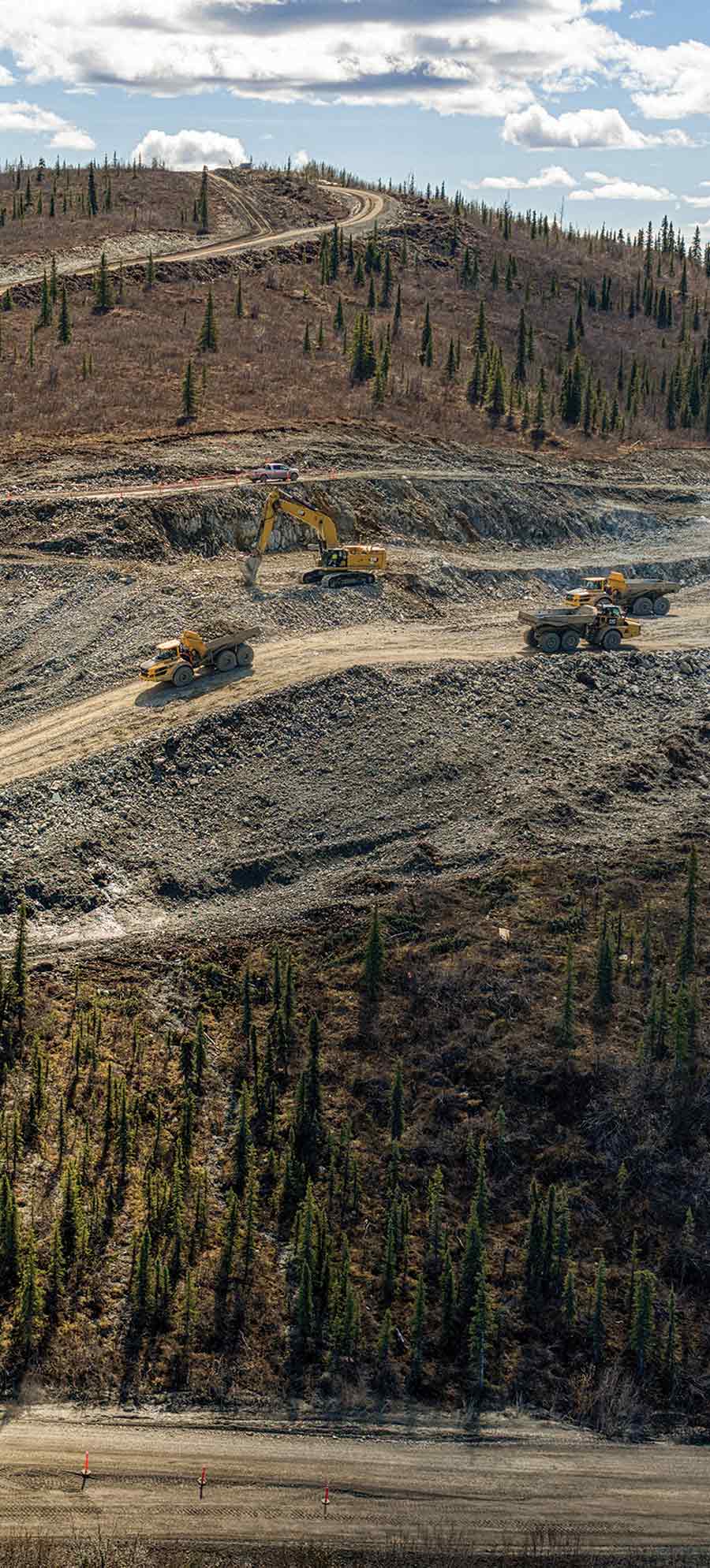
Phil Garvey, Great Northwest, Inc.
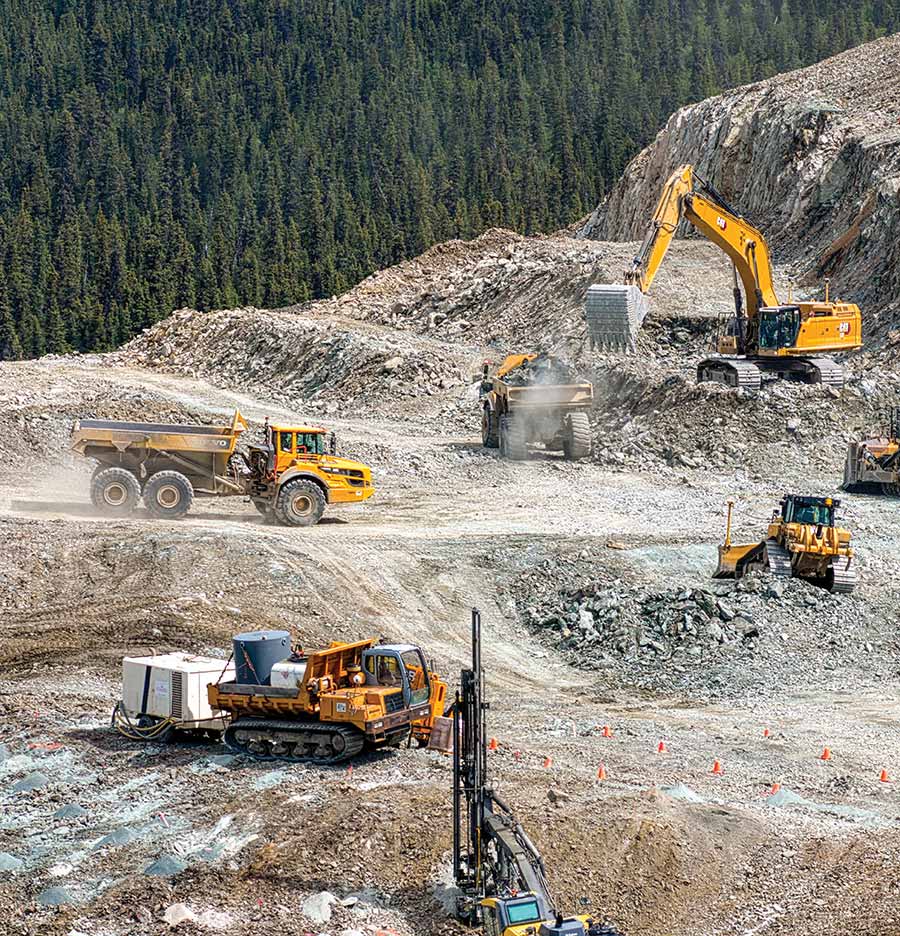
Phil Garvey, Great Northwest, Inc.
The Richardson Highway has served Alaskans for generations, and this investment will help ensure it continues to do so for many years.
As Griffin notes, “Ultimately, the greatest measure of success will be that people can travel this section of highway safely and reliably for decades to come, whether they are commuting between communities, hauling freight to and from the Port of Valdez, supporting military operations, accessing the Trans Alaska Pipeline System, or visiting some of Alaska’s most iconic destinations.”


elebrating summer in style, the Construction Leadership Committee held its annual CLC Grill & Chill event in the Schoon Street parking lot of AGC of Alaska. It’s one of two networking events CLC hosts, CLC Chair Sarah Klebs says; the second will be the CLC Reception, held from 5 p.m. to 7 p.m. November 12 at the Hotel Captain Cook, as part of the AGC of Alaska Annual Convention. CLC is open to anyone new to the construction industry, Klebs says.
More than fifty AGC members turned out to enjoy Yeti Dogs on the grill, lawn games, and great conversation on June 25. Prizes from the Anchorage Golf Tournament were also handed out at the event.
AGC would like to thank the CLC volunteers who planned and hosted the event, as well as sponsors CGC Services and MagTec Alaska, whose support made the event possible.


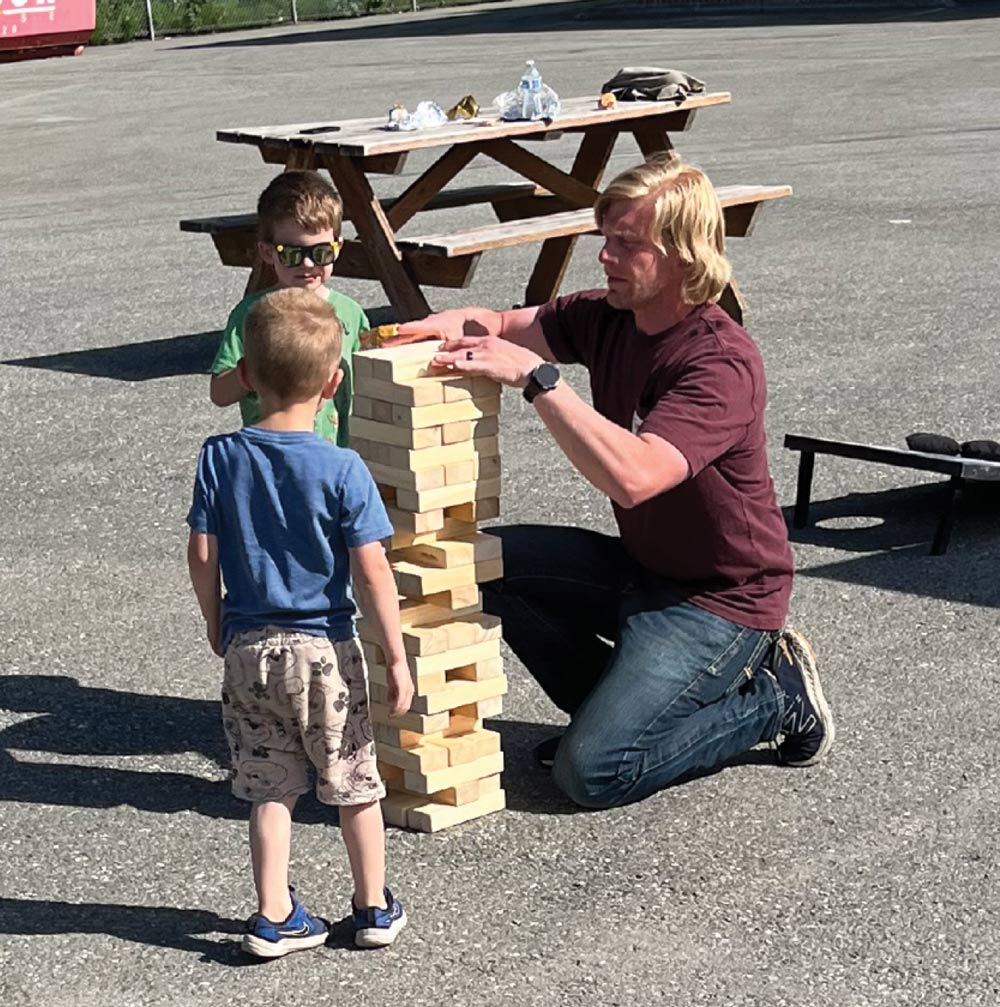


ow in its tenth year of business, Eklutna Construction and Maintenance has become a major player in Alaska, taking on federal, state, and municipal projects. The company specializes in new construction and renovation projects, primarily on military installations in Southcentral and the Interior.
“Eklutna self-performs minor civil, minor concrete, carpentry, electrical, and dry-side mechanical work on most of its projects, allowing for greater control over quality, schedule, and cost,” says General Manager Bill Doss. “Eklutna is a competitive and successful contractor outside the federal government contracting arena as well.”
Over the past eight and a half years, Doss says the company has completed projects for the Anchorage School District, the State of Alaska, Municipality of Anchorage, and private clients.
“When I came on board, I was given a lot of autonomy to take the company in a different direction and grow the revenue,” Doss says. “It’s for the benefit of the employees, staff members, and to provide a benefit back to the Native Village of Eklutna shareholders.”
Doss is Alaska Native. His father was serving in the US Army when he met and married Doss’ mother. Though born in Ohio, his family divided its time between the two states. As an adult, he’s called Alaska home for twenty-one years.
“When I got old enough to where it was my decision making, I chose Alaska,” he explains.
Doss began his construction career after high school, and gained “extensive hands-on experience across multiple trades and project types,” he says. He attended a construction management program in Ohio, he adds, but owing to career demands he came just short of finishing a degree. He’s worked in construction for thirty-eight years, including operating his own company in Ohio.
“I’ve pretty much run the gamut for background and experience,” he says.

Doss cites Eklutna’s work rebuilding and upgrading Anchorage School District roofs as one of many examples of the company’s focus on “sustainment, renovation, and maintenance” projects.
Edie Knapp, construction supervisor for the Anchorage School District’s Capital Planning and Construction department, praises Eklutna’s capabilities. The district’s history with Eklutna, Inc. began with Eklutna Services, with Eklutna Construction and Maintenance’s predecessor company.
“The district has worked with Eklutna, Inc. for almost fifteen years. Eklutna has always been professional and responsive to the needs of the district. They stepped up to assist the district with recovery after the November 2018 earthquake, ensuring a timely and safe return to education for the students,” Knapp says.
“The company participates pretty heavily in the Southcentral construction market,” Doss says. “We’ve done work for UAA, Southcentral Foundation, Alaska Native Tribal Health Consortium, and various other state and municipal clients.”

“It’s basically a federal government contracting company,” Doss explains, adding that Eklutna’s workload is about 15 percent new buildings and 85 percent renovation projects. “It’s primarily renovations to existing facilities and infrastructure via multi-year contracts on JBER, Eielson, and Fort Wainwright.”
Eklutna was awarded the $12.8 million contract to build the F-35 Operations Support Squadron’s Weapons/Intelligence Facility at Eielson Air Force Base in 2018. Calling it “the milestone project for Eklutna,” Doss says the Eklutna team is particularly proud of that project.
Building a high-security facility in Interior Alaska is no easy task. But on this and other federal projects, the Eklutna Construction and Maintenance team received praise, Doss says. He notes that Eklutna has “demonstrated exceptional performance on previous and current multi-year contracts, often leading in the overall volume of awards while achieving favorable CPARS [Contractor Performance Assessment Reporting System] ratings from the various government clients.”
Those favorable ratings come in part from Eklutna’s commitment to delivering complex projects safely, on time, and on budget. That commitment goes beyond Doss’ leadership.
Building a solid reputation is a team effort, he explains. The company’s team of project managers, superintendents, estimators, quality control managers, administrative staff, and field employees collectively enable the company to succeed and grow in a challenging and competitive construction market, he says.
“One thing I don’t believe is that a company is about one person. I can’t do anything without these people. Our fantastic team is the reason why we have success. It’s all of us,” Doss says.




laska has long played a critical role in the defense and national security of the United States. During World War II and throughout the Cold War, our state served as America’s strategic gateway to the Arctic and the Indo-Pacific. But after the Cold War, Washington’s focus shifted. The Pentagon closed bases, proposed force reductions, and even planned to shrink the Coast Guard’s presence in Alaska.
That was a mistake—not only for America’s security but also for Alaska’s economy.
Since being elected to the Senate, I have made it a priority—through my seat on the Senate Armed Services Committee and as chairman of the Senate Commerce Subcommittee overseeing the Coast Guard—to restore Alaska’s central role in America’s Arctic and Indo-Pacific strategy. Because of these efforts, which we undertook working hand in glove with our patriotic communities throughout the state, I’m glad to say that Alaska is experiencing one of the biggest military buildups in our history. This buildup is not only strengthening our national defense but also delivering billions of dollars in investment, thousands of good-paying jobs, and new opportunities for Alaska businesses, contractors, and workers.
The latest example is the recapitalization of Joint Base Elmendorf-Richardson (JBER). At $7 billion, the Fighter Town Recapitalization Project at JBER is likely the largest military construction project in Alaska’s history. Over the next decade, the project will build 26 state-of-the-art facilities to support multiple generations of fighter aircraft while creating approximately 4,000 private-sector jobs. These projects are in addition to the roughly $400 million we secured in recent years for a new runway at JBER, as well as $300 million for the Air Force’s new Joint Integrated Test and Training Center (JITTC). Alaska construction companies, engineers, suppliers, and skilled tradesmen will help build this next generation of military infrastructure, injecting billions of dollars into our state’s economy. All of this will make JBER the most strategic Air Force base in the world.
This recapitalization builds on years of work my team and I have done to reverse the Pentagon’s neglect of Alaska. In 2022, the redesignation of Alaska’s 1st and 4th Infantry Brigade Combat Teams as the historic 11th Airborne Division reaffirmed Alaska’s importance to America’s military. Since then, Eielson Air Force Base has welcomed two squadrons of F-35s, joining the F-22s stationed at JBER to create the world’s largest concentration of fifth-generation fighter aircraft. We’re going to be receiving billions of dollars in missile defense investments as part of the new “Golden Dome” initiative, expanding Alaska’s military footprint while supporting jobs and economic activity across the Interior.
We are also driving historic investments in the US Coast Guard. While Russia operates more than fifty icebreakers and China continues expanding its Arctic ambitions, the United States for many years relied on just two aging heavy icebreakers based in Seattle—and one of those is broken. We are finally reversing that trend.
Earlier this year, the Secretary of Homeland Security announced that three additional Coast Guard icebreakers will be homeported in Alaska, joining the Coast Guard Cutter Storis in Juneau. Homeporting these assets in Alaska means more than strengthening America’s Arctic presence. It means long-term economic growth for Alaska communities through new housing, infrastructure, maintenance facilities, logistics support, and hundreds of Coast Guard personnel and their families living and working in our state.
Since 2015, Alaska has received more than $1.4 billion for Coast Guard infrastructure projects across Alaska, supporting new cutters, shore facilities, housing, childcare, and other improvements. These investments include six Fast Response Cutters, two Offshore Patrol Cutters, a Waterways Commerce Cutter, and additional patrol boats stationed throughout Alaska.
These investments and vessels are fueling some of the most exciting economic activity our state has seen in years. Alaska shipyards, marine repair facilities, construction companies, and small businesses are benefiting from increased demand for vessel maintenance, infrastructure improvements, and support services. Communities from Ketchikan and Seward to Kodiak, Juneau, Sitka, Petersburg, and Valdez are seeing the benefits of these investments firsthand. Hundreds of new jobs have been created in these critical areas.
As the chairman of the Senate Commerce Subcommittee in charge of the Coast Guard, I led the effort to secure the largest investment in Coast Guard history—$25 billion—in last year’s Working Families Tax Cuts Act. This funding will modernize the service’s fleet and infrastructure, including sixteen new icebreakers, twenty-two new cutters, more than forty helicopters, six C-130J aircraft, and billions of dollars for shore-side infrastructure. Alaska is well positioned to benefit from these investments for decades to come.
Taken together, these substantial military and Coast Guard investments represent one of the largest federal economic development opportunities in Alaska’s history. They are creating thousands of high-paying jobs, supporting Alaska contractors and suppliers, strengthening our maritime industry, and generating long-term economic growth in communities across our state. And they are making America safer.
The federal government is finally recognizing what Alaskans have always known: Alaska is our country’s first line of defense. By restoring our state’s importance to our national defense, we are creating new opportunities for Alaska workers, businesses, and families while ensuring our nation is prepared to meet the challenges of an increasingly contested Arctic and North Pacific.
That is a win for Alaska’s economy, a win for Alaska workers, and a win for America’s security.


s a teacher, Jeff Utecht taught both Millennials and Generation Z students. Now, he uses that knowledge to help company leaders, who might be Generation X or Boomers, better understand the differing perspectives of workers in both generations. An international presenter and keynote speaker, Utecht says generational misunderstandings cost companies time, money, and productivity.
On the opening day of the AGC of Alaska Annual Conference November 11, Utecht will deliver solutions for helping head off those misunderstandings and creating harmony within a workforce whose makeup might include members with differing ideas of what “work” should look like.
Utecht is the son of two educators and grew up working his family’s farm in the Spokane Valley. As a teenager, he was a volunteer teacher in the classroom of his mentor, a fourth-grade teacher. That experience launched both his career and his commitment to student learning. That drive led him to receive a Technology Leadership Project grant through the Bill and Melinda Gates Foundation in 2001, which pushed him to experiment with blended learning, network literacy, and digital collaboration long before those terms became a common part of schooling.
Utecht is no stranger to Alaska; at the Alaska Chamber’s 2025 Alaska Business Summit in Girdwood, Utecht spoke about how to manage multi-generational workplace dynamics. He spoke on a similar topic with Arctic Slope Regional Corporation’s leaders last year.
Utecht says the construction industry, and the US workforce in general, is going through a double transition: simultaneous shifting of the generational understanding of what work means, alongside a shifting understanding of how work is structured, now that AI is a tool that can be used on some tasks.
“I believe all blue-collar jobs, construction being top of the list, are feeling this right now. We are redefining—or this generation of people coming into the workforce, Gen Z, is redefining—what it means to work, and we are struggling with that,” he says. “We have a generation that wants to engage in this work, but we have leaders who don’t understand them. And that’s the generational rub right now.”
Millennials, the largest generation in the workforce right now, were sold the idea that they had to be college ready.
“We took away all avenues for them to even see or believe that being in blue-collar [fields]—in construction, electrical, whatever—wasn’t even a pathway for them. So this generation (Gen Z), they’re coming back to that. It starts with our schools; our schools now have construction programs. We’ve got all these CTE [career and technical education] programs coming back, so these kids know there’s money to be made there,” Utecht says.
But Baby Boomer and Gen X company leaders might see Gen Z workers as lazy or not committed. Not so, in Utecht’s experience. “It’s not that they’re lazy. It’s that they view work differently. And they are forcing us, as a nation, to redefine work,” he says. “I run into people who run large firms to small firms that, they have kids applying, but they can’t keep a kid for two weeks.”
Either the new employee is frustrated with the workplace and doesn’t show up or the employer is frustrated with the worker and they fire them, Utecht says.
“There’s a mismatch there. There’s a communication issue,” he says. “If you want to grow your business, you’re going to need to figure out a way to work with this generation.”
Because the work still needs to be done, he says, and Gen Z holds the keys to getting it done.
“You’ve got a lot of contract work going on right now. We have a generation that, they’re willing to do it, but under their terms,” Utecht says. “That’s the huge rub right now.”
Utecht will be giving the keynote address at the AGC of Alaska Annual Conference Wednesday, November 11 at an afternoon presentation at the Hotel Captain Cook. For more conference news, or to register, visit the conference website: agcak.org/annual-conference.



& The Law
hen bidding a project, contractors routinely ask: Who is the owner? How will the job be funded? When will we be paid?
After the Alaska Supreme Court’s decision in Copper River Native Association v. Ito (Ito), contractors should add another question to the list: If a dispute arises, what remedies will actually be available?
The case highlights a reality that every contractor should understand before signing a contract—the usual legal remedies don’t always apply when a tribal entity is involved in the transaction.
To be clear, Ito was not a construction case. The dispute arose when a former employee sued the Copper River Native Association (CRNA), an Alaska Native nonprofit tribal consortium, alleging a breach of the covenant of good faith and fair dealing. CRNA argued that it shared the sovereign immunity of its member tribes and, as a result, couldn’t be sued in Alaska state court. The Alaska Supreme Court agreed.
In reaching that conclusion, the court adopted the new (for Alaska) “arm-of-the-tribe” test, and it held that CRNA was entitled to tribal sovereign immunity. The plaintiff’s claims were dismissed before they could be decided on the merits.
For lawyers, the significance of Ito is the new framework for determining when an organization qualifies as an “arm of a tribe.” For contractors, the case raises more important practical questions: What happens if a dispute arises? Can the owner be sued? Where, and for what?
Those questions matter because contractors in Alaska regularly work with tribal governments, tribal health organizations, and intertribal consortiums. Many of these entities own facilities and build infrastructure that looks very similar to other private construction projects.
But an entity’s name or corporate structure doesn’t determine if it’s immune from suit. In Ito, the court focused on CRNA’s purpose, its creation, the degree of tribal control, and its financial relationship with member tribes.
From a contractor’s perspective, assuming the normal rules apply because the owner acts like a conventional business or nonprofit can be dangerous. The company might have a corporate office, use standard construction contracts, or appear to operate like any other commercial customer. But after Ito, that doesn’t necessarily mean that usual remedies will be available.
The first step is due diligence. Identify the owner and determine whether it is a tribe, a tribal health organization, or an intertribal consortium. Understanding the organizational structure at the beginning helps avoid surprises later.
The second step is determining whether the owner is willing to provide a limited waiver of sovereign immunity for the project. Waivers should meet three criteria: be unequivocally expressed and clearly articulated; be written; and be properly authorized.
Third, dispute-resolution provisions deserve careful attention. Contracts should address governing law, venue, arbitration requirements, and enforcement mechanisms. If arbitration is agreed upon, the parties should consider where arbitration will occur, how an award will be enforced, and clearly express agreement on the process. A well-drafted dispute-resolution clause cannot eliminate every risk, but it can significantly reduce them.
Finally, contractors should consider incorporating sovereign immunity into their broader risk-management controls. Just like procedures for assessing credit worthiness, bonding, and insurance coverage, contractors should evaluate whether meaningful remedies will be available if a dispute arises. The practical value of a contract depends not only on what it promises but also on whether those promises can actually be enforced.
To summarize, determining whether an entity qualifies as an “arm of the tribe” is a nuanced, fact-specific inquiry. But the lesson from Ito is straightforward: do not assume your remedies are the same merely because your customer operates like other businesses. Absent a clear and express waiver, courts in Alaska are required to look beyond an entity’s corporate form when determining if tribal sovereign immunity applies. Before bidding, before mobilizing, and certainly before a dispute develops, contractors should understand who their customer is and what remedies will be available if the relationship goes sideways.
When sovereign immunity is potentially in play, the most expensive mistake a contractor can make is assuming the usual rules apply.



“From the beginning, you have exhibited commitment and hard work toward this goal, and the recommendations our consultants made were received freely and implemented to the effect of enhancing your program. We congratulate you on the positive attitude related to safety and health exhibited by you and your employees,” wrote Labor Commissioner Catherine Muñoz in her February letter to Rain Proof Roofing.
The approval is for a five-year duration and means Rain Proof Roofing will be placed on a lower-priority general scheduled inspection list for enforcement, although incidents can trigger normal inspection and enforcement activities by the state, should they occur.
In tandem with the enhanced safety status, Rain Proof Roofing recently received an Experience Modification Rate (EMR) of 0.57. EMR is a workers’ compensation metric that compares a company’s workers’ compensation claims rate against similar businesses in the same industry and is a measurable indicator of a company’s safety record.

Treasure Valley, a growing metropolitan and agricultural region around Boise, Idaho, is expanding at a rapid pace, bringing with it an increasing demand for robust technology, cybersecurity, and compliance infrastructure. That’s where Stratus Services comes in.
“Our model has always been straightforward: build relationships, be responsive, and operate transparently,” says Jason Isenhart, a Kuna, Idaho resident and director of MSP operations. “Having a presence in Meridian allows us to deliver more talent, expanded services, and better hands-on support to businesses that deserve uncompromised service.”
Stratus Services is one of the few MSPs in the country, and the first in Idaho, to achieve Cybersecurity Maturity Model Certification (CMMC) Level 2 certification. CMMC is a US Defense framework created to verify that contractors protect sensitive unclassified government data. While the US Department of War has placed on hold Phase II requirements while it reviews and reforms the program, Phase I self-assessments remain active and required for businesses working on federal contracts.


- Airswift
- Alaska Industrial Hardware
- Alaska Mechanical Contractors Association, Inc
- Alaska Quality Septic
- Alaska Railroad
- Alyeska Pipeline Service Co
- Alyeska Tire
- Anchorage Sand & Gravel
- Birch Horton Bittner & Cherot
- Bob's Services, Inc
- CBIZ
- Chugach Electric Association Inc
- Colaska
- Construction Machinery Industrial
- Cornerstone General Contractors
- Craig Taylor Equipment
- Credit Union 1
- Crowley Fuels
- Davis Block & Concrete
- Davis Constructors & Engineers Inc
- Denali Drilling Inc
- ENSTAR Natural Gas Co
- Equipment Source, Inc
- F&W Construction Company Inc
- First National Bank Alaska
- Fountainhead Development
- Fullford Electric, Inc
- GMG General, Inc
- Great Northwest Inc
- Holmes Weddle & Barcott
- IMA Financial Group
- JD Steel Co Inc
- KLEBS Mechanical
- Loken Crane, Rigging and Transport
- Lynden
- Matson Inc
- Michels Corporation
- MT Housing Inc
- N C Machinery
- NECA Alaska Chapter
- Northern Air Cargo
- Northrim Bank
- Personnel Plus Employment Agency
- Petro Marine Services
- PND Engineers, Inc
- Port MacKenzie
- Rain for Rent
- Ritchie Brothers Auctioneers
- Rural Energy Enterprises
- SealMaster
- Sheet Metal Inc
- Sourdough Express, Inc
- Span Alaska Transportation LLC
- Spenard Builders Supply
- Sullivan Water Wells
- Swalling General Contractors, LLC
- SYSTEMCENTER ALASKA
- TOTE Maritime Alaska LLC
- Tutka, LLC
- Weaver Brothers Inc
- Yukon Equipment Inc