



Associated General
Contractors of Alaska

Associated General
Contractors of Alaska


8005 Schoon St.
Anchorage, AK 99518
907-561-5354
Fax: 907-562-6118
www.agcak.org
Associated General Contractors of Alaska
Jenith Ziegler
ChemTrack Alaska, Inc.
Pearl-Grace Pantaleone
HDR Alaska Inc.
Alicia Kresl
Associated General Contractors of Alaska
Christine A. White
R&M Consultants, Inc.
Heather Sottosanti
Big State Mechanical, LLC
Marcus Trivette
Brice, Inc.
Johnathon Storter
Meridian Management, Inc.
Tasha Anderson
Managing Editor
Rindi White
Editor
Monica Sterchi-Lowman
Art Director
Fulvia Lowe
Art Production
James K Brown
Graphic Designer
BUSINESS STAFF
Charles Bell
VP Sales & Marketing
907-257-2909 cbell@akbizmag.com
Chelsea Diggs
Account Manager
907-257-2917 chelsea@akbizmag.com
Tiffany Whited
Marketing & Sales Specialist
907-257-2910 tiffany@akbizmag.com
501 W. Northern LIghts Blvd., Ste 100
Anchorage, AK 99503
The Alaska Contractor is published by Alaska Business Publishing Co. Inc. for the Associated General Contractors of Alaska. Contents of the magazine are not necessarily endorsed by AGC of Alaska or Alaska Business Publishing Co. All rights reserved. Copyright 2025 by the Associated General Contractors of Alaska. For information about articles in this edition or for permission to reproduce any portion of it, contact Alaska Business Publishing Co.
Design by James K Brown
2025 Construction Leadership Council Trivia Night
2025 AGC of Alaska Anchorage Golf Tournament
2025 AGC of Alaska Fairbanks Golf Tournament
2025 AGC of Alaska Sporting Clays Shoot
2025 AGC of Alaska Safety Fair
2025 Construction Leadership Council Grill & Chill
2025 Construction Leadership Council Trivia Night
2025 AGC of Alaska Anchorage Golf Tournament
2025 AGC of Alaska Fairbanks Golf Tournament
2025 AGC of Alaska Sporting Clays Shoot
2025 AGC of Alaska Safety Fair
2025 Construction Leadership Council Grill & Chill
8005 Schoon St.
Anchorage, AK 99518
907-561-5354
Fax: 907-562-6118
www.agcak.org
Associated General Contractors of Alaska
Jenith Ziegler
ChemTrack Alaska, Inc.
Pearl-Grace Pantaleone
HDR Alaska Inc.
Alicia Kresl
Associated General Contractors of Alaska
Christine A. White
R&M Consultants, Inc.
Heather Sottosanti
Big State Mechanical, LLC
Marcus Trivette
Brice, Inc.
Johnathon Storter
Meridian Management, Inc.
Tasha Anderson
Managing Editor
Rindi White
Editor
Monica Sterchi-Lowman
Art Director
Fulvia Lowe
Art Production
James K Brown
Graphic Designer
BUSINESS STAFF
Charles Bell
VP Sales & Marketing
907-257-2909 cbell@akbizmag.com
Chelsea Diggs
Account Manager
907-257-2917 chelsea@akbizmag.com
Tiffany Whited
Marketing & Sales Specialist
907-257-2910 tiffany@akbizmag.com
501 W. Northern LIghts Blvd., Ste 100
Anchorage, AK 99503
The Alaska Contractor is published by Alaska Business Publishing Co. Inc. for the Associated General Contractors of Alaska. Contents of the magazine are not necessarily endorsed by AGC of Alaska or Alaska Business Publishing Co. All rights reserved. Copyright 2025 by the Associated General Contractors of Alaska. For information about articles in this edition or for permission to reproduce any portion of it, contact Alaska Business Publishing Co.
Design by James K Brown



 AGC MEMBER
 Cruz Construction, Inc.
$12,303,761
North Slope Borough Barrow Landfill Expansion Phase VI
UIC Construction – ASRC SKW Eskimos, LLC
$9,962,664
RipRap for Old Barrow Landfill Erosion Control Upgrades
Brice Incorporated
$6,102,720
Dalton Hwy. MP 90-104 Resurfacing
Qayaq Construction LLC
$5,973,930
Dalton Hwy.MP 247-289 and MP 305-362 Delineator Replacement
Mass Excavation, Inc.
$2,496,778
Wainwright Gravel Acquisition 2025
Olgoonik Construction Services (OCS)
$2,278,554
Nome Creek Restoration 2025 Part 1
Drennon Construction & Consulting, Inc.
$387,430
Kwethluk M&I 2025 Improvements Project
Sturgeon Electric Co., Inc
$205,300
Kipnuk Distribution System Upgrade Transformer Purchase
MVA Power, Inc.
$140,721
 ASRC Prime Constructors, LLC
$12,370,000
Chena Ridge Road and Chena Pump Road Resurfacing
HC Contractors LLC
$9,870,172
Yankovich-Miller Hill Road Reconstruction and Multi-Use Path
Great Northwest, Inc.
$4,522,162
UAF Fire Station 12 Dormitory
GHEMM Company, LLC
$2,822,000
Joyce Drive Improvements
Exclusive Paving
$1,235,415
Black Rapids and Donnelly Training Area Stream Bank Improvement
Drennon Construction & Consulting, Inc.
$895,373
Cummings Rd. Surfacing Upgrades
Drennon Construction & Consulting, Inc.
$787,329
FAST Area Surface Upgrades FFY2025
Exclusive Paving
$665,266
Chena Pump SRS Facility Improvements
Paving Products, Inc.
$657,356
Fairbanks Youth Facility Safety & Security Modifications, Phase One Probation Unit Improvements
Alcan Builders Inc
$634,246
South Davis Softball Consolidation Phase 1B
Alcan Builders Inc
$513,284
Contaminated Sand Removal at Eielson AFB
IOEI-CES JV LLC
$338,139
Residential Well System Installations – Fairbanks
Northern Contractors and Consulting LLC
$304,575
Black Rapids Erosion Repair
Carpenter Contracting, Inc.
$277,000
Transit Facility Canopies
Alcan Builders Inc
$269,495
TA 516 FARP Rehabilitation
Custom Steel
$242,680
Big Dipper Outdoor Rink Light Replacement
Fullford Electric, Inc.
$224,002
West Chatanika Recreational Subdivision Trail Improvements
Korpela Construction
$205,000
DTA TA 518 Lampkin LZ Access Improvement
North Pole Gravel Products
$161,236
FNSB HOTs Removal
Tandem Enterprises, Inc.
$160,689
Delta Bison Range Access Improvement 2025
Mountain Trucking, LLC
$144,950
JHAC Employee Entrance Drainage Repair
Trost Construction, Inc.
$127,000
Road Service Area Group: Ester Area – Bluebird, Old Wood, Serendipity, Ester
K&R Excavation, LLC
$119,879
Public Works Fuel Dispensers Upgrade Project
Pinnacle Construction, Inc.
$118,725

Carver Construction LLC
$3,174,341
JNU Glacier Highway Chip Seal – Industrial Blvd to Ferry Terminal
Secon-Aggpro
$2,492,410
Haines WWTP Influent Upgrade
Glacier Construction, Inc. dba Southeast Road Builders
$1,980,000
St. Michaels Street Rehabilitation
Marble Island, LLC
$1,248,182
Petersburg Maintenance Shop Oil Water Separator System
Rock-N-Road Construction, Inc
$1,090,000
Copper River Highway MP 2.4 Drainage Improvements
Knik Construction Co Inc
$978,593
Taku Harbor Improvements
Trucano Construction
$930,330
FFY25 Southeast Region District Painting
Specialized Pavement Marking, Inc
$806,215
Meyers Chuck Harbor Replacement – Float Installation
Pool Engineering Inc
$775,500
Water Treatment Plant Disinfection System Upgrades
Nodak Electric & Construction Inc.
$475,000
Alaska Office Building Roof Repairs and Replacement
Coogan Construction Company LLC
$440,000
Gakona Cemetery Access Road
Denali Land Services, LLC
$303,258
Pier 2 Damage Repairs
Highmark Marine Fabrication
$297,430
Wildflower Court Sidewalk Replacement
Admiralty Construction Inc
$285,250
Ore Peninsula Redevelopment Pile Anodes
Alaska Commercial Divers Inc
$207,990
Statter Harbor Office Re-Roof
Dawson Construction, Inc.
$199,000
Mountainside Dr. Drainage Improvements
Admiralty Construction Inc
$144,105
Eagle Beach SRA Riverbank Stabilization, Phase II
Coogan Construction Company LLC
$121,030
Capital Transit Facility Bus Storage Bay 1 – Overhead Door Replacement
Island Contractors, Inc.
$108,200
SCOW Bay Metal Building Addition
Steelhead Enterprises, LLC
$100,000
 QAP
QAP$18,356,834
Construct American Charter Academy
Roger Hickel Contracting, Inc.
$14,283,754
Dalton Highway Yukon River Bridge #0271 Redecking
Granite Construction Co.
$4,189,634
ANC Gates N3 and N5 Passenger Boarding Bridge Replacements
Roger Hickel Contracting, Inc.
$3,795,000
West Anchorage Snow Disposal Site Phase II
Mass Excavation, Inc.
$3,778,744
Quinhagak Street Reconstruction E Dowling to Askeland Drive
Mass Excavation, Inc.
$3,595,296
De Armoun Rd: E 140th Ave – Hillside Dr Pavement Preservation Project
Granite Construction Co.
$3,286,646
Hope Hwy: MP 12.9 Pipe Replacement
QAP
$3,136,840
ANC Airport Lighting Control System Resiliency
Alcan Electrical & Engineering, Inc.
$2,845,000
ARRC MP 66.09 and MP 67.51 Culvert Replacement
CNR Industrial North Wind
$2,162,688
Dowling Road Surface Rehabilitation Lake Otis Parkway to Elmore Road
QAP
$2,012,851
Alaska State Parks Statewide Concrete Toilet Installation
Tutka, LLC
$1,584,664
ANC Kulis Ramp Temporary Repair
QAP
$1,549,324
AWWU Surface Restoration Contract
GMG General, Inc
$1,500,000
Construct Cell 4 Expansion at the Central Landfill
Southcentral Construction, Inc.
$1,487,654
AMATS: 88th Ave: Abbott Rd to Lake Otis Pkwy Pavement Preservation
QAP
$1,483,805
Jewel Terrace Street Road & Drainage Improvements
Mass Excavation, Inc.
$1,439,982
AVTEC 3rd Ave. Dorm Re-Siding
H5 Construction, LLC
$1,375,333
Settler’s Dr. Pavement Preservation
K & H Civil Constructors, LLC
$1,296,157
Construct Crimsonview and Heavenly Meadows Street Improvements
Valley General Construction LLC
$1,291,458
Atwood Building Code Improvements
Brick and Birch Homes LLC
$1,273,988
QAP$1,171,815
Eagle River Traffic Mitigation Phase 1
Neeser Construction, Inc.
$1,089,001
Roads Paving 2025/2026
Big Dipper Construction
$1,061,652
Performing Arts Center Elevator Modernization
Consolidated Contracting & Engineering LLC
$1,050,275
Snowcrest Drive and Trapline Drive Improvements
K & H Civil Constructors, LLC
$1,049,261
Provide Leachate Tanker Hauling Services on an “As Needed” Basis to the Municipality of Anchorage, Solid Waste Services
Alaska Pro Truckers
$967,000
Rabbit Creek Pedestrian Overcrossing Emergency Repairs
QAP
$944,400
ANC South Terminal Employee Parking Area Improvements
Granite Construction Co.
$787,462
ANC Taxilane V Gate Reconstruction
YH Constructors, Inc.
$717,960
Construct East Lakeview Road Pavement Preservation
QAP
$654,523
Eska St. Granite St. Utah St. and Grand Ave. Improvements
Western Construction & Equipment LLC
$568,225
Don Young Port of Alaska PCT Access Road
Granite Construction Co.
$567,100
Consortium Office Building Boiler Replacement Construction Services
KC Corporation
$517,809
ADA Signal Upgrades
YH Constructors, Inc.
$464,854
Leary Bay Drainage Improvements
Frawner Corporation
$458,999
Kasilof River SRS Parking Improvements
Foster Construction LLC
$414,770
South Butte Drive Road Improvements
Dirtworks, Inc
$386,941
Birch Creek at Mastodon Fish Passage Improvements
JRF Enterprises LLC
$385,678
Port of Alaska Petroleum Cement Terminal Gangway
Capital Construction LLC dba CCL General Contracting
$359,500
Furnish Liquid Magnesium Chloride to the Municipality of Anchorage, Maintenance & Operations
APUN, LLC
$315,750
RSA 23 North Colony and RSA 31 Alpine Annual Road Maintenance
Battleground LLC
$302,956
Anchorage Sand & Gravel Co., Inc.$263,890
Snowden Training Center Mechanical Upgrades
Frawner Corporation
$259,000
Supply and Deliver Salted Sand and Road Chips for FY26 Road Maintenance
Western Construction & Equipment LLC
$231,870
Bear Creek Community Multi-Use Facility Parking Lot Paving
Metco Alaska, LLC
$206,000
Rosewood Park Estates CR
Northern Powerline Constructors, Inc.
$201,357
Coal Creek to Center Pit Road Restoration
Granite Construction Co.
$193,692
Supply & Install New Crematory at Animal Shelter
Orion Construction Inc
$193,400
Chugiak Senior Housing Generator Replacement
Consolidated Contracting & Engineering LLC
$168,777
Summer & Winter Road Maintenance Central Region, Unit 3
River City Construction, LLC
$165,540
UAA Commons and Residential Halls EVO Replacement
Goertz Construction Inc
$147,077
Seward High School Bus Parking Improvement
Metco Alaska, LLC
$140,130
Summer & Winter Road Maintenance North Region, Unit 4
Trail Blazers LLC
$134,980
Mulachy Electrical Distribution Upgrades
Nodak Electric & Construction Inc.
$131,791
Summer & Winter Road Maintenance West Region, Unit 2
River City Construction, LLC
$129,120
Gravel Road Projects FY2026 KB Drive, Bye Way, Sonder Street West Region, Unit 7
Peninsula Construction, Inc.
$127,750
Polaris K-12 Video System Upgrades
Sherman Technologies, LLC
$126,360
Summer & Winter Road Maintenance West Region, Unit 1
River City Construction, LLC
$123,360
Summer & Winter Road Maintenance North Region, Unit 3
M&C Contracting
$117,000
Pioneer Peak Trailhead Parking Expansion
Ficklin Construction LLC
$115,612
2025 Street Lights Repair & Maintenance with Utility Locates
Kachemak Electric Co, Inc.
$107,880





MESSAGE
s I have progressed through my career, I have had the opportunity to be immersed in the family of the Associated General Contractors, or AGC, of Alaska. This immersion has inspired my passion and love for Alaska’s construction industry while also fueling my career and professional trajectory. AGC of Alaska has provided professional partnerships and allies, some of whom are now lifelong friends who attend birthday parties, weddings, baby showers, and non-work-related trips. The support from these relationships helps strengthen, challenge, and encourage me as I progress in my career, participate in AGC committee meetings, and lead our local AGC of Alaska chapter as president.
The power of being involved in AGC is multi-faceted: it has impacted my life and ultimately the lives of others on so many levels. My love for the industry and the people that lead it inspires my conversations with people in school who are developing their goals and what their futures will look like. It has allowed me to mentor my peers and encourage them to try a career path in construction, a path they wouldn’t have otherwise chosen.
It allows me to build relationships with my competitors so I can call them and ask, “How are you handling the implementation of Ballot Measure 1?” It puts me in contact with Alaska’s most reputable and knowledgeable subcontractors, vendors, banking, and insurance carriers that help me to build better, smarter, and more profitable projects.
I occasionally hear that people have a hard time investing time in AGC because they don’t understand “The Why.” They don’t see the value. But this is “The Why,” this is “The Value.”
Involvement doesn’t need to be complicated. It can be simple. But I can guarantee you will find value and you will find benefits. Active participation ensures our industry remains competitive, innovative, and united in facing the challenges of Alaska’s unique environment. “The Why” is simple: when you get involved in AGC of Alaska, you help build more than projects, you help build the future of Alaska.


laska’s construction industry is more than a sector—it’s a cornerstone of our economy. From building roads and ports to maintaining public facilities, our work connects communities, supports commerce, and creates thousands of good-paying jobs.
But the strength of this industry—and the economic stability it provides—is directly tied to one critical factor: timely and reliable funding.
The Alaska Department of Transportation and Public Facilities (DOT&PF) has warned that without a legislative solution to restore match funding, Alaska could exhaust its available unrestricted general funds by spring 2026. That means new project starts may be delayed, and the Statewide Transportation Improvement Program (STIP) will need to be scaled back to reflect what can realistically be delivered with funding constraints.
This is not just a budget issue—it’s a workforce and economic crisis in the making. Associated General Contractors (AGC), of Alaska members are already reporting sharp declines in active project portfolios, with some contractors experiencing reductions of 50 to 90 percent. While DOT&PF has pointed to 2025 as a historic award year, it’s important to understand that project awards do not automatically translate to shovels in the ground, contractor payments, or employee paychecks. Many of these awarded projects are delayed or stalled due to funding uncertainty, permitting issues, or lack of readiness.
The result is a slowdown in actual construction activity, which is forcing layoffs, limiting hiring, and causing companies to question whether they can continue operating in Alaska. The ripple effects extend far beyond the jobsite: local suppliers, small businesses, and entire communities feel the strain when construction doesn’t move forward.
The governor’s FY26 budget originally proposed $115.9 million in match funding, primarily from unrestricted general funds. The legislature replaced more than $70 million of that with reappropriations from older projects—some of which were already spent or committed. The governor then vetoed those reappropriations, citing concerns about compliance risks and reduced financial flexibility. These decisions reflect complex budget dynamics, but the result is the same: Alaska’s infrastructure program is now in a holding pattern.
We cannot afford to wait until next spring or early summer to resolve this. The construction season in Alaska is short, and delays in funding mean delays in bidding, mobilization, and delivery. Even if a legislative solution is reached, it will take time to sign it into law and adjust the state’s plans to bid projects. Contractors will remain in limbo, uncertain whether jobs will go to bid until spring 2026. We’ve all experienced the scramble of projects getting pushed out late—and every week counts.
This is not just about roads and bridges. It’s about keeping young Alaskans in the state by offering them meaningful careers. It’s about ensuring rural communities have safe, reliable access to essential services. It’s about protecting the economic engine that supports over 41,000 jobs and generates $3.6 billion in labor income annually.
Alaskans deserve safe roads, strong communities, and good jobs. That future hinges on a capital budget that is strategic, reliable, and fully funded. The good news is that a solution is within reach. But it will require coordination, transparency, and urgency from all parties involved. The governor, legislature, and DOT&PF must come together to ensure Alaska doesn’t leave federal dollars on the table. The stakes are too high.
At AGC of Alaska, we stand ready to support this effort. We are committed to working with policymakers, agency leaders, and our industry partners to ensure Alaska’s infrastructure program remains strong and sustainable. Let’s not allow a temporary funding gap to become a long-term setback. Let’s act decisively to protect Alaska’s infrastructure, economy, and workforce. The future of our state depends on it—and so does the future of your business. We encourage AGC members to contact their legislators and share how this issue directly impacts your projects, your employees, and your ability to operate. Your voice matters, and now is the time to use it.

6700 Arctic Spur Road, Anchorage, AK 99518
907-677-5267
kodi.long@uiccs.com
www.uicalaska.com
Tyler Cunningham, Owner
PO Box 58473, Fairbanks, AK 99711
907-987-0733
office@jade.contractors
www.jade.contractors
Cayla Keene, Estimating Coordinator
184 E. 53rd Avenue, Anchorage, AK 99518
907-351-6114
ckeene@udelhoven.com
www.udelhoven.com
1980 S. Eklutna Street, Palmer, AK 99645
907-229-4133
redvalleysvs@gmail.com
www.redvalleyservices.com
3222 Commercial Drive, Anchorage, AK 99501
907-277-1741
nick@akmining.com
www.akmining.com
1227 W. 9th Avenue, Suite 200, Anchorage, AK 99501
907-276-4331
laura@anchorlaw.com
www.ashburnandmason.com
1637 Gillam Way, Fairbanks, AK 99701
907-460-1625
info@dwellinalaska.com
www.dwellinalaska.com
Marianne Fanger, Director of Advancement and Community Engagement
7410 Meadow Street, Anchorage, AK 99503
907-793-3581
tcfadmin@tcfak.org
www.thecirifoundation.org
251 W. 106th Avenue, Anchorage, AK 99515
907-334-8044
projectmanager@titanalaska.net
www.titanalaska.net
Crystal Biringer, President
721 Depot Drive, Anchorage, AK 99501
907-302-2323
info@toastofthetownak.com
www.toastofthetownak.com
2665 E. Tudor Road, Suite 202, Anchorage, AK 99507
907-561-2462
logan@veritasalaska.com
www.veritasalaska.com


Photo provided by Altman, Rogers & Co.
Photo provided by Altman, Rogers & Co.
embers of the Associated General Contractors, or AGC, of Alaska made an impressive showing this year at the Best of Alaska Business Awards, or BOAB, sponsored by Alaska Business magazine. From general contractors to cargo and logistics providers to bank and credit unions and accounting firms, AGC members were recognized for outstanding work in twenty-two categories.
A few companies took home more than one award or continued their winning ways by winning for the second—or even tenth—year in a row. The top three winners were awarded the Denali, St. Elias and Foraker awards, in order of votes received.
CEO Grant Todd says the firm, now in its 34th year, truly cares about its customers and its employees.
“Even though we have thousands of clients from every corner of the state, we try to treat them as individuals and help them out in any way we can in a kind and efficient manner,” says Todd.
Even during crunch times like tax season, the company’s employees make clients a priority, working 60 to 80 hours a week to make sure that work is completed in a timely manner. Competitive salaries and benefits, bonuses and generous vacation policies, and maternity/paternity leave make it worth it to employees, who also enjoy half-day Fridays from Memorial Day to Labor Day. The staff can also take part in a company softball team, potlucks, fishing outings, barbecues, and community-focused philanthropy.
“We try to strike a work/life balance,” says Todd of the family-oriented firm. “We work hard but we also play hard. We’ve worked hard to build a good, fun culture that is also inclusive.”

Photo provided by First National Bank Alaska
“We audit a large number of nonprofits, so we try to help them the most,” says Todd, noting that the company recently closed its Anchorage office for a day to spend time with the athletes at Special Olympics Alaska and also supports the nonprofit’s yearly auction.
“In the past, we’ve helped out on Christmas Eve morning at Bean’s Café to help them prep for Christmas dinner the next day, and every year we have a big team that participates in the Anchorage Chamber Citywide Cleanup,” he adds. “Our other offices donate to their local communities as well.”
While the company finishes in the top one or two places in the BOAB awards consistently—including winning Best Accounting Firm every year since the category’s inception—Todd says the company doesn’t take the wins for granted.
“It’s a great honor when your staff and clients recognize your hard work and vote for you,” he says. “It’s really special when you see a client on the street and they say, “Hey! I voted for you!’”
“I believe that our workforce and our culture are our superpowers,” says Senior Administrative Director Steven Patin, who notes that First National has won the Best Bank/Credit Union award numerous times. “We have a great workforce because of our culture, and our workforce creates that culture. It’s a symbiotic relationship.”
He adds that, while the bank is up to date on the latest technology, it is also “delightfully old school” in a certain way.
“When someone goes into a branch, they are greeted with a smile. We have adequate staffing so they’re not waiting in line. Our people ask the right questions and try to anticipate customers’ needs. This traditional feel sits on top of a complex and sophisticated operation.”
First National has won the Best Place to Work award ten years in a row, which Patin credits to the fact that the bank offers extremely generous benefits and learning and development resources that appeal to employees at different stages of life.

Photo provided by Alaska Business
“In a place like Alaska, reputation goes a long way,” he adds. “We all know somebody who knows somebody who banks at or works for First National. Word-of-mouth is huge for us.”
Community involvement is also important to the bank, which provides approximately $1 million a year in donations, activities, sponsorships, and in-kind contributions. Recipients range from high school sports and activities through Alaska School Activities Association to Big Brothers Big Sisters Alaska to the United Way, University of Alaska and more.
“First National is Alaska’s community bank; if we were not contributing to the community, we wouldn’t be true to who we are,” Patin says. “We do this not only on an individual level through our employees but collectively as an institution.”
In 2024, Matson contributed $1.4 million in cash and in-kind services in Alaska to entities such as Alaskan for Litter Prevention and Recycling, Matson’s Caring for Alaska program and the Prince William Science Center. Wells Fargo contributed approximately $4.8 million to Alaska over the past four years, with its employees volunteering 6,700 hours of community service.
Readers also nominated AGC companies ASRC Energy Services, ConocoPhillips Alaska, First National Bank Alaska, GCI, Global Credit Union, Hilcorp, Hotel Captain Cook, Northrim Bank, and PeopleAK for this notable honor.
- Altman, Rogers & Co., Denali Award for Best Accounting Firm
- First National Bank Alaska, Denali Award for Best Bank/Credit Union
- Global Federal Credit Union, St. Elias Award for Best Bank/Credit Union
- Lynden, Denali Award for Best Cargo/Logistics Provider
- Matson, St. Elias Award for Best Cargo/Logistics Provider
- Span Alaska Transportation, Inc., Foraker Award for Best Cargo/Logistics Provider
- DOWL, St. Elias Award for Best Engineering Firm
- CRW Engineering Group, Inc., Foraker Award for Best Engineering Firm
- Cornerstone General Contractors, Inc., St. Elias Award for Best General Contractor
- Cruz Construction, Inc., Foraker Award for Best General Contractor
- Landye Bennett Blumstein, LLP, Denali Award for Best Law Firm
- Birch Horton, Bittner & Cherot, Foraker Award for Best Law Firm
- Signature Land Services, St. Elias Award for Best Snow Removal Company
- PeopleAK, Foraker Award for Best Staffing Agency
- GCI, Denali Award for Best Telecommunications Provider
- The Hotel Captain Cook, Denali Award for Best Hotel
- First National Bank Alaska, Denali Award for Best Customer Service
- Altman, Rogers & Co., Denali Award for Best Place to Work, 1 to 250 Employees
- First National Bank Alaska, Denali Award for Best Place to Work, 250 or more Employees
- ASRC Energy Services-Houston Contracting Company, Inc., St. Elias Award for Best Place to Work, 250 or more Employees
- Matson, 2025 Best Corporate Citizen
- Wells Fargo Bank, N.A., 2025 Best Corporate Citizen

Cover illustration by Chad Carpenter





The winning team “Two Roosters in the Henhouse” boasting AGC president Saigen Harris won with 169 points, and hilariously named team “And in First Place…” was a close second with 167 points—with former AGC president Brian Midyett and Hard Hat recipient Kelly Layman on that team, we would say it was pretty stacked!
This event was so well attended AGC is looking forward to putting another one together in the fall: Keep your eyes peeled, your brain limber, and your trivia game sharp!
Photo provided by Cameron McLeod
dequate roads and safe public facilities such as schools are a must, as far as publicly funded projects go, but many would argue that recreational facilities are vital as well. In fact, voters in various municipalities have often chosen to pay a slightly increased property tax rate for the opportunity to have inviting places to access the outdoors.
A lot of park-related projects are happening in Anchorage and around the state right now, from new bike and skate parks in Anchorage to a significant bluff erosion measure that will result in improved fishing access in Kenai.
The Anchorage Parks and Recreation Department is currently updating the Recreational Trails Plan and gathering public feedback through community workshops, surveys, and interactive maps, enabling stakeholders to contribute to the future development of local trails.
“Capital improvements are generally funded through municipal bonds. We have a capital improvement program that evaluates community needs from all the community councils in Anchorage every year or every few years,” explains Nicolette Dent, park planner at the Municipality of Anchorage. “The community council ranks projects that are most important to them, and that helps us put together a funding program. Each year we propose something to the administration and then it usually goes through a little bit of back-and-forth in discussions. Occasionally the administration will add projects or take out projects depending on priorities.”
The Anchorage Parks Department typically has numerous projects in various stages of development. “It varies based on funding and what’s going on, but we are usually quite busy. We usually have so many projects that we can’t get everything we want to get through. There’s never a shortage of things for us to work on,” says Dent. Two current projects, out of several the department is working on, are the Service Singletrack Trail project at Hillside Park and bridge and trail improvements along the multi-use Campbell Creek Trail. Both are nearing completion.

Photo provided by Anchorage Parks and Recreation
“Service High School, Abbott Road, and the Hilltop ski area serve as trail access points. The trail is really popular, and this new series of loops spans about five and a half miles, featuring beginner and intermediate flow trails with some downhill jump lines and some more challenging options for riders,” says Dent. “Working with STA, we decided to make a series of loops in one direction so it provides a better experience for everyone. Mountain bikers won’t have to worry as much about passing or encountering someone in their path. They can focus on riding safely and avoiding wildlife encounters.”
Designed exclusively for bikers, the trails display signs noting that hiking is not recommended.
“What’s really cool about this project is, it’s like this cool progressive system where you can choose your own adventure. You can avoid the more challenging features, but as you get more comfortable, you might decide to try them out,” notes Dent. “The trail also provides a beginner area for kids to explore as they build their biking skills.”

Photo provided by Anchorage Parks and Recreation
The Campbell Creek watershed represents a valuable natural resource, offering extensive recreational activities, fishing opportunities, inherent flood control benefits, salmon viewing, and high-quality habitat for aquatic and terrestrial wildlife. The Campbell Creek Trail is included in Anchorage’s Moose Loop route, linking the Tony Knowles Coastal Trail, Lanie Fleischer Chester Creek Trail, and Ship Creek Trail to create a 32-mile loop that outlines the shape of a moose across the Anchorage Bowl.
Due to its popularity, the Campbell Creek Trail has undergone considerable wear over time, making a series of improvements necessary. Neeser Construction, Inc. is currently working on the fifth and final stage of this project.
“The Campbell Creek bridge replacement and trail reroute project went through several phases. As a major thoroughfare, it needed a lot of love. Creeks all over town are changing water levels and, as a result, we are seeing increased erosion events. For Campbell Creek, we had to realign the trail for the new bridge,” Dent explains. “The former wooden bridge was replaced with a 70-foot steel bridge and the contractors added quite a bit of riprap under the new bridge to shore it up against the creek’s changing directions and the water flow. The contractor also raised the height of the new bridge to accommodate flooding.”

Photo provided by US Army Corps of Engineers
In 2019, USACE published a Kenai Bluffs Bank Stabilization Section feasibility study that recommended building a protective berm at the bluff toe. The height of the bluffs range between 55 and 70 feet, while the face is receding at a rate of about three feet per year. The project has been the top capital priority for the City of Kenai for decades, as continued erosion threatens homes and businesses that line the bluff.
In September 2023, representatives from USACE and the City of Kenai formally executed the “Project Partnership Agreement” at a ceremony attended by Assistant Secretary of the Army for Civil Works Michael Connor and Governor Mike Dunleavy. This agreement facilitated continued progress on the project. In February 2024, the USACE–Alaska District awarded Western Marine Construction of Seattle the construction contract.
Western Marine is building a protective rock berm roughly a mile long, running from the mouth of the Kenai River nearly to the city dock, along the north bank of the Kenai River. The revetment is designed to shield the lower portion of the bluff from storm damage and stabilize erosion along the newly protected shoreline. When construction is complete, the stones at the toe of the bluff should prevent tides and river currents from taking the bank material, allowing the upper slope to transform over the next 15 years from a steep and barren bluff to a stable and vegetated riverbank.
The construction effort requires the placement of about 33,880 cubic yards of armor rock, 4,500 cubic yards of crushed rock, and 12,380 cubic yards of gravel base. The federal government is funding 90 percent of the $19 million project’s cost share under the Infrastructure Investment and Jobs Act, with the City of Kenai responsible for the remaining 10 percent.
The project has meant additional river traffic, including loaded rock barges traveling to the site, offloading for several days, and being swapped with a freshly loaded barge. The City of Kenai has kept river users informed of updates on its Public Works project page, posting regular announcements of when barges are scheduled to travel to and from the project site. The Alaska Department of Fish and Game is also communicating information it receives about the project such as barge movements in Cook Inlet on daily announcements.
“This project is an example of our commitment to working alongside our partners and stakeholders to find engineering solutions to coastal erosion problems in Alaska,” says Colonel Jeffrey Palazzini, USACE–Alaska District commander. “Together, we will build innovative, climate-resilient infrastructure that will protect communities and ecosystems for many years to come.”
The project is expected to be complete by February 2026.





he 2025 Anchorage Golf Tournament teed off in a big way on June 13 at Moose Run Golf Course. For the first time ever, Associated General Contractors, or AGC, of Alaska hosted two back-to-back tournaments in a single day, setting a new record with 216 players. Under sunny skies, golfers made the most of the warm weather with the help of refreshment carts sponsored by DAMA Industrial, IMA, and Swalling General Contractors. Players were able to enjoy a variety of beverages, courtesy of spirited drink sponsors, Drake Construction, and KLEBS Mechanical.
Between rounds, players enjoyed a delicious Hawaiian-themed lunch from Peppercini’s, made possible by lunch sponsors: Alaska Business, CMI, Davis Constructors & Engineers, and ESI. From the first tee-off to the final putt, the volunteers, players, and sponsors helped make the event one to remember.
AGC is grateful for the support and enthusiasm of its members and sponsors, who continue to make this tournament a standout event each year. Their participation helps keep this long-standing tradition thriving—and growing. AGC extends a hearty “thank you” to everyone who came out, played hard, and made it such a successful day on the course. Congratulations to the winners! Please save the date for Friday, June 12, for the 2026 tournament.



Brennan Walsh
Steve Rowe, Paul Swalling
Merrit Waldrop
Hole #4 (Men’s)
Mike Miller
Hole #14 (Men’s)
Jordan Williams
Hole #18 (Women’s)
Donna Neill
Longest Drive
Hole #10 (Men’s)
Hunter Blake
Hole #12 (Women’s)
Kacie Cancelli
- Alaska Business
- Alaska Garden & Pet Supply, Inc.
- Alaska Industrial Hardware, Inc. (AIH)
- Alaska National Insurance Company
- Alaska Railroad Corporation (ARRC)
- All Pro Alaska
- Anchorage Sand & Gravel Co., Inc.
- ASRC Construction
- Brice, Inc.
- CBIZ
- ChemTrack Alaska, Inc.
- Colaska, Inc.
- Construction Machinery Industrial, LLC (CMI)
- Cornerstone General Contractors, Inc.
- Craig Taylor Equipment Co.
- Cruz Construction, Inc.
- DAMA Industrial LLC
- Davis Constructors & Engineers, Inc.
- Denali Industrial Supply, Inc.
- Drake Construction
- Equipment Source, Inc.
- Excel Construction, Inc.
- First National Bank Alaska
- GPS Alaska, Inc.
- Granite Construction Company
- Holmes Weddle & Barcott, P.C.
- HUB International
- IMA (Formerly Parker, Smith & Feek)
- KLEBS Mechanical
- Knik Construction Co., Inc.
- Laborers 341
- Loken Construction LLC
- Lynden
- Marsh McLennan Agency
- Meridian Management, Inc.
- Michael Baker International
- N C Machinery Co.
- National Electrical Contractors Association, Inc. (NECA)
- Northrim Bank
- Petro Marine Services
- Polar Supply Company
- Quality Asphalt Paving (QAP)
- Roger Hickel Contracting, Inc.
- Sandpiper Telecom LLC
- Shoreside Petroleum, Inc.
- Sourdough Express, Inc.
- Spenard Builders Supply
- STG Pacific, LLC
- STG, Inc.
- Summit Windows & Doors, Inc.
- Swalling General Contractors LLC
- Taylored Business Solutions, LLC
- TMG Wall Systems
- Top Shelf Realty LLC
- TOTE Maritime Alaska, Inc.
- Turnagain Marine Construction
- UNIT COMPANY
- Victaulic Company

any contracting businesses need personalized, professional assistance with tax and financial planning. Finding a company to handle this is critical to maintaining smooth operations. That’s where Fairbanks-based Chinook Accounting is ready to step in.
“We realized that there’s a demand for this contract controller position,” cofounder and co-owner Caitlin Deutsch says. “A position that has higher-level education and accounting that a company might not have a need or budget to hire someone full-time for, but still is really needed. And that’s where we can fill the gap and be that fractional controller.”
Deutsch’s partner Hailey Gundersen explains, “We are this solutions-focused firm where it’s not just, ‘These are our services and this is all we’ll do.’ We’ll sit with our clients and figure out where they’re at in terms of their accounting work and how they use their financial information.”

The two women have deep roots in Alaska and Fairbanks. Deutsch grew up there, while Gundersen, who was raised in Northern California, had family in the Golden Heart City and frequently visited in summers.
Deutsch headed south for college, receiving her accounting degree from University of Portland, and worked for Big Four accounting firm KPMG before returning to Fairbanks. Gundersen, a certified public accountant, or CPA, went the other direction, earning an economics degree with an accounting minor from UAF and obtaining her CPA license shortly after graduating.
The two, who have been acquainted since childhood, both established themselves professionally in Fairbanks working for small firms and Native corporations. They also knew each other through volunteering their time with local nonprofits. The two first considered joining forces when a friend offered to sell them her business.
“We entertained it and then had conversations with her about what it was like for her being on that side of the spectrum and not an employee, and it sounded very appealing to us,” Gundersen says.
When the owner sold the business to a different buyer, they decided to start their own. “We had both decided that we wanted to be in public accounting as opposed to the private side, working for a company in their accounting department,” Deutsch explains. They launched Chinook, she adds, because, “It was really apparent that there was a huge need here in Fairbanks.”
Gundersen says the two of them keep abreast of the rapidly changing tax and regulatory laws their clients need to be aware of. These, she says, include “anything that would help the business stay compliant in the sense of state filings, payroll reports—quarterly and annual for both federal and state—as well as any federal regulations that they need to stay current on, which can vary depending on the business type.”
Deutsch says changes made by the private Financial Accounting Standards Board also impact what business owners need to know.
“A few years ago, the accounting codifications had a large update, which was called ASC 606,” she explains. “That changed a lot about how contractors recognize revenue. I did a lot of my work in public accounting, helping clients adopt that new standard. So, my experience has lent to being able to serve that client base.”
Therefore, she adds, “It made sense to join AGC because that’s where our client base is. It’s a good way to connect with those clients. We are able to serve the construction community because we do have a bookkeeping aspect to our business. And we’re a firm that will work in Sage, which is a highly favored accounting program with contractors.”
Contractors aren’t the only ones happy with Chinook. Chris Chambers, owner of Harley-Davidson Farthest North Outpost in Fairbanks says, “We count on Chinook Accounting to manage our internal accounting. They’ve invested and customized their services to fit our business and are a pleasure to work with.”
Gundersen says that as owners of Chinook Accounting, she and Deutsch are “very solutions oriented. And we’re Alaskans. We like serving Alaskan businesses, small businesses, and contractors. We enjoy what we do. We like to be of service.”


Matt Thon, Steve Hallsten, Dima Kulmanovsky, Tighe Schumacher, Billy Renfrew
Matt Thon, Steve Hallsten, Dima Kulmanovsky, Tighe Schumacher, Billy Renfrew
nder postcard-perfect skies, teams teed off at Chena Bend Golf Course for the 46th Associated General Contractors, or AGC, of Alaska Fairbanks Golf Tournament on July 18. In addition to a great golfing day, each player went home with a tabletop stove donated by N C Machinery. AGC would like to congratulate all who played and the sponsors and volunteers who made the event a success.

Jim Culley, Dana Craig, Chase Edstrom,
Steve Hallsten, Rob Schumacher

Richard Neff, Martin Bent, JT Morgan, Bruce Liati, Vic Lajiness

Aaron Pletnikoff, Josh Harrod, Brian Haugen, CJ Leonelli, Rick Watson

Togi Letuligasenoa, Josh Coghill, Tom Fisher, Todd Henderson, Becca Russell

Brian Johnson, Eric Marshall, Mark Martin, Silviu Petrisor, Duana Risse
- 3-Tier Alaska, Inc.
- Alaska Auto Rental
- Alaska Business
- Aurora Construction Supply, Inc.
- Brice, Inc.
- Chevrolet GMC of Fairbanks
- Chinook Accounting
- ConocoPhillips Alaska
- Denali Industrial Supply, Inc.
- Design Alaska, Inc.
- Equipment Source, Inc.
- Fullford Electric, Inc.
- GHEMM Company, LLC
- Granite Construction Company
- HC Contractors, LLC
- Hale & Associates, Inc.
- IMA (formerly Parker, Smith & Feek)
- Johnson Controls, Inc.
- Marsh McLennan Agency
- Merchants Bonding Company
- Michael Baker International
- National Electrical Contractors Association, Inc. (NECA)
- North Star Equipment Services
- Northrim Bank
- N C Machinery
- Otis Elevator
- Shoreside Petroleum, Inc.
- Spenard Builders Supply
- Teamsters Local 959
- TOTE Maritime Alaska, Inc.
- Victaulic Company
Hole #3 (Men’s): Tighe Schumacher, IMA
Hole #3 (Women’s): Jillianne Fazakerley, GHEMM, Company
PUTT FOR BUCKS
Todd Henderson, Brice Services
Hole #2 (Men’s): Logan Hanneman, Equipment Source, Inc.
Hole #2 (Women’s): Becca Russell, Brice Services
Hole #11: Andrew Schultz, Michael Baker International
Hole #17 (Men’s): Chris Marok, Victaulic Company
Hole #17 (Women’s): Carrie Jokiel, ChemTrack Alaska, Inc.
3-Tier Alaska, Inc.
AGC Member Since 12/09/1998
3-Tier Alaska, Inc.
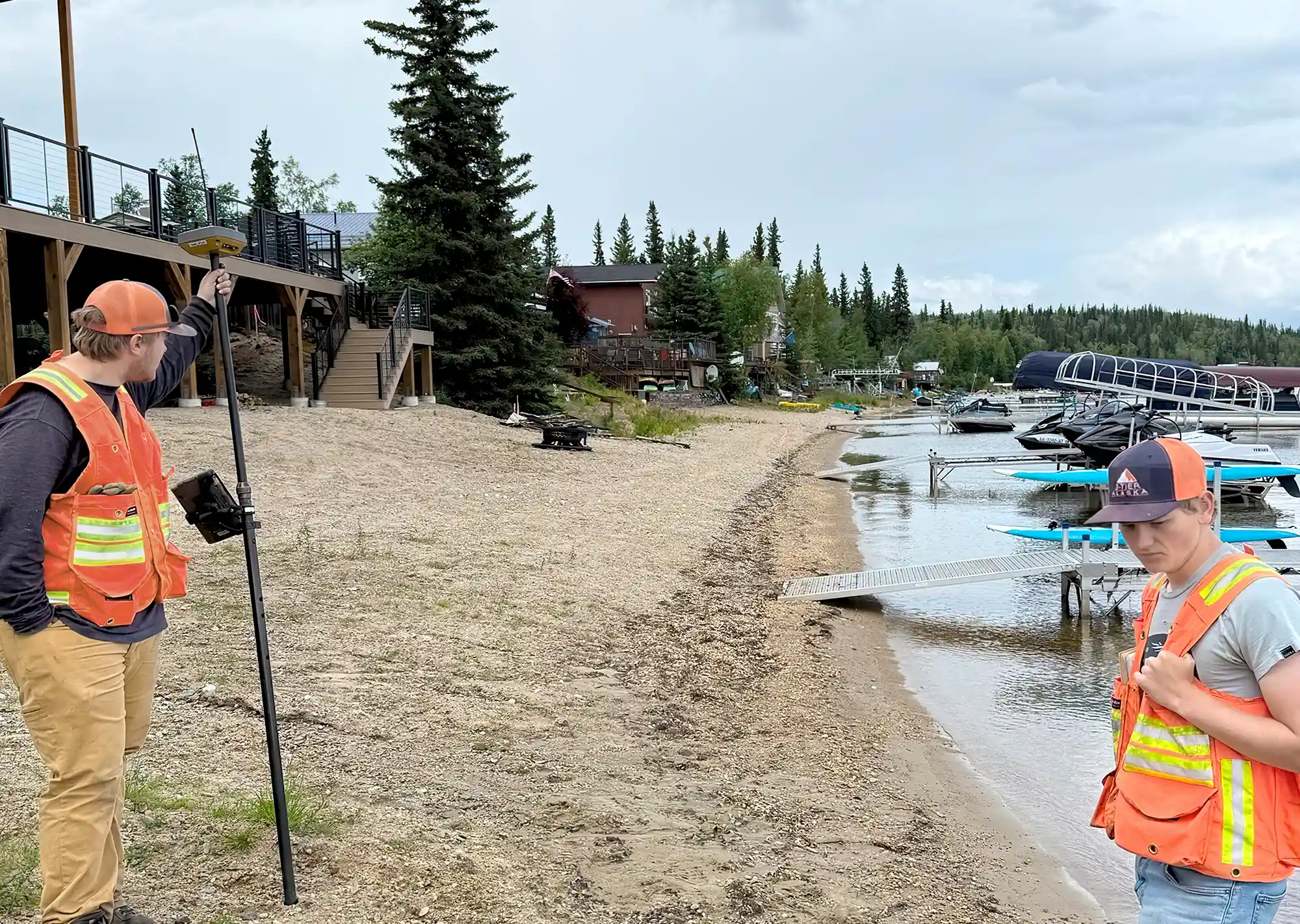
By David A. James
hen planning large projects, developers need a basic layout for the site and often assistance with essential permitting. Fairbanks-based 3-Tier Alaska: Property & Land Surveying can help get things underway.
“We specialize in civil and environmental engineering and land surveying,” 3-Tier Alaska Owner and CEO Nicholas Ringstad says.
3-Tier Alaska is a longstanding company that offers expert specialized work in all three areas. The company also performs civil engineering, which he says is “mostly related to residential road design and septic system design.”
Additionally, the company has added environmental engineering and consulting to its list of services. “We do a large amount of environmental remediation,” Ringstad says. “Soil screening, remediation, wetlands delineations and permitting. A lot of NEPA [National Environmental Policy Act] and EPA [Environmental Protection Agency] permitting as well.”
“He was a dual-licensed professional engineer and professional land surveyor,” the younger Ringstad says of his father. “I would guess 75 percent plus of his revenue was in the survey world. He kept the business pretty small. It was really my only job growing up, even through college.”

Fairbanks-based 3-Tier Alaska assisted with the survey, horizontal design, and permitting for the newly built Love Alaska Hotel at Pike’s Waterfront Landing.
“That mix of backgrounds with business and economics plus engineering actually turned out to be great in terms of being a business owner,” he says.
In 2018, as his father neared retirement, Ringstad decided to buy the company. That same year he also purchased Northland Surveying, and in 2021 he acquired Travis Peterson Environmental Consulting, which added the environmental component of their business.
“We stair-stepped into where we are now, which is twenty full-time people and six or seven part-time people,” Ringstad says.
3-Tier Alaska operates state-wide, from the Aleutian Islands all the way up to North Slope and everywhere in between.
Often, Ringstad says, “a customer will buy a big chunk of property and contact us.” For the engineering side of the job, he says, “We’ll design road work. And sometimes the developer will say, ‘Hey could you also design individual septic systems?’”
The company ensures that all of this is done in accordance with municipal, state, and federal environmental regulations, which are frequently changed and updated.
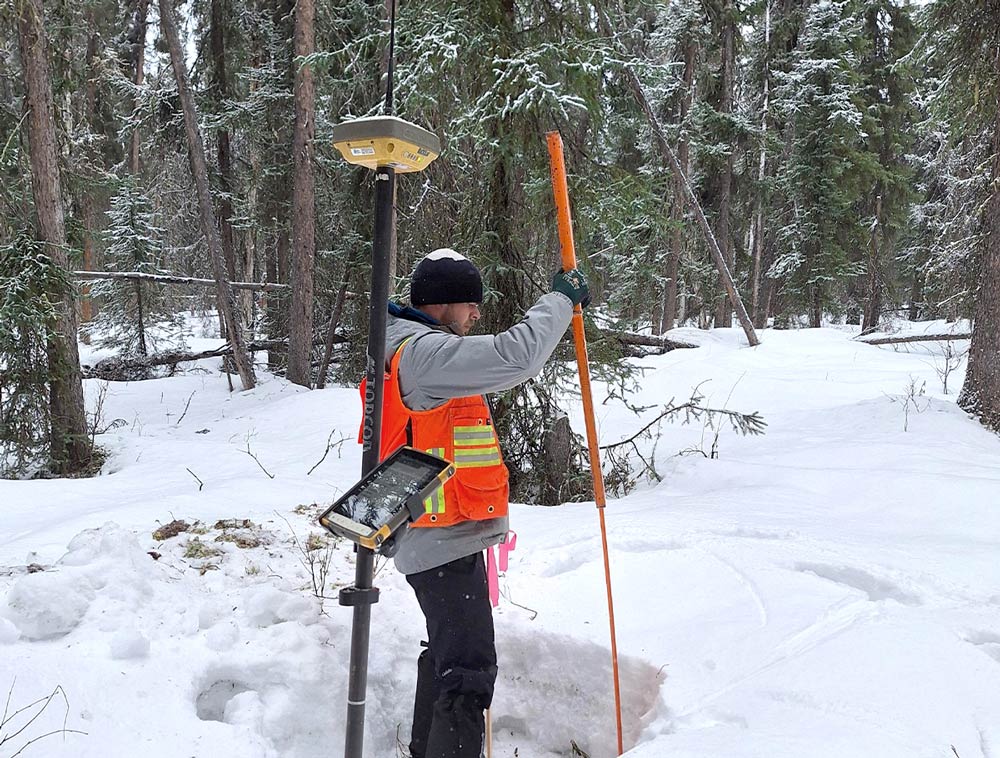
Brett Fillipi, a chainman for 3-Tier Alaska, installs a Carsonite stake for a survey monument.
Owner,
Pike’s Waterfront Lodge
“We did a lot of that layout and design. We did a lot of survey work. We secured a nationwide permit for that new boat ramp on the river. And it’s been wildly successful,” Ringstad says.
Ramras says 3-Tier Alaska did all the civil work and permitting for a reindeer viewing area, motor coach parking, the new Love Alaska Hotel, and the necessary roads and structures within a small area. “They helped us create a Mr. Rogers Neighborhood project on a skinny 10-acre site along the Chena River,” Ramras says.
Calling 3-Tier Alaska “the best civil engineering outfit in the state of Alaska,” Ramras says, “Their work was brimming with imagination.” He adds that it is “imaginative, competent, friendly, and fun. We give them an A+ all around.”




As part of its efforts to work with the community, Cornerstone General Contractors held scheduled tours of the new facility.

fter years of planning, design, and construction, the new Inlet View Elementary School is nearly finished in Anchorage’s South Addition neighborhood. The project is replacing the original 1957 building, one of the oldest schools in Anchorage, which will be used by students through the end of the year. The project is on track for students to move into new classrooms at the beginning of the spring semester in January.
“Right now, the siding is going up,” says Jonathan Hornack, senior project manager for Cornerstone General Contractors. “The parking lot on the east side is striped and signed, and the west side parking lots are nearing completion.”
Landscaping and exterior hardscape began earlier this month, and the Anchorage School District is expected to take over the building in early December to begin furnishing classrooms. Once students settle in, demolition of the existing school will begin in early 2026, followed by construction of a playground, hockey rink, and basketball courts next summer. Full project completion is scheduled for August 2026.
More Need Than a Targeted Upgrade Could Cure
The new building will accommodate up to 289 students, an increase in capacity of more than a hundred students over the current building. The original school, built for 170 students, currently has 215 students enrolled.
“We’re well over capacity,” says Charlie Peters, the Inlet View project manager with the district’s capital planning and construction department. “We’re expecting—because of the International Baccalaureate program that is within the elementary, since this is the only elementary school with that program—that we will see more students going to the school.”

“Right now, the school only has a gym slash multi-purpose room—one space, and typically our elementary schools have two spaces: one multi-purpose room, one gym,” Peters says. “We’re giving them that in the design we have.”
Unlike other Anchorage schools receiving targeted upgrades, Inlet View required a full rebuild due to its age and outdated systems. The existing school does not meet a handful of education and safety standards, such as no sprinkler system for fire protection and no line of sight between the office and the entry. The infrastructure of the current school is past its life expectancy, with more than 550 work order repair requests in 2018, and has had temporary out-buildings for more than 15 years.
Some elements of the existing school will carry over to the new building, including a mural on the west face of the gym.
A Family Project to Benefit Families
“For us, this project is really personal,” says Larry Embly, project manager and co-owner of Circle. “I know friends who went to Inlet View. Now we’re taking that school down and building something new—it feels like giving back to the community.”

The new Inlet View Elementary School will be two stories, with room to accommodate students who want to be part of the International Baccalaureate program, the only one offered in an elementary school in Anchorage School District.
“We’ve got a big family that works here—my dad, uncle, cousin and now my son,” Embly says. “It’s special to be working on something that our kids or grandkids might go to one day.”
Embly said the project has been one of the best Circle has worked on.
“Cornerstone [General Contractors] is extremely high on safety,” he said. “Every day, we know we’re building something safe and lasting. This project was a team effort from the start.”
Peters agreed that the school has been shaped not just by engineers and contractors but by the people it will serve. In addition to Peters, the design committee included community members, staff, PTA members, and the school principal.
“I would say that community involvement is very important on these projects,” Peters says. “Making sure that not just people that are affiliated with the school are aware of it but people that live in the community, and then not just during the design phase but being available during construction. When we’re out there compacting asphalt, or dirt, or just building the building, I think being open and available is important.”
Hornack says the project has been meeting with the local community council on a quarterly basis, or whenever there are updates, to keep neighbors up to date.
“We try to meet with [the community] to make sure they’re in the loop and can tell all their neighbors what’s going on and why we’re doing what we’re doing,” Hornack says.




wenty-two teams took part in the August 8 Associated General Contractors, or AGC, of Alaska 2025 Sporting Clays Shoot. With cool temperatures and a mild breeze, the teams roamed the course, racking up points. Afterward, everyone enjoyed gumbo and po’boys from Gumbo House.
First place went to QAP’s team, made up of Daron Underwood, Kyle Green, Daryl Belanger, Jeff Schock, and Andrew Loman. They scored 374 points. Second place went to Turnagain Marine, whose team included Adam Kresl, Chris Nielsen, Adam Jones, Cody Bryden, and Will Marshall. They scored 372 points. Swalling General Contractors took third place with 365 points, with a team made up of Paul Swalling, John Martin, Matt Thon, Guy Armfield, and Skeet Black. John Martin was the individual high shooter for the third year in a row, racking up 96 points. Full results are posted at the AGC website.
AGC would like to congratulate all the teams who participated, and give a special “thank you” to the Clay Shoot Committee and all the sponsors who helped make the event possible, including food sponsors Granite Construction and North Star Equipment Services, and to Swalling General Contractors, Big Ray’s, and The Superior Group, who were the event prize and gift sponsors.
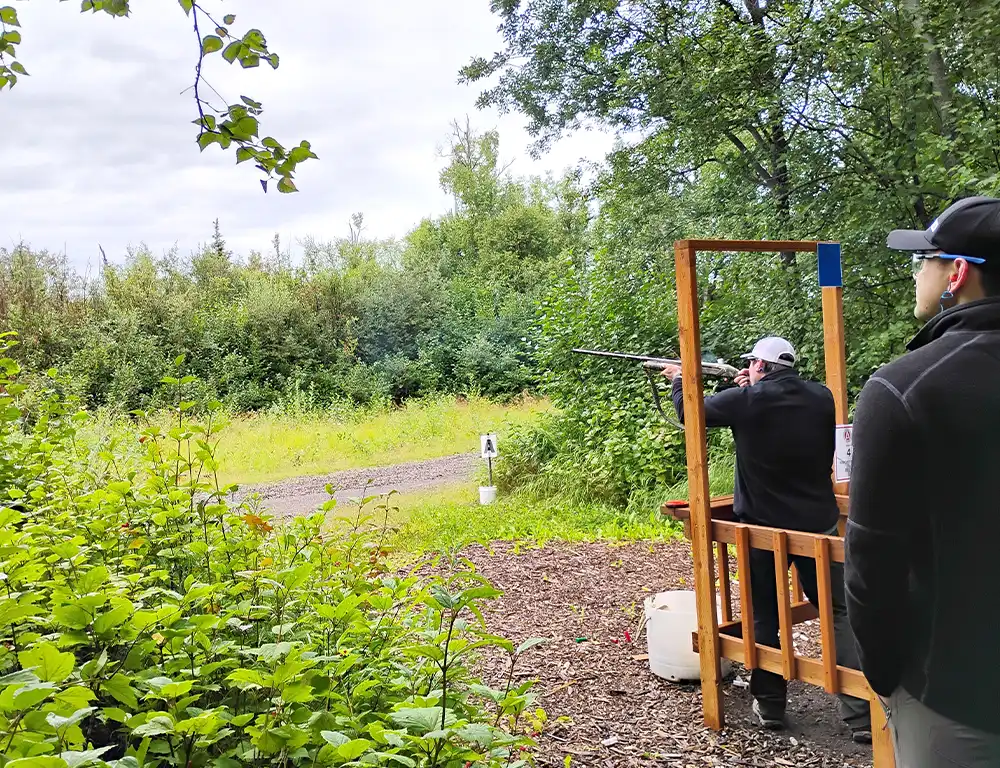

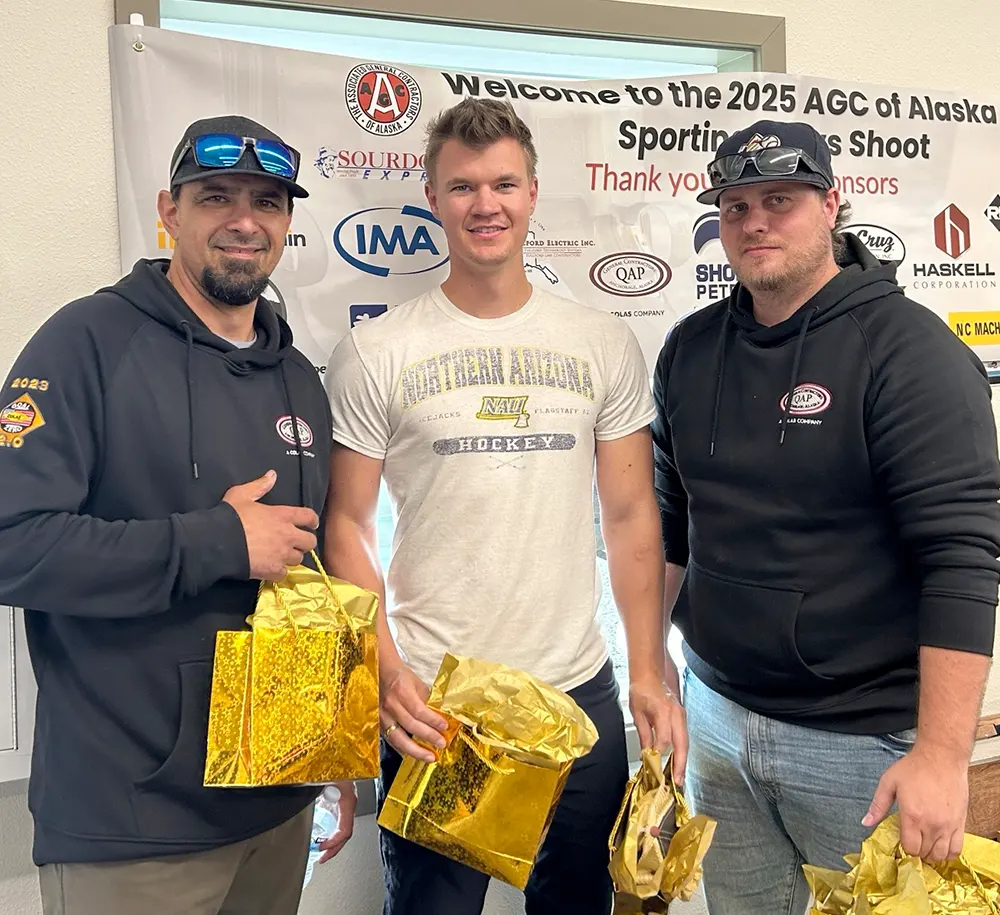
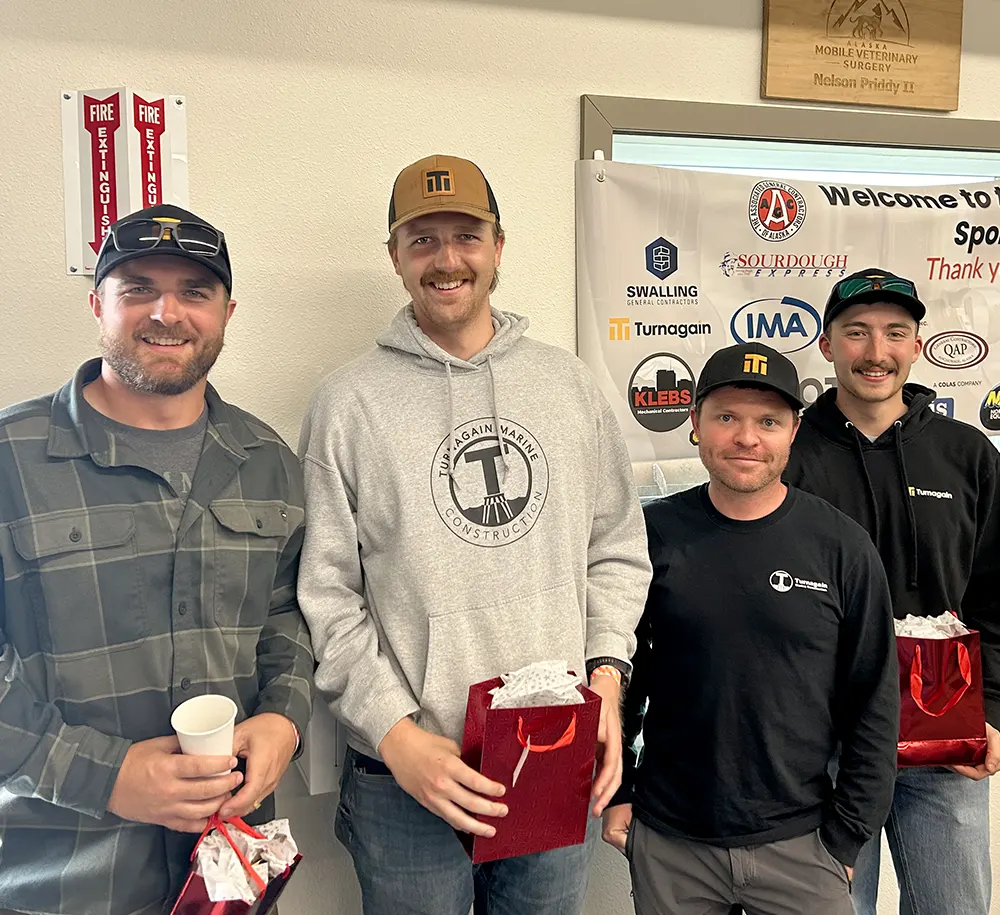


Photos provided by Associated General Contractors of Alaska

e went from zero to one hundred this past year, going from setting our goals to getting in front of as many youth and potential workforce as possible,” reflects Kris Jensen, co-chair of the Associated General Contractors, or AGC, of Alaska’s Workforce Development Committee, or WDC—the goal of which is to address the state’s shortage of qualified construction workers.
Last year, WDC volunteers visited the freshmen classes at all eight of Anchorage’s high schools as part of its outreach to the Anchorage School District, or ASD, rousing interest in Alaska’s construction trades among at least 3,400 students. The committee also facilitated student campus visits to UAA and to worksites like Joint Base Elmendorf-Richardson, Providence Alaska Medical Center, and Anchorage Sand & Gravel.
The ASD partnership is just one facet of a greater effort to shift perspectives when it comes to what’s possible for students and others who are contemplating future careers.
“The past couple of decades, the message to students has really been about higher education and [going into] technology pathways,” says Jensen. While both avenues are viable for some students, “our committee is working hard on trying to offer education and information to the youth on trade pathways.”
In 2024 and 2025, the WDC established several goals aimed at engaging job-seekers and students with hands-on, work-based learning opportunities. The committee’s strategies ranged from connecting with organizations and rural schools to doing outreach to Alaska’s veterans and creating the Contractor Classroom Playbook, an online guide and resource for industry stakeholders to bring the experience of working in construction into the classroom.

Volunteers from the WDC attended seven sessions during the nine-week program, introducing students to career opportunities in construction and related industries. Committee members worked with students to craft their résumés and then led them through developing a list of questions the students wanted to ask industry professionals.
The final session was a “speed interview” event. Students had the opportunity to sit down with industry leaders from eight different trades and ask them the questions they’d developed. Each of the visiting leaders talked openly about their professions and provided advice to students on ways to gain entry to the fields they were interested in.
“Engaging with students from remote locations is one of the most important goals we have,” Jensen says. “We might not reach as many students, compared to when we visit ASD schools, but these sessions are probably the most impactful work we do, per student.”
Publication of its Contractor Classroom Playbook last year provided industry professionals with a living document that provides ideas and tips for connecting with students in the classroom. The playbook can be accessed through the AGC website (look under AGC Services, then Workforce Development) and is continually reviewed and updated with ideas on how to bring construction into ASD and other school districts.
The WDC also worked with ASD to develop the Alaskan Architecture and Construction Career Tree. This document outlines exactly what education and skills can branch into construction industry jobs; it provides viewers with information about the time it takes to develop industry-specific skills, how much a worker can expect to earn at each level, and what advancement potential each job offers.
“All of the jobs and training the tree lists are Alaska-based,” Jensen says. “Youth can find the necessary training and education right here in Alaska, then get the jobs they want.”
Finally, the We Build Alaska website (WeBuildAlaska.com) has become an active forum where employers, potential employees, and educators connect to learn more about construction training and careers.

While the Academies of Anchorage—a program that creates areas of career focus at Anchorage’s high schools—has been scaled back from its original design, the WDC is still dedicated to assisting ASD schools with incorporating construction-informed curricula into classroom learning. For instance, Jensen says, the construction industry relies heavily on Microsoft Excel—something ASD educators hadn’t realized. Through collaboration, educators are now looking at including more Excel-based learning into future curricula.
“Our committee’s approach to work-based learning is trying to find ways to get schools to teach students with real world examples of what we do on a day-to-day basis,” Jensen says. “This allows youth to learn our language: ‘cubic yards,’ ‘production rates,’ ‘shifts.’ All this is a way to get them excited about our industry and possibly choose a pathway that leads to the trades.”

“It’s hard to turn away opportunities, but one of our current challenges is to not exhaust the committee members who already do so much,” Jensen says.
He estimates that outside of committee meetings, WDC members will invest more than 400 hours visiting classrooms, collaborating with schools, and presenting to organizations. Though the committee has expanded to establish groups in Fairbanks and the Mat-Su, additional volunteers are needed to build upon the WDC’s success.
At the beginning of each outreach effort the WDC leads, volunteers ask their audiences how many of them are interested in a job in the trades. Roughly 5 percent raise their hands.
“At the end, we ask that same question—and we get about 15 percent,” Jensen says. That shift is one small piece of evidence that the WDC’s efforts are working.
The next step, he adds, is to ensure the industry is ready for the growing workforce: “Now we have to be prepared as an industry to get them trained and working.”




n Alaska, remote construction and operations aren’t the exception, they’re the norm. From fly-in-only mine sites and offshore platforms to isolated villages and roadless corridors, these projects often operate hundreds of miles from the nearest infrastructure. In such environments, reliable connectivity isn’t a convenience, it’s a necessity. It allows the project office and project teams to operate safely, efficiently, and effectively.
Yet in many rural and remote parts of the state, basic connectivity remains one of the biggest barriers to efficient project delivery. From transmitting engineering plans to enabling remote inspections or simply keeping crews connected to headquarters, the digital tools used on most job sites rely on a network that often doesn’t exist.
These challenges aren’t new, but the solutions are evolving. As construction and operations become increasingly data-driven, we must rethink how we design, deploy, and support communications systems in remote areas. Success in rural Alaska depends on selecting the right technologies, building in resiliency, and planning for the unexpected.
One notable advancement has been the expanded use of Low Earth Orbit, or LEO, satellite services like those provided by Starlink and OneWeb. These systems have brought high-bandwidth internet to areas previously unreachable. But deployment in Alaska requires customization. For example, off-the-shelf mounts and cabling often underperform and fail in Arctic conditions. Custom mounts designed to withstand extreme winds and icing have proven critical for ensuring connectivity uptime during Alaska’s often harsh weather events.
Even with LEO satellite coverage, smart service management is essential. In many locations, multiple LEO units are required for bandwidth and to support different functions like field offices, equipment monitoring, video streaming for inspections, or crew housing. Without central coordination, these can compete for bandwidth or broadcast conflicting wireless networks or service set identifiers, or SSIDs. A managed connectivity approach—sometimes referred to as “connectivity as a service” or CaaS—consolidates these into a unified network with load balancing, prioritization, and centralized monitoring, making the network more predictable and secure.
And of course, outages will happen. Just a few weeks ago, a large LEO provider outage disrupted services across the region. Preparing for these moments is the best practice. That could mean on-site data buffering, redundant links on different technologies, or protocols for prioritizing data traffic when capacity drops. In projects where connectivity is tied to worker safety or environmental monitoring, resilience is non-negotiable.
Depending on the use case, there are many technology solutions:
- Fiber (where feasible, often in conjunction with nearby communities or utilities)
- Fixed Wireless Access, or FWA, or microwave point-to-point or point-to-multi-point links
- LEO satellite service
- Geostationary Earth Orbit, or GEO, satellite service
- Cellular/5G services
- Private LTE (Long-Term Evolution) or CBRS (Citizens Broadband Radio Service) networks for controlled, on-site mobile coverage
These tools can be combined—LEO for backhaul, CBRS for site-wide wireless, and microwave as a secondary failover. The key is understanding not only the capabilities of each technology but how they perform in extreme environments and how they can be deployed, maintained, and scaled as project demands evolve.
1. Conduct a digital readiness assessment early in project planning. Identify communication needs by phase—construction, operations, maintenance—and design the network accordingly.
2. Design for redundancy. That includes power sources, communication pathways, and hardware spares. In rural Alaska, the unexpected is expected.
3. Prioritize critical data. Not all data is created equal. Define what needs to flow in real time, what can be cached, and what can be dropped if necessary. This determines how much bandwidth is truly required and where to build in safeguards.
4. Train and empower local teams. Having someone on-site who can maintain systems, reboot hardware, or provide basic diagnostics can be the difference between a five-minute glitch and a multi-day outage.
5. Stay flexible. Technologies evolve quickly, and in isolated locations, agility is an asset. Be open to blending traditional and emerging tools and plan for upgrades as better options become available.


he employees of Equipment Source Inc. Alaska, or ESI, know how to keep customers working through cold Arctic winters.
For 25 years, ESI has manufactured customized equipment and provided commercial and rental options for the oil, mining, construction, agriculture, telecommunications and other industries. The company has experienced significant growth, particularly in the past decade, and company leaders continue to innovate solutions for Alaska’s most challenging problems.
“The team decided there was a way to do this better,” says ESI Vice President Nick Ferree. “That’s how our flagship heater, the ES700, was born and now there are over 1,000 in operation on the North Slope alone.”

“We have a reliable lineup of equipment that we support, cradle to grave,” says Ferree. “We’re here to find solutions. A lot of manufacturers build stuff that they don’t support after a few years. That’s not acceptable to us. Even if it’s 20 years old, we’ll find the part to fix it and keep it going.”
Ferree says talking with customers is vital to helping them. He says the internet has been good for marketing and customer research, but an in-person conversation is the best way to ensure the customer rents or purchases the best solution for their project. A customer may have a solution in mind, but there may be a more efficient or cost-effective option available.
Arriving on Time
“A lot of our customers on the slope have a limited construction and delivery window; whether they need to make a summer barge schedule, winter ice road season or flight schedules,” says Ferree. “If you miss one of those deadlines, then your only option is to hire a Herc [a civilian version of the C-130 Hercules military cargo transport airplane], which is very expensive.”
He adds that many companies from the Lower 48 don’t realize that, while a repair job in the states might involve a technician loading tools into a vehicle and driving to the location, in road-inaccessible areas a technician will have to fly in either by plane or helicopter.
“The ESI team is the best in the business,” says Nielsen. “They are attentive, thorough, and make things happen. I would recommend ESI over any other equipment rental agency in Alaska.”

“Onyx Drilling has purchased several pieces of equipment from ESI, and we feel that their equipment line cannot be beat,” says DePeter. “Couple that with an amazing group of people, and you have a winning team.”
Ferree says ESI has spent the last eight years in a growth phase. ESI’s 12-acre Fairbanks campus has expanded over the last four years with the addition of a dedicated service facility, 10,000 square-foot warm storage warehouse and an additional 10,000 square-feet of manufacturing space. In 2023, it relocated its Anchorage location to a larger 16,000 square-foot building at the corner of Dowling and C Street that allowed for more room in the service shop, an expanded equipment yard, and customer service areas. Ferree says ESI plans to continue growing its team, expanding equipment rental options in the Anchorage market, and looking for new opportunities. In the meantime, the staff at ESI will continue to innovate designs, manufacture new products that keep the industry working all year round, and make sure customers are outfitted with equipment that is reliable in Alaska’s cold weather.





he 2025 Associated General Contractors, or AGC, of Alaska Safety Fair was a hit. Attendees had a wonderful time in the sun with more than twenty stations focused on kid-appropriate safety messaging.
AGC would like to thank everyone who attended, as well as all of the booth hosts, and offers a special thanks to our partners Davis Constructors & Engineers, Inc.; ENSTAR Natural Gas Company; Swalling General Contractors, LLC; WeBuildAlaska; the AGC Construction Leadership Council; and especially the AGC Safety Committee for putting on this fantastic event.
Thanks also to our friends at the National Association for Women in Construction for their door prize donations, and congratulations to Killian J., who took home the grand prize, a grill donated by ENSTAR.
We look forward to another great Safety Fair in 2026!




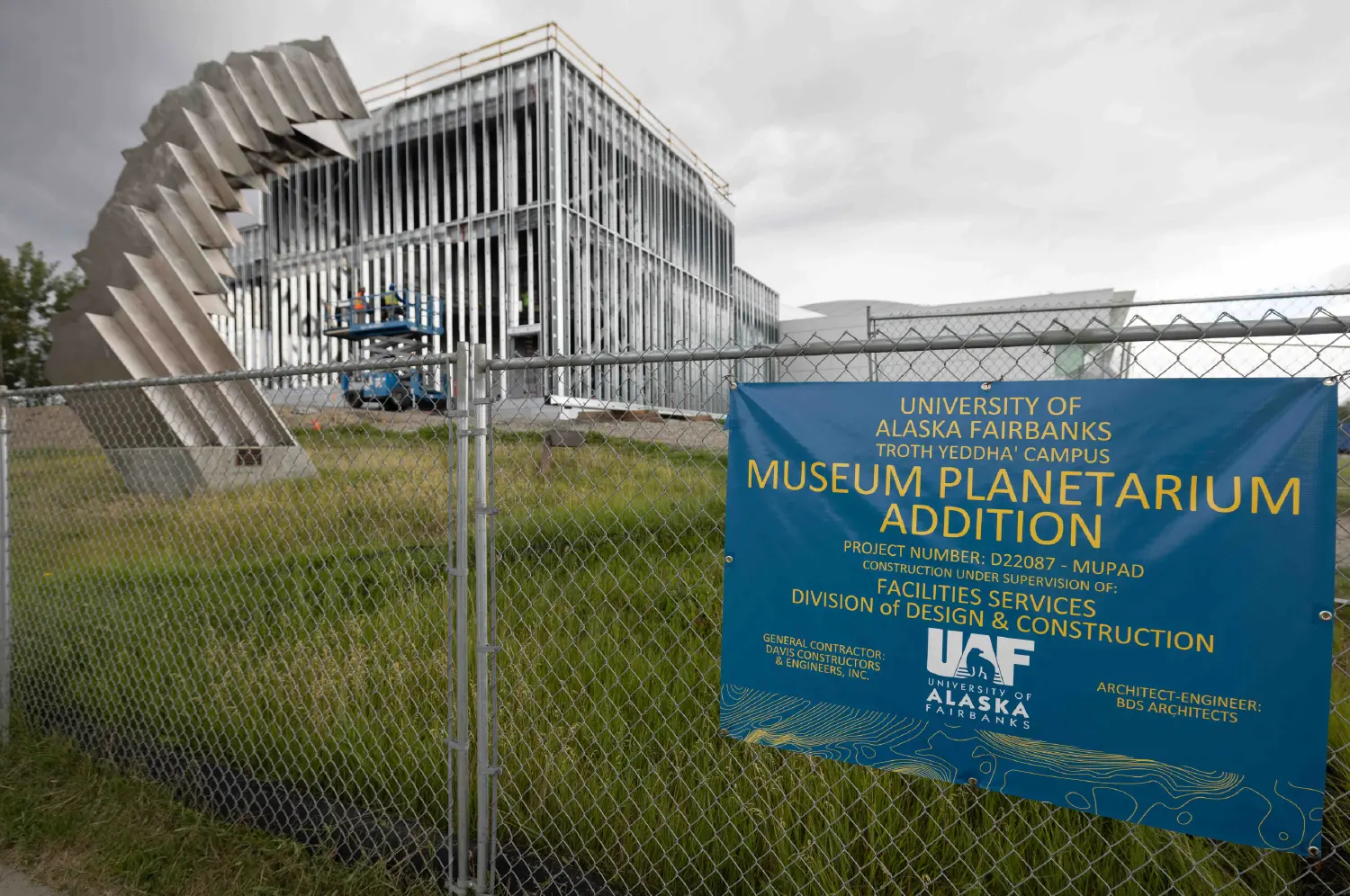
hen visitors step into the University of Alaska Fairbanks’ new planetarium, they will be greeted by more than just a high-tech projection system and a state-of-the-art dome. They will be entering a space that was decades in the making—a dream for scientists, educators, and students.
The Fairbanks community has long wanted a permanent place to bring the wonders of the Arctic sky, the aurora borealis, and the universe indoors. This $9 million, 5,700-square foot facility, which is expected to open to the public in February, will be the northernmost planetarium in North America.
Located on the west side of the University of Alaska Museum of the North, the theater will feature an 11-meter dome, two projectors, four image-generation computers, theater-quality surround sound, and specialized lighting systems. The sixty-five-seat venue will host astronomy classes, public programs, and immersive experiences that go beyond stargazing.
“Every summer, tourists wander into the Geophysical Institute and ask, ‘Where’s the aurora?’” says McCoy. “In winter, we can point them to the real thing, but in summer, with the 24-hour daylight, they’re out of luck. A planetarium means we can show them the aurora, along with the science, culture, and beauty behind it any time of year.”
This idea wasn’t new. Fairbanks residents have advocated for a planetarium for at least four decades, says McCoy. Former UAF Chancellor Brian Rogers pushed for funding when he was a state legislator more than forty years ago. Multiple feasibility studies came and went without a green light.
What finally brought the planetarium to life was an anonymous donor’s commitment to fund the brick-and-mortar portion of the project. Additional contributions soon followed. The MJ Murdock Charitable Trust pledged nearly $500,000 for the projection and sound system. In addition, longtime UAF donors Sarah and Cary Keller committed $125,000 to fund the planetarium manager position.
McCoy says he sees the project as a tool for both outreach and research. Beyond serving tourists and the local community, the facility will be used for K-12 field trips, university courses, and scientific presentations.

With the software and technology that’s being installed, the planetarium can entertain and educate visitors about astronomy as well as chemistry, biology, glaciology, and volcanology.
“We can pull up a molecule, spin it around on the dome, and make science come alive,” says McCoy.
Preliminary demolition began in late 2024, including the relocation of an Alaska Native totem pole from the construction site to a protected location inside the museum. Official groundbreaking took place in April 2025 and completion is targeted for late December 2025.
“A planetarium is a specialized facility,” says Lindsey. “They require unique equipment that requires technical installation. Keeping all [stakeholders] included on the schedule and the planning process to have the construction side complete for dome installation has been very important.”
Lindsey says consistent collaboration has kept the project on track.
“This project was very much a team approach,” says Lindsey. “We’ve worked hard on value engineering and design to fit within the designated budget. Everyone involved worked hard to make the pieces come together.”
The construction brought together a wide range of skilled subcontractors, each contributing specialized expertise to the project.
Aaron Plumbing & Heating Company tackled the mechanical systems, the electrical work was completed by Fullford Electric Inc., and Swanson Steel Erectors Inc. and JD Steel Co., Inc. took care of the structure steel, meaning the building represents coordinated effort across multiple trades.
Great Northwest, Inc. handled site work, while Rady Concrete Construction and Gundersen Painting, Inc. were hired to add finishing touches inside and out. A&A Roofing Company, Inc. is working to ensure the building is weather tight, and Commercial Contractors, Inc., Elite Acoustics, and GMW Fire Protection are taking charge of interior systems and safety. BEK of Alaska, Inc. and Siemens Industry, Inc. are also providing support.
For Lindsey, these partnerships are essential.
“We can bring all that into the dome,” says McCoy.
It’s not just a place to look at the stars. It’s a place to tell Alaska’s stories. Programs will include astronomy shows, cultural presentations, and immersive science films. One highlight is Cultural Connections, a collection of films produced by UAF featuring interviews with Alaska Native elders about the aurora, along with song, dance, and animation.
Classroom integration will be another major focus. For years, UAF has been operating portable planetariums around Alaska. The inflatable domes are popular, says McCoy, but they wear out and can only reach so many schools.
“This fixed facility means we can welcome everyone in, year-round,” says McCoy.
Through it all, Davis Constructors & Engineers have maintained a strong partnership with UAF.
“Working with Davis has been great,” says McCoy. “They’re doing a fantastic job.”
For Lindsey and the Davis team, the reward will be seeing a project that was years in the making reach completion.
“The collaborative teamwork that has occurred to bring this project together will undoubtedly make a positive impact on the Fairbanks community,” says Lindsey. “Davis Constructors and all of our subcontractors are excited to see this project come to life.”
- Aaron Plumbing & Heating Company
- Fullford Electric Inc.
- JD Steel Co., Inc.
- Great Northwest, Inc.
- Gundersen Painting, Inc.
- Commercial Contractors, Inc.
- GMW Fire Protection, Inc.
- Siemens Industry, Inc.




ew US Department of Defense, or DOD, cybersecurity standards go into effect in October, which will affect contractors seeking to work on projects with several government agencies, including the US Army Corps of Engineers–Alaska District.
Cybersecurity Maturity Model Certification, or CMMC, is a framework designed to protect sensitive unclassified information that is processed, stored, or transmitted by defense contractors and subcontractors.
When the standards go into effect, contractors and subcontractors will need, at a minimum, Level 1 certification to be eligible for USACE and other DOD projects.
“Overall, the effort to secure government information is to make sure it’s not accidentally released during a cyber attack,” says Ryan Zachry, Small Business Professional for USACE–Alaska District.
CMMC standards have existed since 2021, but the federal government announced the certification mandate last year. The full implementation timeline spans three years. Beginning October 1, Level 1 certification is required for the security of Federal Contract Information, or FCI, whether or not the prospective project includes Controlled Unclassified Information, or CUI.
By October 2026, companies must complete both Level 1 and 2 certifications, which cover both FCI and CUI. And for those who need Level 3 certification to work on highly classified weapons systems or critical CUI, the deadline for completion is October 2027.
Certification is mandatory for all DOD contracts greater than the $10,000 micro-purchase threshold for awards, orders, calls, agreements, and Government Purchase Card transactions. There is an exception to Commercial off-the-shelf purchases. Likewise, contractors and subcontractors already working on DOD and USACE projects are grandfathered; however, they will need certification before they are awarded future projects.
Level 2 and Level 3 certifications pertain to companies dealing with increasingly higher levels of controlled information and, therefore, are more complex. In addition to self-certification, contractors must meet additional criteria outlined on the SPRS website, followed by a verification by a certified third-party assessment organization authorized to conduct CMMC evaluations. Because Level 3 is the advanced level of cyber hygiene, additional steps are required prior to verification by the certified third-party assessment organization and the Defense Industrial Base Cybersecurity Assessment Center. Zachry says the cost for Level 2 and Level 3 certification is significantly more, due to the need for third-party verification and any additional internal changes in a company’s IT systems to meet compliance requirements. Once implemented, Level 2 and Level 3 certifications require a third-party assessment every three years. In addition, a yearly self-assessment is mandated to ensure the in-place protections are working and being followed.

Ivan Cholakov | iStock
“The path to certification varies depending on what level of compliance you need,” says Fisher. “For R&M, this means meeting the 110 requirements of NIST Special Publication 800-171 R2. This includes physical and logical protection and policies to ensure CUI is protected at all times within our network and in the physical space where it resides.”
Going into the process, Fisher says R&M had very little understanding of what CMMC requirements were, including what they were trying to safeguard and why. In the process of working toward compliance, they’ve learned that the CMMC requirements, while not trivial, are not overly onerous, and most of the requirements are really just good modern cybersecurity standards. There are pieces that are specific to CUI and FCI and to information storage. For example, companies can’t use commercial cloud storage. Instead, they have to use special DOD-approved cloud storage services to store data in the cloud.
“CUI has been a nebulous idea from the start,” says Fisher. “By definition, it is information that is not classified but still needs to be protected and not shared with the world. Some of this information by itself isn’t CUI; sometimes it becomes CUI when combined with other information. We now have a much better idea of how to identify CUI, most of which will come from the DOD and will be marked in specific ways.”
While much of the work in becoming CMMC certified falls under the responsibilities of R&M’s IT group, Fisher says it is a company-wide initiative. Any department that will create or encounter CUI needs to be involved and trained in procedures to protect CUI. R&M’s IT group is currently working with all departments, including engineering, construction services, geomatics, earth sciences, planning, and business services, to ensure they understand what the users need to work efficiently in this new environment and all departments and employees understand the scope and requirements of CMMC.
Fisher advises companies to get started with the certification process, even if they are already well-aligned with the standards. He says there are a lot of boxes to check, a lot of policies to create, and a fair bit of training for users. Though CMMC may seem daunting at first, it ultimately strengthens a firm’s cybersecurity posture. More importantly, it ensures that it can continue supporting DOD projects while protecting sensitive information critical to national security.
“The biggest hurdle here is time,” says Fisher. “Take a deep breath, and if you don’t have the internal staff to work through this, contract an external firm with experience in NIST requirements to help guide you through this. It is all very doable and comes down to attention to detail.”
Zachry says contractors and subcontractors can find more information on the SPRS website, www.sprs.csd.disa.mil, or they can contact him with questions.





he sun was shining, the salmon was bucking, and Yeti Dogs were on the grill on June 25 at the 2025 Construction Leadership Committee, or CLC, annual Grill & Chill event. There was a great turn out of familiar faces and some new members who were able to learn about CLC’s mission to cultivate the next generation of leaders in the construction industry.
Judy Hepner from Shannon & Wilson unseated last year’s Bucking Salmon champ to take home the championship belt buckle, after hanging on for a whopping 25 seconds. We know she will display that belt with pride at home or in her office.




hen Kelly Bond’s sons were young, he’d occasionally take them to work with him. A single father living in Wyoming, he’d spent his life working in sawmills and skidding trees before finally starting his own logging business. Kelly’s sons, Murray and Joe, would tag along, learning their father’s businesses by observation and osmosis.
The Bond family was always close. When elder son Joe relocated to Alaska to study aviation, Murray went with him. Soon, Kelly was following his sons north.
“It seemed like it was good timing,” Kelly reflects. “I just tied up some loose ends in Wyoming, then came up later.”
Since then, Bond Brothers has been the go-to company for land clearing services throughout Alaska. Based in Wasilla, the father and son business clears land for projects from Cordova to Nome, throughout the Kenai Peninsula, and in the Glenallen area.
Anyone who’s headed down to Kenai for fishing or camping this summer has seen the result of Bond Brothers’ work. The company cleared every inch of land necessary for the Cooper Landing Bypass, a project that adds ten miles of new highway north of Cooper Landing, widens shoulders, and adds passing lanes, paths, and wildlife crossings.
Bond Brothers subcontracted for various phases of the Cooper Landing Bypass project. A small company of just three employees—Kelly, Murray, and one steady part-time employee—Bond Brothers brought on several additional temporary employees to operate the company’s fleet of equipment for the Cooper Landing Bypass job.
More recently, Bond Brothers subcontracted to Kiewit for a job clearing timber for a 300-acre runway expansion on Joint Base Elmendorf-Richardson. The project, which adds 2,500 feet to bring the runway’s total length to 10,000 feet, is one of the US Army Corps of Engineers–Alaska District’s largest and most significant military construction projects. The work Bond Brothers did on this job was part of a larger effort to move about 12 million cubic yards of material that was in the way of the extension—including a literal mountain.
For Bond Brothers, and for Kiewit, the JBER runway extension was an opportunity to create jobs and bring on additional workers. “The runway extension is a real jobs project,” says Pat Harrison, the Alaska Area manager for Kiewit Infrastructure. “We estimate this project will require over 650,000 craft-hours to complete, which translates to about 156 man-years given the construction schedule.”
Begun in 2022, the project will equip the base to accommodate any Department of Defense aircraft, regardless of weather conditions.
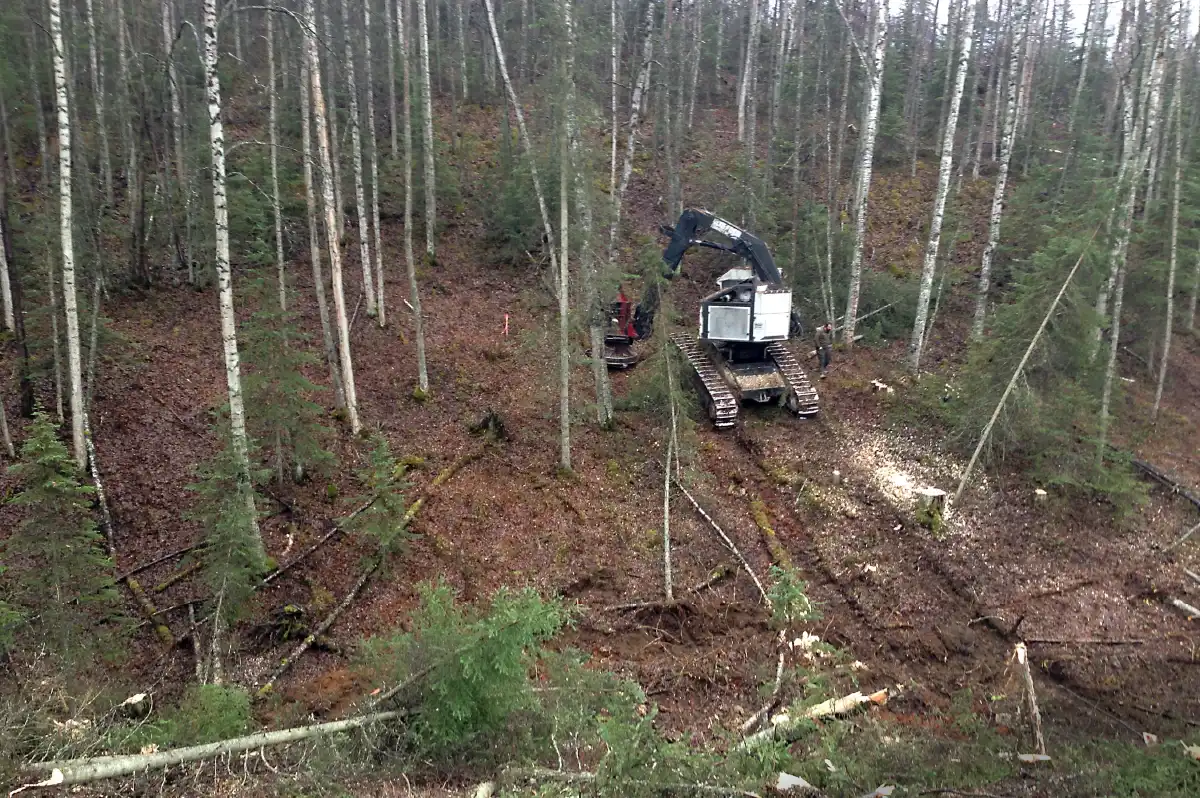
“That was one of my absolute favorite projects,” Kelly says of the Road to Tanana. “I really enjoy the work because you’re out there, hardly anybody to bother you, and you see all kinds of really neat country.”

Kelly spends more time in the office now, doing paperwork. When he’s needed, he still climbs into the cab of the feller buncher and helps clear land. While “the company basically belongs to Murray now,” he says, he envisions the possibility that it might be handed down to Murray’s sons one day.
“The reason I called it ‘Bond Brothers’ is because [my] boys were more interested,” he explains. “They were really involved in setting it up. And naming it that, I knew it would last longer.”





Horizon Trek, LLC
magine this: You’re on site, juggling subcontractors, schedules, and a million moving parts, when suddenly—bam—you’re sidelined. Maybe it’s a heart attack, maybe it’s a lawsuit, or maybe it’s just life doing what life does best: surprising us. If you’re not around to call the shots, will your business survive the fallout?
Welcome to the world of contingency planning—specifically, preparing for the 5 D’s: Death, Disability, Divorce, Disagreement, and Distress. These aren’t just dramatic plot points; they’re real-world disruptors that can gut a business faster than a faulty backhoe hydraulic line.
Let’s unpack what they mean for you and how you can turn these threats into manageable risks.
So, what should you do? Start with the basics:
- Document your wishes. Who should take the reins? Should the business be sold, kept in the family, or dissolved?
- Fund continuity. Life insurance can provide the cash your business needs to stay afloat while leadership transitions.
- Create a “Stay Bonus” plan. Want to keep key employees from jumping ship? Give them a financial reason to stay during the chaos.
Death doesn’t have to mean the end of your company—but only if you’ve prepared.
Disability is uniquely dangerous because it doesn’t always trigger a legal transfer of ownership—but it does trigger a leadership vacuum. To avoid paralysis, make sure you have:
- Medical and financial powers of attorney
- A clear management succession plan
- A buy-sell agreement that addresses disability events, including how and when your interest can be bought out—and how that buyout will be funded.
Remember, if you’re not at the wheel, someone else needs to be—legally and operationally.
To reduce the business damage in the event of a personal breakup:
- Understand how your state treats business assets in divorce.
- Consider a prenuptial or postnuptial agreement.
- Have a valuation method in place (ideally spelled out in your buy-sell agreement).
- Keep clean records of what’s personal and what’s business.
It’s not romantic, but it’s realistic—and it could save your company.
Don’t wait for tension to boil over. Instead:
- Build a solid operating or shareholder agreement with clear exit provisions.
- Establish buy-sell terms that are fair and current (and regularly updated).
- Decide whether ownership changes should be optional or mandatory in cases of retirement, dispute, or firing.
A well-written agreement is like a fire extinguisher: better to have and not need, than need and not have.
Distress isn’t always preventable—but good planning can soften the blow:
- Invest in business interruption insurance.
- Diversify your revenue streams (e.g., service contracts, maintenance, or federal projects).
- Build financial buffers to weather lean periods.
- Back up your data and document your operational systems so others can step in if you’re sidelined.
The key is to build resilience before disaster strikes.
- Who will run your business if you can’t?
- Does your buy-sell agreement cover death, disability, divorce, and disputes?
- Are your key employees incentivized to stay in a crisis?
- Do your family and advisors know your succession wishes?
- Have you reviewed your plan in the last year?
You owe it to your family, your employees, and your legacy to prepare. Because someday, one of the Ds will show up uninvited. The question is: will your business survive the visit?

erlla Deluca will be the keynote speaker at the 2025 Associated General Contractors, or AGC, of Alaska Annual Conference taking place at the Hotel Captain Cook November 12 through 15. She will be speaking at the Management Symposium on Friday, November 14. Deluca will present an interactive and informative talk about the trajectory of women’s careers in construction, creating a legacy, and mentoring women in construction.
Deluca is the president of Southeast Constructors, a woman-owned small business that specializes in heavy construction. She migrated to the United States when she was 20 years old. After landing in Florida, she worked in real estate and construction for 18 years, where she became a general contractor, working on more than 100 projects including residential and commercial. About 10 years ago she moved to Iowa to acquire more experience in heavy construction. Since then, she has done extensive work for cities, state, and federal agencies. Her company has completed twenty-six federal projects in the past decade.
Deluca says some of her proudest projects are the Women of Achievement Bridge in Des Moines, Iowa, and, at the federal level, the restoration of former president Harry S. Truman’s house. Her federal projects include work for the US Army Corps of Engineers, several national parks, and the General Services Administration, which manages government buildings and real estate.
Because of her passion for helping small businesses, Deluca sits on the board of the Iowa Department of Transportation for DBE, or Disadvantaged Business Enterprise, Businesses. In 2020, she graduated from the Goldman Sachs Entrepreneurship Program and is still a part of the Goldman Sachs 10k Small Business Voices community, where she advocates for small businesses at the national level. To have a direct impact helping minorities and women entering the construction industry, Deluca in 2021 founded—with her partner Joseph Cichowski—an all-inclusive construction school, the Iowa School of Construction, which has been featured in the Wall Street Journal, national news, and local news channels. She is also behind The Pink Hardhat Foundation, which she founded in 2022 with the vision of empowering, educating, and inspiring women in construction. The foundation helps cover the costs for additional training for women in the industry and mentoring.


unning a contracting business means managing projects, crews, equipment, and finances. One key financial decision that can improve your bottom line is refinancing your business debt at the right time. But be cautious: refinancing too early or too late can cost your business more in the long run. Here are important elements to consider.
For contractors, refinancing can offer the breathing room needed to manage slow pay cycles, fund new equipment, or take on larger projects.
You have multiple loans or payments. Are you juggling equipment loans, credit cards, and lines of credit? Refinancing can consolidate them into one manageable payment, helping simplify your cash flow and reduce the chance of missing payments.
Your cash flow is tight. Many contractors experience fluctuating income depending on job schedules and seasonality. Refinancing to lower your monthly payments, even if it means extending your loan term, can free up working capital.
You need funds for growth. If your current debt is preventing you from taking on new jobs or purchasing better equipment, refinancing can sometimes unlock equity or reduce obligations to make room for new borrowing.
Your business has become more stable. If your business has grown, your financials are stronger, and you’ve built a good payment history, banks may be willing to offer better terms than when you first borrowed.
You’ll face high prepayment penalties. Check your original loan agreement for any fees.
You plan to exit or sell soon. Taking on new debt or extending repayment may not make sense if you’re winding down.
A strong relationship with your banker can help you explore flexible options, such as extending repayment, receiving a lower interest rate, or accessing a revolving line of credit that grows with your business. Consult your banker about what is the best option for your unique operation. The right refinancing move could help lay the financial foundation for your next big project.



len “Knick” Knickerbocker passed away on August 6. He was born on October 7, 1946, in Stanley, North Dakota, to Glen Morris Knickerbocker and Viola June Shoff. Knick moved to Alaska in his teens and became a master craftsman and builder.
The former president and lifetime board member of the Association of General Contractors of Alaska, Knick was also an avid hunter and fisherman, and an adept storyteller.
erbert “Herb” Lang passed away July 20, at the age of 95, at Alaska Regional Hospital after a brief illness.
Lang was born October 24, 1929, in Jersey City, New Jersey, orphaned at ten years old, and raised by extended family. Having dreamed of moving far away from New Jersey, at age seventeen Lang chose to attend the University of Alaska in 1947.



n May, Alaska Department of Labor and Workforce Development Commissioner Cathy Muñoz sent a letter to Cornerstone General Contractors, announcing that Cornerstone had been approved for the Alaska Occupational Safety and Health, or AKOSH, Construction Health and Safety Excellence Program, or CHASE. Cornerstone is the first construction company to achieve CHASE Flag status.
offman Engineers, Inc., congratulates Catelynn Hettick on earning her professional engineering, or PE, license in fire protection engineering; McKenzie Lallish and Noah Fowler on earning PE licenses in structural engineering and mechanical engineering; and Jesse Wight-Crask on earning his Certified Commissioning Authority certification.
ettisworth North Architects and Planners has hired two senior professionals and two associates, expanding the firm’s Anchorage and Fairbanks teams.
The addition of Rebekah Gray, a senior interior designer with 20-plus years of experience, expands Bettisworth North’s capabilities in Fairbanks with onsite interior design expertise.
wo new employees at Associated General Contractors, or AGC, of Alaska, will be on hand to help members. Norma Lucero joins AGC as Deputy Director after working with the Small Business Administration in Alaska and Heidi Olson steps in as the new Membership Director, following work at the Alaska Department of Corrections.
avis Block & Concrete celebrated its milestone 50th anniversary July 25, with an event attended by many current and former employees, local leaders, and many Davis family members. The celebration highlighted the company’s lasting legacy and contributions to the Kenai Peninsula community.




- Alaska Industrial Hardware
- Alaska Mechanical Contractors Association, Inc.
- Alaska Railroad
- Alyeska Pipeline Service Co.
- Alyeska Tire
- Anchorage Chrysler Dodge
- Anchorage Sand & Gravel
- Birch Horton Bittner & Cherot
- Bob’s Services, Inc.
- Chugach Electric Association Inc.
- Construction Machinery Industrial
- Craig Taylor Equipment
- Crowley Fuels
- Davis Block & Concrete
- Davis Constructors & Engineers Inc.
- Denali Drilling Inc.
- DesertAir Alaska
- ENSTAR Natural Gas Co.
- Equipment Source, Inc.
- F&W Construction Company Inc.
- First National Bank Alaska
- Fountainhead Development
- Fullford Electric, Inc.
- GMG General, Inc.
- Great Northwest Inc.
- Hamilton Construction Alaska
- Holmes Weddle & Barcott
- IMA Financial Group
- JD Steel Co. Inc.
- KLEBS Mechanical
- Loken Crane, Rigging and Transport
- Lynden
- Matson Inc.
- Michels Corporation
- MT Housing Inc.
- N C Machinery
- NECA Alaska Chapter
- Nortech Environmental & Engineering
- Northern Air Cargo
- Northrim Bank
- PeopleAK
- Personnel Plus Employment Agency
- PND Engineers Inc.
- Rain for Rent
- Rain Proof Roofing
- Rural Energy Enterprises
- Samson Tug & Barge
- Seatac Marine
- Sheet Metal Inc.
- Shoreside Petroleum
- Smith Currie Oles
- SMS Equipment
- SMS Equipment
- Sourdough Express, Inc.
- Span Alaska Transporation LLC
- Spenard Builders Supply
- Sullivan Water Wells
- Surveyors Exchange Co. Inc.
- Swalling General Contractors, LLC
- Think Office
- TOTE Maritime Alaska LLC
- Tutka, LLC
- University of Alaska Office of Public Affairs
- Weaver Brothers Inc.
- Yukon Equipment Inc.
 Take note: