


or a young person trying to enter the workforce, getting a job involves much more than filling out an application. Obtaining a driver’s license, reliable transportation, stable housing, work clothes, a bank account, and mentorship can all be challenges to teens or young adults entering the workforce. For Alaskans experiencing homelessness or housing instability, the path to employment can be even more difficult.
Work Ready Alaska, a partnership between Covenant House Alaska, the Alaska Department of Transportation and Public Facilities (DOT&PF), and AGC of Alaska, is designed to address those challenges, connecting young people with careers in transportation, construction, and skilled labor.
AGC of Alaska was asked to partner with Covenant House Alaska and DOT&PF in recognition of AGC’s statewide initiatives to address Alaska’s workforce shortage and increase awareness of career opportunities in construction, transportation, and the skilled trades. AGC is helping amplify Work Ready Alaska by housing the program within its We Build Alaska website and leveraging its statewide membership network to connect young Alaskans with employers, training opportunities, and career pathways. Through this partnership, AGC is helping bring industry, workforce development, and young people together to strengthen Alaska’s workforce and create lasting career opportunities.
The Work Ready Alaska program launched in March with a focus on Alaskans between the ages of 16 and 24 who are experiencing housing instability or facing barriers to education and employment. Rather than focusing only on job placement, the program combines workforce preparation with support services intended to help participants remain employed and build long-term stability.
The partnership was a natural fit, says Covenant House CEO Alison Kear.
Covenant House has been serving young people experiencing housing instability and barriers to education and employment for more than thirty years. DOT&PF, meanwhile, was looking for ways to develop a stronger pipeline for Alaska’s transportation workforce.
“We saw a significant gap between young people’s potential and their ability to access training opportunities that lead to meaningful employment in good paying, high-demand occupations,” Kear says.
The teens and young adults were often ready and willing to work.
“Many of the young people we serve are unemployed and disconnected from education or the workforce, but the biggest barrier isn’t a lack of motivation,” Kear says. “It’s a lack of stable housing, transportation, life skills, and trusted adults to help them navigate the path to employment.”
Those barriers can include practical needs that many other job seekers may take for granted. Some young people are also navigating trauma, behavioral health challenges, or a lack of family support. Before a young person can succeed in a workplace, Kear says, those foundational needs often have to be addressed.
“That’s why Work Ready Alaska starts with supporting the whole person—not just placement in a job,” she says.
Schrage serves on AGC’s Workforce Development Committee. She and her husband own Signature Land Services, an Anchorage-based paving, concrete, landscaping, and snow-removal company. She has participated in AGC’s legislative affairs efforts, where she has heard repeated conversations about Alaska’s workforce needs. Workforce development is a top legislative priority for AGC.
“There has been a gap in skilled labor, a skilled workforce,” Schrage said.
She says the construction industry is facing a labor gap at the same time that Alaska is struggling to move infrastructure projects forward. Schrage says her own frustrations with trying to fill her company’s labor needs led her to look for ways to improve workforce development in Alaska.
“It became more important to become a part of the solution than it was to complain about the problem,” Schrage says.
Since Schrage is also an avid supporter of Covenant House, she saw an opportunity to bring together organizations approaching different parts of the same problem. The goal, she says, is to create stronger connections between schools, workforce programs, trade organizations, employers, and young people.
“We’ve got lots of great opportunities in Alaska,” Schrage says. “But we do really need to coordinate.”


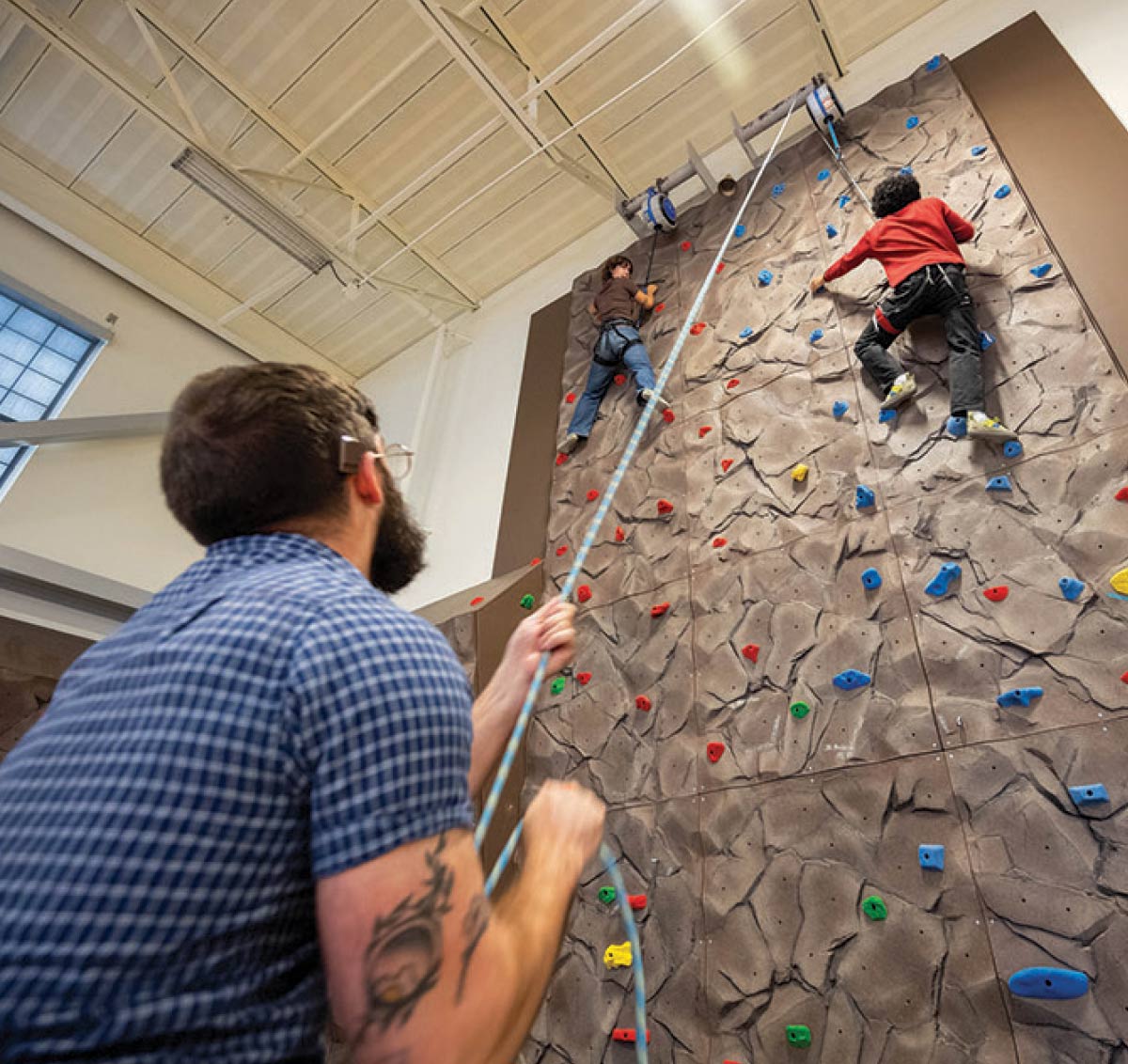
Participants can receive career guidance, industry-recognized training and certifications, transportation assistance, case management, behavioral health services, and housing support.
The program also connects participants to vocational training providers, postsecondary institutions, school districts, apprenticeship intermediaries, trade associations, youth-serving organizations, and employers.
Kear says the goal is to create a path that begins with career exploration and continues through training, credentials, and employment.
“We recognized during the planning phase of Work Ready Alaska that no single organization can prepare young people for long-term career success alone,” she says.
The program is designed to reach young people outside of those already receiving services from Covenant House. The statewide approach includes virtual programming and partnerships outside Anchorage, making sure geography does not become another barrier to opportunity.
During its first eight months, Covenant House reports that more than 200 young people completed an eligibility form, more than 400 were connected through outreach efforts, more than 140 entered the active pipeline, and more than 100 formally enrolled. The response has exceeded expectations.
“The demand continues to outpace capacity, which tells us there is a real need for this type of workforce development model in Alaska,” Kear says.
Kear sees participation as about more than completing a certification or securing a first job. It’s also about building confidence.
“One of the biggest changes we see is that young people begin to believe in themselves again,” she says.
She says one participant told the organization, “I’ve never had this amount of help in getting a job.” Another said, “For me, it is not being helpless—that is the precious thing.”
Those experiences are part of what Kear says the program is intended to accomplish: helping young people transition into adulthood with greater independence and self-determination.
The employment component is important, but so is helping participants develop the skills and confidence needed to remain employed over the long term.
“We’ve got to make sure that they’re well-skilled, well-trained, and inspired, and willing to stay in Alaska,” Schrage says.
Schrage says she sees Work Ready Alaska as part of a larger workforce development effort to connect those components together. For Covenant House, the same coordination is what makes the program different from a traditional workforce initiative. The goal is not simply to help a young person find a job, but to help remove barriers that can keep young people from keeping a job, and creating pathways toward a career in an industry that needs workers.
“We all need to do better by our children and our young people,” Schrage says.