


Dahlton Wasankari, Great Northwest, Inc.
Dahlton Wasankari, Great Northwest, Inc.
tretching through the heart of Interior Alaska, the Richardson Highway carries everyone from daily commercial freight operators to military traffic, tourists, and outdoor enthusiasts.
While the route offers breathtaking views, portions of the highway have also posed longstanding safety challenges: sharp curves, changing elevations, and environmental conditions that can quickly become hazardous. As traffic volumes have increased and modern transportation demands have evolved, improving these sections of roadway has become a priority for the Alaska Department of Transportation and Public Facilities (DOT&PF) and its construction partners.
DOT&PF is currently addressing those concerns through the multi-phase reconstruction of the Richardson Highway between Mileposts 148 and 173. Fairbanks-based Great Northwest, Inc. is leading construction on the approximately $33.5 million project to rebuild the road between Milepost 167 and 173, the third phase of a multi-year effort to enhance safety, improve roadway geometry, and create a smoother, more reliable driving experience for the motorists who travel the corridor.
“The existing roadway through this section of the Richardson Highway was last reconstructed in the early 1950s and paved in 1957. While it continues to serve as a major transportation corridor, it no longer meets current design standards,” says Guan Griffin, project manager, Northern Region Construction for DOT&PF. “The roadway is narrow, lacks paved shoulders, contains numerous sharp curves and steep grades, and has experienced settlement that has affected both the pavement and embankment due to the underlying permafrost foundation. Nearly half of the horizontal curves do not meet today’s minimum design standards, and many aging culverts are undersized for spring runoff. Numerous crashes have been recorded along the corridor, with approximately half involving wildlife collisions and the other half consisting primarily of run-off-the-road crashes.”
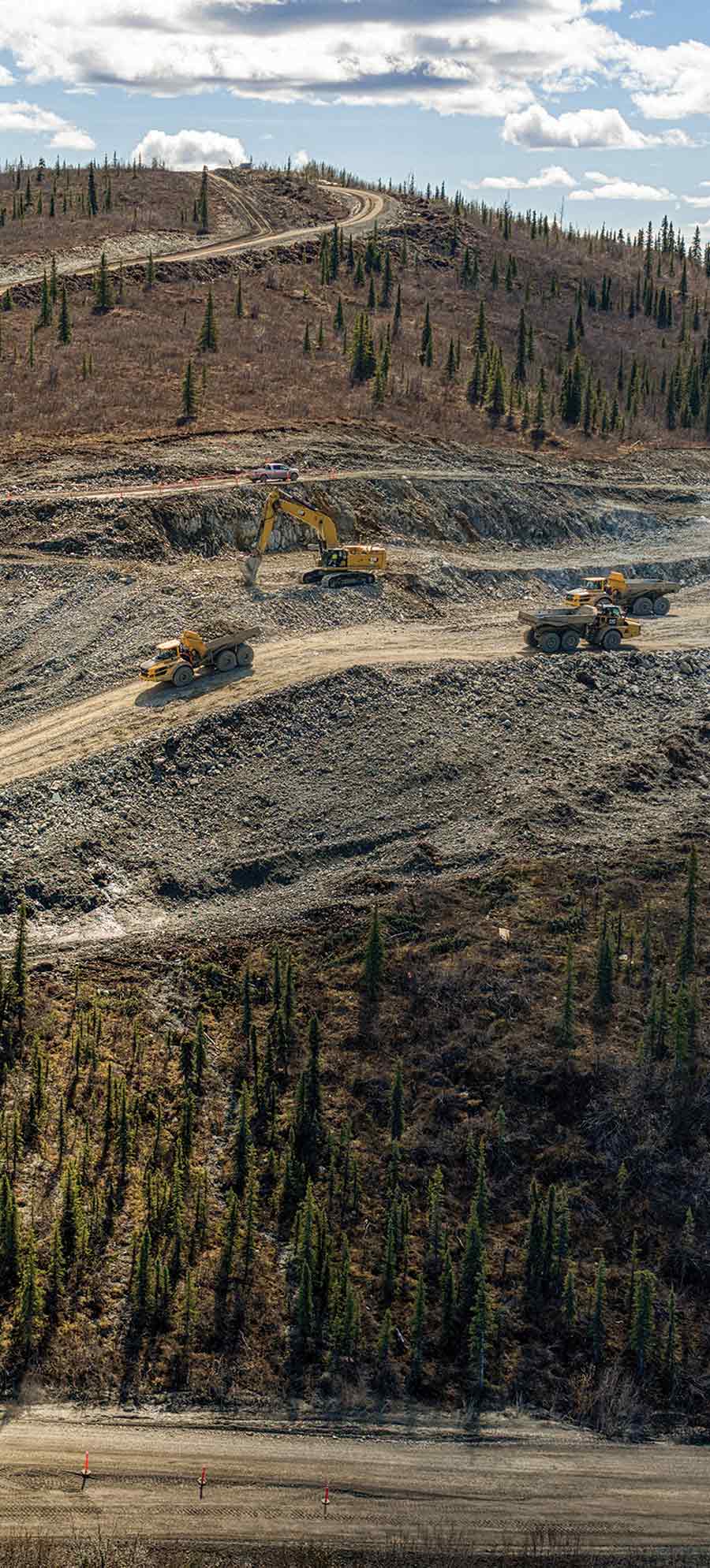
“This year, we’re focused on the dirt work, which involves moving and reshaping earth and rock to rebuild these six miles,” explains Tyler Quakenbush, Great Northwest project superintendent. “A settlement period is necessary after this phase before we can complete the project next year.”
- Adding 6-foot paved shoulders on both sides of the road, flattening curves, and reducing grades to improve sight distance and overall safety. The wider shoulders will also accommodate bicyclists traveling along this corridor.
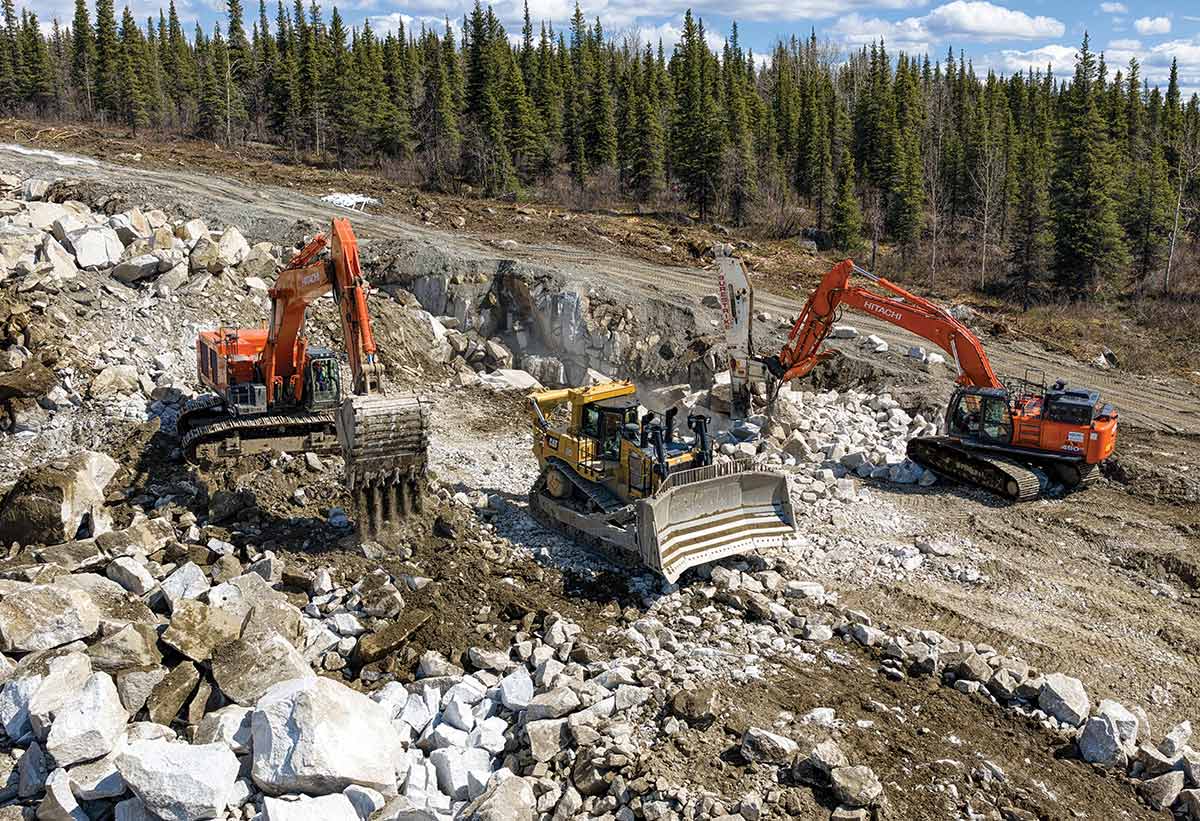
- Rebuilding the road using shot rock generated from a major cut within the project limits, at Mile 171. This more stable foundation will reduce future settlement and provide a longer-lasting pavement structure.
- Replacing all culverts with larger structures and rebuilding roadside ditches to improve drainage and accommodate spring runoff.
- Installing new pavement markings, signage, and guardrail that meet current safety standards.
- Improving turnouts to reduce driver fatigue while providing safe locations for emergency stops and opportunities for slower vehicles to allow traffic to pass.
Phil Garvey, Great Northwest, Inc.
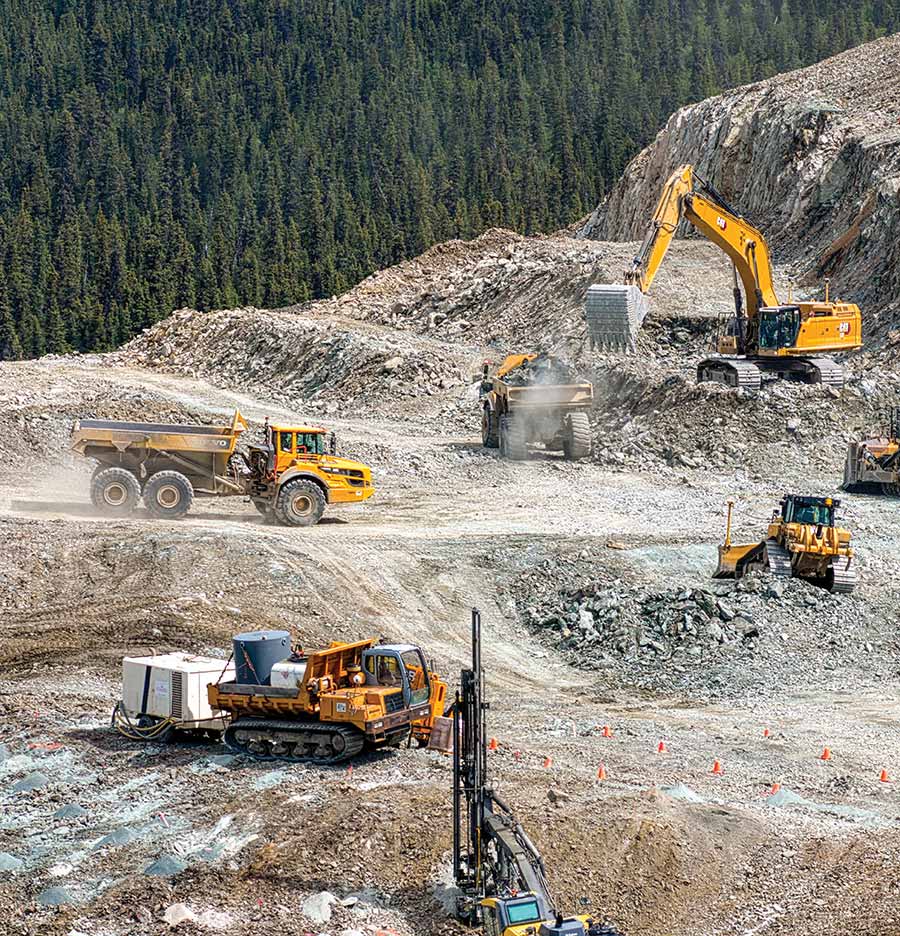
“Shot rock makes a great road, but it is challenging,” says Quakenbush. “We have a fleet of five drills working double shifts, 24 hours a day since May 11 in an effort to complete this phase in one season, so we can finish the project next year.”
As with any Alaska road project, managing traffic during construction delivers its own set of logistical challenges. “We run two pilot cars that help keep the public wait times to a maximum of twenty minutes, if possible,” explains Quakenbush. “Also, for this project, we are able to keep traffic on old alignments while building new alignments. We don’t always have that luxury.”
The project also incorporates lessons learned and cost-saving measures identified during the two previous phases of rebuilding portions of the Richardson Highway. The Milepost 148–159 project was completed in 2013, and the Milepost 159–167 project was completed in 2023. “By applying those best practices, Alaska DOT&PF is maximizing the value of this investment while improving safety, increasing long-term reliability, and ensuring this critical transportation corridor continues to support Alaska’s economy, freight movement, tourism, military operations, and community connectivity for decades to come,” says Griffin.
“Drivers will notice improved sight distance, flatter curves, and reduced grades. These geometric improvements will make the highway more predictable and easier to navigate, particularly during Alaska’s long winter driving season and in periods of reduced visibility,” explains Griffin. “The reconstructed highway will feature two 12-foot travel lanes with 6-foot paved shoulders, giving drivers additional recovery space while providing room for disabled vehicles and emergency stops.”
Improved turnouts will provide safe locations for drivers to pull over, reduce fatigue, make emergency stops, and allow faster vehicles to pass safely.
Phil Garvey, Great Northwest, Inc.
Phil Garvey, Great Northwest, Inc.
The Richardson Highway has served Alaskans for generations, and this investment will help ensure it continues to do so for many years.
As Griffin notes, “Ultimately, the greatest measure of success will be that people can travel this section of highway safely and reliably for decades to come, whether they are commuting between communities, hauling freight to and from the Port of Valdez, supporting military operations, accessing the Trans Alaska Pipeline System, or visiting some of Alaska’s most iconic destinations.”