


eople often associate the term “workforce development” with encouraging prospective hires to join a business or industry. Just as important as bringing new people into the fold, however, is making sure those who are already working have a chance to build their skills, learn about trends, or keep abreast of changing regulations.
To that end, Associated General Contractors (AGC) of Alaska offers a number of training sessions, classes, and workshops throughout the year. In April, AGC brought members together for two workshops covering topics affecting the construction industry.
Anthony Huey, president of Reputation Management, LLC, led an April 7 workshop that covered the importance of crisis management and legal preparedness entitled “Communicating in an AI World: Leading Critical Conversations from the Jobsite to the Boardroom.” Huey’s program was fittingly followed by “Dirt to Done: Construction Law & Risk Management Across the Project Life Cycle” on April 10 led by Loni Hinton, construction and design attorney for Dorsey & Whitney LLP; Angela Samarel, senior vice president, construction account executive for IMA Financial Group; and Todd Vandenhaak and Gary Moorhead, both managing directors for Imperium Consulting Group. Both sessions put AGC members into contact with professional services they might not ordinarily think of as part of their jobs and prepared members to navigate a variety of business challenges.
AGC’s dedicated committees organize training events, workshops, and regular courses that enhance business operations and prepare members for future roles in the industry.
AGC’s April event calendar was packed with many professional development opportunities. AGC’s annual spring training events offer courses beyond the regularly offered Microsoft Excel, Cybersecurity Maturity Model Certification (CMMC), or Alaska Certified Erosion & Sediment Control Lead (AK-CESCL) sessions. The busy training roster included the AGC Edge Building Information Modeling Education Program, the Construction Quality Management for Contractors (CQM-C) course, and the AGC EDGE Blueprint Reading Basics course.
Huey’s workshop and the “Dirt to Done” workshop were scheduled to coincide with the Spring Train networking event to make it easier for members who travel to attend. Olson says the guest presenters for both workshops were selected because of their long-term relationship with AGC.
“Sometimes they are people recommended by one of our committees,” says Olson. “We also pull speakers from the AGC of America lineup. If there’s been a speaker at a national conference or at a different AGC event that we think would be of value to our local membership, then we bring them in.”
Huey has a long history with AGC, having worked directly with various AGC members and chapters. Olson says he’s intimately familiar with the needs of the construction industry and, given that his focus is on crisis management and response, “Communication in an AI World” was the perfect partner for “Dirt to Done.”

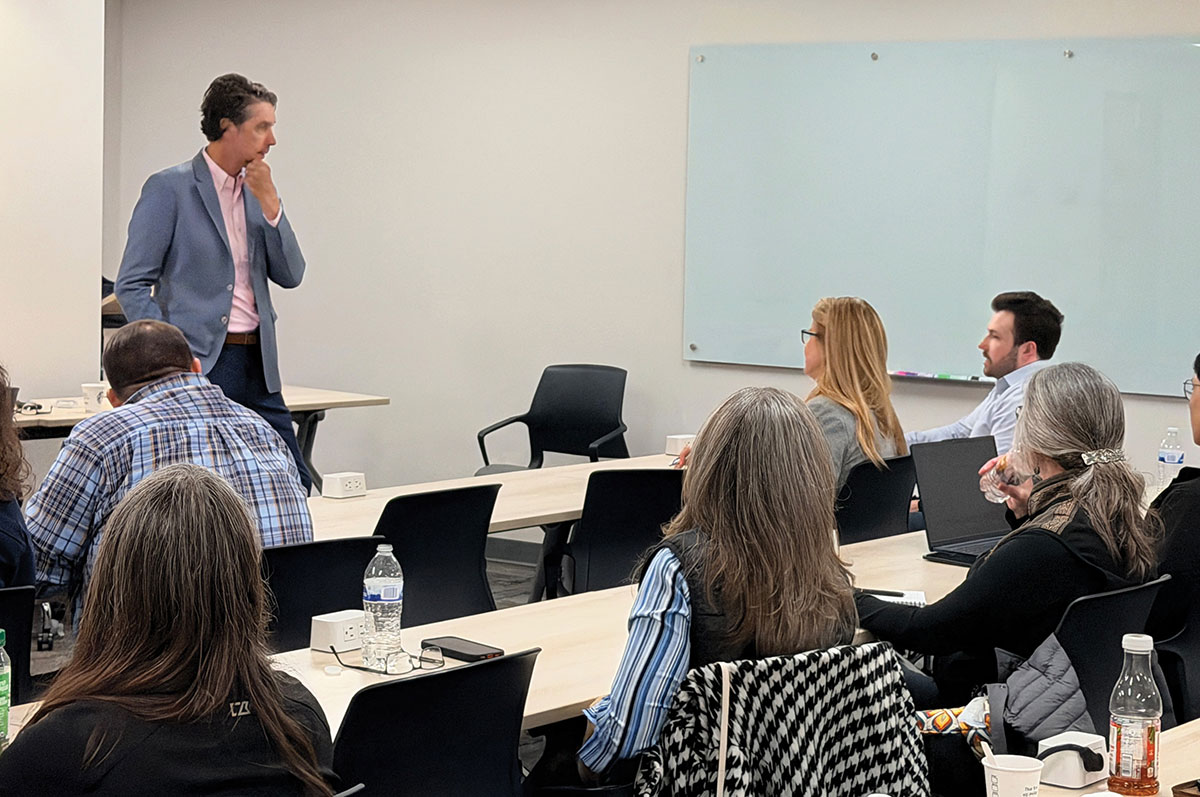
“It is so important to have a crisis communication plan,” says Huey. “Organizations need to have a document in place that tells them who is going to talk to the media, who’s their spokesperson, who’s going to talk to employees, the owner, the subs, government officials, and neighbors. There are a lot of people that they need to communicate with in the middle of a crisis, and they need to figure out how to do that before they have a crisis.”
Hinton, Samarel, Vandenhaak, and Moorhead’s “Dirt to Done” presentation was a one-day, hands-on educational series for mid- to senior-level construction professionals to deepen their understanding of construction law and risk management. The presentation covered project fundamentals, key contract provisions, and practical strategies for allocating, managing, and mitigating risks. Since legal risks can happen at any stage of a project, the presenters outlined steps contractors can take prior to construction, how to handle challenges during construction, and methods of dispute resolution if necessary.
“Workshops like ‘Dirt to Done’ are powerful because they bridge the gap between theory and day-to-day project challenges,” says Samarel. “When employees understand the ‘why’ behind contract terms, insurance requirements, and risk strategies, they feel more confident and invested in their work. That level of understanding directly supports better decision-making, stronger teams, and long-term employee retention—outcomes every construction organization is striving for.”


“In today’s day and age, employees have their choice of employers to work for, especially in Alaska,” says Olson. “Offering the additional benefit of certifications and workshops provides a clear trajectory within the company. It’s a great tool employers can take advantage of to recruit and retain high-quality employees.”
During the busy summer construction season, AGC’s training circuit will include a CMMC cybersecurity compliance training, AK-CESCL sessions, and Microsoft offerings. This fall, in addition to regular workshops and training events, Olson says several committees are considering bringing back lunch-and-learn training options.
“Members should watch their News to Use and the AGC Events Calendar on AGC’s website to be informed of the latest training schedule additions,” says Olson.
Members can visit the online AGC Calendar (members.agcak.org/eventcalendar) to check on future professional development, training, or networking opportunities.