



Associated General
Contractors of Alaska




8005 Schoon St.
Anchorage, AK 99518
907-561-5354
Fax: 907-562-6118
www.agcak.org
Associated General Contractors of Alaska
Jenith Ziegler
ChemTrack Alaska, Inc.
Pearl-Grace Pantaleone
STG, Inc.
Alicia Kresl
Associated General Contractors of Alaska
Christine A. White
R&M Consultants, Inc.
Heather Sottosanti
Big State Mechanical, LLC
Carrie Jokiel
ChemTrack Alaska, Inc.
Johnathon Storter
Meridian Management, Inc.
Tasha Anderson
Managing Editor
Rindi White
Editor
Monica Sterchi-Lowman
Art Director
Fulvia Lowe
Art Production
Patricia Morales
Visual Content Designer
BUSINESS STAFF
Charles Bell
VP Sales & Marketing
907-257-2909 cbell@akbizmag.com
Weston Giliam
Account Manager
907-257-2911 weston@akbizmag.com
Joshua Wilks
Account Manager
907-257-2917 jwilks@akbizmag.com
Tiffany Whited
Marketing & Sales Specialist
907-257-2910 tiffany@akbizmag.com
501 W. Northern LIghts Blvd., Ste 100
Anchorage, AK 99503
The Alaska Contractor is published by Alaska Business Publishing Co. Inc. for the Associated General Contractors of Alaska. Contents of the magazine are not necessarily endorsed by AGC of Alaska or Alaska Business Publishing Co. All rights reserved. Copyright 2026 by the Associated General Contractors of Alaska. For information about articles in this edition or for permission to reproduce any portion of it, contact Alaska Business Publishing Co.
In the column “SBA Upends 8(a) Eligibility” on page 49 of the Spring 2026 edition of The Alaska Contractor, Loni Hinton’s title was incorrectly stated. It should have been Of Counsel, Construction & Design Group.
Design by: Patricia Morales
8005 Schoon St.
Anchorage, AK 99518
907-561-5354
Fax: 907-562-6118
www.agcak.org
Associated General Contractors of Alaska
Jenith Ziegler
ChemTrack Alaska, Inc.
Pearl-Grace Pantaleone
STG, Inc.
Alicia Kresl
Associated General Contractors of Alaska
Christine A. White
R&M Consultants, Inc.
Heather Sottosanti
Big State Mechanical, LLC
Carrie Jokiel
ChemTrack Alaska, Inc.
Johnathon Storter
Meridian Management, Inc.
Tasha Anderson
Managing Editor
Rindi White
Editor
Monica Sterchi-Lowman
Art Director
Fulvia Lowe
Art Production
Patricia Morales
Visual Content Designer
BUSINESS STAFF
Charles Bell
VP Sales & Marketing
907-257-2909 cbell@akbizmag.com
Weston Giliam
Account Manager
907-257-2911 weston@akbizmag.com
Joshua Wilks
Account Manager
907-257-2917 jwilks@akbizmag.com
Tiffany Whited
Marketing & Sales Specialist
907-257-2910 tiffany@akbizmag.com
501 W. Northern LIghts Blvd., Ste 100
Anchorage, AK 99503
The Alaska Contractor is published by Alaska Business Publishing Co. Inc. for the Associated General Contractors of Alaska. Contents of the magazine are not necessarily endorsed by AGC of Alaska or Alaska Business Publishing Co. All rights reserved. Copyright 2026 by the Associated General Contractors of Alaska. For information about articles in this edition or for permission to reproduce any portion of it, contact Alaska Business Publishing Co.
In the column “SBA Upends 8(a) Eligibility” on page 49 of the Spring 2026 edition of The Alaska Contractor, Loni Hinton’s title was incorrectly stated. It should have been Of Counsel, Construction & Design Group.
Design by: Patricia Morales




 AGC MEMBER
UIC Construction, LLC
$14,800,000
On-Site Water and Sewer Crooked Creek
Alaska Electrical Contractors LLC
$6,375,771
Point Hope Search & Rescue Building Upgrade
H Construction LLC
$4,449,391
Manokotak Power Plant Upgrade Project
Sturgeon Electric Company, Inc
$2,914,200
Residential Septic System Installations, Nelson Lagoon
Drennon Construction & Consulting, Inc.
$2,832,111
Tuluksak Power Plant Upgrade Project
Sturgeon Electric Company, Inc
$2,275,450
Nunamiut School HVAC & Mechanical System Upgrades
Sturgeon Electric Company, Inc
$2,159,540
Hopson Middle School Heating System Upgrades
Ameresco, Inc.
$2,113,000
Bethel Family Clinic Dental & Administration Building Renovation Project
TC Construction, Inc.
$1,880,011
Small Boat Harbor Utilities Expansion Project
Alaska Geothermal LLC
$1,262,000
Point Hope Equipment Storage Structure
H Construction LLC
$675,000
Yukon Kuskokwim Correctional Center Recreation Area Refurbish
Birch Contracting and Consulting LLC
$280,250
Port of Nome West Gold Dock Repairs
Resolve Marine Group
$249,228
FFY26 St. Paul SPM & SRE
Anchorage Striping LLC
$204,000

Watterson Construction Co.
$17,399,000
Elliott Highway MP 43-51 Resurfacing
Qayaq Construction LLC
$11,838,786
TFTA Road Rehabilitation
Great Northwest, Inc.
$7,890,500
University Park Nanook Child Care
Callahan Construction Company
$6,400,216
FIA Terminal North Apron Improvements
Granite Construction Company
$3,934,471
Firebird Flight Landing Zone
Exclusive Paving/Univerity Redi-Mix
$2,699,990
Shannon Drive Utility Improvements
Exclusive Paving/University Redi-Mix
$1,387,520
Solid Waste Facility Cover Material Purchasing and Hauling
EC Haulin
$1,110,000
Northern Region Dalton District Guardrail Repair
Dimond Fencing Company, Inc.
$709,079
DFAC Roof Repair
Interior Alaska Roofing, Inc.
$571,700
FNSB Seasonal Water Meters
Alaska Range, LLC
$553,800
Tri-Valley K-12 School Sewer System Replacement Project
AK Built Construction & Design LLC
$459,939
Solid Waste Facility Cover Material Purchasing and Hauling
Our Alaskan Company, Inc.
$398,000
DTA TA502 FARP
Eyre’s Construction LLC
$347,880
Summit Drive RSA Road lmprovements
M&M Constructors LLC
$310,192
Carlson Center Exterior Stair Repair & ADA Compliance
Alcan Builders Inc
$305,612
Northern Region Fairbanks District Guardrail Repair
Dimond Fencing Company, Inc.
$297,815
DTA TA518-519 ISB Pads
Eyre’s Construction LLC
$275,006
Johnson Bivouac
Hawks Enterprises
$261,374
Northern Region Denali District Guardrail Repair
Dimond Fencing Company, Inc.
$248,454
Lathrop Hall Flooring Replacement
Commercial Contractors, Inc
$209,849
Land Clearing Services
Hawks Enterprises
$189,000
Northern Region Tok District Guardrail Repair
Mt McKinley Fence Company of Mat-Su Valley
$130,802

Dawson Construction LLC
$6,844,037
JRD Compound Heating – Ventilation – Air Conditioning & Envelope Improvements
Carver Construction LLC
$1,871,765
Barge Ramp Fender Replacement Project
Rock-N-Road Construction, Inc
$1,412,250
Skagway School Rehabilitation Phase 1
Dawson Construction LLC
$1,364,509
Mt. Edgecumbe High School Building 292 Boys’ Dormitory Ventilation & Window Upgrades
Schmolck Mechanical Contractors
$1,363,000
Haines Hwy/Lutak Road-DEC 20 SE PR
HiEx Construction, Inc.
$1,230,134
Sheldon Jackson Museum HVAC Upgrades
IP Mechanical Contractors, LLC
$1,037,236
Newhalen Water Storage Tank Project
UIC Sanatu, LLC
$984,687
2026 Point Higgins Elementary School Fuel Storage Tank Project
Marble Island, LLC
$594,734
Fort Abercrombie SHP Ranger Station Improvements
Wolverine Supply Inc
$519,650
Gateway Aquatic Center Recreation Pool Replaster Project
Orion Construction Inc
$385,000
Stikine Middle School Boiler Replacement
IP Mechanical Contractors, LLC
$342,720
Replacement of Two Wooden Transmission Towers
Electric Power Constructors, Inc.
$197,506
December Snow Damage Backstop Replacements
R.A.D. Excavation
$174,432
Clinic X-Ray Renovation
MCG Constructors Inc.
$174,000
Heavy Equipment Rental
Tyler Rental Inc
$152,700
TNF Fire Extinguisher Services
Southeast Extinguisher Service, Inc.
$142,024
Salmon Creek Filtration Plant Clearwell Watermain Connection
Admiralty Construction Inc
$127,500
FFY26 Yakutat SPM
Anchorage Striping LLC
$108,000
 Granite Construction Company
$14,829,323
Seward Highway MP 90-99 Pavement Preservation Phase 1
Granite Construction Company
$12,631,208
Kodiak Rezanof Drive Resurfacing: W. Marine Way to Airport
Brechan Construction LLC
$9,280,227
ANC Taxiway K Tug Road Improvements
Neeser Construction, Inc.
$7,193,849
Pavement Management Phase IV Meals Avenue
Wolverine Supply Inc
$6,505,803
Furnish Sodium Chloride Salt to the Municipality of Anchorage, Anchorage Waste-Water Utility
Alaska Garden & Pet Supply, Inc.
$4,627,050
Construct School Safety Improvements Shaw Elementary School Phase 1 Foxtrot Extension
Granite Construction Company
$4,482,500
Soldotna High School Siding Phase II
Wolverine Supply Inc
$4,397,000
Alpenglow Elementary School Roof Replacement and Seismic Upgrades
HPM Contracting, Inc.
$3,301,748
2026 Water Treatment Pump House – Construction
UIC Construction, LLC
$3,022,200
Winner Creek Trail Bridge at Glacier Creek
Spernak & Son LLC
$2,959,340
2026 Town Square Park Reconstruction Project
Spernak & Son LLC
$2,847,921
Tasha Drive Reconstruction Flamingo Drive to Northwood Street
Southcentral Construction, Inc.
$2,502,097
Construct Phase 1 Fern Street Upgrade and Pathway
Tutka, LLC
$1,897,024
Construct Compost and Tire Area Improvements at the Central Landfill
Granite Construction Company
$1,527,531
RSA 27 Meadow Lakes Annual Road Maintenance
Ficklin Construction LLC
$1,186,406
Mary Ave Area Road & Storm Drainage Improvements
Southcentral Construction, Inc.
$924,227
Upper Tyonek Creek Fish Passage Improvements
Western Construction & Equipment LLC
$848,820
RSA 9 Midway Annual Road Maintenance
McKenna Brothers Paving Inc
$832,815
Consolidated Contracting & Engineering LLC
$809,888
Dr. Etheldra Davis Fairview Elementary School Head Start Renovation
Roger Hickel Contracting, Inc.
$756,800
Potter Marsh Facility Improvements
Pro Built LLC
$698,057
Peratrovich Park Improvements
Spernak & Son LLC
$687,332
Provide Pipeline Jetting, Thawing, Liquid and Buildup Removal to the Municipality of Anchorage, Solid Waste Services
Alaska Storm Water and Drain, Inc.
$584,500
Provide Portable Chemical Toilets to the Municipality of Anchorage Parks & Recreation Department
Rent-A-Can Toilet Company
$570,818
Baxter Family Housing Phase II Framing
GMC Builders, Inc.
$552,000
Cedar Avenue Improvements
Dirtworks, Inc
$523,882
Anchorage District Drain Cleaning
Smithsons
$498,600
Neklason Lake at Homebuilt Circle Fish Passage Improvements
Meier Excavation LLC
$496,093
Sterling Highway and Kalifornsky Beach Road Intersection Flashing Beacon
B&B Electric, Inc.
$467,600
Creekside Elementary School Pedestrian Improvements
Spernak & Son LLC
$454,390
MKEC DERA 2026 Project Engine-Generator Purchase
49th State Power
$401,977
Old Kasilof Landing SRS Facility Host Site
Build Alaska General Contracting, LLC
$342,880
Port MacKenzie Conveyor System Removal
Northern Gravel & Trucking LLC
$300,000
Evergreen Avenue Improvements
Dirtworks, Inc
$293,329
Construct East Knik View Drive, South Knik Circle Street Improvements
Northern Asphalt Construction, Inc.
$292,352
Furnish Outdoor Modular Toilets to the Municipality of Anchorage, Eagle River/Chugiak Parks & Recreation Department
Alaska Modular Systems LLC
$288,710
Valley Trails Subdivision Pavement Rehabilitation
Northern Asphalt Construction, Inc.
$277,991
East Anchorage Areawide Vertical Traffic Calming
Bristol Infrastructure Design Services, LLC
$276,994
GMC Builders, Inc.
$276,500
2026 Fire Systems Testing, Inspection & Monitoring
North Star Fire Protection
$275,540
Northern Region Tazlina District Guardrail Repair
Dimond Fencing Company, Inc.
$252,271
Northern Region Valdez District Guardrail Repair
Mt McKinley Fence Company of Mat-Su Valley
$242,377
Provide Gas Detectors & Support to the Municipality of Anchorage, Anchorage Water & Wastewater Utility
TTT Environmental LLC
$238,962
Dena’ina Convention Center Dock Leveler Upgrades
R Squared Contracting, Inc.
$214,269
Provide Road Rideability Evaluation Services to the Municipality of Anchorage, Project Management and Engineering Department
Applied Research Associates
$198,800
Dena’ina Center Audio-Video System Upgrades
Creative Lighting and Sound, LLC
$190,000
Dena’ina Convention Center Lighting System Upgrades
Supreme Electric
$179,370
Provide Storm Drain Cleaning Services for Eagle River Street Maintenance
Alaska Pipeliner, Inc
$171,981
Lake Lucille Fire Mitigation Clearing
Bushwood Land Services LLC
$153,930
Interior Improvements – Palmer City Hall
Goertz Construction Inc
$149,792
Fire Station 1 Overhead Door Replacement
Door Systems of Alaska
$142,306
Plant Material Center – Irrigation Well
E&D Water Wells
$141,590
Mountain View Elementary Window Replacement
Build Alaska General Contracting, LLC
$134,200
Design Build for SCHI – Mountain View Community Resource Center Anchorage Office Remodel
Arctic Tactical General Contractors
$133,950
Provide Traffic Control Services to the Municipality of Anchorage, Anchorage Water and Wastewater Utility Department
Shaman Traffic Control
$124,367
Colony Middle School Boiler Pump Upgrades
AK Clearwater Mechanical, LLC
$123,441




ne of the core values of AGC of Alaska is simple: we advocate.
Not just during legislative sessions. Not only when a project is delayed or funding is uncertain. Advocacy happens year-round because decisions made at the municipal, state, and national levels directly shape Alaska’s construction industry and the environment our members work in every day.
As we approach Alaska’s August 18 primary election, it is a good reminder that participation matters long before decisions are finalized. Construction professionals understand better than most that successful outcomes are shaped well before equipment reaches a jobsite.
Good projects require planning, coordination, communication, and steady involvement from start to finish. Civic engagement works the same way.
Municipal races matter.
State legislative races matter.
National elections matter.
The decisions made in those elections influence transportation funding, permitting, workforce policy, public infrastructure priorities, procurement rules, and the overall business climate across Alaska. Issues like government-mandated Project Labor Agreements, transportation funding, labor policy, environmental regulation, and resource development do not appear overnight. They are shaped over time by elected leaders and by the people willing to stay engaged in the process.
Past AGC presidents often reminded us that advocacy is not about politics alone—it is about stewardship. Stewardship of an industry that builds Alaska’s roads, schools, ports, pipelines, hospitals, and communities. Several former leaders emphasized that if contractors are not willing to participate in the public process, others will make decisions for our industry without understanding the realities of building in Alaska. That wisdom remains relevant today.
Over the past year, AGC members and staff have continued advocating on issues critical to Alaska construction, including contractor payment protections, workforce development, transportation priorities, labor policy, and infrastructure investment.
That work extends beyond Juneau. At the national level, Alaska benefits when leaders understand the realities of building in our state and advocate for long-term infrastructure and resource priorities.
Alaska’s congressional delegation has emphasized the importance of transportation infrastructure, military readiness, domestic energy development, and responsible resource investment—all issues directly tied to the strength and stability of Alaska’s construction industry. In an election year, those conversations carry even greater importance.
Past presidents also frequently spoke about the value of relationships—that progress in Alaska depends on people willing to sit down together, solve problems, and keep communication open even during disagreement. That spirit of collaboration remains one of AGC’s greatest strengths.
This year, AGC joined other statewide business organizations in supporting continued advancement of the Alaska LNG Project, recognizing its potential to strengthen energy security, support thousands of construction jobs, and create long-term economic opportunity across the state.
At the same time, AGC continues advocating for strategic investments in transportation, including improvements to Alaska Railroad infrastructure and freight mobility projects that strengthen supply chains, improve military readiness, and support economic growth statewide.
None of this happens without engagement.
Voting is one of the simplest and most important ways to participate. Staying informed matters. Attending local meetings matters. Building relationships with elected officials matters. The conversations that happen outside election season are often the ones that shape decisions when critical issues arise.
Past AGC presidents consistently reinforced another important truth: the construction industry succeeds when people show up consistently—not only during challenges, but when there is an opportunity to lead.
Alaska’s construction industry has always succeeded because people stepped forward—on jobsites, in communities, and in public service. That same “northern attitude” that helps us solve problems in the field should also guide how we engage as citizens and industry leaders.
The August 18 primary election is another opportunity to do exactly that.
AGC will continue to advocate, educate, and promote this industry with professionalism and persistence. I encourage every member to stay informed, stay engaged, and most importantly—show up.
Because participation builds more than projects. It helps build the future we will all work in together.




any outside our industry think of “construction” as a simple image: hard hats, dirt, and shovels. Those of us who live this work know it is anything but simple. Construction demands innovation and logistics, relationships and leadership, precision and problem solving. It requires both craft and technology, grit and vision. Most importantly, it is an industry built on people who choose to build something bigger than themselves.
That is why Associated General Contractors (AGC) of Alaska’s work to support the next generation of our workforce—along with the members and leaders who guide them—matters so much.
These efforts are not just about a single event, a first job, or even one career. They create pathways that last; relationships that encourage people to stay in the industry, grow within it, and eventually step into leadership roles themselves. Over time, that creates a sense of ownership and investment in the future of the profession.
At our recent Spring Agency Day in Fairbanks, a public agency leader shared that he had received an AGC scholarship when he was in college. Beyond the financial support, what he said stayed with him was the connection it created and the sense that this industry was one he could be part of long term. Today he works alongside our members to deliver critical infrastructure across Alaska. Those early touchpoints matter, and they carry forward in ways we do not always see in the moment.
This is why our student chapter support, scholarships, endowments, and workforce programming continue to be so important. These efforts are not one-time transactions. They are long-term investments in people and in the strength of our industry.
Over the past decade, AGC of Alaska has invested roughly $500,000 in scholarships, community programs, and workforce development efforts to support people pursuing construction-related careers. Those investments do more than provide financial support. They tell students and young professionals that this industry believes in them and wants them here.
We all recognize that workforce challenges are not going away. The need for skilled, motivated people continues to grow, and meeting that need requires intention. Recruitment is about retention, mentorship, and leadership development. Ultimately, it is about making sure that when someone enters this industry, they can envision a future for themselves in it.
Here in Alaska, where distance, weather, and terrain shape nearly every project, that impact is especially clear.
Carrying that forward requires all of us to stay engaged: continuing to invest in people, creating opportunities for the next generation to step in and lead, and giving back to the industry that has given us so much.
To this year’s scholarship recipients and student leaders featured in this issue, congratulations. Your dedication and commitment to pursuing a future in construction represent exactly what our industry needs. We are proud to support you and look forward to seeing where your careers take you.
And to our members, partners, staff, and volunteers, thank you. The time, energy, and resources you invest are making a lasting difference. Together, we are strengthening the future of construction in Alaska, one person at a time.

149 Robin Place
Soldotna, AK 99669
907-631-1559
projects@radgeneral.com
radgeneral.com
4300 Natrona Avenue
Anchorage, AK 99516
907-677-1990
officewce@gmail.com
wce-ak.com
2486 W. James T. Circle
Wasilla, AK 99654
907-947-6513
villalobos.projects@outlook.com
3009 International St.
Fairbanks, AK 99701
907-456-1383
contractor@alcanbuilders.com
alcanbuilders.com
RBI | Anchorage, AK 99503
3733 W 64th Avenue, Unit A
Anchorage, AK 99502
907-227-4227
sjong@7helectric.com
7helectric.com
2009 Spar Avenue
Anchorage, AK 99501
907-276-3221
ap@bobsservices.com
bobsservices.com
1400 Labar Street
Anchorage, AK 99515
907-250-9730
eric.hammer@statewidedg.com
statewidedoorglass.com
5421 Stationers Way
Sacramento, CA 95842
916-349-1200
stratton@pacificdecorative.com
pacificdecorative.com
590 University Avenue, Suite 110
Fairbanks, AK 99709
907-452-5018
frontoffice@briceservices.com
11378 Grand Canyon Loop
Eagle River, AK 99577
907-750-5623
evergreenenterprisesalaska@outlook.com
122 1st Avenue
Fairbanks, AK 99701
907-452-8251
gary.shu@tananachiefs.org
tananachiefs.org
250 Cushman Street, Suite 3D
Fairbanks, AK 99701
907-931-1505
info@fbxenvironmental.com
fbxenvironmental.com
173 N. Hamilton Road
Chehalis, WA 98532
208-215-1687
mrush@elrus.com
elrus.com
721 Depot Drive
Anchorage, 99501
907-312-4562
rosita.johnson@ascillc.com
ascillc.com

 Take note:
ur 25th president, William McKinley, wasn’t talking about road construction when he said “The path to progress is seldom smooth;” but the adage rings as true for torn up roads today as it was for a country inconvenienced by territorial expansion at the beginning of a new century.
When the path is challenging, it’s more important than ever to be patient, keep focused, and confront the challenges with a level head.
That’s the best way to keep the driving public and those working in construction zones safe: slow down, pay attention, and make every action a safe action.
“Safe Actions Save Lives” was the theme of the 2026 National Work Zone Awareness Week, held across the nation April 20–24. Celebrated by state transportation departments and others in the construction industry, the week is an annual spring campaign held at the start of construction season to encourage safe driving through highway work zones. The key message is for drivers to use extra caution in work zones.
The National Highway Traffic Safety Administration says on average, at least two people are killed each day in work zones.
- Pay attention, especially at night. More than half of all fatal work zone crashes reported in 2024 happened at night.
- Keep your distance. In 2024, rear-end collisions cause nearly one-quarter of all fatal work zone crashes.
- Slow down. Speed was a factor in more than one-third of fatal work zone crashes in 2024.
- Watch for pedestrians. In 2024, nearly 170 pedestrians, including construction, maintenance, and utility workers, and cyclists were killed in work zones.
- Allow extra space for large vehicles to maneuver. In 2024, large trucks or buses were involved in nearly one-third of fatal work zone crashes.
- Avoid distractions. Unpredictable zones require full focus. Distractions were involved in more than one in eight fatal work zone crashes in 2024.
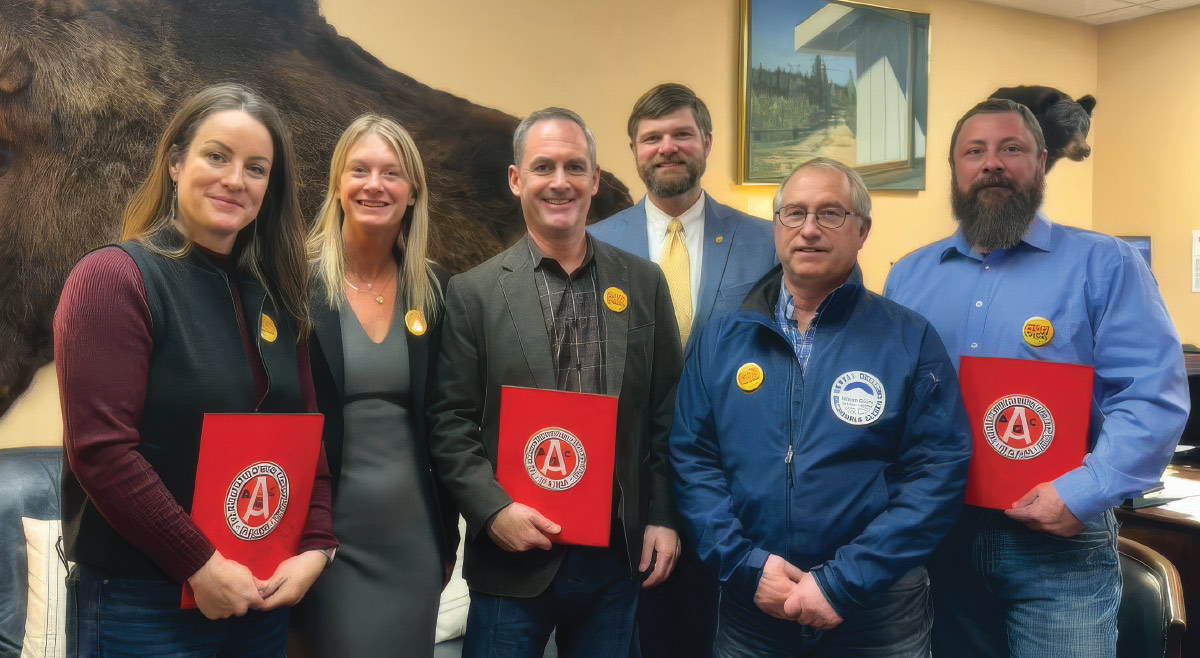
- Rindi White is the editor of The Alaska Contractor magazine. Photo provided by Associated General Contractors of Alaska.




hen Randee Johnson—the founder, president, and lead safety consultant for Anchorage-based SafeLogic—learned she was the 2026 recipient of the Governor’s Safety Professional Award, she says it caught her off guard.
“I was surprised because I do think there’s some really amazing safety professionals here in Alaska,” she explains. “I was very humbled to receive it.”
Johnson accepted the award at an April 8 ceremony in Anchorage, as part of the Governor’s Safety & Health Conference. The award celebrates safety professionals who have devoted their careers and personal time to safety through service. Nominees must be active in the profession, have spent at least a decade working in safety and health in Alaska, and a minimum of fifteen years in the field during their career. They must also show substantial contributions and be an active volunteer in a safety-related nonprofit for at least three years.
Originally from Alaska, Johnson had just graduated when her mother told her a friend needed a safety administrator for the summer. What she assumed would be a temporary gig became her calling.

hen Randee Johnson—the founder, president, and lead safety consultant for Anchorage-based SafeLogic—learned she was the 2026 recipient of the Governor’s Safety Professional Award, she says it caught her off guard.
“I was surprised because I do think there’s some really amazing safety professionals here in Alaska,” she explains. “I was very humbled to receive it.”
Johnson accepted the award at an April 8 ceremony in Anchorage, as part of the Governor’s Safety & Health Conference. The award celebrates safety professionals who have devoted their careers and personal time to safety through service. Nominees must be active in the profession, have spent at least a decade working in safety and health in Alaska, and a minimum of fifteen years in the field during their career. They must also show substantial contributions and be an active volunteer in a safety-related nonprofit for at least three years.
Originally from Alaska, Johnson had just graduated when her mother told her a friend needed a safety administrator for the summer. What she assumed would be a temporary gig became her calling.
Johnson was hired as the safety manager at Matanuska Electric Association’s Eklutna generation station, and she was on her way. “I got a lot of experience on that project and learned a lot,” she says.
After several years in the field, Johnson launched SafeLogic in December 2016. She recalls, “It started with me having a newborn, working from my basement office.”
From there, the business quickly grew and now employs about twenty people. Johnson observes, “We’ve grown organically on a nice, slow, sustainable pace.”
“I encourage companies to be proactive with safety, rather than reactive,” she says. “As a safety professional, you never know what lives you saved or who you helped because it’s the call that you don’t get.”
Johnson now holds a bachelor’s degree in environmental health and safety from Oakland University in Michigan and is certified by the Board of Certified Safety Professionals, which she describes as one of the most difficult safety certifications to earn.


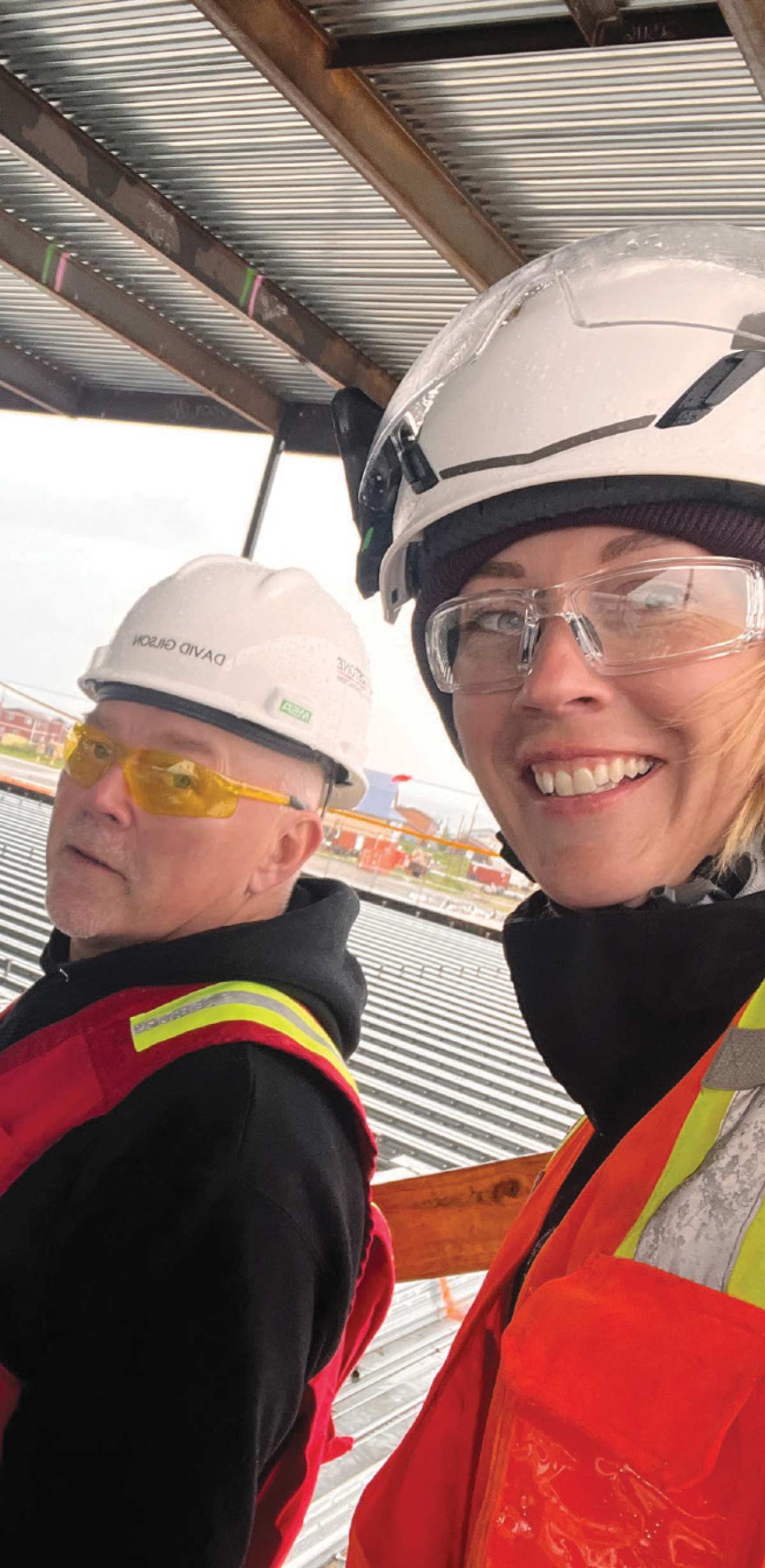
Johnson has an impressive resume. She was formerly employed by CH2MHill supporting the North Slope, Anchorage, and northern region operations. Through SafeLogic she works with the Municipality of Anchorage, where she assists with fluoride safety in the water system, solid waste services, and homeless camp abatement safety. SafeLogic contracted with Anchorage-based Unit Company while working on the Eielson Air Force Base F-35 hangars construction. There she served as the company’s safety and health manager. She’s worked on bridge projects, helped with wildlife and polar bear programs, has dealt with helicopter safety, and more.
AGC member Fullford Electric Inc. is another loyal client. Vice President Brian Gnoffo says Fullford Electric Inc. has come to rely on the services Johnson’s company provides.
“Randee and her team at SafeLogic have been instrumental in strengthening our safety program. She brings a practical, proactive approach and truly cares about our people. Partnering with her has elevated our safety culture and accountability across the entire organization,” he says.
Suicide prevention is another area she devotes time to, both professionally and as a volunteer. “In Alaska, construction workers are five times more likely to die from suicide than they are from the top four OSHA hazards,” she says. “I work with individual companies on it, training people how to have that conversation and how to identify people who are at risk.” The US Occupational Safety and Health Administration lists falls, struck by objects, electrocution, and caught-in/between (including trench collapses) as the “fatal four” causes of construction worker deaths.
Additionally, she’s climbed Mt. Baker, the third-highest mountain in Washington, and she’s trekked to Everest Base Camp as part of Any Mountain, a nonprofit working to fund research on the first ever diagnostic tool to detect ovarian cancer. Later this year she’ll hike Africa’s tallest mountain, Kilimanjaro, through the Any Mountain program, and then she’ll work in Africa with a medical team that will include her oncologist, Dr. Joanie Mayer Hope.
“It’s a super full-circle, special opportunity to be able to get to do something like that,” Johnson says.
Despite her accomplishments with SafeLogic and her recent award, Johnson says she still doesn’t think of herself as an industry leader. She reflects, “Sometimes I still see myself as an up-and-coming junior safety professional. I don’t think I’ve quite accepted the fact that I’ve been around for a while and I’m in my 40s now, and people are actually out in the world who look up to me.”



ike a mineral pulled from the soil, it took a little time and dedicated effort to bring out the value of Patrick Mechanical, but the Fairbanks-based company now carries the deep shine epitomized by the diamond in its logo.
Fairbanks-based PMI specializes in large mechanical system installations. The company was started by Mike Patrick in 1993. Current president Constantinos “Dino” Nafpliotis says Patrick was known for personal generosity to employees. He built a company based on training and retaining great tradespeople. Nafpliotis himself started with the company as an apprentice pipefitter almost twenty years ago. He is now president of Aleut Mechanical, PMI’s holding company, as well as subsidiaries Patrick Constructors and Patrick Mechanical.
Clients with multi-million-dollar contracts didn’t bang down the doors right away. The company nearly closed in 1996. But after a fire on March 20 of that year destroyed a large portion of Denali Princess Wilderness Lodge just outside Denali National Park, lodge owner Princess Cruises announced it needed contractors to help rebuild. The lobby, dining room, 170 out of 280 guest rooms, and the gift shop were destroyed. But tourists and cruise ship passengers extending their holiday with a park visit already had rooms booked. Princess Cruises set a bold goal: open as scheduled May 14.
A Patrick Mechanical crew headed to Denali and set to work. With the ambitious schedule, the lodge opened on target just 55 days after the fire. Repairing the Denali Princess Wilderness Lodge was the job that moved the company forward, and Princess Cruises became a recurring client. Building and maintaining utilidors became a mainstay for the company, with the University of Alaska system and Fairbanks Memorial Hospital as major clients.
PMI now employs forty-three employees, many of whom started as apprentices like Nafpliotis and moved up over long careers. “We’re trying to get to 100,” he says.
The foundational commitment to quality work continues to pay off. Tanana Chiefs Conference Facilities Senior Project Manager Timothy Troppmann says PMI’s team “earned their place on our projects through performance, reliability, and professionalism. Over time, they’ve become our preferred contractor.” He adds, “I would say that PMI has had one of the strongest teams of tradesmen in the region.”
Nafpliotis says, “It’s an expectation of our management team that whatever the client needs, we deliver. Right now, that includes ongoing emergency work such as Typhoon [Halong] repairs for the Department of Transportation (DOT), Northwest freeze-ups for DOT and the Alaska Native Tribal Health Consortium (in partnership with GHEMM Company), as well as emergency freeze repairs in Adak out in the Aleutians. These are all projects where we basically get a phone call: ‘Hey, can you guys get on a plane tomorrow?’”
Phillip Begley, general manager of Aurora Energy, LLC, recalled a complicated project at the company’s 27.5-megawatt, coal-fired Chena Power Plant in Fairbanks. It needed “two condenser caps for a 2,000-tube, 20-foot-long unit. Nobody even knew the weight; the records were gone… We’re rigging from a ceiling that’s already carrying a turbine on the floor loading, so you can imagine, [it was a] very delicate situation. Then we find asbestos gaskets—[that] stops everything. A total mess, frankly. They handled it beautifully. They worked with us, brought in the right trades, made sure everything was safe—[that was] top priority. ”
Under Aleut’s leadership, the company continues to grow. The Alaska Native regional corporation’s top leadership team works with subsidiary and holding company presidents to develop long-term plans, Nafpliotis says. PMI hopes to build or buy an Anchorage shop within two years.
Maximizing shareholder dividends through growth is important, Nafpliotis said, but “just as importantly, that growth has been intentional—built on strong relationships and consistently delivering for our clients. We’re also getting involved earlier in projects through design-assist and design-build approaches, helping reduce risk and improve outcomes before construction even begins.”


AGC presentations also keep the board informed about upcoming large projects, he says. With plans to expand, the company takes advantage of networking with clients, contractors, and vendors. “I try to go to everything I can now,” says Nafpliotis.
PMI wants to be on the North Slope and in Juneau by 2033. In the meantime, they’ll keep doing what they’re doing. According to Begley, that is: “They come in, they look at what you need, and they deliver—every time.”



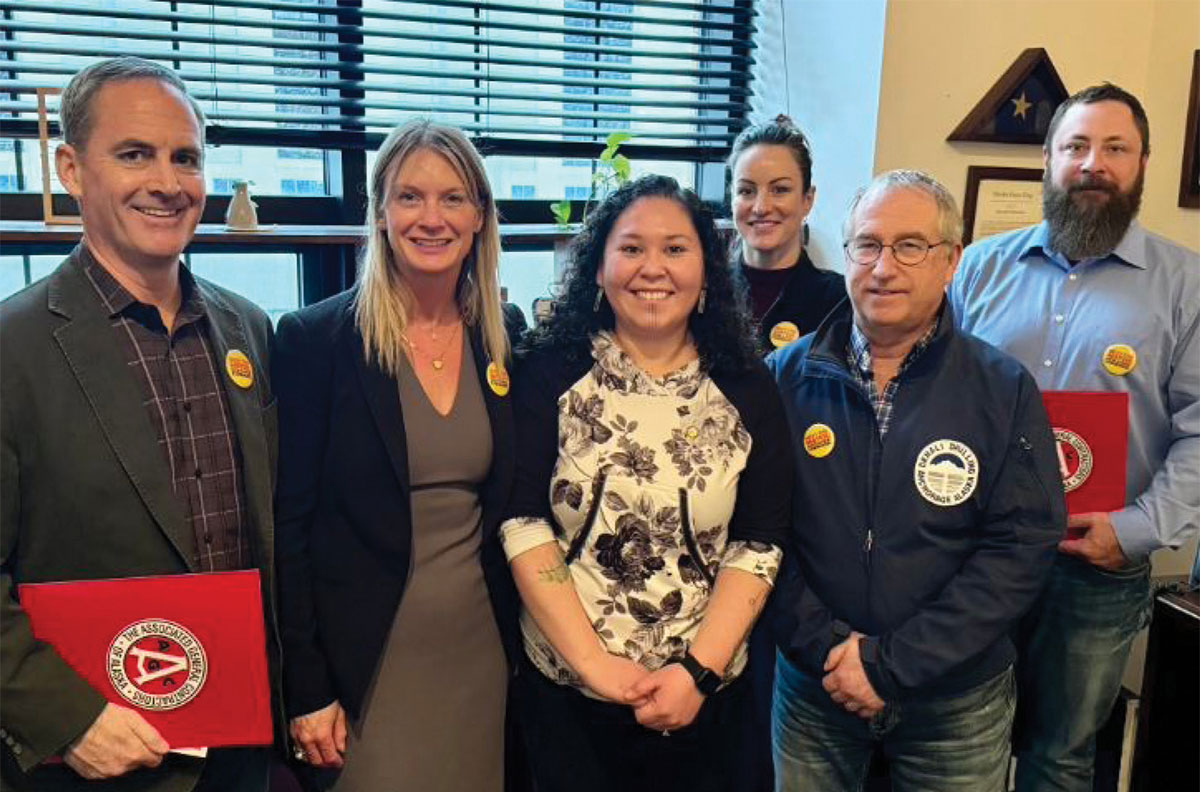
he second session of the 34th Alaska State Legislature demonstrated the power of advocacy and the value of membership in the Associated General Contractors (AGC) of Alaska.
When the executive branch and legislature failed to reach consensus in 2025 on appropriating state match dollars, millions in FY26 federal funding for transportation projects were left at risk. About 90 percent of Alaska’s transportation funding comes from the federal government. But to use that money, the state must add in the remaining 10 percent in match funding. When the effort to appropriate state match funding was vetoed, AGC launched the Meet the Match advocacy campaign to raise awareness about the critical role those dollars play in sustaining Alaska’s construction economy.
Beginning in fall 2025, the Meet the Match campaign engaged AGC members, constituents, affiliated industry organizations, and policy leaders in conversations about the significance of these federal highway dollars and the critical timing of a state commitment, given Alaska’s seasonal construction calendar. The campaign—while challenging and long in duration—was successful. Contractors doing business in Alaska are thankful for the support received from both the legislature and the governor this session to approve FY26 state matching dollars, ensuring eligibility for available federal transportation funds.
World events and consideration of significant resource development projects dominated the work of this legislative session. Rising oil prices due to the Iran conflict allowed for increased capital project funding across the state. At press time, the Legislature has been called into a special session by the governor to continue consideration of legislation in support of an in-state natural gas pipeline. AGC will continue to monitor this debate and advocate for Alaskan contractors; the impacts will be significant should such a major project move forward.
The final FY27 operating budget passed with a total price tag of $6.7 billion. It includes a $1,000 per person Permanent Fund Dividend, alongside an additional $200 per person allocated for energy relief sourced from a projected surplus in FY26. The state’s outlay for these payments will amount to $800 million, marking a substantial decrease from the $2.4 billion expenditure originally proposed by the governor.




- $57 million designated for major maintenance projects in K-12 schools, which will fully fund the top fifteen priority schools on the state’s deferred maintenance list, along with necessary repairs to tank farms at three rural schools.
- $17 million allocated for the replacement of the Stebbins school, which was destroyed in a fire in 2024.
- $14 million earmarked for repairs at Mt. Edgecumbe High School.
- $17 million directed towards addressing deferred maintenance at the University of Alaska.
- Continued funding for workforce development programs aimed at cultivating Alaska’s pipeline and construction workforce to support future economic growth.
AGC remains vigilant on legislation that could impact our industry. This includes a wide range of issues, from paid sick and parental leave programs to ongoing support for workforce development and remote equipment maintenance flexibility. AGC has and will continue to provide both oral and written testimonies on these key issues and legislative proposals that significantly affect member businesses.
The Legislative Affairs Committee (LAC) has been proactive, holding weekly meetings throughout the legislative session. During these meetings, members engaged in thorough discussions to evaluate the potential impacts of legislation under consideration related to the construction industry. The committee’s mission centers on developing AGC’s legislative priorities while assessing levels of support, opposition, or neutrality toward specific bills—a focus that is especially critical during the session.
In February, the LAC organized a dynamic fly-in event to Juneau, where twenty-two AGC members passionately advocated for crucial “Meet the Match” funding. This year’s fly-in event mirrored the success of last year’s initiative, allowing lawmakers to hear compelling messages that highlighted the vital role the construction industry plays in various aspects of Alaska’s economy.
Our messaging directly helped secure the critical highway match dollars in the supplemental budget that passed in March. However, this same level of effort is needed year after year to ensure a healthy, vibrant construction economy that supports the quality of life in our great state. AGC remains a champion for Alaska’s construction industry, advancing public policy which will sustain such opportunities for generations.




Knik Construction
arlier this spring, two of Anchorage’s general contractors—Knik Construction and Mass Excavation, Inc., also known as Mass X—were honored for their outstanding work at the March 24 to 26 Associated General Contractors (AGC) of America Construction Association Convention in Orlando, Florida.
Knik Construction received a 2026 The Baldwin Group Build America Merit Award for its Chefornak Airport rehabilitation project. The project was a semi-finalist in the $20–$100 million Highway and Transportation category and was one of fourteen Merit Award winners at what The Baldwin Group calls the “Oscars of the construction industry.”
Mass X was recognized with a 2026 Construction Safety Excellence Award, coming in third place nationally in the Highway and Transportation Division, Under 450,000 Work Hours division.
“Our team overcame logistical, environmental, and operational hurdles through innovation, safety, and community collaboration, setting a benchmark for remote Alaska construction and exemplifying AGC excellence,” Hall says. “We are proud to have that dedication recognized on a national stage.”
According to a Knik Construction news release, Fox Air pilots share that the old runway was “rough” and “riddled” with heaves and potholes—a serious risk to aircraft. The new Chefornak runway is smooth with no more safety concerns that pilots have to navigate.
The remote nature of the project meant a lot of work had to happen before the work could officially begin. Materials were barged more than 2,700 nautical miles before being transported on a 5.3-mile ice road, which was built solely for the Chefornak project. To create the ice road, teams worked in subfreezing temperatures, blizzards, and white-outs, all while also drilling and blasting nearby at Cheeching Mountain, shattering solid rock into “shotrock” which was loaded into trucks and hauled to a stockpile at the airport.
Fifty-six holes were drilled in the ice road to allow water to be added and frozen, strengthening the road to support the 215-ton haul. The team maintained a perfect safety record over 55,666 man-hours and completed the winter portion in forty-eight days. In the summer, a rock crusher plant was barged to the site, and the crew crushed the shotrock into gravel for use at the airport.
Dora Hughes, the health, safety, and security manager at Knik Construction, says preconstruction on the federally funded project began in October 2023, when crews established camps and staging areas. She says she’s very happy that the team earned national recognition for the project.
Hughes isn’t the only one full of pride for Knik Construction’s national win; the whole team feels it.
“The guys are pretty stoked and excited. We haven’t seen [the award] yet, but I think once we are able to see it, it will feel a lot more rewarding,” she says.
She says the Knik Construction crew contained skilled experts from McGrath and Bethel who were familiar with harsh winters and working with ice in the Kuskokwim area.
Hughes notes that the Chefornak crew was also selected as a winner in the annual AGC Safety Committee Safety Stand-Down photo contest. Getting out to train her crew wasn’t always easy, she notes.
“When I was trying to go out and get some additional training done with the guys, my plane just kept cancelling because of the ice fog, so I think after three attempts, I finally got there,” Hughes says. “I know that we have had to use at least [Microsoft] Teams, where everyone was huddled around [a screen.]”
But the team’s commitment to safety paid off.
“Everybody was really safe, and the execution of the work was seamless,” she says. “I know from the project completion pictures afterwards, the final stabilization with the natural grass, you can’t even tell that we were there.”
Hughes says she always has thought Knik Construction has done exemplary work, so it is exciting to see her team’s efforts acknowledged on a nationwide scale.


Shields says it’s an honor to be recognized on a national level. Mass X won the AGC of Alaska ConocoPhillips Alaska Excellence Safety Highway Division award in November. Winning locally was a requirement to apply for the National Safety Award. Mass X had to submit a sixty-page application and was named a finalist out of 160 applications nationally. After being selected as a finalist, both Shields and Mass X Vice President Luke Blomfield attended the national AGC conference in Orlando to present their case and, ultimately, accept the award.
“We were notified that we were one of the three finalists,” Shields says. “Then the next step is to go to the national AGC convention and present to a panel of five board members. The panel included members from Google, the Smithsonian, as well as the National AGC president… You basically have to get up there and do a five-minute presentation followed up by a fifteen-minute Q&A session.”
Shields says Mass X is excited to have taken home the third-place award but will be shooting for first place at the AGC National Convention Safety Awards in 2027.
“Mass X is excited to be compared to and competing against some pretty extensive companies from the United States,” Shields says. “We are really proud of [our award]. It just really speaks volumes to what we are doing with our safety program and our people within our company, just their dedication to safety and taking us to that next level. We are extremely proud of our team and the company’s commitment to safety.”


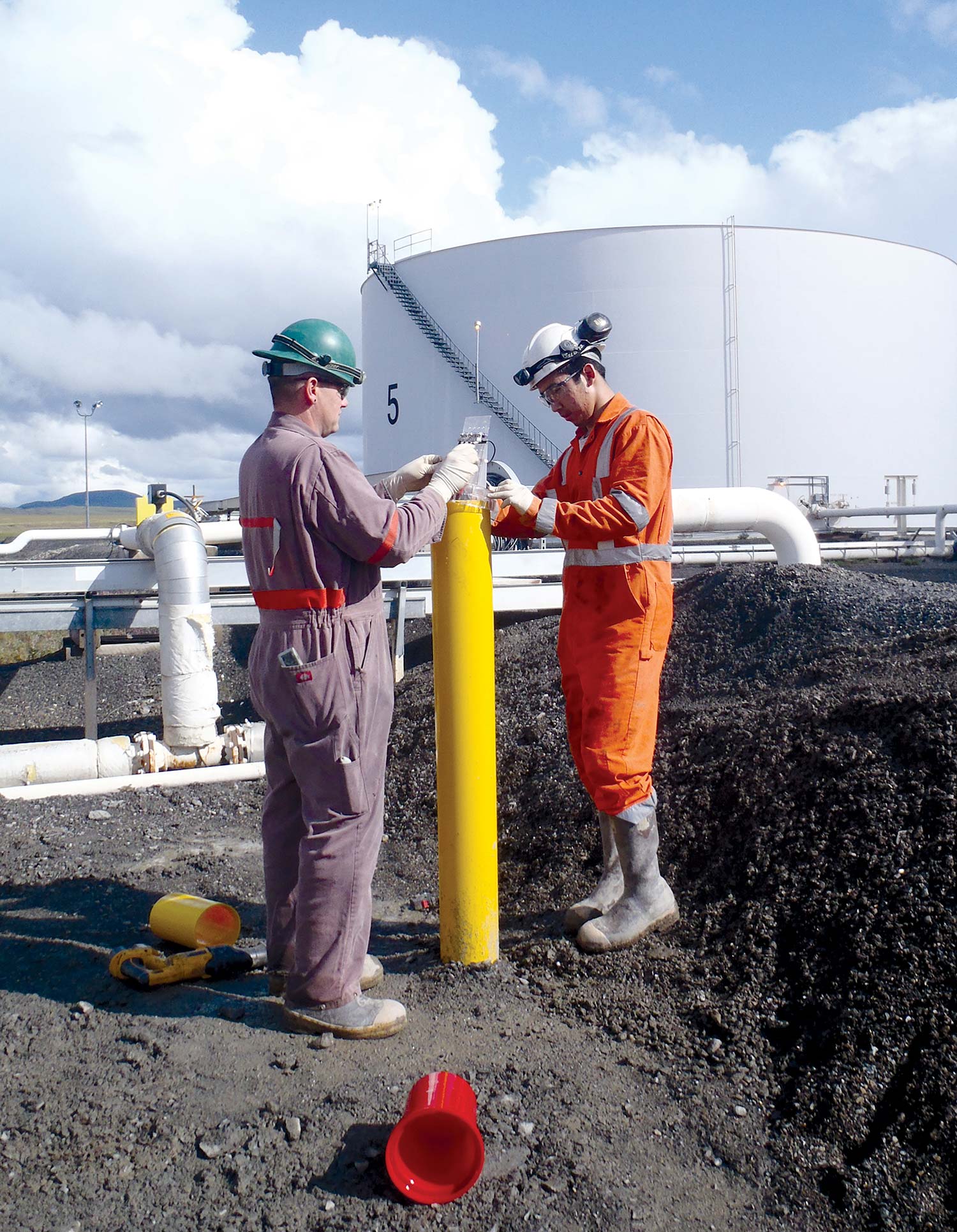
ompleting large-scale complex industrial projects often requires the owner to overcome numerous technical and regulatory challenges. The ability to rely on a single company to meet many of those needs makes it much simpler for any contractor.
That’s where Anchorage-based Taku Engineering comes in. Over the past quarter-century, the company has grown into a powerhouse providing corrosion, mechanical, electrical and civil engineering; tank and piping design; inspections; and much more.
“Taku started with two guys providing project engineering and project management services to Alyeska [Pipeline Service Company] and providing corrosion engineering to other clients on the side,” says Taku President and General Manager Bill Mott. “Over the years, we morphed into a multi-discipline engineering firm with a subsidiary that provides fire and gas systems support. We’re also one of the preeminent tank and piping inspection companies in the state.”
Originally from Connecticut, Mott grew up dreaming of coming north to Alaska. “Alaska had big salmon and halibut and lots of wild, open spaces, so that was the initial draw,” he says.
After earning a double major in chemical and materials engineering from the University of Connecticut, he followed that vision and has lived in Alaska since coming up on a short-term assignment for Alyeska in 1990.
Once he joined Taku, Mott led the company’s growth into areas as diverse as oil and gas facilities, municipalities, construction contractors, and public utility projects.


The work has taken the team as far south and east as Metlakatla, as far north as Utqiaġvik, and as far west as Gambell and Shemya Island. A map of Alaska that hangs on the Taku office wall, with a pin representing each past project, looks like a pin cushion.
“We’ve completed a lot of oil and gas system modifications and expansions for operators and utilities. We assist the North Slope Borough with engineering support for their gas systems in Barrow and Nuiqsut,” Mott adds.
North Slope Borough Director of Environmental Management Jason Brune says Taku’s dependability has kept their relationship strong.
Brune observes, “Taku Engineering has been an outstanding partner to the North Slope Borough. Their tank inspection work is consistently thorough and well-documented, and their team is highly organized, professional, and easy to work with. They routinely meet or beat contract deadlines, and we’ve come to rely on their responsiveness and technical expertise.”
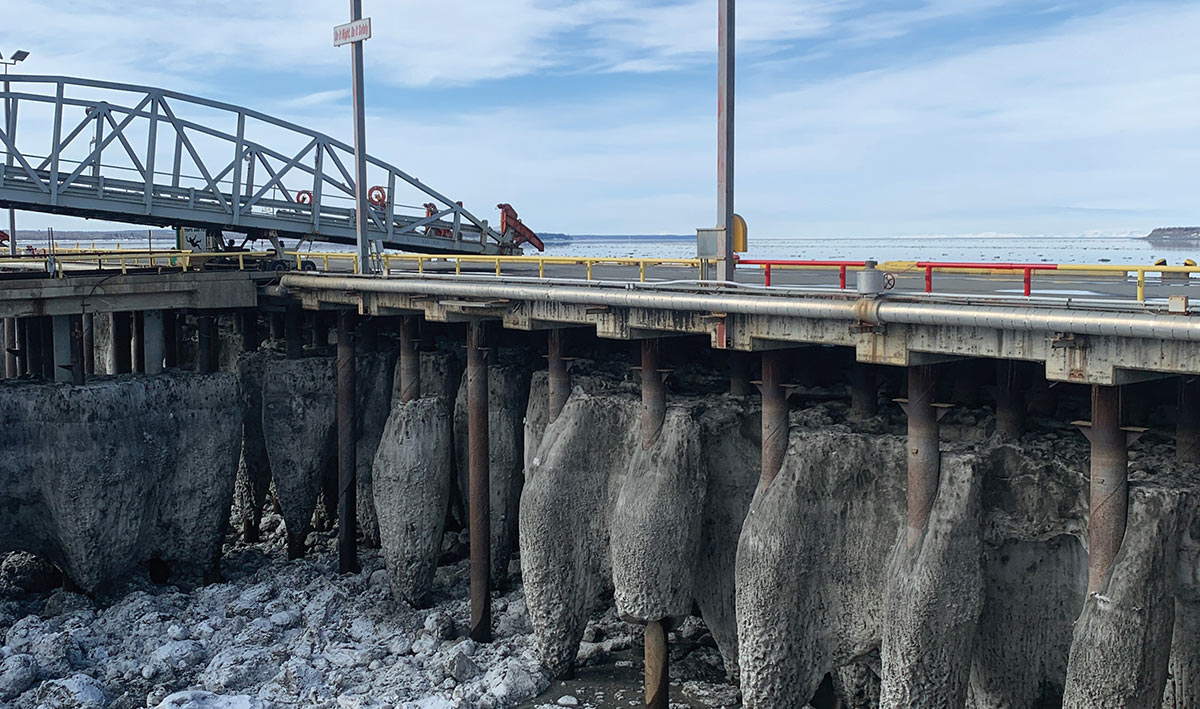
“The Port of Alaska is located in Cook Inlet, which is one of the most corrosive environments on the planet. Most of the freight entering our state passes through the port. The new docks are critical to Alaska’s future and important for the wellbeing of Alaska’s residents. These new structures need to last for 75 years or more. We’re proud to be protecting this critical infrastructure and to be helping to ensure that the port remains intact and effective for the next generations,” Mott says.

Mott says much of Taku’s ongoing work involves non-destructive testing techniques used to identify areas of thinning on tanks or piping. “If inspections indicate that patch repairs or more significant modifications are necessary, we’ll follow up—either make recommendations or develop the necessary designs and provide construction oversight of the repairs,” Mott says.
Despite working with many of Alaska’s largest corporations and municipalities, Mott says Taku’s size has helped it develop a sterling reputation. “We’re a small company,” he explains. “We understand that we are too small to survive a failure. We work hard to make sure that when we complete an inspection or project, the operator can be confident in the integrity and safety of their equipment.”



Photo provided by Udelhoven Oilfield System Services, Inc.
Photo provided by Udelhoven Oilfield System Services, Inc.
ruise ship passengers traveling through the Port of Seward will now be greeted by stunning views, small-town charm, unpredictable weather—and a brand new, 748-foot-long, floating double-berth pier and a 69,000-square-foot passenger terminal.
With Associated General Contractors (AGC) of Alaska member Turnagain serving as general contractor, the entire project—from the date real estate development firm The Seward Company, the Alaska Railroad Corporation, and Royal Caribbean Group agreed to terms until the first cruise ship docked—took fewer than two years to complete. And it was done with minimal interruption to railroad or cruise ship operations.
“The Seward Company was up against a huge challenge, knowing that we were trying to get this done in a single winter season,” says Mickey Richardson, CEO and Founder of The Seward Company. “We timed construction with the cruise ship season and structured the project in such a way to take full advantage of the changes in the weather conditions during marine construction. This dance was the most difficult part of our accelerated timeline.”
The $137 million project not only modernizes the port’s aging infrastructure but promises to expand economic opportunities for Alaska Railroad, Royal Caribbean, the City of Seward, and the Alaska visitor industry.
Yet, despite the urgent need for replacement, several attempts to get the project underway were unsuccessful—until The Seward Company approached the railroad in January 2024 with a bold plan. The unsolicited proposal was backed by Royal Caribbean and included a 30-year Pier Use Agreement (PUA) with the cruise line and its guarantee of, at minimum, 140,000 passengers per year. The three entities agreed to terms in July 2024. Within the agreement, Turnagain was pre-named as the team’s design-build partner.
“Turnagain is heavily invested in the development process,” Richardson says. “As a design-build firm with a lot of experience around Alaska and in Resurrection Bay, they gave us a leg up. Turnagain is great to work with, as always.”
The agreement required project completion for the 2026 cruise ship season, so working on an accelerated timeline required open communication and collaboration between all parties. Turnagain stepped up on all fronts.
Cole Petersen, owner of AGC member company Metco Alaska, says having Turnagain at the helm minimized delays.
“Turnagain’s design team was great,” he says. “If we ran into any issues, it was redesigned and back to us the next day. That was really nice.”
“HPM has done an amazing job and been 100 percent on schedule,” he says. “They really under-promised and overdelivered on all terms of the project. The building is beautiful.”
HPM came on board in August 2024 and immediately set to work helping design and price the terminal.
“We worked with them during the design phase to get the cost down so that the terminal could fall under the overall funding limit of the job,” Wilhelm says. “That included the site work and the dock work.”
HPM began construction on the terminal, which is 75 percent larger than the previous terminal, in April 2025. Designed to meet the cruise ship industry’s needs and enhance the passenger experience, the terminal consists of a 41,500-square-foot indoor passenger terminal and a 27,500-square-foot covered outdoor space, with covered walkways and larger awnings to protect passengers, luggage, and vehicles from the elements. The terminal was moved from the dock to the adjacent uplands area, part of the Alaska Railroad’s 328-acre land reserve.

Photo provided by The Seward Company

Photo provided by HPM, Inc.

Photo provided by Udelhoven Oilfield System Services, Inc.
The terminal, a pre-engineered metal building (PEMB) that sits atop a polished concrete slab, is “a realistic and efficient building solution for Alaska,” Wilhelm says. The decision to go the prefabricated route was equal parts necessity and practicality.
“For a fast-track design like the one we had, PEMB presents a more streamlined opportunity; it’s a simplified fabrication process and it’s easier to ship,” Wilhelm explains. “It’s just another means that tends to be a little bit more cost effective.”
Metco Alaska began excavating the terminal site on January 1, 2025, removing 12,000 to 15,000 yards of material and filling it back in with 12,000 to 14,000 yards of material from its Seward gravel pit, Petersen says. All that material, combined with almost 2,000 feet of underground utility piping and demolition of inground structures, made it one of the largest jobs in Metco’s history.
“Seward’s a pretty small place, so 10,000 or 15,000 yards of material on a single job, that’s a lot for us,” Petersen says. “Most Seward jobs take 1,000 yards, and it’s done. For my six or eight employees who worked on this project day in and day out, we were able to accomplish some really big tasks for a small team.”
AGC of Alaska member Udelhoven Oilfield Systems Services, Inc., installed roughly 40,000 feet of tubing to support the terminal’s in-floor radiant heating system, says Karlo Buitrago, Udelhoven’s on-site superintendent and foreman.
“There was a large amount of work done on our mechanical side between mid-December and May,” he says. “We roughed in all domestic water piping, waste and vents, and the entire heat system in a very compact schedule. Everything went smoothly, and all the trades worked great together to get this completed in such a short window.”

Photo provided by Metco Alaska

Photo provided by The Seward Company
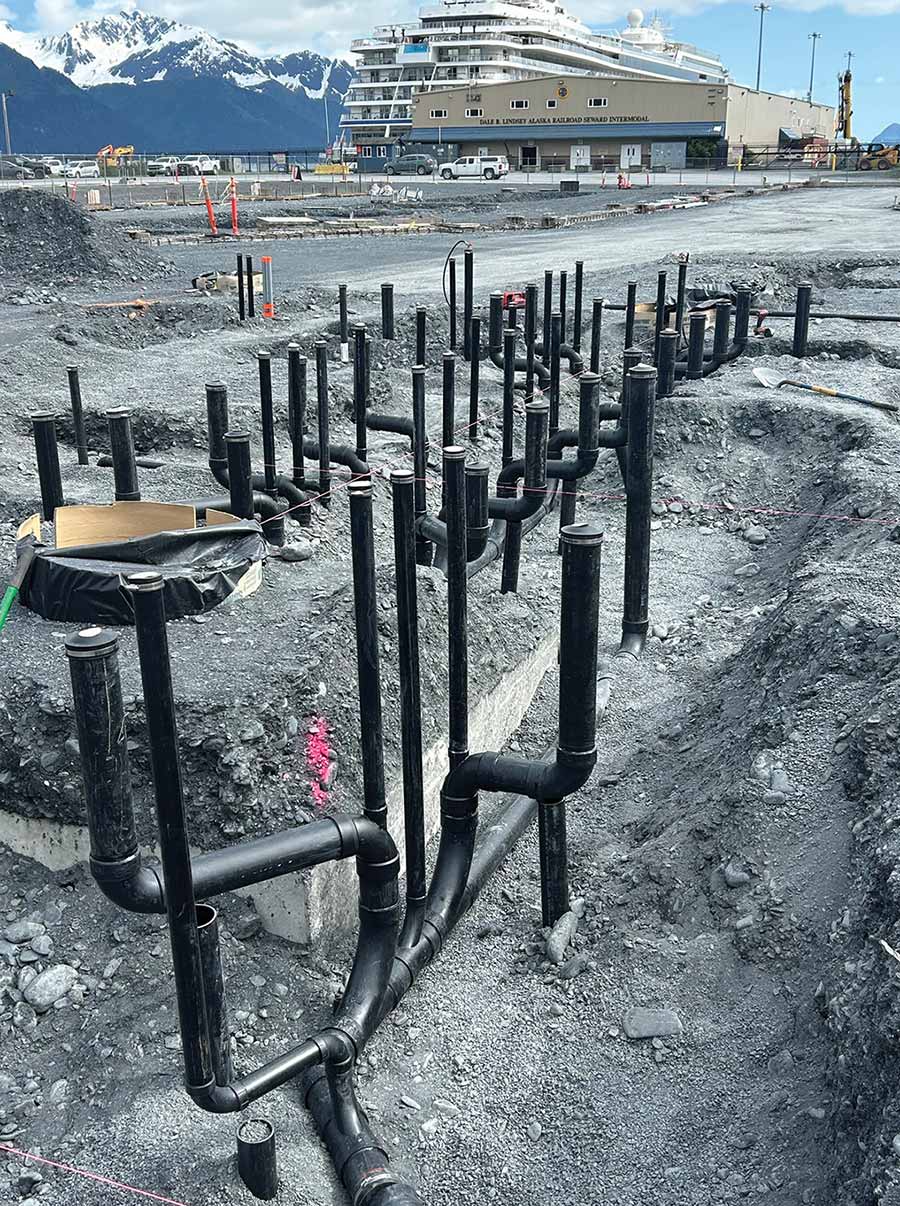
Photo provided by Udelhoven Oilfield System Services, Inc.

Photo provided by Metco AlaskaSystem Services, Inc.
High winds and cold temperatures created some hiccups on the terminal side as well. HPM intermittently paused work when the wind created safety issues.
“Then it’s just a juggling act, and you’re watching the weather, so when you have a window, you take advantage of it and keep going until Mother Nature decides to have other plans, and then you pivot,” Wilhelm says.
“Water in the building was tough in the winter months,” Buitrago adds. “The underground plumbing encountered some hurdles with steel and concrete designs, but we came up with a solution, and everything worked out great.”
The original facility’s age, combined with ‘60s construction methods, also created unexpected challenges. The original batter piles were solid concrete poured inside steel casings, rather than strengthened with rebar, which is standard today, Richardson says. Over time, the sheeting rusted, leaving the concrete piles fragile.
The Port was also designed to accommodate larger classes of ships, eliminating the potential that it will repeat the error of the original facility, which saw potential user groups outgrow its capacity.
“I expect the new facility, with the new building materials and techniques, will last just as long, if not longer than, the original port,” Richardson says.
The terminal will also be available for community rentals during the off-season. That’s a benefit Petersen, a Seward resident, is looking forward to.
“During construction, the terminal wasn’t available to the community,” he says. “I’m excited, the community’s excited to have this building back in town. It’s going to be really nice.”




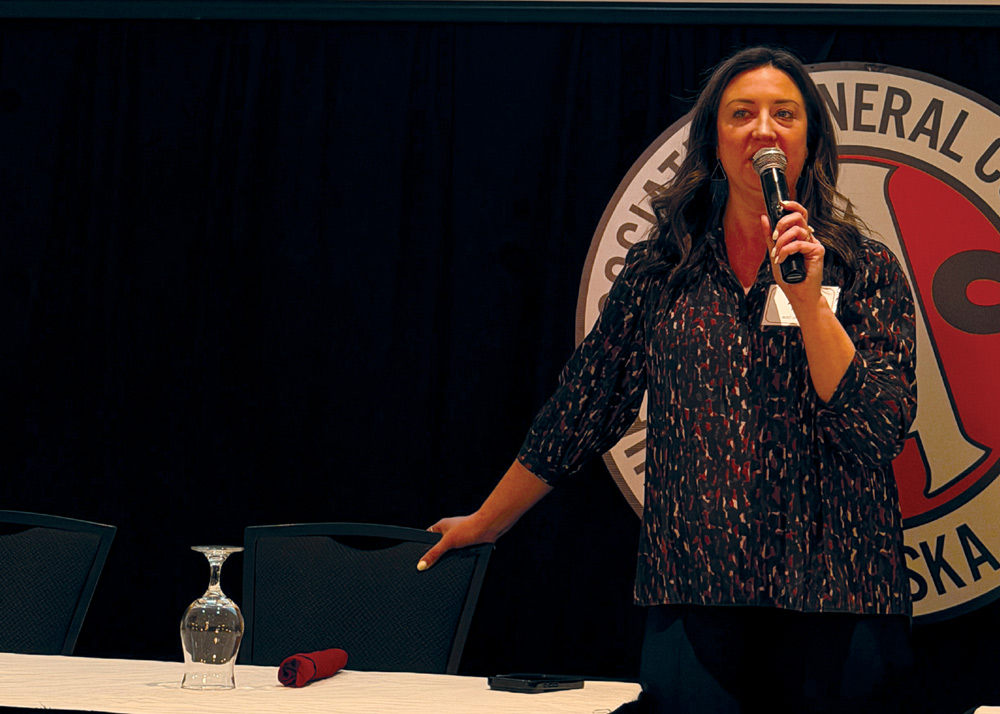

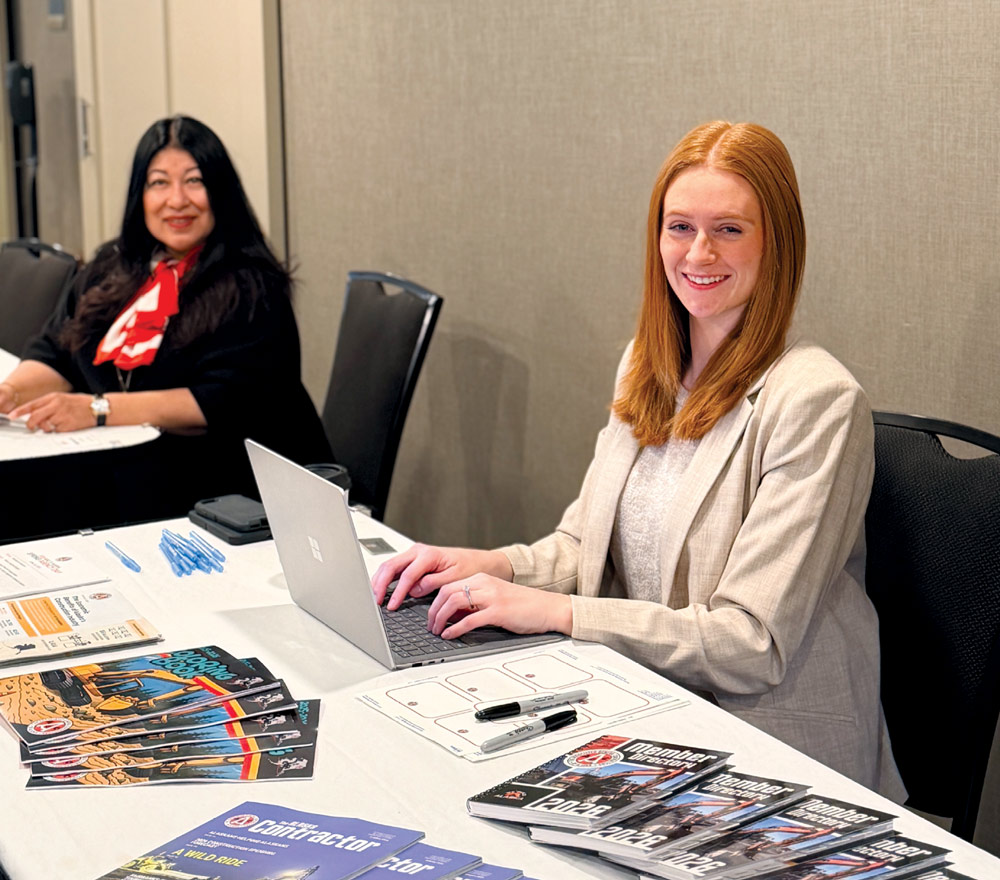

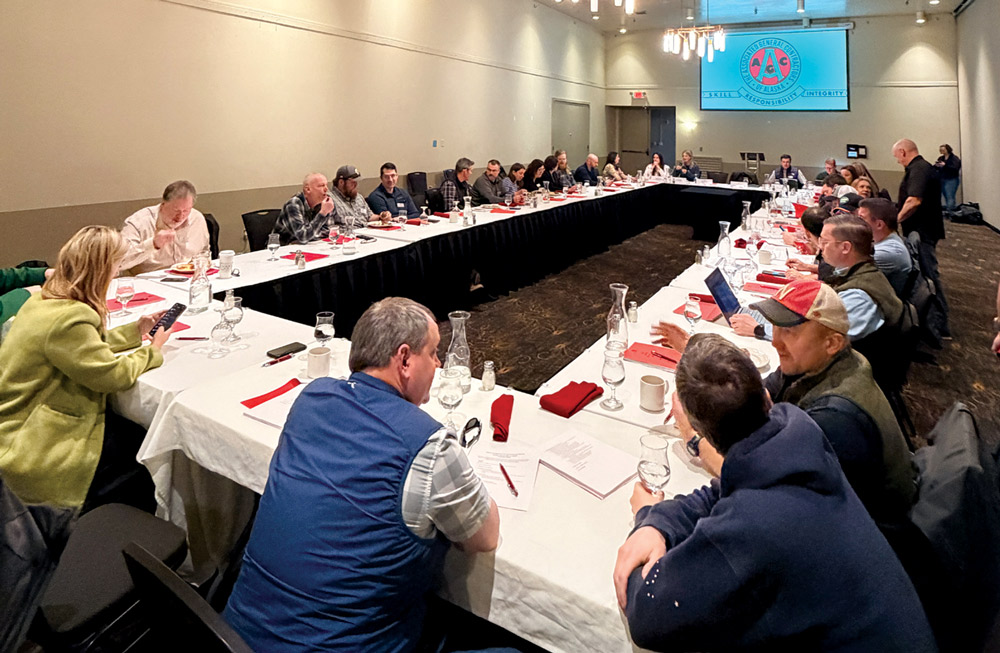
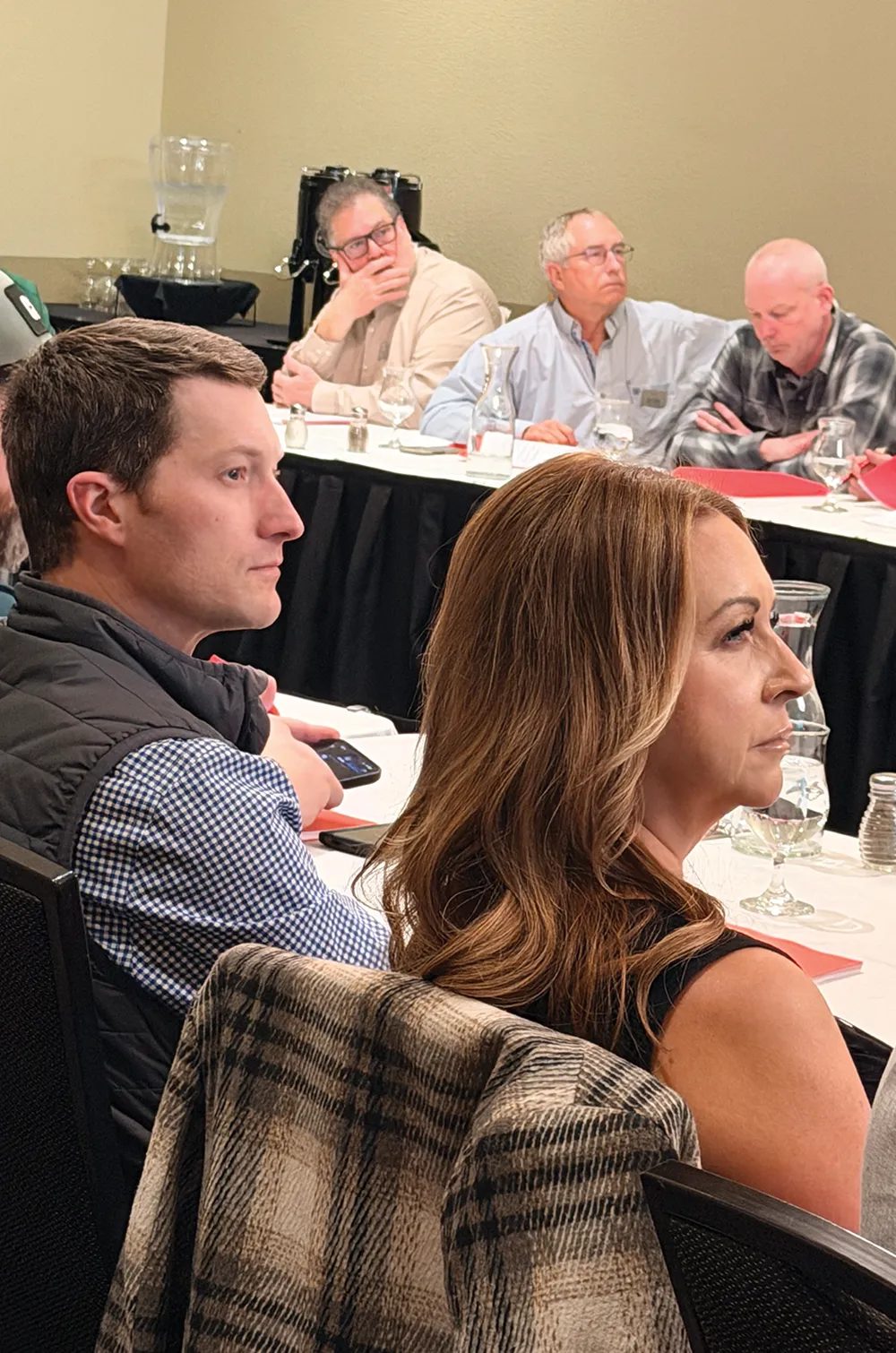

he annual spring construction season kick-off April 23 and 24 at the Westmark Hotel in Fairbanks brought energy and connection; it also coincided with a boost of sunshine that made the coming season feel even brighter.
Agency Day brought a wealth of presentations, from the Alaska Department of Transportation & Public Facilities to University of Alaska. Glenfarne Group updated members on the Alaska LNG project, and Alaska Railroad and Eielson Air Force Base representatives spoke about their upcoming projects.
Members who weren’t able to attend can check the event page for presentation materials to learn more about upcoming projects across Alaska.

Brice, Inc.
CGC Services
Denali Industrial Supply, Inc.
Equipment Source, Inc.
Exclusive Paving/University Redi-Mix
F&W Construction Co., Inc.
Frontier Supply Company
Fullford Electric Inc.
Granite Construction Company
Great Northwest, Inc.
North Star Equipment Services
PFK Enterprises, Inc.
Patrick Mechanical, LLC
Stratus Services, LLC
TOTE Maritime Alaska

Catching Up
Transportation update touches on budget, leadership changes, and mental health focus
By Rachael Kvapil
he Alaska Department of Transportation & Public Facilities (DOT&PF) had good news to share with members of Associated General Contractors (AGC) of Alaska during its presentation at the annual Spring Agency Day: the Alaska Legislature approved a $70 million match to ensure DOT&PF received full federal funding ahead of the FY26 summer construction season.
However, that announcement was only one of several made by presenters as they outlined an internal structural shift within DOT&PF in the coming year. They also addressed safety and mental health issues within the construction industry and outlined ways AGC members can work with DOT&PF to keep employees on both sides safe and to prevent burnout.

Catching Up
Transportation update touches on budget, leadership changes, and mental health focus
By Rachael Kvapil
he Alaska Department of Transportation & Public Facilities (DOT&PF) had good news to share with members of Associated General Contractors (AGC) of Alaska during its presentation at the annual Spring Agency Day: the Alaska Legislature approved a $70 million match to ensure DOT&PF received full federal funding ahead of the FY26 summer construction season.
However, that announcement was only one of several made by presenters as they outlined an internal structural shift within DOT&PF in the coming year. They also addressed safety and mental health issues within the construction industry and outlined ways AGC members can work with DOT&PF to keep employees on both sides safe and to prevent burnout.
During AGC’s annual conference in November, DOT&PF was still unsure whether the state legislature would be able to provide the $70 million match required for full federal funding for FY26 projects. The agency received word on March 25 that the Legislature approved the match requirement. During DOT&PF’s Spring Agency Day presentation April 24, Chris Goins, Southcoast Region Director, expressed appreciation for members’ help advocating for full funding.
“I just want to give a huge thank you to Alicia [Kresl] and to the agency steering committee,” Goins told the audience. “I would like you to give them a round of applause for all the work that they put in to get to this.”
Alaska Department of Transportation & Public Facilities
“There’s a cool little rule that you can move those from CY27 one year forward to CY26,” said Goins. “And our teams are on their path to delivering those projects.”
At past Spring Agency Day events, DOT&PF presented a comprehensive list of current and upcoming construction projects. In 2025 however, AGC partnered with DOT&PF to hold monthly Tentative Advertising Schedule (TAS) meetings, during which DOT&PF pre-construction engineers provided a full account of all projects. DOT&PF still hosts virtual TAS updates every third Wednesday at 11 a.m. to share schedule changes, project delivery insights, and regional updates. These sessions help industry partners stay informed about upcoming bidding opportunities. The Zoom link to join these meetings is on the DOT&PF Procurement and Contracting page (dot.alaska.gov/procurement), along with links to recordings of previous meetings.
Now that DOT&PF has the state match funds, agency staff are reviewing CY27 marine construction and Port Improvement Development Program projects. However, this will not affect CY26 road projects. Goins says the latest STIP, covering CY27 construction projects, will soon be out for public review and comment.
Alaska Department of Transportation & Public Facilities
Goins clarified that regional director changes will not alter the regional boundaries. He says the majority of interactions between AGC members and DOT&PF staff will be with the teams that AGC members have already been working with in each region, including pre-construction and construction engineers. Regional teams will allow DOT&PF and contractors to maintain local knowledge and previously established relationships. The realignment among the regional directors will also not affect federal oversight and compliance, as there will always be federal requirements for DOT&PF funds to ensure accountability.
The M&O director position was unfilled at the time of Goins’ presentation, so it is uncertain where that position will be located within the state. Formal alignment and position transfers are scheduled to happen this summer.
AGC members asked whether it made sense to undergo a major reorganization this close to the end of the current administration, and whether the state legislature supported the process. Goins responded that, since the change is only with the directors and not the structure below, it allows DOT&PF to look at ways to better align leadership for consistency, even if a new governor chooses a different direction. As for the legislature, Goins says the proposed changes have been approved by the State House Transportation Committee, though they have met some opposition in the State Senate Transportation Committee, which approved the reduction in positions but not the reorganization. However, at the time of the April presentation, Goins said there was still time for both the House and the Senate to reach agreement.
“There is a process that has to play out in the Legislature, and we’re letting that process happen,” said Goins. “In the meantime, we’re preparing like this could happen when it turns over in the fiscal year.”
Goins says administrative support staff outside the construction sections are being reorganized, but the overall goal is to keep payments going out on time. While state laws allow for more than 10 days to make a payment, DOT&PF employees want to be aware of payments that do not reach contractors within 10 days of having all signatures complete, so the issue can be addressed right away.
AGC members asked if the reorganization would result in faster payments. Goins encouraged contractors who were not paid within ten days of submitting requests to begin by calling the project engineer and work their way up the chain of command if necessary. Any payment issues need to be brought to DOT&PF’s attention, he said, so contractors can be paid in a timely manner and to ensure there aren’t any problems with the new system.
“You never know what somebody’s going through,” said Goins. “If we have mutual respect for each other, that just makes it easier for everybody.”
He suggested communicating major shift changes with the DOT&PF project engineer, particularly those involving projects changing from daytime work to nighttime work. The sooner DOT&PF knows about major changes, the sooner they can stagger staff to prevent burnout. Likewise, he asked contractors to communicate in advance any addition of a new shift, bringing on additional crews, or extending or compressing project timelines. Keeping communication lines open will prevent surprises for everyone involved, reduce stress, and maintain positive relationships between DOT&PF and contractors, he said.
Goins recommended members check out “AGC of Washington Weekly Toolbox Talk Safety Meeting Healthy Coping & Personal Resilience Tools,” located at AGC of America’s Mental Health & Suicide Prevention “Contractor Resources” page. Written during the pandemic, this one-page list identifies best practices for surviving difficult times. The suggestions are still relevant to the consistent stress many employees in the construction industry face.



International auctioneer strives for personal service in an online field
The Ritchie Bros. lot in Wasilla allows buyers to take a look at auction items before they bid.
itchie Bros. has catapulted from a small, family-owned business founded in 1958 in British Columbia, Canada, into a global marketplace with more than sixty full-service yards in fourteen countries. But in Alaska, it’s the online auctions at the Wasilla yard that play a critical role in remarketing the state’s oil and gas assets along with construction, mining, logging, and dirt work equipment.
The company’s history in Alaska began with its role selling equipment used during the cleanup of the 1989 Exxon Valdez oil spill, which decimated the waters of Prince William Sound.
“That brought international attention to both the scale of the work in Alaska and our company’s ability to manage large, complex asset sales,” recalls Ritchie Bros. Alaska Territory Manager Kari Cabanski of the environmental cleanup.
While working for an international company boasting the world’s largest heavy equipment auctions, Cabanski operates the Wasilla yard, located on the Parks Highway west of Pittman Road in Meadow Lakes, on more of a local level.
“I work directly with businesses across Alaska to help them buy and sell equipment efficiently and align their fleets with current market demand,” she says.
The Wasilla site, which opened in 2012, is critical for connecting surplus equipment with the right buyers, says Cabanski. “It’s incredible some of the things I’ve sold.”
As an example of the reach of the Ritchie Bros. marketplace, Cabanski points to the sale of a City of Bethel vacuum truck that ultimately went to a buyer in Maine. “When buyers are looking for the right piece of equipment, they’re willing to go where the inventory is,” she says. “That’s the advantage of putting equipment in front of a global audience.”
Another interesting transaction involved the sale of a passenger van located on the North Slope to a buyer in France, who flew to Prudhoe Bay and drove the vehicle off the lot.
“Having a permanent location in Wasilla reinforces our long-term commitment to Alaska and the relationships we’ve built here,” Cabanski says. “It also gives sellers strong visibility—we’re right on the Parks Highway—and through Ritchie Bros., that equipment reaches buyers around the world.”
Six auctions are planned for Wasilla this year in March, May, July, September, October, and December. The auctions typically feature a mix of equipment and assets from across Alaska and beyond. Much of the Wasilla inventory is sold through unreserved auctions, meaning there is no minimum bid. Potential buyers have the opportunity to visit the yard, inspect equipment in person, and kick the tires before bidding online.
The auctions are conducted entirely online without a live auctioneer and can run for several days or weeks, with staggered closing times for each item. Because the marketplace is digital, bidding activity can come from across Alaska, throughout North America, and around the world — helping connect local sellers to a global audience through the Ritchie Bros. marketplace.
Construction Machinery Industrial, LLC (CMI) of Anchorage utilizes the company’s auction services as part of the heavy equipment dealership’s strategy in managing aging inventory, trade-ins, or surplus equipment, says Olga Prestwick, CMI’s corporate credit and finance manager.
“The auction platform allows us to reach a large, qualified buyer base and ensure transparency in pricing, helping us move equipment efficiently while maintaining market competitiveness,” Prestwick adds.

Ritchie Bros. got its start in Alaska selling equipment used in the cleanup efforts after the Exxon Valdez oil spill in 1988. It opened a location west of Wasilla in 2012.

Ritchie Bros. staff at the Edmonton, Alberta, office in Canada talk with customers. The company started as a family-owned business in British Columbia, Canada, in 1958.

Ritchie Bros. staff work to make the multi-national company retain a small-town feel.
CMI uses Ritchie Bros. staff’s expertise in preparing machines for auction, coordinating transportation, and aligning timing with auction schedules to maximize exposure and returns.
“While our use of auction services is selective, Ritchie Bros. has consistently provided a dependable platform when we choose to go that route,” says Prestwick. “Whether it’s guidance on cleaning, minor repairs, or ensuring equipment is properly represented, Kari helps keep everything organized and on track. That level of coordination allows our team to stay focused on internal operations while feeling confident the auction process is being handled professionally.”
Ritchie Bros. is trucking and logistics company Carlile Transportation’s primary sales outlet for depreciated equipment.
“They help us out greatly by managing titles, posting ads for our equipment, cleaning, helping update title issues, selling our equipment, and managing the bridge between us and the customers,” explains Whitney Roe, Anchorage shop manager.
Roe recalls an especially complicated sale of two extremely large forklifts. “Kari took special care in obtaining road permits with our heavy haul division to get them up to Wasilla. She works extremely hard to make sure that all of our legal parameters are met and we have good market value, plus wonderful advertising for all equipment being sold.”
“I never want people to feel like they’re dealing with some massive corporation. If there’s an issue, they’ve got my phone number. They can email, call, text, or even send a smoke signal,” she says with a laugh. “I always say, ‘I’m not in sales, I’m in solutions.’ That’s what matters.”
Being local in Wasilla means we understand the people, the equipment, and the market here. But through Ritchie Bros., we can also connect Alaskans and Alaskan equipment to buyers around the world. That’s the power behind the Ritchie Bros. brand promise: Partner Local. Reach Global. Real Results.”
Being a member of Associated General Contractors of Alaska since 2023 has enabled Ritchie Bros. to connect with buyers and sellers throughout the state.
“It helps us stay close to the industry and maintain a network of other Alaskans to find solutions that meet the needs of customers in our unique market,” Cabanski says.


n Alaska, construction workers are known for their resilience. They build roads through unforgiving terrain, operate in extreme weather conditions, work long rotations, and sometimes spend months away from family. They push through conditions many people would never tolerate. The strength to push through it all has always been a part of the construction culture. But across the industry, one reality is becoming impossible to ignore: the same workforce known for toughness is facing a growing mental health crisis.
Nationally, the construction industry continues to experience some of the highest rates of suicide, depression, and substance misuse among any industry. Construction workers die by suicide at rates significantly higher than the national average, with the industry ranking second only to mining and oil and gas extraction, according to recent Centers for Disease Control and Prevention reporting.
For Alaska’s workforce, the risks are amplified. Remote projects, seasonal pressure, extended shifts, harsh weather, isolation from support systems, and financial stress all contribute to mental fatigue. Add in a culture where many workers still feel expected to “tough it out,” and the result can be dangerous silence.
The good news is that the conversation is changing. Across the industry, that silence is finally starting to break.
Rather than treating mental health as a personal issue employees should handle on their own, the initiative recognizes it as a workplace safety issue—one that directly impacts people, families, crews, and company culture. Just like fall protection or equipment safety, mental health awareness requires training, leadership, communication, and early intervention.
The initiative encourages contractors to start where they are. That may mean incorporating mental health moments into weekly toolbox talks, educating supervisors on recognizing warning signs, promoting Employee Assistance Programs (EAPs), or simply checking in with coworkers more intentionally. Sometimes the most meaningful step is creating an environment where workers feel safe enough to say, “I’m not okay.”
Programs like peer-to-peer support training and initiatives such as Hard Hat Courage are also helping normalize these conversations in construction. Workers are often more likely to open up to someone who understands the industry firsthand: another operator, laborer, mechanic, foreman, or superintendent who knows the pressures of the job. Peer support helps bridge that gap and reminds workers they are not alone.
The industry is also learning that mental health affects more than just emotional wellbeing. Stress, fatigue, and untreated mental health struggles can contribute to incidents, injuries, distracted work, relationship strain, and substance misuse. Creating a culture of care ultimately strengthens safety performance, retention, morale, and productivity across the board.
This message is also reflected in the Associated General Contractors of America’s national “Culture of Care” initiative, which encourages construction companies to build workplaces where every employee feels valued, supported, and respected. The initiative emphasizes that a strong safety culture goes beyond preventing physical injuries—it also includes psychological safety, mental wellbeing, inclusion, leadership engagement, and caring for the whole person. By fostering open communication, trust, and support throughout an organization, the Culture of Care framework helps companies strengthen their workforce while reinforcing that taking care of people is a critical part of taking care of the jobsite.
Leadership plays a critical role in that culture shift. When company owners, managers, and supervisors speak openly about mental health, employees are more likely to seek help early. Simple actions matter: asking how someone is doing, noticing changes in behavior, encouraging time off, or sharing available resources can have a lasting impact.
In Alaska, where communities are tight-knit and the construction industry often feels like family, that support network matters. The goal is not to turn supervisors into counselors but to help people recognize when someone may be struggling and know how to connect them with support before a crisis occurs.
Statewide behavioral health initiatives are also continuing to expand access to care and crisis response resources for Alaskans. Alaska’s behavioral health system has increasingly focused on prevention, early intervention, and reducing stigma around mental health treatment.
The message behind “Breaking Ground on Mental Health” is simple but powerful: it is okay to ask for help, and no one in this industry should struggle alone.
Construction workers spend their careers building the roads, bridges, schools, airports, mines, and infrastructure that keep Alaska moving forward. Now, the industry is taking important steps toward building something else just as critical—a culture where mental health and suicide prevention are part of everyday safety conversations. Because the strongest crews are not the ones who never struggle. They are the ones who look out for each other when they do.

ssociated General Contractors (AGC) of Alaska has had a presence in Alaska for almost eighty years. During this time, the organization, which represents more than 600 general and specialty contractors and industry suppliers and service providers statewide, has helped to build the 49th State from the ground up.
However, the association’s own office building has not kept up with the times.
“Our building has served us well, but it was tired and no longer reflected who we are as an industry,” explains AGC Executive Director Alicia Kresl. “We recently sold our Fairbanks office building, and as part of the sale, the board made the decision to take a portion of those funds and reinvest them into a statewide office building.”
The AGC Board of Directors allocated just under $1 million to renovate the association’s Anchorage office building. No structural changes were made, but there were comprehensive renovations to the interior. The reception area was removed and, in its place, new display cabinetry was installed to highlight the AGC emblem and member awards. A wall mural was added to the main lobby, greeting visitors as they walk in the building.
The refresh included new paint; an upgraded ceiling grid; new flooring throughout the office; new wallpaper, carpet, and furniture in the offices, training rooms, and kitchen; new LED lighting throughout the building; and new flooring, wainscoting tile, partitions, plumbing fixtures, and accessories in the restrooms.
AGC member company The Superior Group kicked off the project by overhauling the HVAC system in the winter. Stantec served as the project architect on the second phase, and Meridian Management acted as the owner’s representative. DuClos & Associates, LLC was the general contractor.
Alcan Electrical & Engineering completed the extensive electrical work—including new LED flat-panel lighting fixtures and new outlets, switches, electrical devices, signs, and emergency lights throughout the building. Arctic Office Products provided the new furniture, and audio-visual upgrades were performed by Meridian Systems, Inc.
Kresl says renovating the building at 8005 Schoon Street will add value for members. In addition to providing space for meetings, it includes modernized classrooms and training space, creating a place for collaboration.
“We’ll be able to gather and connect in a way that reflects our industry and association,” she explains, noting that AGC is being very intentional about honoring the past while building for the future by incorporating elements that reflect AGC history. This includes the AGC logo on a mural in the lobby as well as display space for all of the Excellence in Construction awards members have earned over the years. Chapter awards and accolades will be displayed, and the AGC brand will be incorporated in the board room through a red/black/white/gray color scheme that aligns with the logo.
“We wanted to create a space that would welcome members as well as showcase their accomplishments and the history of AGC,” says Kresl.
According to Kresl, it was important to AGC that its members were chosen to serve as contractors and subcontractors on the project.
“Who better to build our space than the contractors and subcontractors we represent?” she asks. “What better way to invest back into our member companies?”
In order for the bidding process to be fair and equitable, AGC hired Meridian Management Inc. to serve as a liaison between AGC staff, the AGC Board of Directors, and general contractor DuClos & Associates and the numerous subcontractors.
“One of the main criteria in the RFP was that the contractor on the project had to be an AGC member, and having subcontractors that were AGC members factored into the scoring process as well,” says Kevin Prange, project manager with Meridian Management. “We also looked at who had the most experience and provided the best fit. And while price plays a part in that, we didn’t select the lowest bidder.”
According to Prange, while the majority of the project consisted of cosmetic makeovers, the building was definitely dated since it hadn’t been renovated in more than twenty years.
“Each week, we held meetings onsite to see if there were things we needed to address,” he says. “For example, some of the selections that the architect selected in November of 2025 were not available, so we had to come up with something else. Working with AGC, we got more samples and went through the process again, and that happened a few times. But for the most part, it went fairly smoothly.”
Although the renovation was originally scheduled for completion at the end of March, long lead times for restroom materials and changes to some of the original choices stretched the timeline by about a month. The project wrapped up May 8, 2026.
“Because this is the AGC building, we knew we’d have some of the premier contractors in the state looking over our shoulders,” says owner David DuClos, who runs the company with partner/superintendent Damien Fedele. “But we embraced those expectations and welcomed the opportunity to demonstrate our capabilities.”
Anyone in the building trades is able to walk into a building and judge the quality of work, a fact DuClos was all too conscious of. “I told our subs that we’re going to have every AGC contractor looking at every detail, so everything needs to be done well,” he adds. “This is a showcase. And everyone stepped up to the challenge and embraced that philosophy.”




An updated break room and kitchen area will allow easy flow of food and drinks during events.
“They were very decisive in their decision-making, and Meridian Management also showed great common sense and did an excellent job facilitating communications,” he says. “They were very easy to work with and had great attitudes. They made it fun.”
The job was a homecoming, of sorts, for DuClos especially. “My father, Paul R. DuClos Jr., was past-president of the AGC,” DuClos adds, “so I feel like I’m continuing a legacy.”

DuClos & Associates LLC
Meridian Management, Inc.
The Superior Group, Inc.
Stantec Consulting
Arctic Office Products
Meridian Systems, Inc.
Rainbow Builders Inc.
Saloka, Inc.
Commercial Contractors, Inc.
Big State Mechanical LLC
Alcan Electrical & Engineering, Inc.
Glacier Sign and Lighting, Inc.
“One of the unexpected benefits of this renovation is that our members opened up their spaces for offsite meetings, so we’ve been able to see their offices,” she says. “This was really inspiring, and we’ve even incorporated some of their ideas into our space.”
The renovation of the office further strengthened Kresl’s respect for the work that AGC members do. She says, “I’ve done home remodels, but this is a completely different scale. Seeing the processes, decisions, changes throughout the project, and attention to detail involved—even in a relatively small building refresh—was eye-opening. It’s made me even more proud to represent the AGC members who do this work every day.”





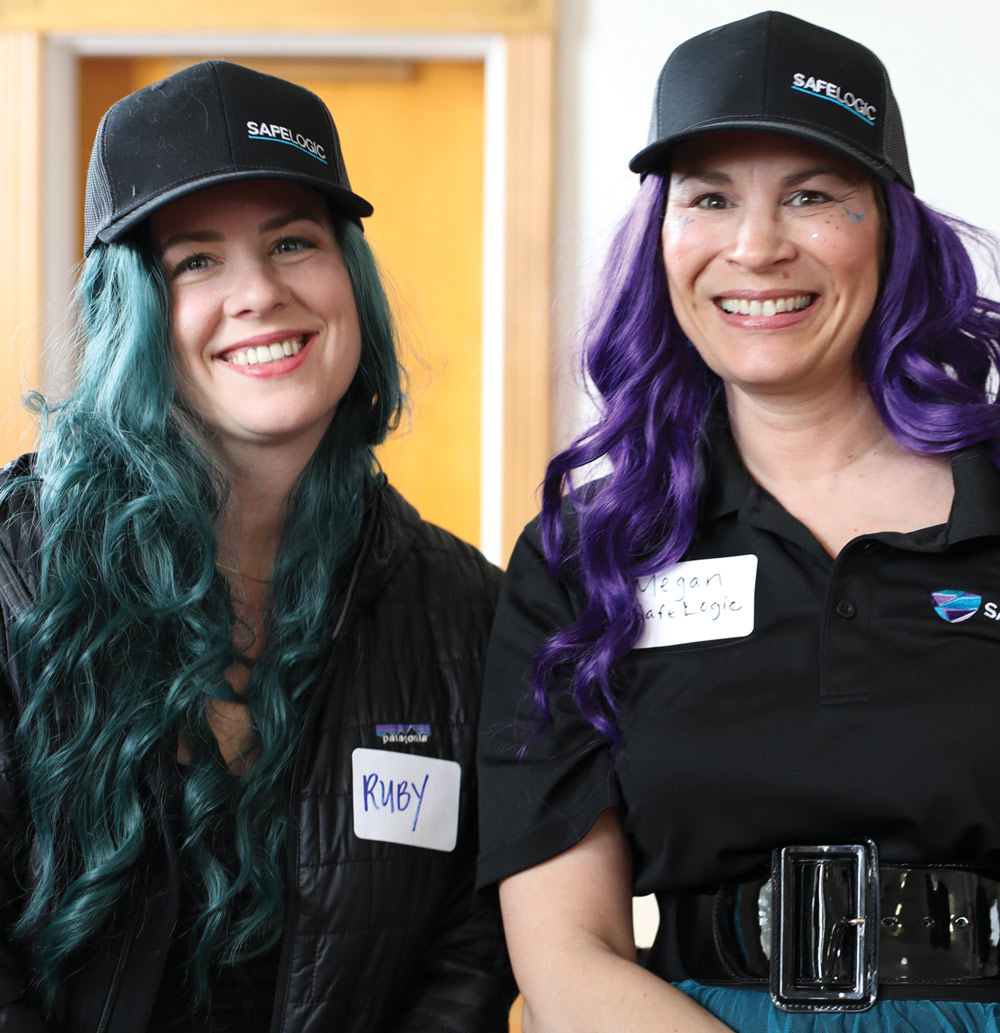
he Associated General Contractors (AGC) of Alaska Spring Train rolled south and then north on a slightly different route l this year. The AGC members who were on board enjoyed stunning views from Anchorage to Indian and back, then north to the Mat-Su.
On board, members were decked out in as much company gear as they could wear—this year’s theme was “Rep Your Brand.” The SafeLogic team donned rainbow tie-dyed coveralls and bright wigs—no one would overlook them on a job site! The event offered plenty of opportunities for connection and engagement as the train rolled along.
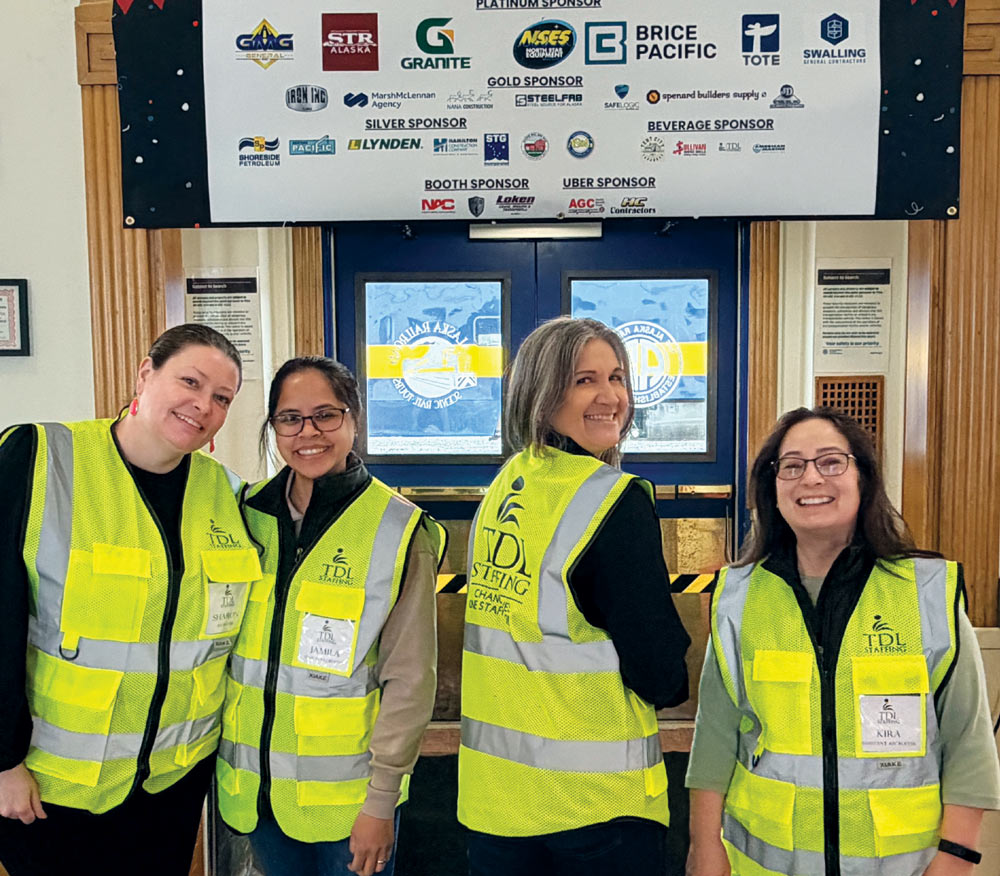
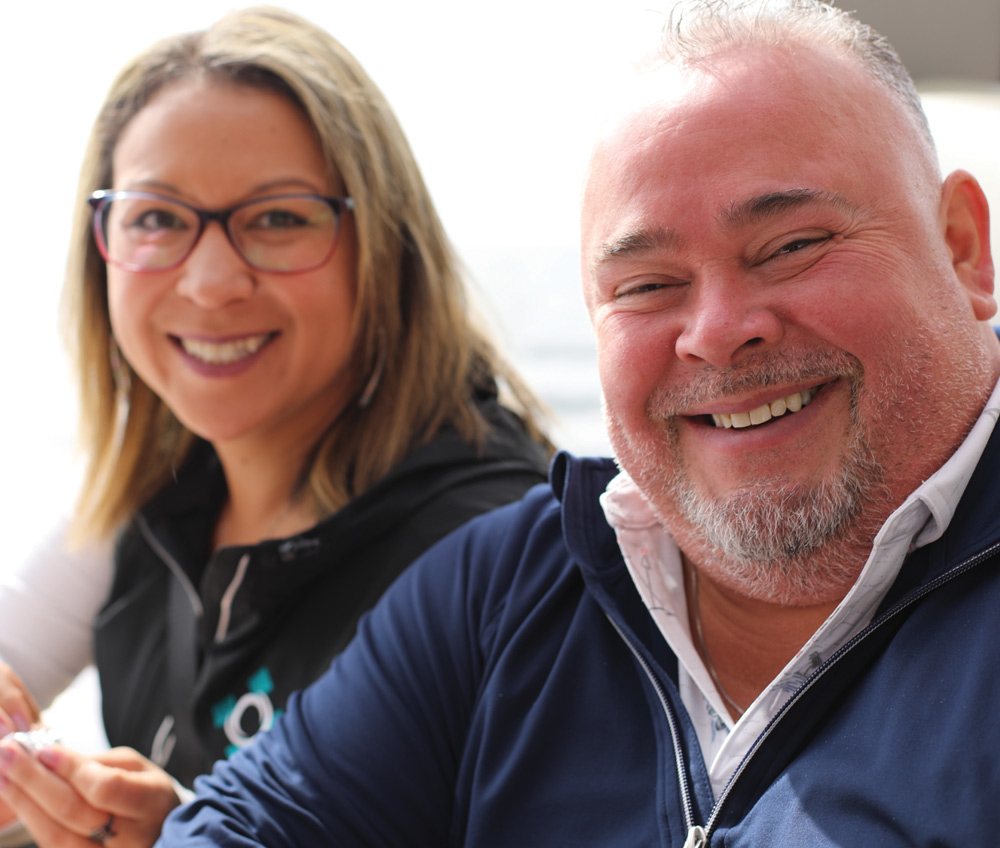


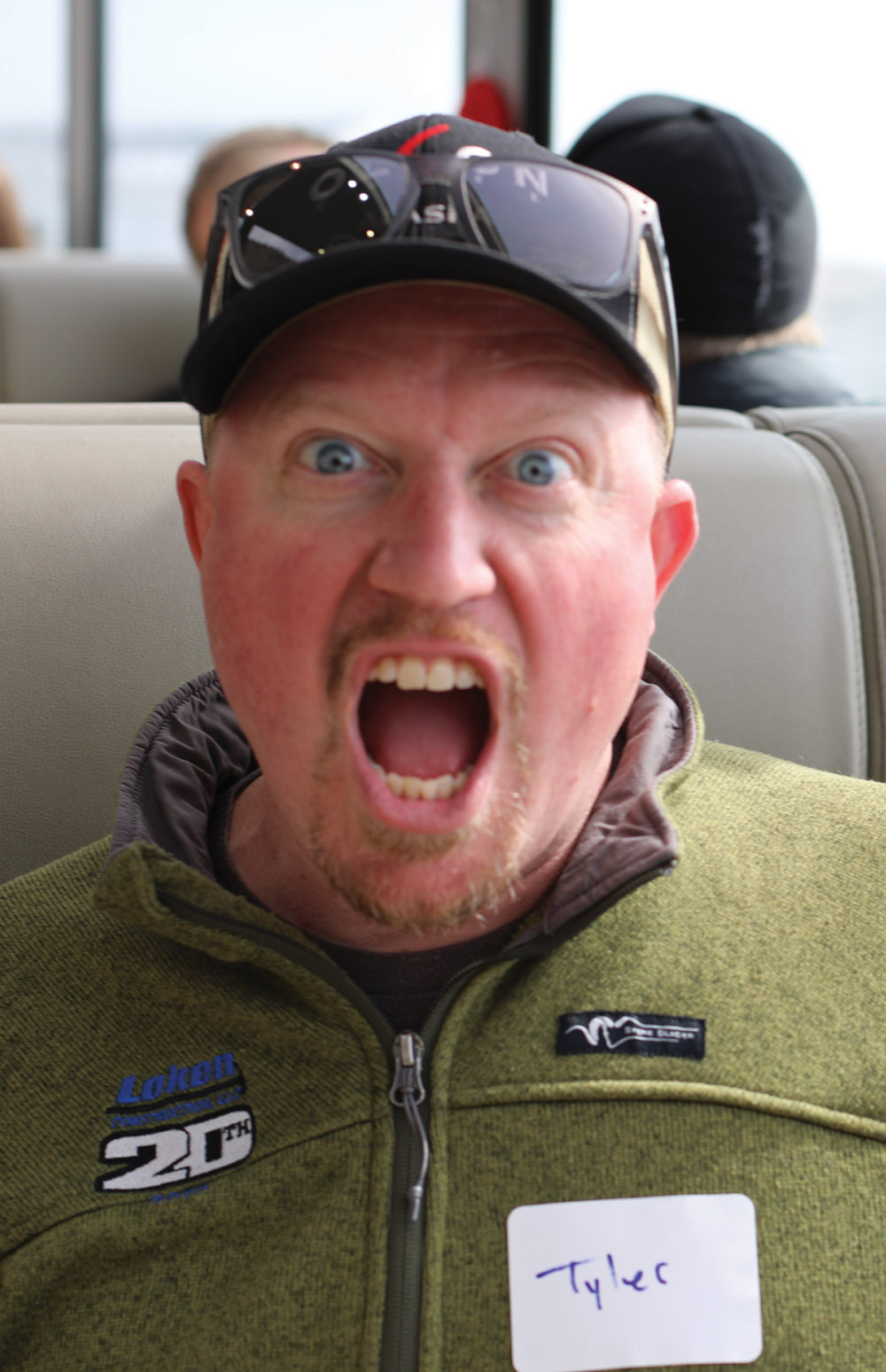

Alaska Garden & Pet Supply, Inc.
American Marine Corporation
Anchorage Sand & Gravel Co., Inc.
Brice Pacific, LLC
GMG General, Inc.
Granite Construction Company
HC Contractors, LLC
Iron Inc.
J.D. Steel Co., Inc.
King’s Custom Design
Marsh McLennan Agency
NANA Construction
Northern Air Cargo
SafeLogic Alaska, LLC
Ship Creek Brewing
Spenard Builders Supply
Sullivan Water Wells
TDL Staffing
Tent City Taphouse



Alaska Seaplanes
n Southeast, air travel is more than a convenience; it is the backbone of everyday life and commerce.
Southeast has no connected highway system linking many of its communities. Mountains, waterways, dense forests, and rapidly changing weather create one of the most challenging transportation environments in North America. Businesses throughout the region depend on aviation not simply for travel but for moving employees, cargo, equipment, medical supplies, and critical services between communities every single day.
Companies such as Alaska Seaplanes have made significant investments in advanced aviation technology and new processes aimed at improving safety, reducing weather-related disruptions, and helping businesses move throughout Southeast more efficiently than ever before.
Historically, regional flights depended heavily on visual flight rules, or VFR, requiring pilots to maintain visual reference to terrain and surrounding conditions. In Southeast, that often meant flights were delayed, canceled, or forced to turn around when weather conditions deteriorated. For businesses trying to maintain schedules and keep operations moving, those disruptions were often unavoidable realities of operating in the region.
Today, technology is beginning to change that. Advanced avionics, synthetic vision systems, autopilot integration, and FAA-approved Instrument Flight Rules (IFR) procedures are among the modern adaptations that operators like Alaska Seaplanes have designed for the terrain and weather of Southeast.
The investment represents one of the most significant technological advancements in regional Alaska aviation in decades.
Many of these procedures were developed over many years by Alaska Seaplanes and its sister company Island Air Express. We often describe these routes as “highways in the sky.”
Using advanced Garmin avionics and synthetic vision technology, pilots can see computer-generated terrain mapping and precise flight guidance directly on cockpit displays, even when outside visibility is limited by clouds or weather.
The systems allow pilots to safely descend through cloud layers and follow tightly controlled FAA-approved approach corridors into Southeast communities that previously had limited or no modern instrument access.
“As Alaska Seaplanes’ largest route to the south, the new approaches are hugely beneficial for the people of Kake and make our flights not only more reliable but faster too,” says Kake Mayor Lonnie Cavanaugh. Alaska Seaplanes serves Kake under the federal Essential Air Service program.
For businesses and travelers throughout the region, “highways in the sky” mean fewer weather cancellations, fewer diversions, and more dependable and safer operations.
Construction crews traveling to remote job sites, healthcare workers moving between communities, government agencies coordinating regional operations, and fishing companies transporting parts and personnel all depend on consistent transportation.
Investing in advanced IFR capabilities and next-generation avionics helps to reduce schedule disruptions and improve regional connectivity.
For businesses, the benefits include more predictable scheduling, reduced downtime, improved employee mobility, better cargo consistency, faster movement between communities, and greater operational flexibility during changing weather. For time-sensitive industries, those improvements can create meaningful economic advantages.
The terrain of Southeast creates unique operational challenges, and modern avionics systems significantly improve pilot awareness during those operations.
Synthetic vision displays provide detailed terrain visualization even in poor visibility. GPS-guided approaches create more precise flight paths. Terrain awareness systems help crews maintain safe separation from surrounding geography. Enhanced autopilot systems reduce pilot workload during difficult conditions.
Together, these technologies help improve both safety and operational consistency.
Importantly, these systems are not shortcuts around weather or safety standards. Rather, they provide pilots with better information, better tools, and more precise procedures for operating safely within FAA-approved conditions.
New instrument procedures required years of development, testing, certification, and coordination with federal regulators before receiving approval.
“We greatly appreciate the effort of our partners at the FAA in collaborating to bring more modern, sophisticated, and safer instrument procedures to Southeast Alaska. It’s time regional air service in Southeast had the same capabilities of the big jets; our customers deserve equivalent safety and reliability no matter the size of the airplane,” says Sean Kveum, Alaska Seaplanes co-owner and chief operating officer, who grew up in Hoonah.
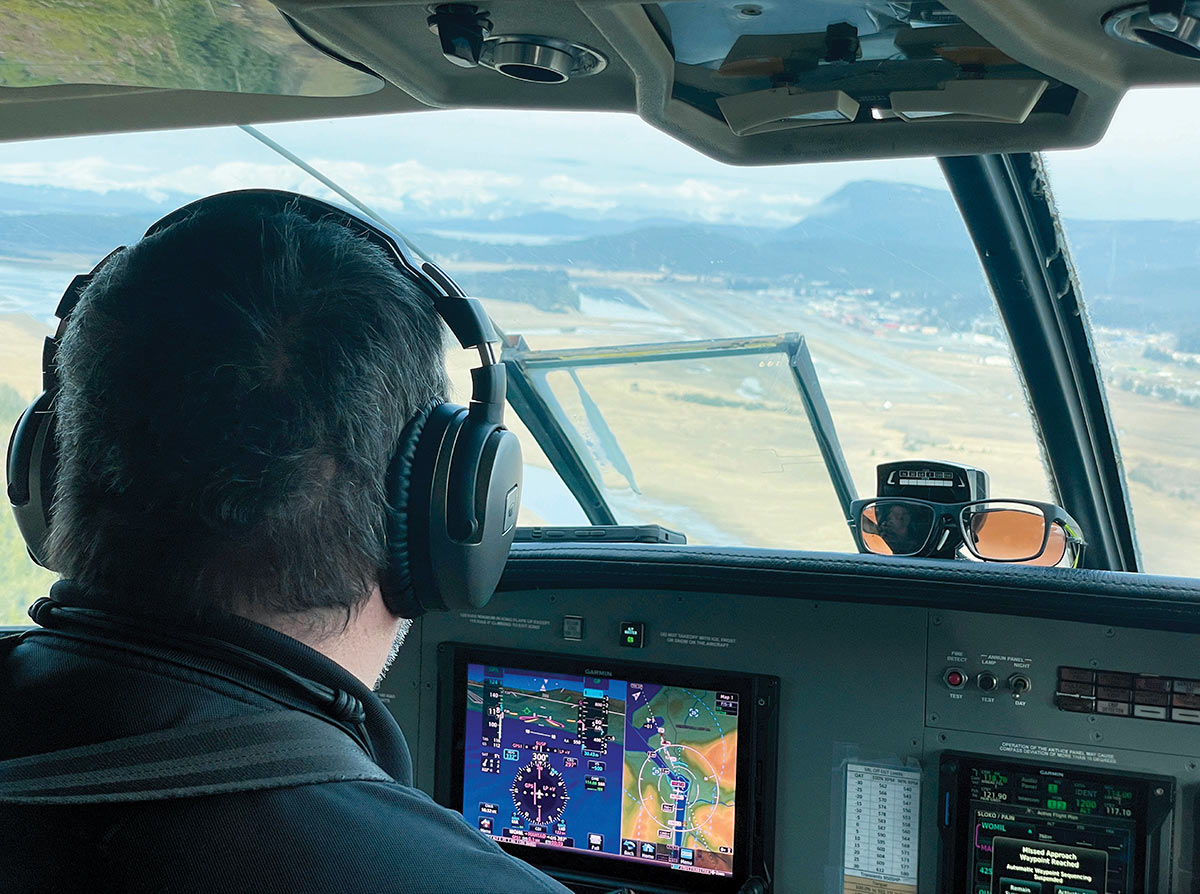
Alaska Seaplanes
Advanced dispatch coordination, maintenance tracking systems, weather monitoring tools, and operational communication technology all play critical roles in improving reliability across Southeast.
Real-time weather analysis and modern flight planning systems help crews make more informed operational decisions. Integrated scheduling and dispatch systems improve aircraft coordination and help the carrier respond more efficiently to changing conditions throughout the region.
This combination of operational infrastructure and cockpit technology helps create a more resilient transportation network for Southeast businesses and communities alike.
By combining advanced avionics, GPS-based navigation, synthetic vision systems, and FAA-approved instrument procedures, Alaska Seaplanes is helping modernize regional aviation in ways that directly benefit businesses, residents, and communities throughout Southeast.
These modernizations are about more than aircraft upgrades. They represent an effort to strengthen the transportation infrastructure that keeps Southeast connected—because, in this region, aviation is not simply travel. It is healthcare access. It is economic development. It is logistics, tourism, commerce, public service, and community connection.
And as Southeast continues moving forward, aviation technology, new processes, and new equipment will play an increasingly important role in helping businesses and communities stay connected—safely, reliably, and efficiently.

cross America, the construction industry is short on hands. Contractors are stretched. Crews are aging out. Closer to home, a generation of young Alaskans is hesitating at the door of the trades.
For the Carpenters Local 1281, an answer is rising on a high-visibility lot off the Glenn Highway just east of the Boniface Parkway exit, where a 20,000-square-foot training center is taking shape along Boundary Avenue.
“The training center is going to be a flagship piece for our organization in Alaska,” says Mario Martinez, regional manager for the Western States Regional Council of Carpenters. “It’s a message to the industry that says the Carpenters union is serious about training the best quality, skilled, productive carpenters in the construction industry. And it also sends a message that we want to be able to train and give opportunity to folks that otherwise wouldn’t have an opportunity for a good career with good pay and good benefits.”
The $20 million project, with F&W Construction Company Inc. as the general contractor, will replace the aging facility that Local 1281 has long outgrown. When the new facility opens this year, the union expects it to be a centerpiece of its recruitment and training pipeline in Alaska—a visible signal that the trade is still here, still hiring, and still investing in the next generation of carpenters and piledrivers.
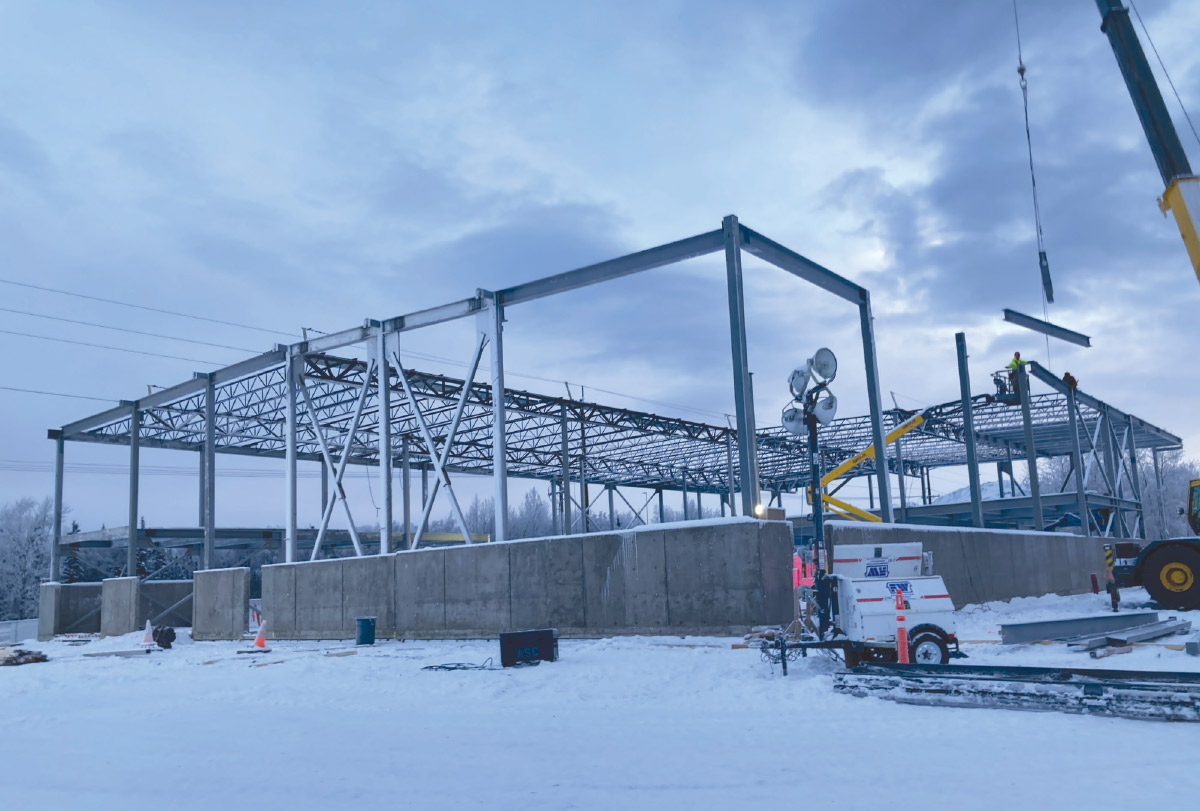


“We definitely want to build to grow,” says Martinez. “What does that building look like if we have 2,000 members or 2,500 members? So we have to build to grow.”
The four-year apprenticeship remains tuition-free, says Martinez, and the union’s pitch to prospective carpenters is straightforward. “We like to have the students think of themselves as professionals,” says Martinez. “This isn’t just a job. It’s a career.”
Martinez says the new Anchorage training center mirrors a recent project in Boise, Idaho, where the union replaced a training center that dated to the ‘90s. Modern carpentry, he says, looks little like the trade of even a generation ago.
“Things have changed so much in the industry,” says Martinez. “It’s not like a hammer and nail so much anymore.”
Beyond hands-on training, the new facility will house computer-based software, multilingual classroom capability, and instruction in soft skills such as communication, accountability, and productivity, says Martinez.
Its location is no accident, either. It’s much more prominent than the current training center in South Anchorage.
“We don’t want to be the best-kept secret,” says Martinez. “We strategically put our training centers on very busy thoroughfares so that everybody can see that the Carpenters Union has got a training center and a presence in the community. We want to make sure that we’ve got high visibility, so folks know this is where you come if you want a pathway to a career.”
“We’re really proud, as a union contractor, to help make an impact and attract future workforce,” says Harris. “Just like everybody else, we’re struggling to find hands. We’re in an environment where a lot of young people don’t think to join the trades, and we’re hoping this creates more interest and curiosity for kids to consider a career in construction.”
“The project was awarded with the expectation to start ASAP,” says Luke Ciufo, the F&W project superintendent and project manager. “Our civil sub was able to accommodate this, got the lot cleared, and began the mass excavation.”
“It didn’t take long for the bumps in the road to begin showing up,” says Ciufo. “Unidentified and unknown underground obstacles, wells, septics, tanks, trash, and utilities.”


Saturated soils, freezing temperatures, and a tightening calendar forced one of the most consequential decisions of the project: hold off on pouring the first-floor slab until spring. That single call rippled across the entire schedule, says Ciufo, postponing nearly all interior work, including framing, electrical, plumbing, and mechanical.
Even so, crews kept moving. Structural steel went up. Exterior framing followed. The roof was installed in the heart of winter, allowing sheathing and a weather barrier to wrap the building. Once doors and windows were temporarily installed and heat applied, the second-floor slabs were poured.
“This is when the project finally opened up to all trades,” says Ciufo.
With the first-floor slab pouring in May, all trades transitioned their workflow from the second floor to the first floor and picked up speed heading into summer, says Ciufo.
Overhead powerlines run close to the building footprint, just far enough away for crews to safely perform their work but close enough to require constant vigilance. The challenge intensified in winter when crews built an 80-foot-by-125-foot plastic tent next to the high-voltage lines so the roof could be installed under temporary heat.
“Having a tent next to high voltage powerlines for six weeks was less than ideal,” says Ciufo, “requiring constant monitoring of the weather conditions and safety precautions to be maintained at all times.”
Underground, Chugach Electric Association high-voltage lines also crossed the building footprint. Coordinating their relocation became one of the more time-consuming delays of the mass excavation phase last summer, says Ciufo.
Soils have been a persistent challenge. The intent was to reuse much of the excavated material on site, but the wet fall, followed by spring breakup, has left certain areas oversaturated.
“It is extremely difficult to operate equipment in certain areas,” says Ciufo.
“This building is quite deceiving,” says Ciufo. “The farther into the details you get, the more precise everything needs to be.”
Despite the precision required and the moving target of a partial design-build approach, the project is tracking close to its aggressive schedule and budget. F&W is working with several Associated General Contractors of Alaska member subcontractors, including Fullford Electric Inc., AAA Fence, Inc., Rain Proof Roofing, Malone Construction LLC, and KC Corporation.
Harris credits the union itself with keeping the work on track.
“The Carpenters Union has made a really good partner to work with,” says Harris. “It’s a unique situation where, we get to work with an owner who understands construction, and specifically carpenters.”
The union is targeting a Labor Day grand opening, says Martinez, with a fallback window of fall 2026. For Martinez, the big picture is opening the doors to anyone who wants to train and ultimately don a carpenter’s tool belt.
“We want to make sure that we’re giving that opportunity out to anybody who would like to put on a set of bags,” says Martinez.



Ashburn & Mason, P.C.
ime and materials contracts, or “T&M” contracts, are favored among contractors for several reasons. First, labor and materials are billed as those costs are incurred, meaning contractors face less risk of non-payment. Second, this structure provides more predictable profits, since overhead and profit are built into the contract at a set rate. And lastly, this structure can help manage client expectations, particularly when the scope of a project is unknown or subject to variables that make accurate bidding and estimating a challenge.
Are there any downsides? As a recent Alaska Supreme Court case highlighted, yes—if contractors don’t carefully define expectations and labor rate pricing upfront. In First Evangelical Covenant Church of Anchorage Alaska v. Michael L. Foster & Associates, the client, First Evangelical Covenant Church, hired Michael L. Foster & Associates to rebuild the church after it was destroyed in a fire. The firm served as general contractor for the project, entered a T&M contract with the client, and attached a schedule of its labor rates to the contract.
After the project was completed, all parties agreed that the contractor had completed the work satisfactorily—even going above and beyond to perform the work in a way that minimized interference with the church’s operations.
However, after receiving the contractor’s invoices, the client—and its insurance adjuster, who was funding the renovation—objected to the total cost, arguing that the contractor’s labor rates were unreasonable. The reason? The contractor charged labor rates based on each employee’s titled position, rather than the type of work the employee actually performed on the project.
The client reasoned that labor should be billed based on the work performed, not the job title or qualifications of the employee performing the work. For example, cleaning should have been billed at a cleaning rate, project management should have been billed at a project management rate, and engineering should have been billed at a professional engineering rate.
This dispute over the reasonableness of the contractor’s labor rates left the contractor with a six-figure shortfall and the contractor ultimately sued the church—and the church’s insurance company—to recover the unpaid balance.
In court, it didn’t matter that the contractor had attached a schedule of its labor rates to the contract and used those rates when billing labor. And it didn’t matter that the church had been satisfied with the contractor’s work. When a contractor brings a lawsuit for unpaid billings on a T&M contract, the contractor has the burden of proving that the disputed billings were for necessary work at a reasonable cost.
Billing labor the way the client wanted in First Evangelical Covenant Church of Anchorage Alaska v. Michael L. Foster & Associates is likely too burdensome for most contractors and can even disincentivize efficiency on the job.
What can contractors do to prevent this kind of dispute altogether? One option is to include a clause in your construction contract or labor rate schedule specifying that labor rates are calculated based on employee skill and experience and may be billed for a range of tasks and work reasonably performed by the employee. This gives contractors the flexibility to bill employees out for a reasonable range of tasks, while putting clients on notice of what to expect.
And as always, timely and comprehensive invoicing is also king: a client may still quibble with how you bill employee time, but if your invoices have a transparent breakdown of costs and go out every month, you are better equipped to address billing disputes with your client as soon as they come up, and before they become a bigger-dollar problem.


Anchorage oil field services company expands across the Continental Western US
Delta Constructors, LLC
fabrication shop.
stablished in 2009, Delta Constructors, LLC began by providing electrical and mechanical construction services to the oil and gas industry. In the past seventeen years, the company has grown significantly.
“We classify ourselves as an industrial process facilities general contractor,” says Nate Andrews, vice president of the Delta Constructors Northern Region. “Although we’re an Alaska-based contractor, we operate in three regions; the Northern Region, Rockies Region, and the Southern Region.”
Delta Constructors was founded by Ed Gohr, who grew up in Palmer and went to college at Central Washington University, where he obtained a finance degree. Gohr returned to Alaska and ventured into the oil patch as an accountant. After several years working for Alaska oil field services giant VECO, he broke out on his own. Gohr founded Delta, servicing industry leaders on the North Slope and then in North Dakota’s Bakken oil field, where the company operates a regional headquarters. Further expansion followed, with beginning operations in its now Southern Region in 2016, followed by regional offices opening in New Mexico and Texas in 2020 and 2021.
Last year, Delta worked on projects in nine different states: Alaska, North Dakota, South Dakota, Montana, Wyoming, Colorado, Utah, New Mexico, and Texas. It has also expanded beyond the oil and gas industry; today the company provides services to the mining and renewable energy industries.
Currently, Delta Constructors employs approximately 800 people, with 352 workers in Alaska. Andrews says he expects a continuing increase in project opportunities.

With the increase in projects comes a potential shortage in skilled personnel.
“The recruiting effort to find talent is becoming increasingly difficult,” says Andrews. “We had to expand part of our organization to reach out and find people. We focus on fostering an environment within the company that employees want to work with.”
Andrews acknowledges that there are numerous steps to developing that environment. “One priority is finding good clients to work for that have projects that are set up well, so there’s not a lot of red tape that the employees see. We work hard to partner with reputable clients with balanced commercial terms to avoid an adversarial relationship. We … aim to set our employees up for success with projects they want to come work on and by providing development opportunities.”
The company credits its success as an organization to the diverse experiences, skills, and knowledge of the individuals within the company.
Delta CEO Ed Gohr embodies that model. While at VECO, he began teaching the Junior Achievement of Alaska curriculum, which focuses on helping students gain financial literacy, develop work-ready skills, and understand entrepreneurship to students. Gohr is one of five Alaska business leaders who were inducted into the Alaska Business Hall of Fame in January 2026.
“His steady leadership and commitment to excellence have guided our team and contributed to Alaska’s economic strength. We’re honored to celebrate this remarkable achievement,” Delta Constructors staff wrote in a Facebook post congratulating Gohr for the nomination.
The culture of excellence also stems from knowledge gained in partnership. Being an Associated General Contractors of Alaska member has broadened the company’s reach, Andrews says.
“I think that the biggest benefit is expanding our collaboration and our outreach with other contractors within the organization to help support us with other operations,” he says.
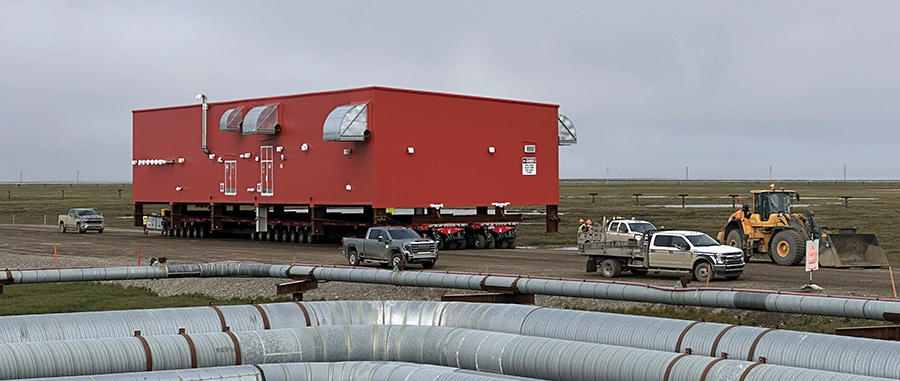

CEO, Delta Constructors
As an important part of relationship building, Delta routinely reaches out to clients in every region to get feedback on its performance and on-the-job activities. One such client is XTO Energy Southern Region, which is an ExxonMobil subsidiary. XTO’s Andrew Outlaw noted, “The overall safety management and affirmative actions towards the PSMS [Pipeline Safety Management System] program were exceptional.”




Calista Brice, LLC
ave you ever chased a proposal because a leader said, “Let’s win this now, and we can figure it out later?” I bet you’re having a visceral reaction just by reading this due to a traumatic personal experience: Heart racing. Palms sweating. Fast breathing. We’ve all been there.
What if I told you it doesn’t have to be this way? Sustainable growth doesn’t happen when you win more work; it happens when the right work is won at the right place. When business leaders value their marketing and business development leaders, they can play a fundamental role in preventing burnout across teams.
In the architectural, engineering, and construction (A/E/C) world, burnout doesn’t come from hard work; it comes from misaligned work. This is where the magic of MBDs comes in: they have the power to prevent that misalignment by shaping what work comes in and create a pathway for sustainable success.
Strategic growth comes from awareness of market trends, understanding client plans, and strong relationships with communities. Working in tandem with your MBDs on pre-pursuit planning translates into strategic “no-go” decisions, as well as deferring work to protect long-term relationships and focusing on doing current jobs well. It doesn’t mean “no” forever—it just means not right now.
So where do the MBDs come in? I’m glad you asked! MBD professionals support leaders by painting a clear picture of what is possible so that the decision makers can plan for the future while also providing employees with confidence to perform the work. This type of collaboration and support can ultimately influence the pace of work coming in, the types of clients and projects accepted, and the workload timeline during the pursuit phase. Why not be in control of your own destiny if you had the opportunity to do so?
Let’s look at it through these three pipeline tiers (because I love a good “rule of three”):
Proposals and bids are in abundance this year. With the busy construction season in full swing, laying out this strategic process is key. The busy season is when discipline matters most so that you aren’t panicking in the slow season trying to catch up. Remember, sustainable growth happens with intention.
It’s proven that MBD leaders shape expectations before a contract is signed by encouraging honest timelines and transparent resource constraints, and by initiating clear scope boundaries. Taking those steps at the beginning helps by managing scope creep and catching issues early, avoiding last-minute firefighting. Ultimately, this approach increases internal and external relationship building.
Chasing pursuits is a strategic move, not a reactionary one. By shifting your view of MBDs as “deal closers” to “capacity-aware strategists,” you will position your firm for long-term, methodical growth without the burnout.


eople often associate the term “workforce development” with encouraging prospective hires to join a business or industry. Just as important as bringing new people into the fold, however, is making sure those who are already working have a chance to build their skills, learn about trends, or keep abreast of changing regulations.
To that end, Associated General Contractors (AGC) of Alaska offers a number of training sessions, classes, and workshops throughout the year. In April, AGC brought members together for two workshops covering topics affecting the construction industry.
Anthony Huey, president of Reputation Management, LLC, led an April 7 workshop that covered the importance of crisis management and legal preparedness entitled “Communicating in an AI World: Leading Critical Conversations from the Jobsite to the Boardroom.” Huey’s program was fittingly followed by “Dirt to Done: Construction Law & Risk Management Across the Project Life Cycle” on April 10 led by Loni Hinton, construction and design attorney for Dorsey & Whitney LLP; Angela Samarel, senior vice president, construction account executive for IMA Financial Group; and Todd Vandenhaak and Gary Moorhead, both managing directors for Imperium Consulting Group. Both sessions put AGC members into contact with professional services they might not ordinarily think of as part of their jobs and prepared members to navigate a variety of business challenges.
AGC’s dedicated committees organize training events, workshops, and regular courses that enhance business operations and prepare members for future roles in the industry.
AGC’s April event calendar was packed with many professional development opportunities. AGC’s annual spring training events offer courses beyond the regularly offered Microsoft Excel, Cybersecurity Maturity Model Certification (CMMC), or Alaska Certified Erosion & Sediment Control Lead (AK-CESCL) sessions. The busy training roster included the AGC Edge Building Information Modeling Education Program, the Construction Quality Management for Contractors (CQM-C) course, and the AGC EDGE Blueprint Reading Basics course.
Huey’s workshop and the “Dirt to Done” workshop were scheduled to coincide with the Spring Train networking event to make it easier for members who travel to attend. Olson says the guest presenters for both workshops were selected because of their long-term relationship with AGC.
“Sometimes they are people recommended by one of our committees,” says Olson. “We also pull speakers from the AGC of America lineup. If there’s been a speaker at a national conference or at a different AGC event that we think would be of value to our local membership, then we bring them in.”
Huey has a long history with AGC, having worked directly with various AGC members and chapters. Olson says he’s intimately familiar with the needs of the construction industry and, given that his focus is on crisis management and response, “Communication in an AI World” was the perfect partner for “Dirt to Done.”

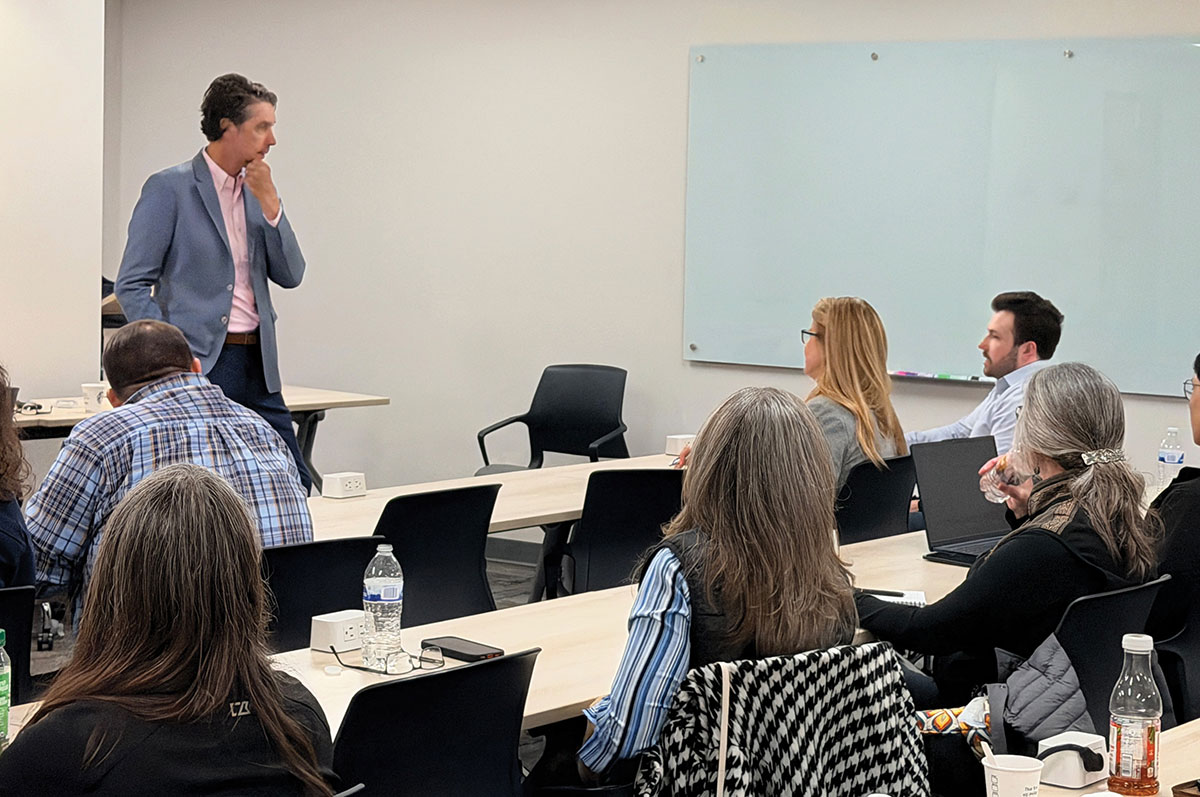
“It is so important to have a crisis communication plan,” says Huey. “Organizations need to have a document in place that tells them who is going to talk to the media, who’s their spokesperson, who’s going to talk to employees, the owner, the subs, government officials, and neighbors. There are a lot of people that they need to communicate with in the middle of a crisis, and they need to figure out how to do that before they have a crisis.”
Hinton, Samarel, Vandenhaak, and Moorhead’s “Dirt to Done” presentation was a one-day, hands-on educational series for mid- to senior-level construction professionals to deepen their understanding of construction law and risk management. The presentation covered project fundamentals, key contract provisions, and practical strategies for allocating, managing, and mitigating risks. Since legal risks can happen at any stage of a project, the presenters outlined steps contractors can take prior to construction, how to handle challenges during construction, and methods of dispute resolution if necessary.
“Workshops like ‘Dirt to Done’ are powerful because they bridge the gap between theory and day-to-day project challenges,” says Samarel. “When employees understand the ‘why’ behind contract terms, insurance requirements, and risk strategies, they feel more confident and invested in their work. That level of understanding directly supports better decision-making, stronger teams, and long-term employee retention—outcomes every construction organization is striving for.”


“In today’s day and age, employees have their choice of employers to work for, especially in Alaska,” says Olson. “Offering the additional benefit of certifications and workshops provides a clear trajectory within the company. It’s a great tool employers can take advantage of to recruit and retain high-quality employees.”
During the busy summer construction season, AGC’s training circuit will include a CMMC cybersecurity compliance training, AK-CESCL sessions, and Microsoft offerings. This fall, in addition to regular workshops and training events, Olson says several committees are considering bringing back lunch-and-learn training options.
“Members should watch their News to Use and the AGC Events Calendar on AGC’s website to be informed of the latest training schedule additions,” says Olson.
Members can visit the online AGC Calendar (members.agcak.org/eventcalendar) to check on future professional development, training, or networking opportunities.


Stratus Services
s the Cybersecurity Maturity Model Certification (CMMC) reshapes the defense industrial base, prime contractors are facing a difficult reality: many of their long-standing, trusted subcontractors are not ready to meet new cybersecurity requirements. While CMMC flowdown is intended to strengthen supply chain security, it is also introducing operational, financial, and strategic challenges, especially when primes want to continue working with preferred subs who are struggling to meet compliance needs.
The tension between mission continuity and regulatory enforcement is the heart of the issue. Prime contractors rely heavily on established subcontractors for specialized capabilities, institutional knowledge, and proven performance. However, under CMMC, those relationships are now contingent on demonstrable cybersecurity maturity. If a subcontractor cannot meet the required CMMC level, the prime may be forced to reconsider the relationship regardless of past performance.
One of the biggest challenges primes face is limited visibility into subcontractor readiness. Many subcontractors, particularly small and mid-sized businesses, are still in the early stages of understanding CMMC requirements. Some may still be completely unaware of requirements. Common deficiencies include lacking a complete System Security Plan (SSP), having significant gaps in National Institute of Standards and Technology (NIST) security guidelines for protecting Controlled Unclassified Information (CUI) in non-federal information systems (typically known as NIST SP 800-171 controls), or being unprepared for third-party assessments. Primes often discover these pitfalls late in the process when timelines are tight and options are limited.
While awareness has improved, it is still common, especially among smaller firms, for subcontractors to be effectively “CMMC-unaware.” To mitigate this, primes should be asking targeted, practical questions early in the relationship:
- What is your current Supplier Performance Risk System (SPRS) score?
- What is your CMMC scope (enclave vs. enterprise)?
- How do you send and receive CUI?
- What is your Plan of Action and Milestones (POA&M) closeout timeline?
An inability to answer these questions clearly is often a strong indicator that the subcontractor is unlikely to meet compliance timelines.
Compounding this issue is the cost and complexity of compliance. For subcontractors handling CUI, achieving CMMC Level 2 requires significant investment in technology, personnel, and process maturity. Third-party assessments add additional cost on top of implementation. Smaller firms often struggle to justify these expenses, particularly when Department of War work is only a portion of their business. This creates a difficult decision for primes: invest in helping a trusted partner reach compliance or replace them with a vendor who is already compliant—often introducing new risk in performance or cost.
In response, some primes attempt to reduce compliance burden through scoping strategies. By carefully segmenting systems and limiting the flow of CUI, they may be able to keep certain subcontractors at CMMC Level 1 rather than Level 2. However, this requires a deep understanding of data flows, something many organizations struggle with. In many cases, subcontractors still require access to technical data that qualifies as CUI, making higher-level compliance unavoidable.
To manage these pressures, primes are increasingly taking a more active role in supporting their supply chain. This includes providing guidance, sharing templates, and even offering financial or technical assistance to help subcontractors meet requirements. Some are formalizing this approach through supplier development programs, while others are addressing it by conducting cybersecurity assessments during the proposal phase. Early engagement allows primes to identify risks sooner and gives subcontractors more time to prepare.
A common pitfall is selecting a provider that attempts to shoehorn both the prime and its subcontractors into a rigid, one-size-fits-all model. These solutions often prioritize standardization over flexibility, requiring organizations to abandon existing tools, workflows, or collaboration methods. For primes working with a network of preferred subcontractors, this can be highly disruptive.
This becomes especially problematic when subcontractors are already struggling with compliance. Forcing them into an unfamiliar environment might slow adoption or even push them out of the supply chain entirely. Instead of lowering the barrier to compliance, it raises it.
Primes should instead prioritize solutions that integrate with existing workflows. This means evaluating whether a provider can:
- Support current engineering and collaboration processes
- Operate within hybrid environments (cloud, on-premises, or mixed)
- Allow phased adoption rather than requiring full migration
- Scale across subcontractors with varying levels of maturity
Flexibility is key when managing a diverse supplier base. Not all subcontractors will be at the same stage of readiness, and a rigid solution can create unnecessary friction across the ecosystem.
Equally important is data flow alignment. A strong CMMC solution should enable precise control over where CUI resides and how it moves without imposing artificial constraints that disrupt program execution. Overly restrictive environments can hinder productivity, while poorly designed ones can introduce compliance gaps.
Ultimately, primes need to treat CMMC as an extension of their operational model, not a replacement for it. The most effective providers will focus on adapting security controls to the business, rather than forcing the business to adapt to the tool.
CMMC is driving a fundamental shift in the defense industrial base. Cybersecurity is now a core requirement for participation, not a secondary consideration. Primes that successfully navigate these challenges, support their subcontractors, select flexible solutions, and align compliance with real-world workflows will be best positioned to maintain their supply chains and compete effectively in this new environment.

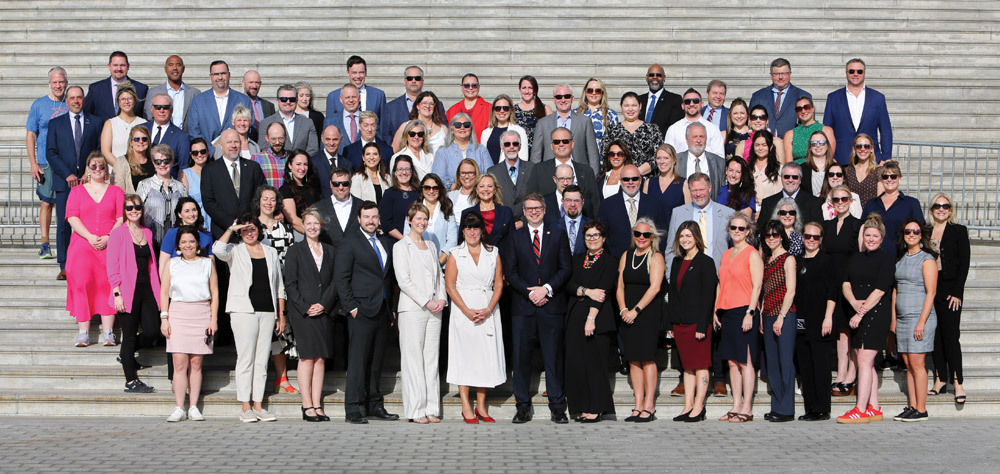


ssociated General Contractors (AGC) of Alaska Executive Director Alicia Kresl and AGC President Carrie Jokiel joined representatives from other Alaska industry groups in Washington D.C. April 15 and 16 for AK on the Hill, an annual fly-in hosted by the Alaska Chamber.
Over two days, attendees met with policymakers and elected officials to bring the state’s priorities to those in power at the national level. AK on the Hill participants engaged in industry briefings, roundtable discussions with congressional leaders, and small group meetings on Capitol Hill, creating space for direct, meaningful conversations about Alaska’s economic landscape and infrastructure needs. AGC leaders say the association’s participation ensures the construction industry remains part of those critical conversations, advocating for policies that support a strong workforce, responsible development, and long-term investment in Alaska’s infrastructure.
The fly-in generally includes an Alaska reception, where Alaska food and hospitality is on display. This year, in addition to the beloved Alaska reception, AK on the Hill attendees were invited to the “Up Top Down Under” reception at the Australian Embassy, where attendees shared their connections and discussed how to work together in the future.


ssociated General Contractors, or AGC, of Alaska awarded scholarships to nineteen recipients this year, disbursing more than $52,000 to degree-seeking students and to students learning a trade. Congratulations to the recipients, and thank you to all who donated to the scholarship fund to make it possible.
We’ve asked the recipients to tell us about themselves.
Harry Steeves, my grandpa, was a licensed civil engineer. My parents met and married Outside but moved up here and started their family, which included my older brother and me. I grew up in a home that was bought unfinished and saw the construction, demolition, and remodel up close and acquired some skills along the way. Add cabin construction to this, and you could say that I’m comfortable with a hammer, crowbar, or circular saw.
My interests in math took off at West High School in Anchorage. Between varsity football, debate, track, and working with special needs children, I completed every upper math class that the Anchorage School District offers. I graduated in May 2026, summa cum laude.
The greatest experience of my high school career was being able to take on a Gifted Mentorship program with Nicholas Choromanski of Devise Engineering. During the mentorship, “Mr. Nick” taught me that the role of a structural engineer is to design and contribute to a larger effort that construction requires. I saw how the different focuses and disciplines come together to complete a project. Mr. Nick led tours at job sites that Devise Engineering contributed to around Anchorage. A great part of this was seeing where my love of math would mesh with structural engineering.
It is my philosophy that we all form emotional bonds to the places, the buildings where we work and live. I want to be a part of that and again thank AGC for their support in reaching my career goals.

Receiving AGC scholarship support has allowed me to continue my Masters in Business Administration degree while working full-time and raising my family, opening doors for broader professional growth and leadership opportunities across Alaska. My work in land management, including experience supporting mining-related projects, has shown me how critical strong partnerships are between industry and community, and I’ve learned firsthand the importance of responsible development, safety, and long-term planning.
These experiences have strengthened my commitment to serving Alaska through leadership roles that support sustainable development and opportunities for future generations. I’m grateful for AGC’s support in helping me move toward that future.

With this in mind, I am motivated as I prepare to further my education in the fall. I plan to attend the University of Nebraska-Lincoln. It is my goal to seek a construction engineering management degree with a minor in business. This education sets me up for my goal of returning to Alaska and owning and operating a contracting company, helping with building infrastructure in remote Alaska.
I want to finish college debt free, and I am prepared to put the work in to do so. If I can finish a higher education free of debt, that gives me a significant advantage as I head into the workforce. Upon receiving an education at the University of Nebraska-Lincoln, I plan on returning to Alaska. This state will forever be my home. While I love traveling and believe it is important to experience a new place for college, I cannot imagine living anywhere else. The entire state of Alaska is such a tightly knit community; dedicated to supporting one another.
I was born and raised in Alaska and, for as long as I can remember, I have known that I want my career to reflect the love I have for this state. I want my career to impact our Alaskan community. My mission is to provide aid in remote villages by helping construct and repair infrastructure with a focus on electrical and heavy civil construction.

Working in Alaska has shown me how important strong infrastructure is, not just for our communities but also for state and national security. This scholarship helps me stay focused on finishing my degree and working towards my goal of becoming a superintendent or project manager. I’m excited to keep growing in Alaska’s construction industry and be part of projects generating a real impact across the state.

In my professional career, I plan to work with the construction industry through geological surveying and hazard prevention across Alaska. The AGC of Alaska scholarship has given me the opportunity to study my passion, give back to the Alaska community in the future, and has helped immensely in my goal of graduating college debt free. I would like to thank Shannon & Wilson, Inc. for giving me the opportunity to build engineering and professional skills as well as my parents for believing in me unconditionally.

I’m also a proud member of Alaska Laborers’ Local 341 and have spent the last ten years working in the field. That hands-on experience taught me a lot about teamwork, accountability, problem-solving, and what it takes to get work done safely and efficiently. Working alongside experienced crews gave me a strong foundation that still shapes the way I approach projects and professional growth today.
My long-term goal is to become a project manager and eventually earn my PMP [Project Management Professional] certification. Receiving the AGC scholarship helps support me as I continue balancing school and work while working toward those goals. Outside of work and school, I enjoy snowboarding and golfing and appreciate the opportunities Alaska provides both professionally and personally.

After earning my Bachelor of Science in Engineering Physics degree from the Colorado School of Mines, I returned home to Alaska to continue building experience in heavy civil construction, remote logistics, and critical infrastructure projects. My work has included airport, landfill, roadway, and rural infrastructure projects across Alaska, where I have gained valuable lessons in leadership, safety, teamwork, and problem-solving in challenging environments. With support from the AGC scholarship, I plan to continue advancing my education, professional engineering goals, and long-term commitment to strengthening Alaska’s construction industry and remote communities.

Through this internship, I was able to build on the skills I have learned over the years, work alongside experienced professionals, and see how important teamwork, safety, and attention to detail are on every project. I plan to stay with ChemTrack and continue growing professionally here in Alaska. Outside of work, I enjoy spending time with my wife and family, eating good food, and making the most of life in the state I have always called home.
I grew up in Houston and love to spend my time outdoors. That connection to the environment has deeply influenced my academic and career goals. I graduated from Houston High School as valedictorian and a multi-sport athlete. I am pursuing a degree in civil engineering with plans to specialize in environmental engineering.
Last summer I had the opportunity to intern with the Mat-Su Borough under an environmental engineer, where I learned a great deal about erosion control, fish passage, bridge surveying, and much more. My goal is to return to the Valley after graduation and build a career that allows me to contribute meaningfully to my home community. I am very thankful to AGC for helping me achieve my goals by aiding my college tuition.


My career goal is to become a construction project manager who contributes to building and improving infrastructure across the state. I have already been able to gain valuable hands-on knowledge and experience of utility systems, teamwork, and job site safety while working for ENSTAR Natural Gas Company. The AGC scholarship will allow me to stay focused on my education and continue developing the skills needed to accomplish my goals.

Growing up playing hockey in Alaska showed me firsthand how local businesses support youth, and I am driven to one day mentor others and give back to the sport and community that shaped me.
By balancing hands-on construction experience with my higher education, I have developed a unique perspective on how management decisions directly impact workers, timelines, and project success.
Receiving the AGC scholarship funds will allow me to focus entirely on my studies without the financial strain of student loans, giving me the opportunity to master the skills needed to manage projects efficiently and contribute to the long-term growth of the Alaska community.

Many years later, I was able to give my passion its name. Architecture became something that I looked for everywhere I went. This led me to enroll in architecture-focused college classes, internships, and sustainable building courses abroad while in high school.
I plan to use the knowledge and passion I have of this field during my time at the University of Oregon’s architecture program. Through the program’s initiative and focus on sustainable building practices and intentional communities, I know that I will be supported in my passion for a greener future.

I have lived in Alaska my entire life and, while I am excited for the opportunity to leave and have new experiences, I am equally excited to return to Alaska in the future to put my education to use giving back to the Alaska community that raised me.
I can’t wait to start this next chapter of my life and am so grateful for the support of the Associated General Contractors of Alaska as I do so.

In the pursuit of excellence, I moved to Alaska in search of a career that would be fitting for someone looking for an avenue to work hard, take pride in what they do, and be a part of something bigger than themselves. I found that career in Alaska’s construction industry and, with the help of this scholarship, I can further my education and become a more valuable asset to my team.

I want to weld because it challenges me in a different way than any other trade I’ve attempted. It’s always been something I can come back to, and I’ve been blessed to have amazing and supportive educators who helped turn my hobby into a passion. Because of this funding opportunity from AGC, my path is now becoming a reality.


Through my hard work at King Tech High School, I was handpicked for an internship in residential, new-construction electricity. All of my dedication led to my commitment to pursue electrical construction as a career.
It feels extremely rewarding seeing all of my learning and efforts bring an impact to my community. At 18 years old, I am beginning my apprenticeship and can’t wait to see where it takes me.

Over the past few years, I gained hands-on experiences where I learned about building techniques, machine operation, and workplace safety. These experiences solidified my passion for the field.
Receiving an AGC scholarship will greatly support my education and training, allowing me to become a skilled millwright. More importantly, it will enable me to give back to my community and inspire other young Alaskans to pursue careers in construction. I am excited about the future and look forward to making a positive impact in my community and state.







amily businesses are among the most powerful engines of the global economy. Representing roughly two-thirds of all businesses worldwide, they generate an estimated 70–90 percent of global gross domestic product (GDP) and often outperform non-family competitors over the long term. Their success is driven by committed ownership, shared values, agility in decision-making, and a deeply rooted sense of purpose. Yet the very qualities that fuel this success can also make one of the most critical moments in a family enterprise—transition—its greatest vulnerability.
The stakes are high. Studies suggest that only about 30 percent of family businesses successfully transition to the second generation, and roughly 10 percent make it to the third. The challenge is often not a lack of economic strength, but unresolved tensions around control, compensation, strategy, and communication.
To navigate this complexity, many advisors rely on the well-established “Three-Circle Model,” which views the family enterprise as the intersection of three systems: Family, Ownership, and Business. Sustainable success requires attention to all three. When one circle falters, the entire system is eventually affected.
Successful transition begins with honest evaluation: Which system—family, ownership, or business—receives the most attention today? Which receives the least? And which type of transition is most pressing now: ownership, governance, management succession, or family roles?
- Strong, disciplined business management. At its foundation, a family business must be well run. This includes maintaining a clear corporate culture, competing effectively in chosen markets, and sustaining quality and innovation. These disciplines are universal, but they become especially important during periods of generational change.
- Thoughtful inclusion of the family. Deciding who participates in the business—and how—is often the most sensitive issue. Best practices include clear, merit-based pathways for family employment, neutral compensation structures, and education for family members who are owners but not managers. Many families benefit from independent directors or non-family executives, as well as regular family meetings to keep non-managing owners informed and engaged. Transparent mechanisms for valuing and exiting ownership are equally critical.
- Intentional family governance. Frequently overlooked, family governance may have the greatest long-term impact on cohesion and continuity. Effective governance reflects the family’s culture and values while providing structures for decision-making, communication, and conflict resolution. Tools may include shareholder agreements, family councils, education plans for the rising generation, and, in some cases, a formal “Family Constitution” that articulates shared purpose, values, and rules of engagement across all three systems.
The Legacy Group is a premier family planning office within UBS with offices in Alaska, Washington, and Arizona. It works closely with affluent families to provide a tailored approach to the financial planning process, helping families protect, manage, and maintain wealth. As a founder of The Legacy Group, Levi Robinson is a certified financial planner serving the wealth management needs of multigenerational families since 2005. Robinson lives in Anchorage with his wife, Blair; their three children, Brance, Adaire and Twyla; and their dog, Finn. They spend many winter days on skis and many summer days on the baseball field or taking trips to the remote cabins of Alaska via their float plane.


ND Engineers, Inc. (PND) announces the promotion of PND Senior Engineer Jhon Landicho. Landicho recently passed his Principles and Practice of Engineering (PE) exam to become a professionally licensed engineer in Alaska. Landicho graduated from UAA in December 2020 and was hired at PND in January 2021. Landicho specializes in structural engineering, with a focus on bridge design and marine infrastructure. Landicho performs bridge and dock inspections throughout Alaska, and his design experience ranges from bridges capable of supporting oil drill rigs to floating docks for small boat harbors.

Photo provided by PND Engineers, Inc.
Photo provided by Associated General Contractors of Alaska
ssociated General Contractors (AGC) of Alaska recently welcomed Laura Erickson to its busy team. Erickson will administer AGC training, oversee workforce development initiatives, and manage AGC’s general operations. She will also serve as the membership’s point of contact for Alaska Certified Erosion & Sediment Control Lead (AK-CESCL) classes, Education Program, the Construction Quality Management courses, and building rentals.
Some members may know Erickson from her previous work as operations director for Alaska Resource Education, where she helped strengthen connections between education and the resource industry. Erickson has called Alaska home since 1994 and has built lasting relationships throughout the state. She is passionate about supporting Alaska’s industries, communities, and future workforce and brings deep operational expertise and a strong, collaborative style, focused on results. Outside of work, Erickson enjoys traveling, being outdoors, kayaking, and spending time with family and friends.
hemTrack Alaska, Inc. recently celebrated the successful completion of a project in Copper Center with a sweet reminder of how far the site has come.


Photos provided by ChemTrack Alaska, Inc.
The US Bureau of Indian Affairs school site, located about 1.5 miles north of Copper Center village center, was built in the ‘50s and operated until the late ‘70s, but had been abandoned and was suffering from vandalism. It was identified through the state Department of Environmental Conservation’s Brownfields Assessment Requests. The building contained asbestos and other hazardous building materials, as well as signs of petroleum use on site. The Copper River Native Association contracted ChemTrack to perform abatement, demolition, and soil removal in June 2025. The company completed the abatement, demolished the building, and landfilled non-hazardous debris in Glennallen. Hazardous debris was shipped to a location out of state in compliance with federal guidelines. The project wrapped up in August 2025. The effort addressed long-standing environmental concerns by safely abating hazardous building materials and remediating lead-impacted soils. The work was completed in full compliance with ADEC and EPA standards, restoring the site to a clean and safe condition.
The Native Village of Kluti-Kaah plans to allow the site to revert to its natural state to support ecological restoration and subsistence use.

- Airswift
- Alaska Industrial Hardware
- Alaska Mechanical Contractors Association, Inc.
- Alaska Quality Septic
- Alaska Railroad
- Alyeska Tire
- Anchorage Sand & Gravel
- Birch Horton Bittner & Cherot
- Bob’s Services, Inc.
- CBIZ
- Chugach Electric Association Inc.
- Coffman Engineers
- Construction Machinery Industrial
- Cornerstone General Contractors
- Craig Taylor Equipment
- Crowley Fuels
- Davis Block & Concrete
- Davis Constructors & Engineers Inc.
- Dorsey & Whitney LLP
- ENSTAR Natural Gas Co.
- Equipment Source, Inc.
- First National Bank Alaska
- Fountainhead Development
- Fullford Electric, Inc.
- GMG General, Inc.
- Great Northwest Inc.
- IMA Financial Group
- JD Steel Co. Inc.
- KLEBS Mechanical
- Landye Bennet Blumstein LLP
- Loken Crane, Rigging and Transport
- Lynden
- Matson Inc.
- Michels Corporation
- MT Housing Inc.
- N C Machinery
- NECA Alaska Chapter
- Northern Air Cargo
- Northrim Bank
- Personnel Plus Employment Agency
- Petro Marine Services
- PND Engineers Inc.
- Port Mackenzie
- R & M Consultants Inc.
- Rain for Rent
- Rain Proof Roofing
- Rural Energy Enterprises
- Sheet Metal Inc.
- Sourdough Express, Inc.
- Span Alaska Transportation LLC
- Spenard Builders Supply
- Sullivan Water Wells
- Swalling General Contractors, LLC
- SYSTEMCENTER ALASKA
- TOTE Maritime Alaska LLC
- Tutka, LLC
- Weaver Brothers Inc.
- Yukon Equipment Inc.