


Alaska Seaplanes

n Southeast, air travel is more than a convenience; it is the backbone of everyday life and commerce.
Southeast has no connected highway system linking many of its communities. Mountains, waterways, dense forests, and rapidly changing weather create one of the most challenging transportation environments in North America. Businesses throughout the region depend on aviation not simply for travel but for moving employees, cargo, equipment, medical supplies, and critical services between communities every single day.
Companies such as Alaska Seaplanes have made significant investments in advanced aviation technology and new processes aimed at improving safety, reducing weather-related disruptions, and helping businesses move throughout Southeast more efficiently than ever before.
Historically, regional flights depended heavily on visual flight rules, or VFR, requiring pilots to maintain visual reference to terrain and surrounding conditions. In Southeast, that often meant flights were delayed, canceled, or forced to turn around when weather conditions deteriorated. For businesses trying to maintain schedules and keep operations moving, those disruptions were often unavoidable realities of operating in the region.
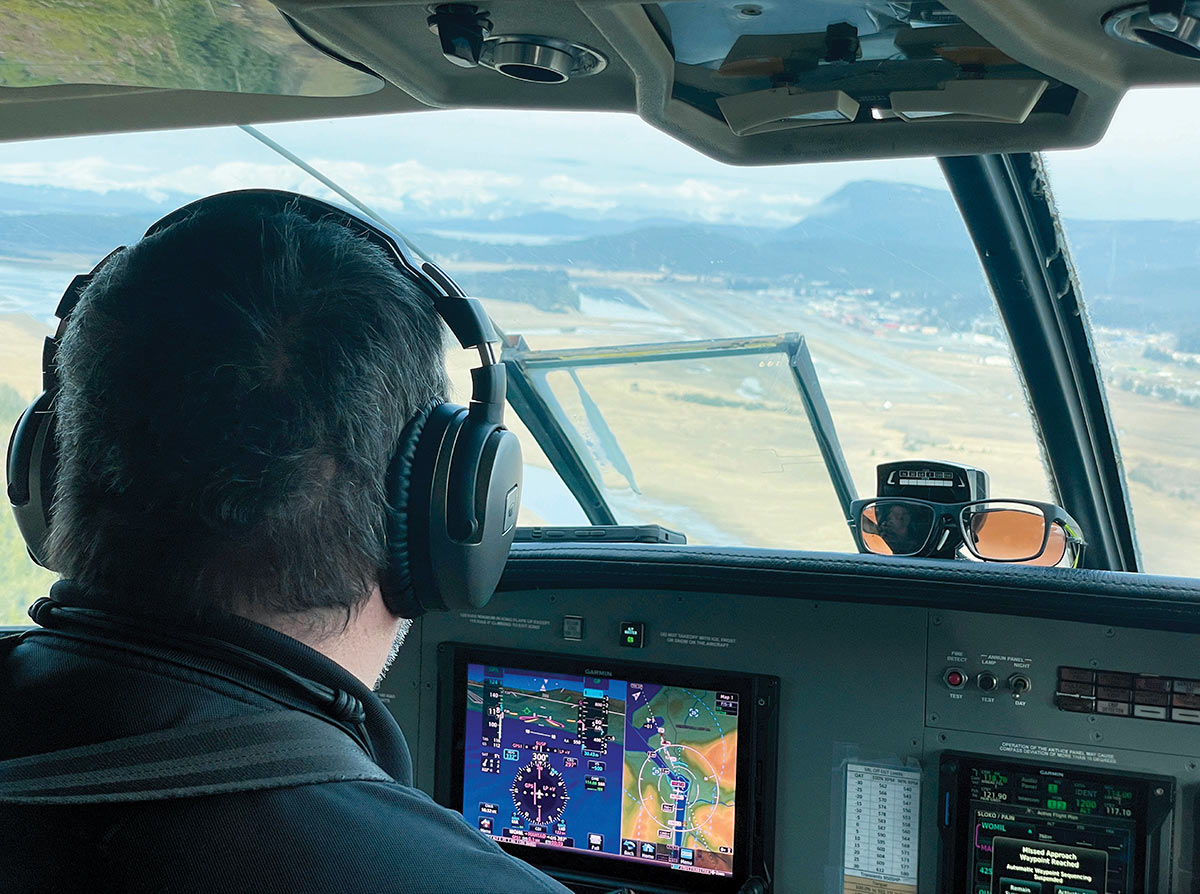
Today, technology is beginning to change that. Advanced avionics, synthetic vision systems, autopilot integration, and FAA-approved Instrument Flight Rules (IFR) procedures are among the modern adaptations that operators like Alaska Seaplanes have designed for the terrain and weather of Southeast.
The investment represents one of the most significant technological advancements in regional Alaska aviation in decades.
Many of these procedures were developed over many years by Alaska Seaplanes and its sister company Island Air Express. We often describe these routes as “highways in the sky.”
Using advanced Garmin avionics and synthetic vision technology, pilots can see computer-generated terrain mapping and precise flight guidance directly on cockpit displays, even when outside visibility is limited by clouds or weather.
The systems allow pilots to safely descend through cloud layers and follow tightly controlled FAA-approved approach corridors into Southeast communities that previously had limited or no modern instrument access.
“As Alaska Seaplanes’ largest route to the south, the new approaches are hugely beneficial for the people of Kake and make our flights not only more reliable but faster too,” says Kake Mayor Lonnie Cavanaugh. Alaska Seaplanes serves Kake under the federal Essential Air Service program.
For businesses and travelers throughout the region, “highways in the sky” mean fewer weather cancellations, fewer diversions, and more dependable and safer operations.
Construction crews traveling to remote job sites, healthcare workers moving between communities, government agencies coordinating regional operations, and fishing companies transporting parts and personnel all depend on consistent transportation.
Investing in advanced IFR capabilities and next-generation avionics helps to reduce schedule disruptions and improve regional connectivity.
For businesses, the benefits include more predictable scheduling, reduced downtime, improved employee mobility, better cargo consistency, faster movement between communities, and greater operational flexibility during changing weather. For time-sensitive industries, those improvements can create meaningful economic advantages.
The terrain of Southeast creates unique operational challenges, and modern avionics systems significantly improve pilot awareness during those operations.
Synthetic vision displays provide detailed terrain visualization even in poor visibility. GPS-guided approaches create more precise flight paths. Terrain awareness systems help crews maintain safe separation from surrounding geography. Enhanced autopilot systems reduce pilot workload during difficult conditions.
Together, these technologies help improve both safety and operational consistency.
Importantly, these systems are not shortcuts around weather or safety standards. Rather, they provide pilots with better information, better tools, and more precise procedures for operating safely within FAA-approved conditions.
New instrument procedures required years of development, testing, certification, and coordination with federal regulators before receiving approval.
“We greatly appreciate the effort of our partners at the FAA in collaborating to bring more modern, sophisticated, and safer instrument procedures to Southeast Alaska. It’s time regional air service in Southeast had the same capabilities of the big jets; our customers deserve equivalent safety and reliability no matter the size of the airplane,” says Sean Kveum, Alaska Seaplanes co-owner and chief operating officer, who grew up in Hoonah.
Alaska Seaplanes
Advanced dispatch coordination, maintenance tracking systems, weather monitoring tools, and operational communication technology all play critical roles in improving reliability across Southeast.
Real-time weather analysis and modern flight planning systems help crews make more informed operational decisions. Integrated scheduling and dispatch systems improve aircraft coordination and help the carrier respond more efficiently to changing conditions throughout the region.
This combination of operational infrastructure and cockpit technology helps create a more resilient transportation network for Southeast businesses and communities alike.
By combining advanced avionics, GPS-based navigation, synthetic vision systems, and FAA-approved instrument procedures, Alaska Seaplanes is helping modernize regional aviation in ways that directly benefit businesses, residents, and communities throughout Southeast.
These modernizations are about more than aircraft upgrades. They represent an effort to strengthen the transportation infrastructure that keeps Southeast connected—because, in this region, aviation is not simply travel. It is healthcare access. It is economic development. It is logistics, tourism, commerce, public service, and community connection.
And as Southeast continues moving forward, aviation technology, new processes, and new equipment will play an increasingly important role in helping businesses and communities stay connected—safely, reliably, and efficiently.