



Associated General
Contractors of Alaska




8005 Schoon St.
Anchorage, AK 99518
907-561-5354
Fax: 907-562-6118
www.agcak.org
Associated General Contractors of Alaska
Jenith Ziegler
ChemTrack Alaska, Inc.
Pearl-Grace Pantaleone
HDR Alaska Inc.
Alicia Kresl
Associated General Contractors of Alaska
Christine A. White
R&M Consultants, Inc.
Heather Sottosanti
Big State Mechanical, LLC
Carrie Jokiel
ChemTrack Alaska, Inc.
Johnathon Storter
Meridian Management, Inc.
Tasha Anderson
Managing Editor
Rindi White
Editor
Monica Sterchi-Lowman
Art Director
Fulvia Lowe
Art Production
Patricia Morales
Web Manager
BUSINESS STAFF
Charles Bell
VP Sales & Marketing
907-257-2909 cbell@akbizmag.com
Chelsea Diggs
Account Manager
907-257-2917 chelsea@akbizmag.com
Weston Giliam
Account Manager
907-257-2911 wgiliam@akbizmag.com
Tiffany Whited
Marketing & Sales Specialist
907-257-2910 tiffany@akbizmag.com
501 W. Northern LIghts Blvd., Ste 100
Anchorage, AK 99503
The Alaska Contractor is published by Alaska Business Publishing Co. Inc. for the Associated General Contractors of Alaska. Contents of the magazine are not necessarily endorsed by AGC of Alaska or Alaska Business Publishing Co. All rights reserved. Copyright 2026 by the Associated General Contractors of Alaska. For information about articles in this edition or for permission to reproduce any portion of it, contact Alaska Business Publishing Co.
Design by Patricia Morales
8005 Schoon St.
Anchorage, AK 99518
907-561-5354
Fax: 907-562-6118
www.agcak.org
Associated General Contractors of Alaska
Jenith Ziegler
ChemTrack Alaska, Inc.
Pearl-Grace Pantaleone
HDR Alaska Inc.
Alicia Kresl
Associated General Contractors of Alaska
Christine A. White
R&M Consultants, Inc.
Heather Sottosanti
Big State Mechanical, LLC
Carrie Jokiel
ChemTrack Alaska, Inc.
Johnathon Storter
Meridian Management, Inc.
Tasha Anderson
Managing Editor
Rindi White
Editor
Monica Sterchi-Lowman
Art Director
Fulvia Lowe
Art Production
Patricia Morales
Web Manager
BUSINESS STAFF
Charles Bell
VP Sales & Marketing
907-257-2909 cbell@akbizmag.com
Chelsea Diggs
Account Manager
907-257-2917 chelsea@akbizmag.com
Weston Giliam
Account Manager
907-257-2911 wgiliam@akbizmag.com
Tiffany Whited
Marketing & Sales Specialist
907-257-2910 tiffany@akbizmag.com
501 W. Northern LIghts Blvd., Ste 100
Anchorage, AK 99503
The Alaska Contractor is published by Alaska Business Publishing Co. Inc. for the Associated General Contractors of Alaska. Contents of the magazine are not necessarily endorsed by AGC of Alaska or Alaska Business Publishing Co. All rights reserved. Copyright 2026 by the Associated General Contractors of Alaska. For information about articles in this edition or for permission to reproduce any portion of it, contact Alaska Business Publishing Co.
Design by Patricia Morales



 AGC MEMBER
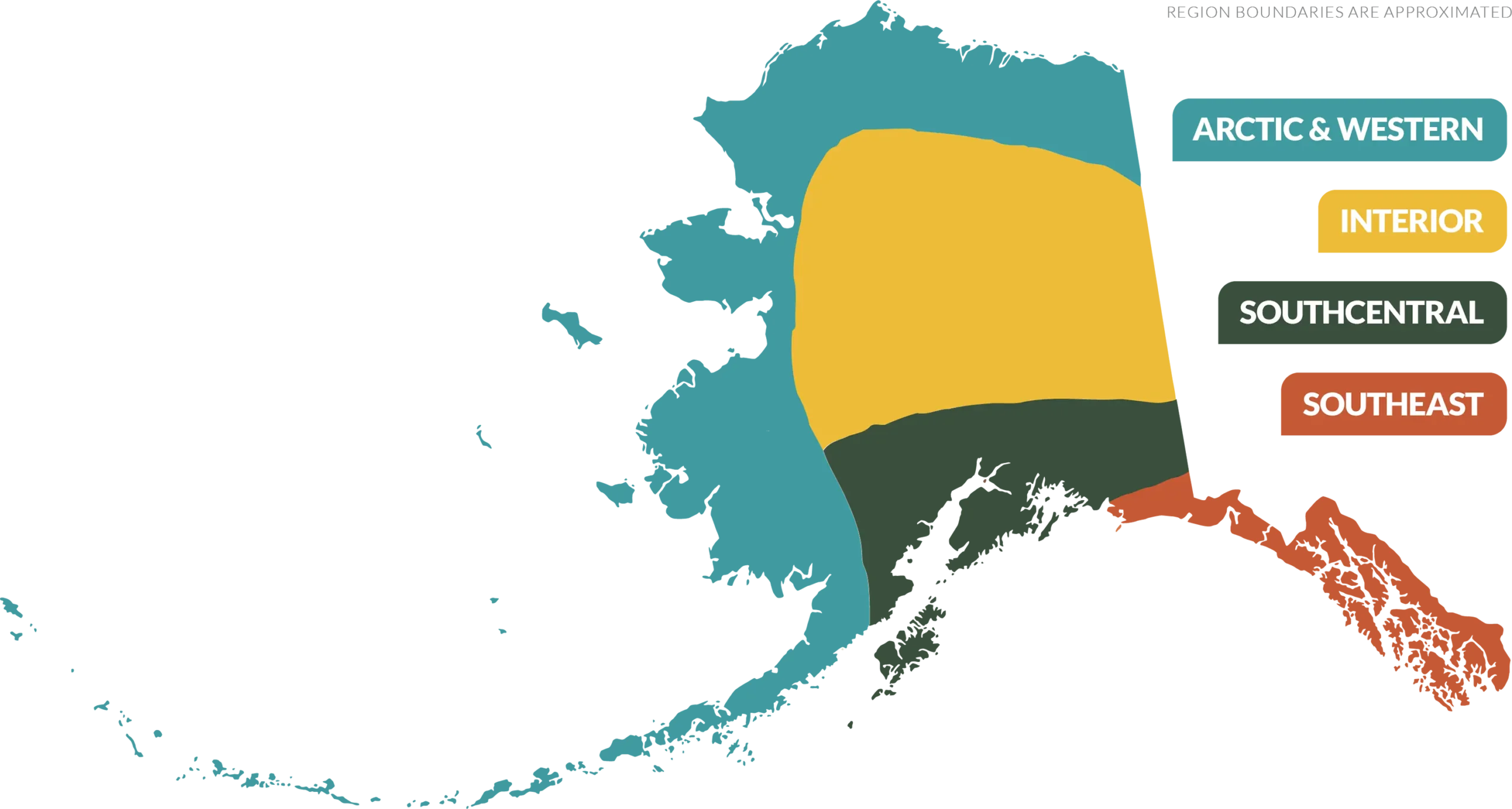
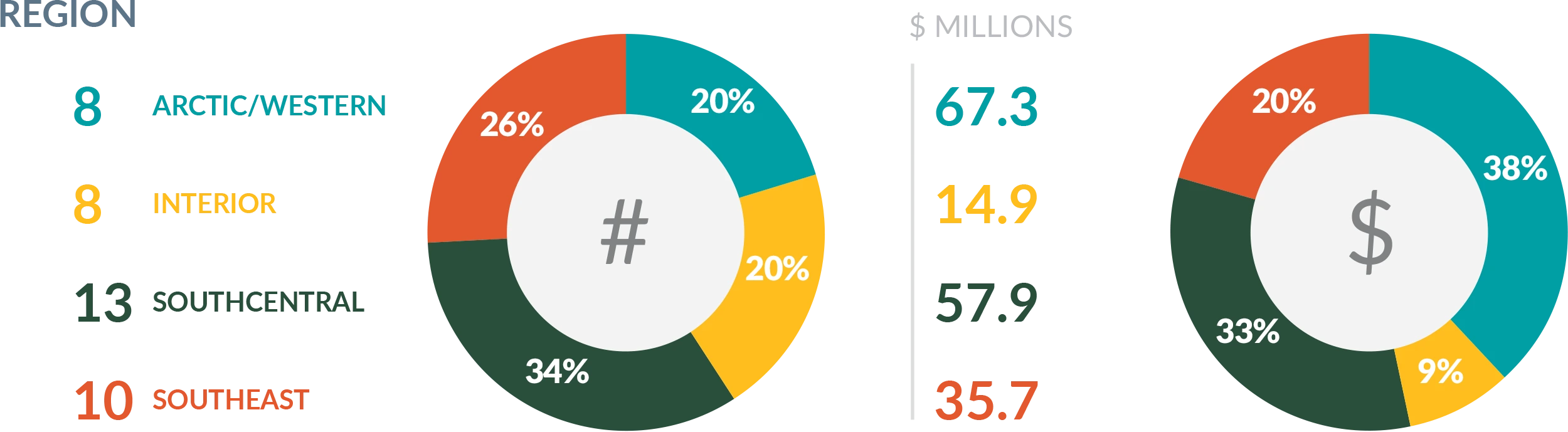
UIC Construction, LLC
$ 40,362,926
Water Storage Tanks 3 and 4 Upgrades, Point Hope
UIC Sanatu, LLC
$8,719,000
Davis Ramoth K-12 School Renovation
H Construction LLC
$7,048,000
Shageluk Bulk Fuel Upgrades
STG, Inc.
$4,837,480
2026-2028 Dillingham Harbor Maintenance Dredging
Alaska Marine Excavation, LLC
$3,255,300
Raw Water Intake & Residential Water & Sewer Service Improvements – Selawik
Frostline Drilling and Construction LLC
$1,495,000
Districtwide Generator Replacement & Upgrades
Sturgeon Electric Company, Inc
$1,148,800
Northern Region Western District Miscellaneous Equipment Rental
Q Trucking Garage
$469,185

Callahan Construction Company
$6,170,842
Sewer System Improvements – Tanacross
AMAQ Corporation
$2,968,000
Big Dipper Structural Repairs
GHEMM Company, LLC
$2,373,035
Wescott Pool Repairs – Phase 28
Orion Construction Inc
$1,920,300
Bernice Allridge Park Improvements
Trost Construction, Inc.
$565,610
Northern Region Fairbanks District Distributor Truck
Emulsion Products Company
$350,295
Slaterville Park Improvements
Exclusive Paving/University Redi-Mix
$345,375
Northern Region Denali District Distributor Truck
Emulsion Products Company
$225,305

Hamilton Construction LLC
$22,848,100
Marine Park Improvements
Dawson Construction, Inc.
$5,571,755
Dudley Street Improvements Phase II
Coogan Construction Company
$2,730,083
Centennial Hall Lobby & Mechanical System Upgrades
Dawson Construction, Inc.
$1,452,219
Nowell Avenue Reconstruction
Admiralty Construction Inc
$762,034
Ore Peninsula Limited Slope Removal
Hamilton Construction LLC
$666,165
Wildflower Court Fire Alarm Replacement
Southeast Electric LLC
$591,400
Angoon Water Source Upgrades Project
Dawson Construction, Inc.
$581,518
Juneau State Office Building Snack Bar
Island Contractors, Inc.
$355,610
Totem Bight SHP: Trail Accessibility Project
LogJam Construction LLC
$152,500
 Great Northwest, Inc.
$33,463,315
HSIP: Anchorage Flashing Yellow Arrow and Signal Head Display Improvements – Stage 1
NexusNorth, LLC
$8,286,666
Water Distribution System Replacement, Tyonek
Western Construction & Equipment LLC
$4,146,000
RSA 17 Knik Annual Road Maintenance
Smithsons
$3,195,381
Northern Asphalt Construction
$2,020,588
Station 6-2 Training Complex Build-Out for Confined Space & Structural Simulation
Big Dipper Construction
$1,956,942
RSA 28 Gold Trail Annual Road Maintenance
Battleground LLC
$1,703,411
Chinook Elementary School Pod 4 Demolition
HPM Contracting, Inc.
$1,104,501
RSA 14 Fairview Annual Road Maintenance
Battleground LLC
$929,558
New Horizons Telecom Inc
$555,941
Construct Palmer Junior Middle School Elevator Upgrades
Samson Electric Inc
$217,182
Construct Palmer High School Elevator Upgrades
Goertz Construction Inc
$208,844
Design and Build Roof Structure at Port MacKenzie
Nodak Electric & Construction Inc.
$148,061




n reviewing decades of Associated General Contractors (AGC) of Alaska presidents’ messages, alongside Alaska’s construction spending forecasts from 2006 through 2026, one thing becomes clear: what feels urgent in the moment often looks familiar with the benefit of time.
Year after year, leaders wrote about uncertainty—funding not yet secured, workforce pressures, projects waiting on decisions. The details changed—the acronyms, the industries driving growth, the external forces—but the underlying dynamics did not. Alaska construction has never moved in straight lines. It moves in cycles.
This reflects the reality of building in a state with a short construction season, long planning horizons, and infrastructure needs that do not pause for market swings or political calendars. The work continues, even when the drivers shift.
Which brings us to the present.
In January, AGC Executive Director Alicia Kresl testified before the legislature in support of the $70 million state match proposed in the governor’s supplemental budget. A month later, AGC members attended our annual Fly-In event in Juneau and met with legislators and leaders from across Alaska’s business community to carry the same message. Our efforts reinforced a message AGC has carried for years: timely state match funding is not about expanding programs—it is about ensuring stability so projects can move from planning to bid in a short construction season.
Our “Meet the Match” message is being heard. But history reminds us that hearing a message is not the same as acting on it.
Confusion remains around DOT’s project funding timelines and why last year’s lack of match funding must be prioritized. For this reason, AGC is sharpening its focus on what timely match funding delivers—stability—for DOT’s planning, for contractors’ hiring and scheduling, and for getting summer projects out for bid.
This moment, too, fits the cycle.
Long before forecasts or dashboards, the advice passed down through lived experience in this state was simpler: cycle through it. Not ignore challenges. Not panic. Understand that cycles are part of the work—and preparation determines how well we move through them.
Across decades, what endures is the workforce that shows up season after season, the professionalism that keeps jobsites safe, and AGC’s role as a steady voice through change.
Cycles will continue. They always have. Decades of work suggest we know how to move through them.
Please continue reaching out to your local representatives—and encouraging others to do the same—as we work to ensure Alaska’s construction season can move forward with certainty.
We’ll keep cycling through it—together.


ost people don’t spend much time thinking about the federal highway bill—the huge bill that sets out a plan for surface transportation and public transit spending, generally passed every five years. It sounds like something meant for policymakers and transportation wonks in Washington, D.C., not for everyday Alaskans who are simply trying to get to work, pick up groceries, or make sure supplies reach their communities. But the truth is clear: the highway bill quietly shapes almost every mile of road we rely on in this state, every single day.
If you’ve driven the Parks Highway in winter, followed a pilot car through a summer work zone, or counted on a shipment coming for a project, you’ve already felt its impact. You just may not have known it.
Before going further, let me make one thing very clear for our Alaska readers: this campaign is not the same as “Meet the Match.” Meet the Match is AGC of Alaska’s effort to secure funding for Alaska-based projects.
America’s Moving Forward, on the other hand, is about education—making sure people understand how the federal highway bill works and why predictable transportation investment at the national level matters.
There are four practical priorities at the center of the America’s Moving Forward campaign: modern, fair funding; reduced congestion costs; streamlined permitting with strong environmental protections; and safer roads supported by better data.
These aren’t abstract policy concepts. They are lived realities in Alaska.
Fair and modern funding matters in a state where long distances and heavy freight loads put unique demands on our roads. Congestion might look different here than in Texas or Georgia, but we feel its costs in the form of delays on single-lane corridors, pilot-car escorts, and the impacts of aging infrastructure on rural connectivity. Streamlined permitting matters because a delay of even a few months can push work into the next year—and in Alaska, that’s not a minor shift. That’s an entire construction season lost. And improved safety data isn’t just helpful—it’s lifesaving in a state with long stretches of highway, limited detour options, and work zones where crews and drivers share tight spaces in harsh conditions.
The America’s Moving Forward campaign is also intentionally digital-first, meeting people where they already get their information. The website, AmericaMovingForward.com, provides accessible explanations, local project examples, and tools to help the public learn more. AGC’s goal is to connect with voters in key districts across the country and help them understand the real-world stakes before Congress renews the federal surface transportation bill in 2026.
So, what does this mean for Alaska?
It means we have a role to play in helping people understand the value of reliable federal investment. We can tell the stories that make the highway bill real: the family waiting for a washed-out bridge to reopen; the contractor bracing for a delivery delay that could push a project into winter; the rural community relying on a single corridor to stay connected. These are the examples that make the highway bill more than legislation—they make it part of daily Alaskan life.
And here’s where the call to action comes in: We don’t need Alaskans to become policy experts.
We simply need them to understand what’s at stake and share that understanding with others. The more people recognize the connection between a stable highway bill and the quality of their daily travel, the stronger our collective voice becomes. And as AGC’s national remarks emphasize, when constituents understand the benefits of long-term transportation investment, their elected officials are more likely to prioritize it.
As America moves forward, Alaska must move forward with it. And that begins with understanding the foundation beneath our wheels.


2240 E. Dowling Rd.
Anchorage, AK 99507
907-222-0963
alexander.lutton@mastec.com
mastec.com
8241 Dimond Hook Dr.
Anchorage, AK 99507
907-349-0182
wheelergeneral@gmail.com
wheelergeneral.com
1320 S. Industrial Way
Palmer, AK 99645
907-745-1520
dgraham@paintalaska.com
grahamindus.com
1720 E. 59th Ave.
Anchorage, AK 99507
907-561-3515
info@glaciersignak.com
glaciersignandlighting.com
3541 Amber Bay Loop
Anchorage, AK 99515
907-201-1433
ncherry@acr907.com
2505 Barrow St., Suite C
Anchorage, AK 99503
907-276-5044
nelzb@rbiak.com
rbiak.com
700 W. 58th Ave.
Anchorage, AK 99518
907-444-1827
quotes@turnagainsprayfoam.com
turnagainsprayfoam.com
400 Crestwood Ave.
Wasilla, AK 99564
407-509-0820
lawrence@cmceis.com
10535 Katrina Blvd.
Ninilchik, AK 99639
907-306-7065
jason@peninsulasurveying.com
peninsulasurveying.com
1400 W. Benson Blvd.
Anchorage, AK 99503
833-548-2734
sben@sugpiat.com
aki-kodiak.com
205 E. Benson Blvd., Suite 517
Anchorage, AK 99503
331-308-3653
jrowley@ensero.com
www.ensero.com
701 Bidwell Ave.
Fairbanks, AK 99701
907-787-8842
alyeskamail@alyeska-pipe.com
4401 Business Park Blvd.
Anchorage, AK 99503
808-368-9166
alaska@systemcenter.com
systemcenter.com/alaska
420 N. Willow St.
Kenai, AK 99611
907-283-9600
manderson@glmenergyllc.com
www.glmenergyllc.com
1455 Richardson Hwy.
North Pole, AK 99705
907-347-6743
northstarindustrialllc@gmail.com
8301 Schoon St., Suite 200
Anchorage, AK 99518
907-302-0455
admin@devise-eng.com
www.devise-eng.com
2132 Railroad Ave.
Anchorage, AK 99501
907-276-4303
jcarlson@steelfabak.com
www.steelfabak.com


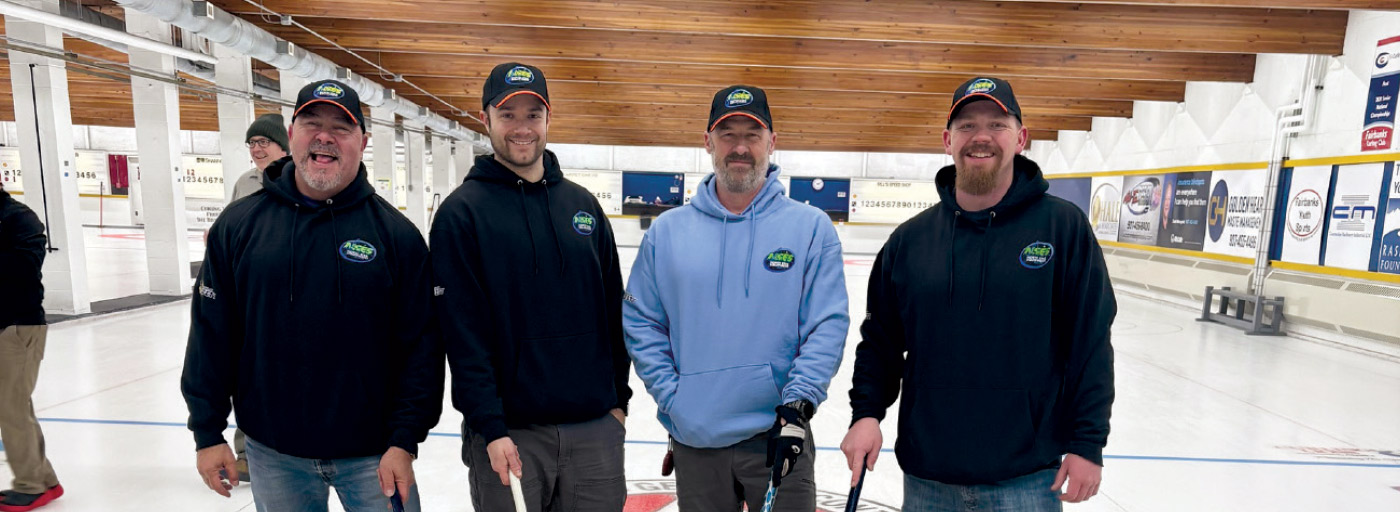
Photo provided by the Alaska Department of Environmental Conservation
Photo provided by the Alaska Department of Environmental Conservation
hree years after Typhoon Merbok—billed as the strongest storm to hit Western Alaska in seventy years—wreaked havoc in Western Alaska, the region was hit by another rogue extratropical cyclone. Typhoon Halong struck on October 8 and continued causing damage for four days across the Yukon-Kuskokwim Delta, up to Norton Sound, and into the western Interior.
The Alaska Organized Militia, which includes Alaska Air National Guard, Army National Guard, Alaska State Defense Force, and Alaska Naval Militia, activated more than 150 members to assist with response operations, transporting more than 600 evacuees out of the region—where many remain today.
The typhoon left devastation in its wake, prompting several state agencies and Alaskan contractors to launch recovery efforts to restore communities to functionality before the start of the cold, dark winter season.
“As with any event of this kind, the first thing we do is determine scale and scope of the damage,” says Eshleman. “We go out and survey the impacts to communities, collecting high-quality aerial and ground photos of the destruction to guide recovery efforts.”
Once surveys and imagery are collected, DOT&PF compares them with pre-storm information to determine the type and extent of damage and the best way to prioritize its workforce. Afterwards, an initial work order is created to direct repairs to facilities and infrastructure.
Once DOT&PF’s pre-construction unit has completed its assessment, the construction unit begins implementing the plan. DOT&PF deploys a mix of staff and contractors to tackle recovery efforts as quickly as possible. Emergency procurement procedures allowed DOT&PF to mobilize contractors to different worksites throughout Western Alaska. Early in November, the Federal Emergency Management Agency (FEMA) provided $1 million in up-front funding for recovery efforts. A federal disaster declaration for Typhoon Halong authorized federal participation for eligible emergency work for ninety days from the date of the declaration.
According to DOT&PF’s West Coast Alaska Storm Response 2025 website, more than fifty communities were impacted by Typhoon Halong. Eshleman says coastal communities near Kipnuk were hit the hardest.
“They basically lost all their board roads that are used by residents to travel along the unstable terrain,” says Eshleman. Unlike a narrow boardwalk, board roads are about eight feet wide and are used daily for essential travel. “Homes were moved or completely destroyed, and utilities, water, septic systems, and roads were damaged.”
More than 250 DOT&PF employees statewide were active in Incident Command System operations, logistics, planning, finance, community engagement, and data-assessment efforts for all agencies. Joining them were more than fifteen contractors rebuilding infrastructure, eleven air carriers delivering critical supplies, and fifty-five suppliers. Many of those who pitched in were Associated General Contractors of Alaska members.
Following the governor’s direction, all impacted communities were treated as priorities for assessment. DEC worked closely with tribal health consortiums and partner agencies to evaluate every affected community. Once assessments were complete, DEC focused efforts on public health and environmental risk. That meant restoring critical infrastructure for safe drinking water, stabilizing landfills, and addressing fuel or hazardous material spills that posed immediate risks to residents and the environment.

Photo provided by the Alaska Department of Environmental Conservation
The work was managed collaboratively with tribal health organizations, contractors, and sister agencies to ensure responsibilities were clearly defined and resources were used efficiently.
“When drinking water systems are compromised, or fuel spills threaten land and waterways, timely response is essential,” says Dapcevich. “Supporting recovery in rural Alaska ensures that basic environmental protections and community safety are upheld statewide.”
Knik Construction also assisted with many other relief projects in the region. In Bethel, Knik Construction supplied certified drivers and vehicles to support DOT&PF airlift operations from Bethel Airport to surrounding communities and managed camp facilities for personnel and contractors. In Kotzebue, Knik crews implemented stormwater pollution prevention measures to protect local waterways. The company delivered more than 1,300 tons of aggregate by barge to support urgent airport repairs in Tuntutuliak. In Akiak, Knik Construction workers graded and shaped damaged barge landing ramps and stabilized vulnerable riverbanks ahead of spring ice breakup. Crews repaired and replaced critical board roads throughout the village of Chefornak. In Napakiak, they repaired washed out road with new aggregate, restoring public access. And in Nightmute a new landfill trail was constructed to support community cleanup efforts.
“Response work is meaningful to all of us and a testament to the values that define our company. We’re proud of our team’s unwavering dedication and the meaningful difference they’ve made in the lives of Alaskans,” says Huhndorf.
Lynden also assisted with other relief efforts coordinated by the Los Angeles, California-based, veteran-led humanitarian aid organization Team Rubicon. Thomas Brown of Team Rubicon in Anchorage says Dan Marshall and Lynden Air Cargo were instrumental in helping move donations to the communities that needed them most.
“Lynden was an essential partner during the typhoon response,” says Thomas. “The compassion shown by businesses like Lynden allowed our volunteers to provide crucial items to storm survivors.”
“Over seventy-five homes between the two villages were affected,” says Harold Baysinger, GHEMM vice president, of the homes in Kipnuk and Kongiganak. “That is a substantial amount.”
In addition to restoring structures, GHEMM also worked on a two-mile temporary water line in Kongiganak. Matt Chacho, an engineer and GHEMM vice president, says working in Western Alaska was logistically challenging due to uncooperative weather and the difficulty of housing people in remote locations. Since housing was limited, crews shared rooms until additional facilities were found. Infrastructure damage required crews to ration water for drinking, showering, and toilet facilities. Food was sent out in coolers from Bethel until recovery efforts allowed for more localized preparation.
“We certainly want to thank people in the community,” says Chacho. “Without their assistance, we couldn’t have accomplished what we did. We were there to help them, but they were also great at helping us.”
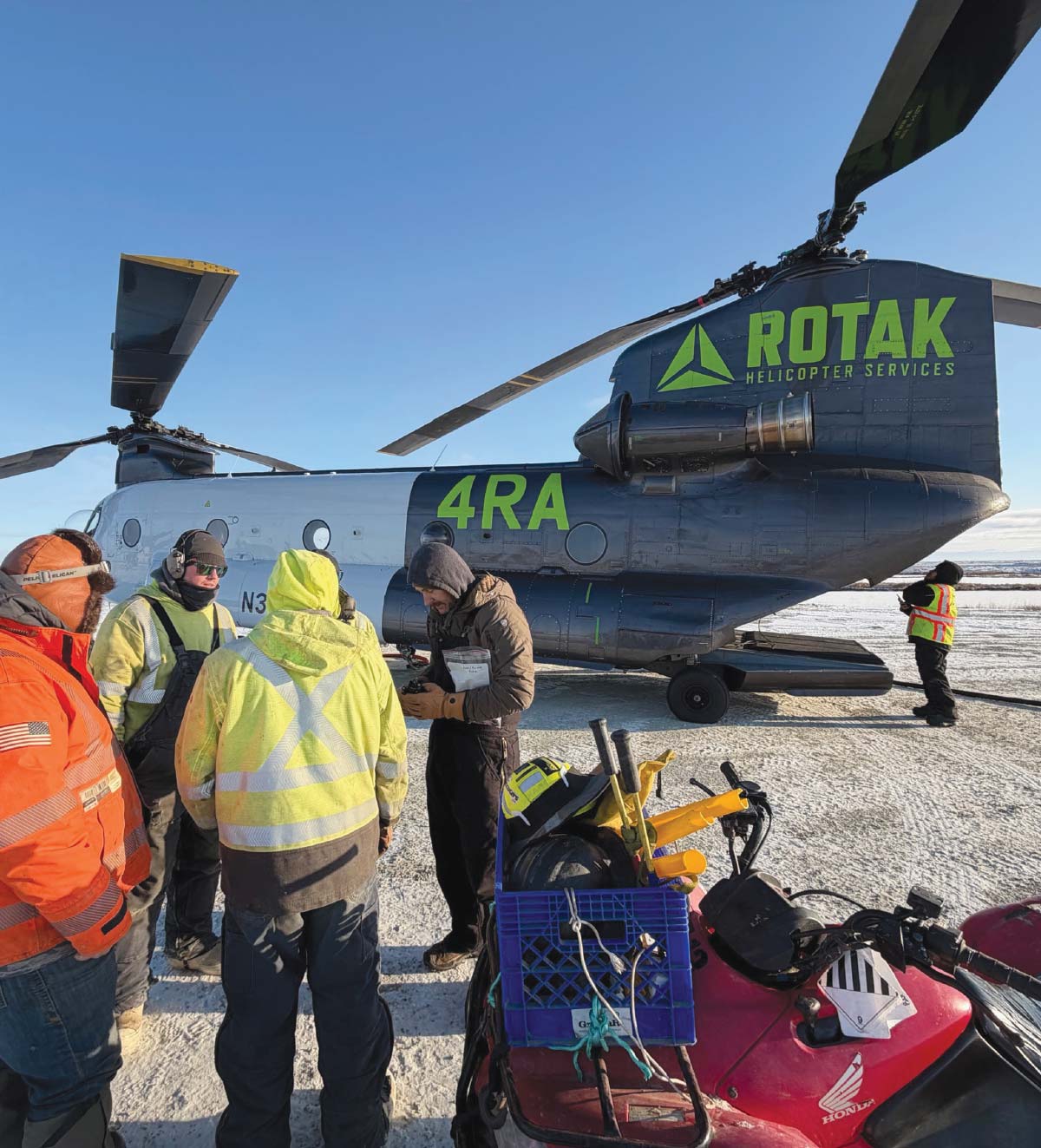

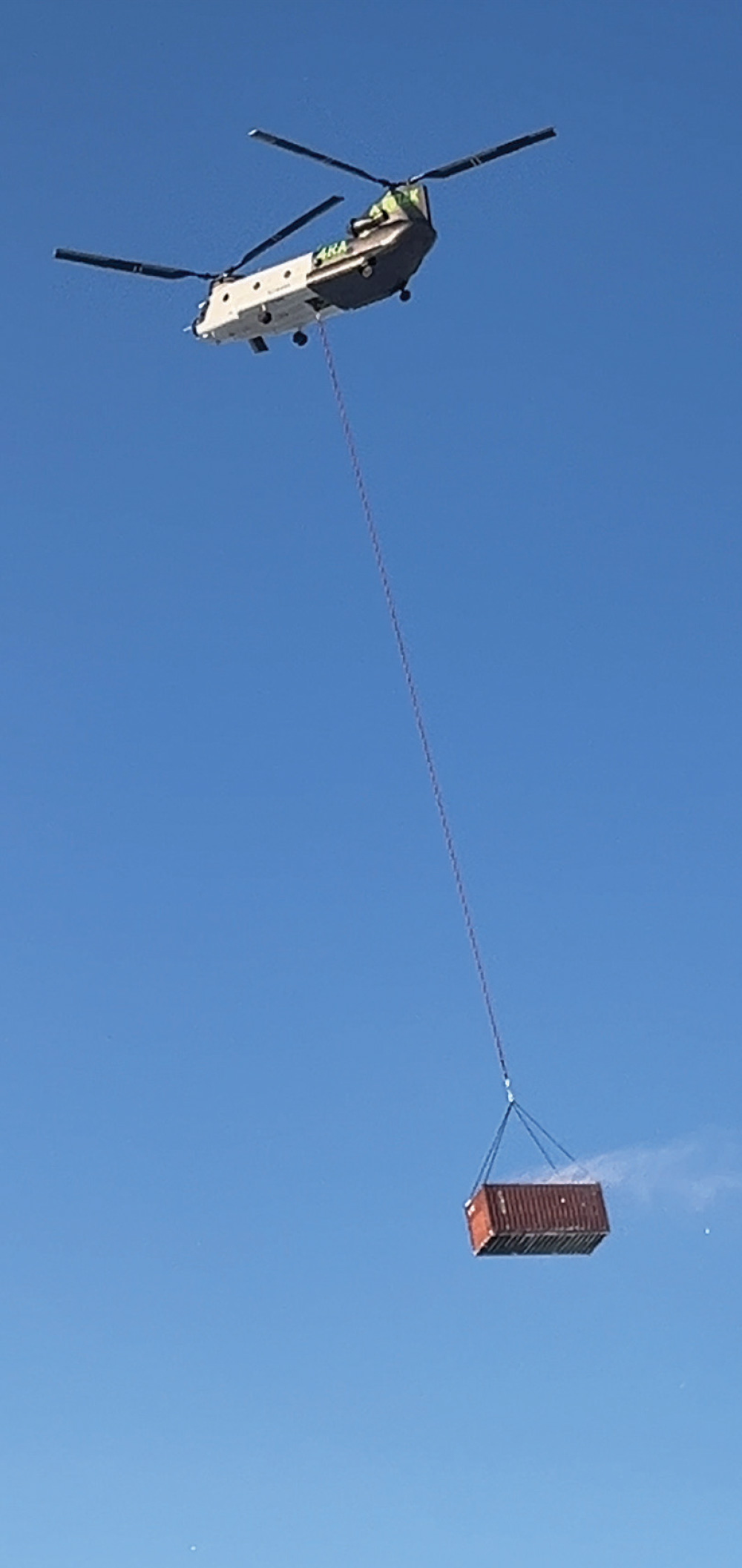
“Remote communities have unique challenges and limited access to resources, services, and infrastructure,” says Thibault. “They deserve support and an emergency response like that provided in urban areas.”
An initial flyover of the affected villages of Kasigluk, Atmautluak, and Nunapitchuk revealed a situation that was extremely concerning, says Thibault. Mass X crews observed widespread structural shifting along the boardwalk system, which serves as the only route of travel for the communities. After the storm surge, high waves and strong winds moved large sections of the boardwalk, uprooting them and making them impassable.
Mass X managed logistics and freight for most materials delivered from Bethel to surrounding communities. DOT&PF transported 8 million pounds of materials and lumber by air to the village hub of Bethel for use across Kasigluk, Atmautluak, and Nunapitchuk, as well as other coastal communities. Crews rebuilt safe, reliable access for residents by removing damaged sections of the board road and installing helical pilings to reestablish the structural stability needed for new elevated travel systems. From there, they reconstructed and raised the board roads so the communities could regain dependable daily travel routes.
“What really stood out to me throughout this project was how grateful I felt to be able to help,” says Thibault. “Spending time in these communities gave me a whole new appreciation for the infrastructure we sometimes take for granted in Anchorage. Being on the ground and engaging with residents and learning about their culture, traditions, and daily challenges made an impact.”
Mass X crews are still installing helical piles, rebuilding sections of board road, and completing stabilization work. Each community has roughly 1,500 feet of board road that requires repair, much of which had to wait for the ground to fully freeze before crews could drill for the helical pile installations.
“The coastal erosion was 10-plus feet of exposed bluff eaten away at the coastline in Tooksook Bay,” says Blake Anderson, Qayaq general manager. “We used 2,000 gravel-filled Super Sacks to protect the area.”
Similar erosion occurred in Scammon Bay along the north side of the airport runway that faces the sea inlet of the river. Crews had to coordinate air traffic with the airport manager to safely install geotextile fabric under new riprap to prevent underlying soil from eroding through the stone and causing the riprap to sink.

Photo provided by the Alaska Department of Environmental Conservation
In Mekoryuk, most recovery efforts focused on culverts and realigning power poles from the airport into the city.
“We wanted to help wherever we could,” says Anderson. “We saw the storm as it happened, and so many villages were impacted. As a native-owned company, we wanted to make sure these villages, many of which are mostly native, were taken care of.”
DEC is finalizing a comprehensive scope of work for the Department of Military and Veterans Affairs, which will outline the next phase of recovery. As conditions improve and the thaw begins, DEC will remain actively involved in spill cleanup, hazardous material management, landfill stabilization, and infrastructure issues that could not be addressed during freeze conditions. Its spring plan, with scopes of work outlined for affected communities, is available at its website.
DOT&PF also continues to support recovery efforts across affected communities. Department staff say 2026 work will be closely aligned with scopes of work approved by the Department of Military and Veterans Affairs and FEMA, particularly as they relate to long-term community and residential infrastructure recovery. In parallel, DOT&PF and its contractors are actively repairing community transportation infrastructure, including extensive boardwalk and board road systems that are critical for daily access and safety. This work is logistically complex, requiring significant material delivery, specialized installation, and careful timing around seasonal ground conditions. To maximize progress before spring thaw, DOT&PF staff say the department is supporting extended and 24-hour operations in several communities and will continue advancing this work as conditions allow. Projects are expected to continue through 2026.
Meanwhile, leaders in several affected communities have begun meeting to discuss whether to rebuild at their current locations or whether their communities should focus instead on rebuilding further inland, where they might be sheltered from the next extratropical cyclone.




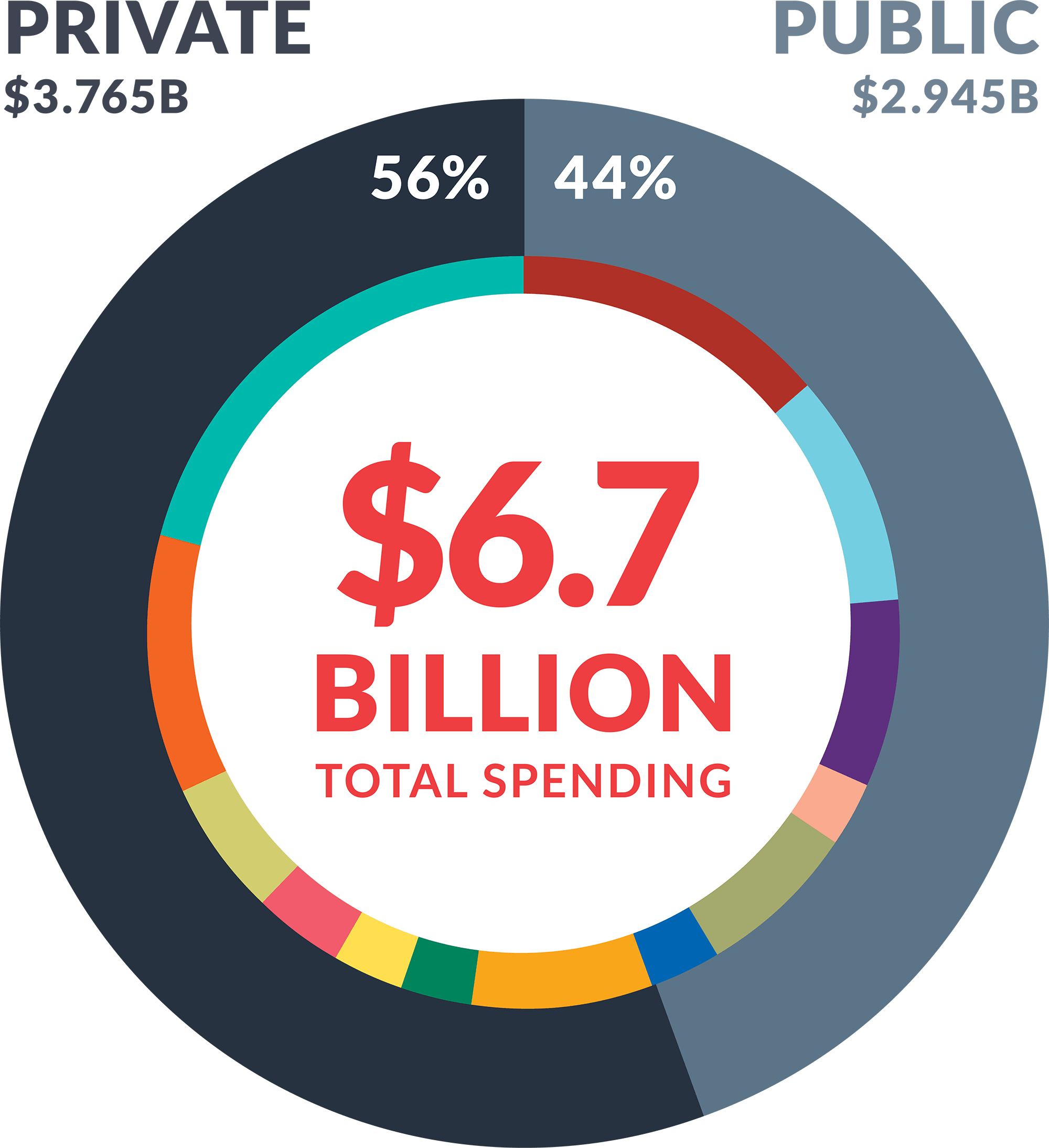
n anticipated increase in private sector projects is expected to outweigh decline in public sector infrastructure spending. Forecasted public sector spending will be significantly influenced by the availability of State of Alaska funding to unlock federal transportation construction dollars.
One of two large North Slope development projects will move into production this year, reducing overall oil and gas construction spending. Healthcare-related spending reflects several large projects, notably pursued by Alaska’s Tribal Health Organizations, and a wide range of utility infrastructure work is planned for the coming year (broadband, water/sanitation, electrical).
















PM, Inc. is built on five core values: collaboration, drive, family, integrity, and safety. Founded in 2017, HPM’s leadership team wanted a company with a different philosophy—one focused on collaboration; that considers the success of its clients, partners, and employees integral to its own; and that strives to make the workday enjoyable, as opposed to a burden.
“We wanted to start a new company with a different culture that was more focused on the people,” says JT Wilhelm, senior vice president of HPM’s Alaska office. “We want to make sure our employees can work a day and then still go spend time with their families.”
Almost a decade later, that philosophy has helped make HPM one of Alaska’s go-to general contractors.
“They’re one of our preferred providers,” says Samson Electric Project Manager Rick Novotny. “If we have a client looking for a general contractor, HPM is one of two or three that we push them to.”
“We do everything, but our bread and butter is federal work,” Wilhelm says.
“We work out on bases across the nation, everything from civil infrastructure to barracks and hangars.”
A subcontracting opportunity at Joint Base Elmendorf-Richardson facilitated the opening of the Alaska office in 2021, Wilhelm says. When the company opened an Alaska office, it also became an Associated General Contractors (AGC) of Alaska member. As it built its federal résumé, HPM Alaska branched out into local projects, including security upgrades for the Anchorage School District, renovations to ENSTAR Natural Gas Company’s headquarters, and the new, 64,000-square-foot Seward cruise ship terminal, which broke ground in March 2025 and is scheduled to open in April.
“That’s the most exciting one we’ve done since I’ve been here,” Wilhelm says.
“It was just kind of a compressed schedule, but working with our partners at Turnagain Marine, it was a really smooth process.”

Photo provided by HPM, Inc.

Photo provided by HPM, Inc.
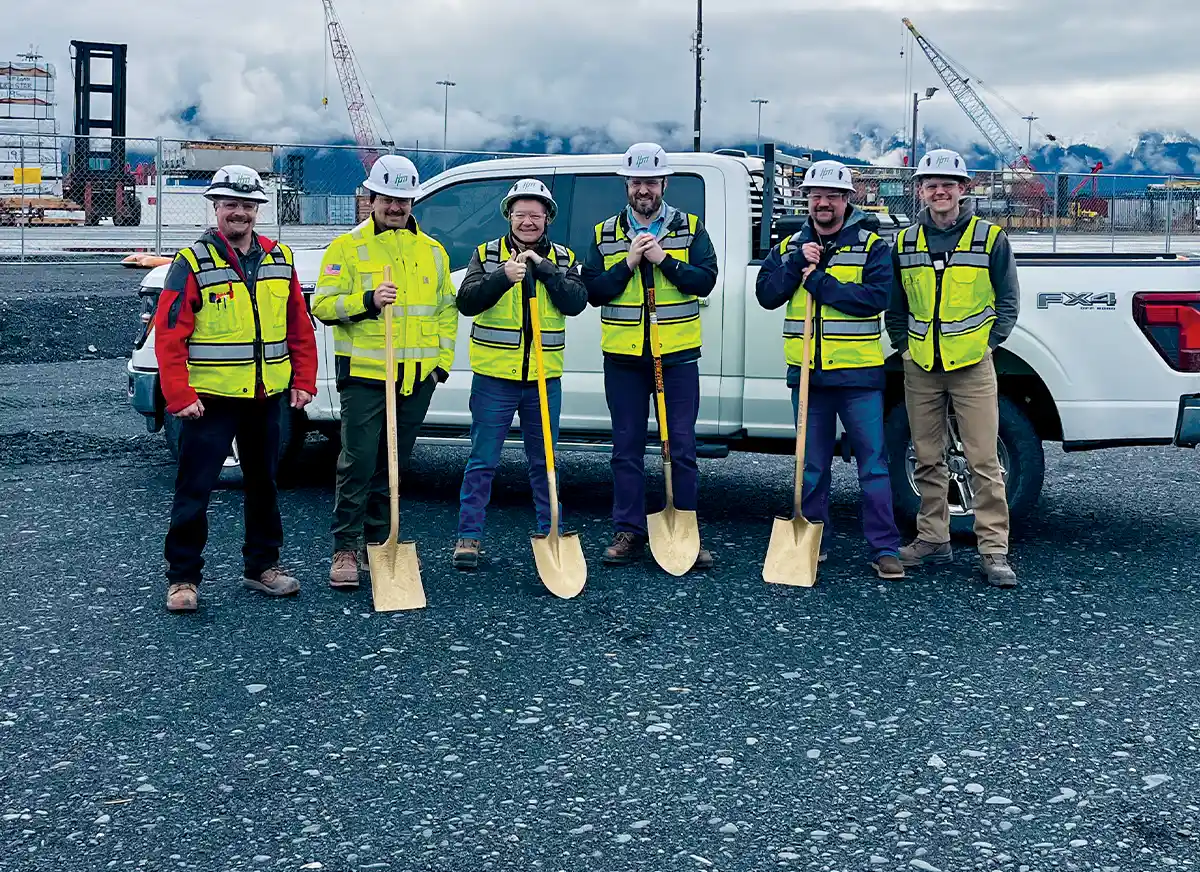
Photo provided by HPM, Inc.
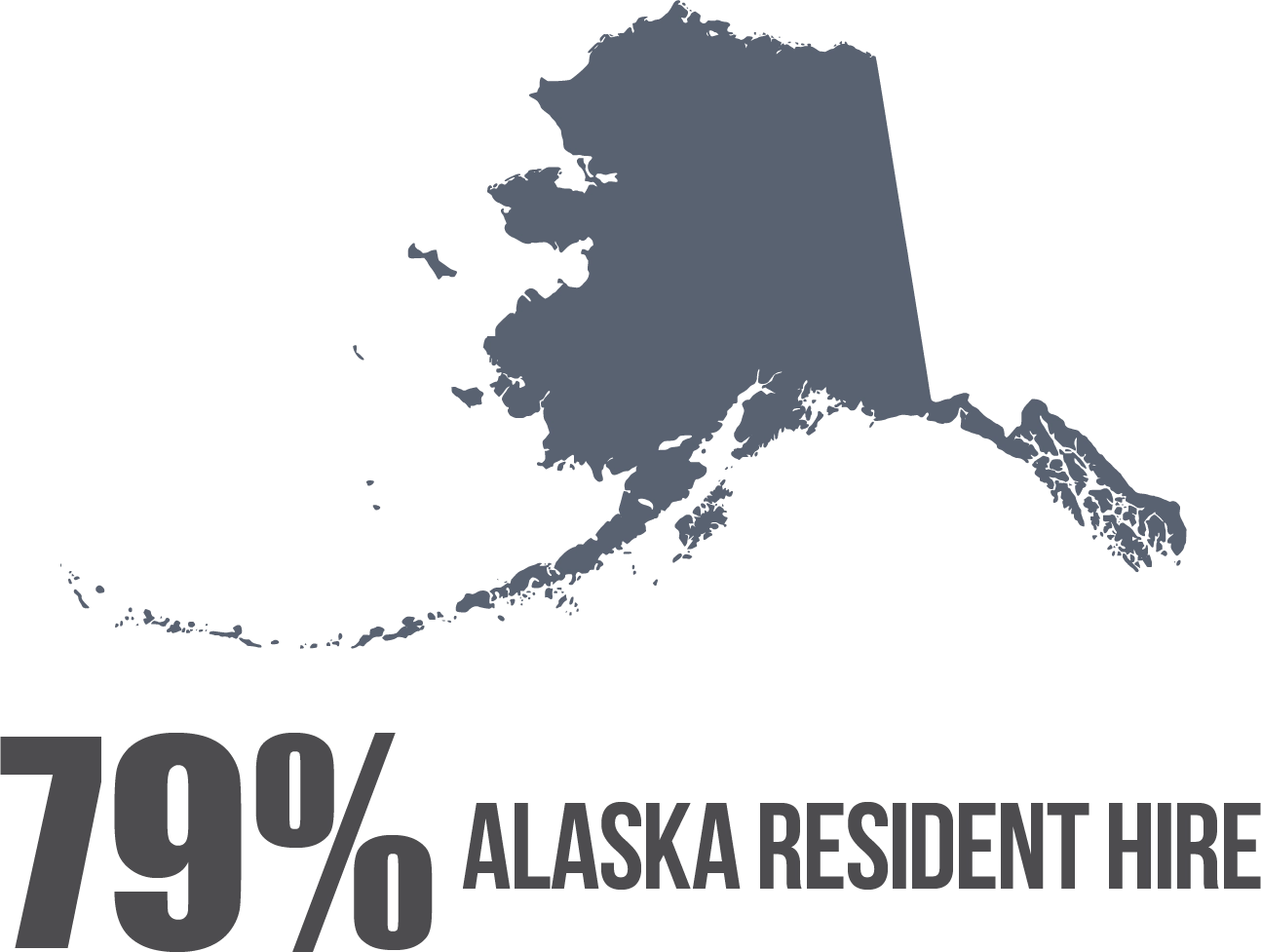
“Alaskans are a tight-knit community,” he explains. “That’s why we’ve been intentional with who we hire. We are committed to our community—and that means hiring local Alaskans. I want to make sure we have the local Alaskans; people who are from here, raise their families here, and are a part of the community. That also means everybody we’re working with knows our people.”
Building a homegrown team meant the office had a near-immediate level of trust within Alaska’s broader construction industry.
“We know almost everyone at HPM from their previous employment, and we worked with a lot of those folks on a lot of projects,” says Jason Gamache, principal architect with Explore Design, which worked with HPM on the ENSTAR renovations, the Seward Cruise Ship terminal, and recently contracted them to head its office renovation project. “We had such an excellent experience, we kind of, for lack of a better term, followed them, because the people are so awesome to work with.”
AGC membership furthers those connections, among other benefits.
“AGC provides access to industry best practices, safety resources, and education that help us strengthen our teams and stay current with evolving regulations and standards,” Wilhelm says. “Beyond the technical benefits, membership connects us with a broader network of contractors, owners, and partners, which supports collaboration and shared problem-solving.”
Novotny and Gamache say HPM’s emphasis on collaboration is just one aspect that sets the company apart.
“What makes them different from a lot of general contractors is that JT [Wilhelm] brings on his preferred team early,” Novotny says. “We work through the process from 35 percent design through to installation, which is good for us because that gives us a chance to control the design and the budget, and it helps with the progression of the schedule.”
HPM is currently in negotiations for several Anchorage projects, including some “exciting” opportunities at Ted Stevens Anchorage International Airport, Wilhelm says. He hopes the company will be involved in future tourism and oil and gas industry projects, as well as healthcare and infrastructure in rural Alaska, where he spent his early childhood. His goals all circle back to HPM’s people-first mindset.
“As we continue to expand our operations in Alaska, we want to continue providing future generations of Alaskans the opportunity to advance our state,” he says.


hat’s the best part of your job?” “How do you balance work and life?” “What kind of money do you make?”
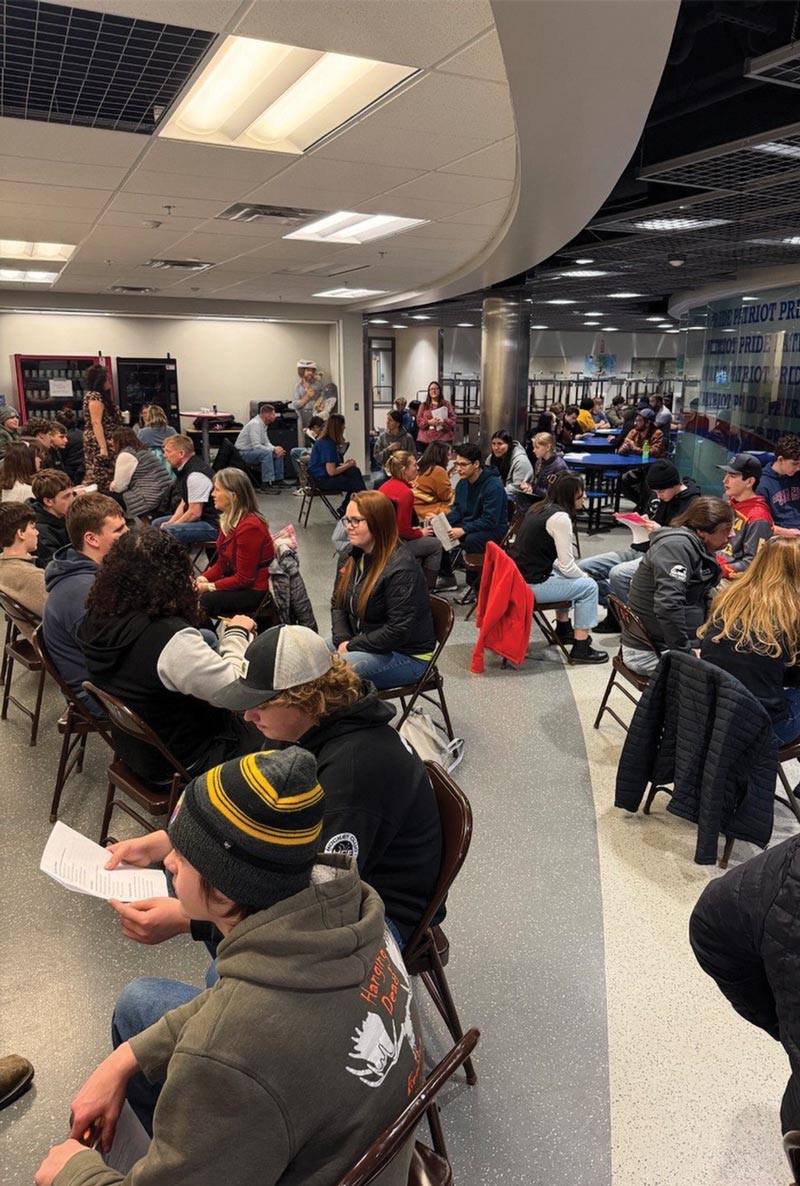
Students at North Pole High School had the opportunity to turn the tables on adults and ask them the hard questions at a November Speed Mentoring event held through a collaboration of the Associated General Contractors (AGC) of Alaska, Alaska Resource Education (ARE), and the Fairbanks-North Star Borough School District.
Held in two sessions, more than thirty mentors from the construction industry—mostly from AGC member companies—answered questions from high schoolers about their work. The event during school hours, replacing their usual environmental science or geometry in construction lessons.

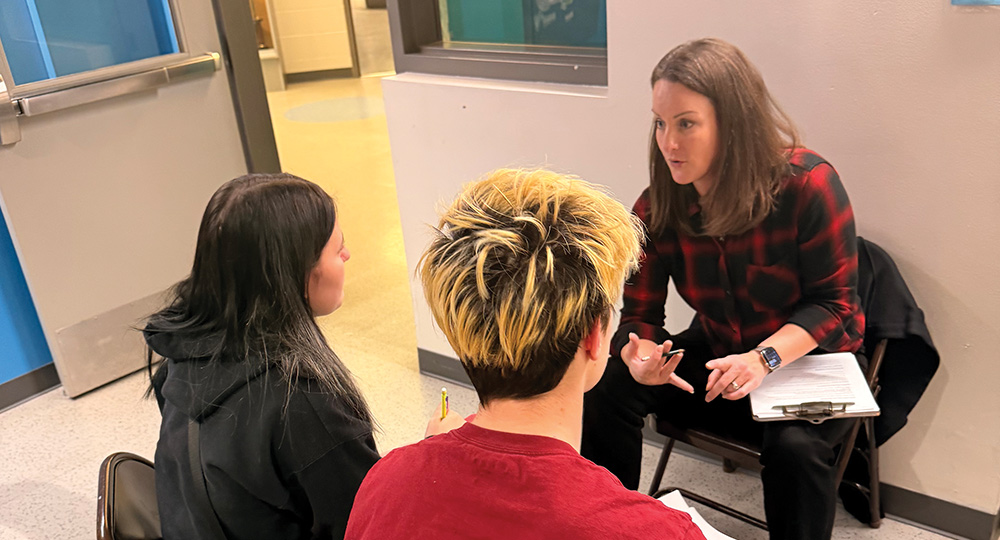
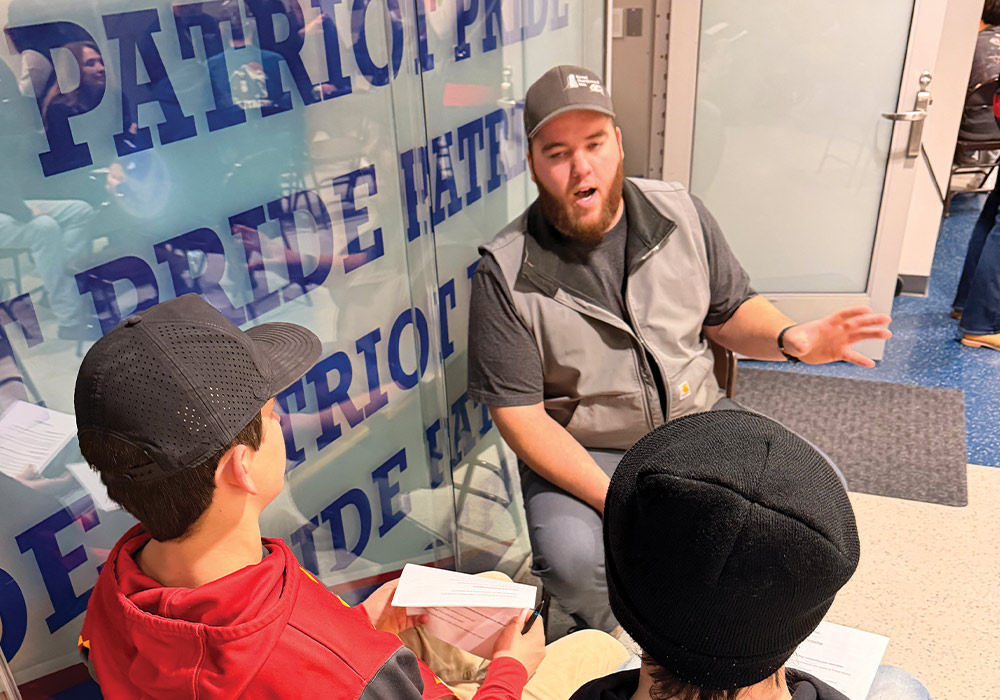


“We were looking for not only field personnel but office management as well. It takes all of these people to make a company run well,” Matar says.
With more than two dozen professionals representing all facets of the construction industry, each pair of students had five minutes to ask questions about their career. When time was up, the students rotated to the next mentor and repeated the process.
“I thought it was excellent to be able to get in touch with kids who maybe had no thought about getting into the industry,” says Jennifer Quakenbush, vice president of Great Northwest, Inc.
The small-group format made it easier to answer questions about salary and the number of hours worked, Quakenbush adds—it was less invasive than answering those questions in front of a broader audience.
“You’re not just talking at them; you’re talking to them,” she says.
ARE Interior Program Coordinator Naomi Mitchell suggested the idea for the Speed Mentoring event. She says it’s an event ARE has successfully held in Anchorage. She was thrilled when the Workforce Development Task Force not only liked the idea but immediately jumped on it, putting it on the calendar.
Mitchell called the event a “smash success.” Task Force members liked it too; another is on the schedule for Hutchinson High School in March, and Task Force members say they plan to continue holding the events next school year.



Photo courtesy of Capitol Glass
Photo courtesy of Capitol Glass
indows are a building’s first impression. But in Alaska communities, windows must do more than look good: they must withstand winds over 100 mph and provide insulation in frigid temperatures.
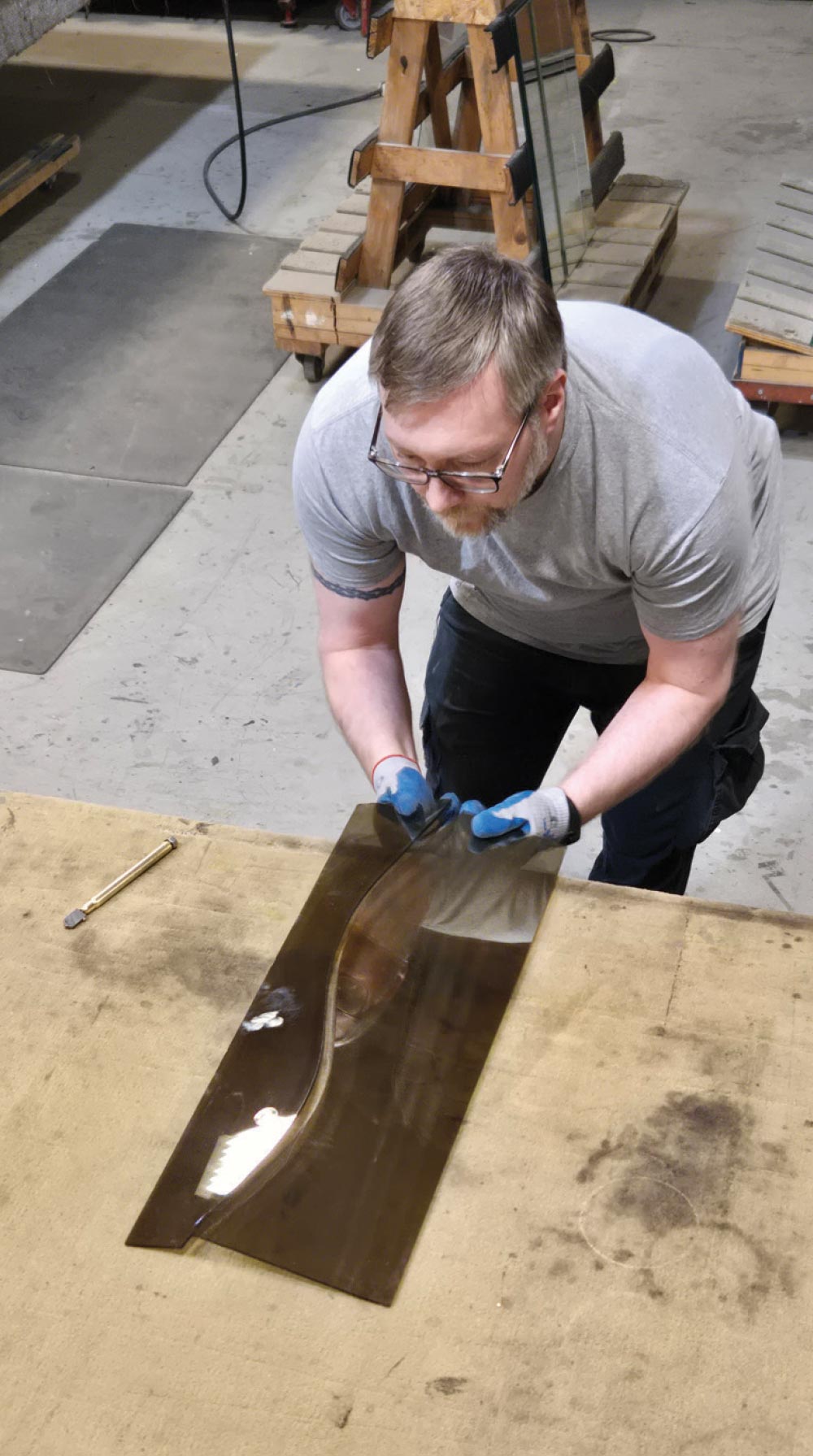
Capitol Glass, formerly Capitol Northerm, provides windows, doors, and custom glass for projects statewide, ranging from single-family homes to hospitals and schools.
Capitol Glass is the Alaska source for Northerm windows: double, triple, and quad-paned windows featuring rubber gaskets, foam spacers between panes, and exceptionally thick, multi-chambered profiles. They are rated to withstand 165 mph winds and have high U-factor ratings (non-solar heat transfer) and condensation resistance numbers from the National Fenestration Rating Council.
Pennington also lauds Capitol Glass’ flexibility and expertise. He recalls a hotel project for which exterior installation would have required diverting power from nearby lines at the customer’s expense. Capitol Glass engineered a custom product that could be fully installed from within, greatly reducing project costs.
Capital Glass’ local knowledge also helps clients avoid last-minute or excessive costs. “Logistics takes up a large part of any supplier’s time and bandwidth in Alaska,” says Capitol Glass General Manager Zac Shelton.
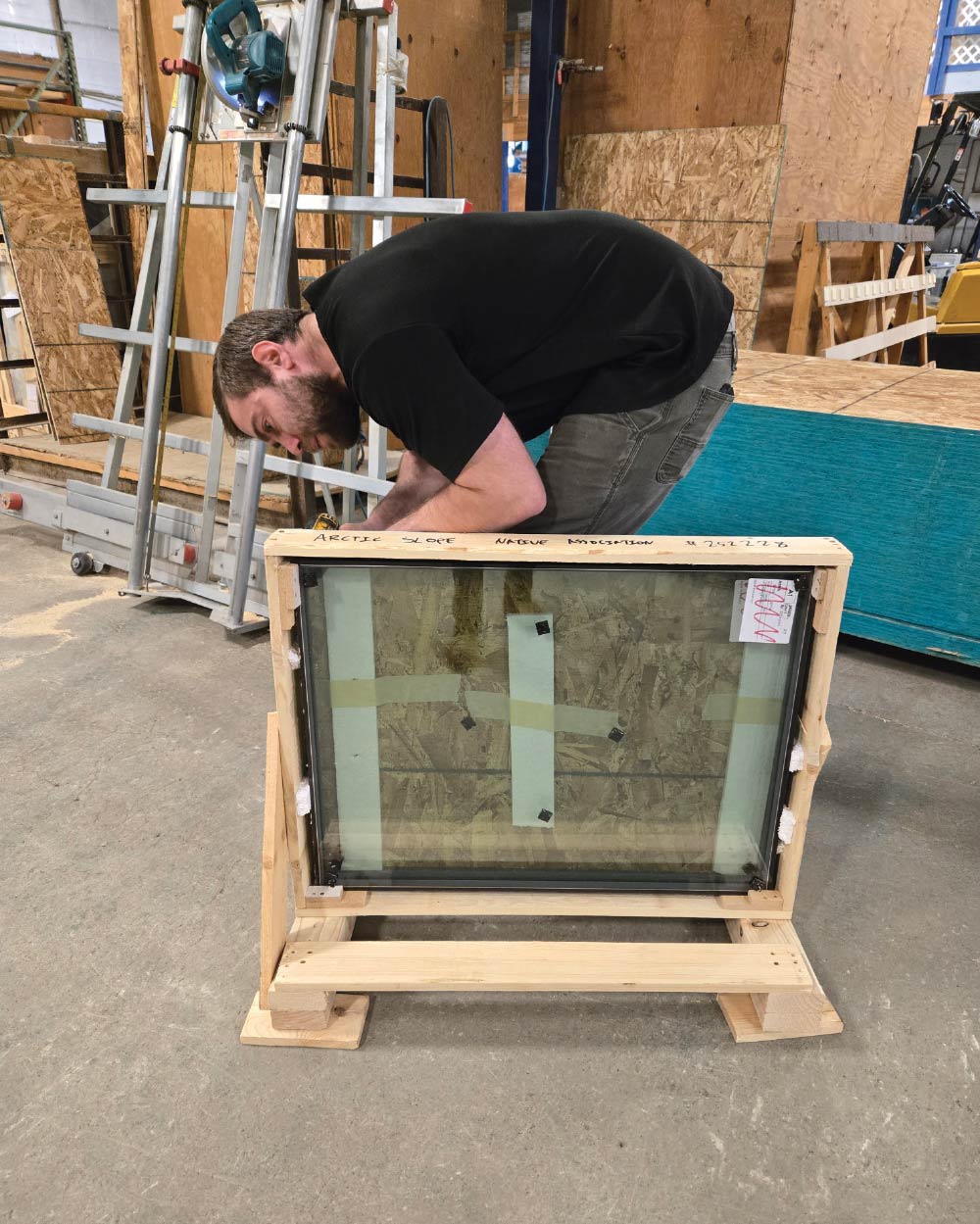
Shelton explains, “At certain times of year there are certain ways to get products to certain communities. An air carrier can only carry certain sized crates, and different carriers have different requirements for how they want their crates built. To meet those logistical constraints, we may need to help customers with design of large windows using combined, smaller openings to create a unified large piece. If it’s getting on a barge, we need to prioritize those orders knowing when that barge is going to leave and making sure it gets there.”
Products are custom-crated in house and delivered by company staff to the airport.
Even on the road system, flexibility is key. Shelton recalls having a load of windows meet a customer at the Hub of Alaska gas station parking lot in Glennallen because that was the best place for the customer to arrange for labor to help unload.
Zac Shelton photo
Zac Shelton photo
Eventually, the company transitioned from automotive glass work to manufacturing. Now, windows are manufactured at a plant in Whitehorse, Canada, owned by sister company Northerm. Insulated and custom glass is made in Anchorage. Both companies are part of the RAB Energy Group, which bought the business from the Phelps family in 2000. Shelton adds that Northerm is 100% Yukon First Nations owned, which he says he believes provides a strong connection to Alaska Native corporate customers.
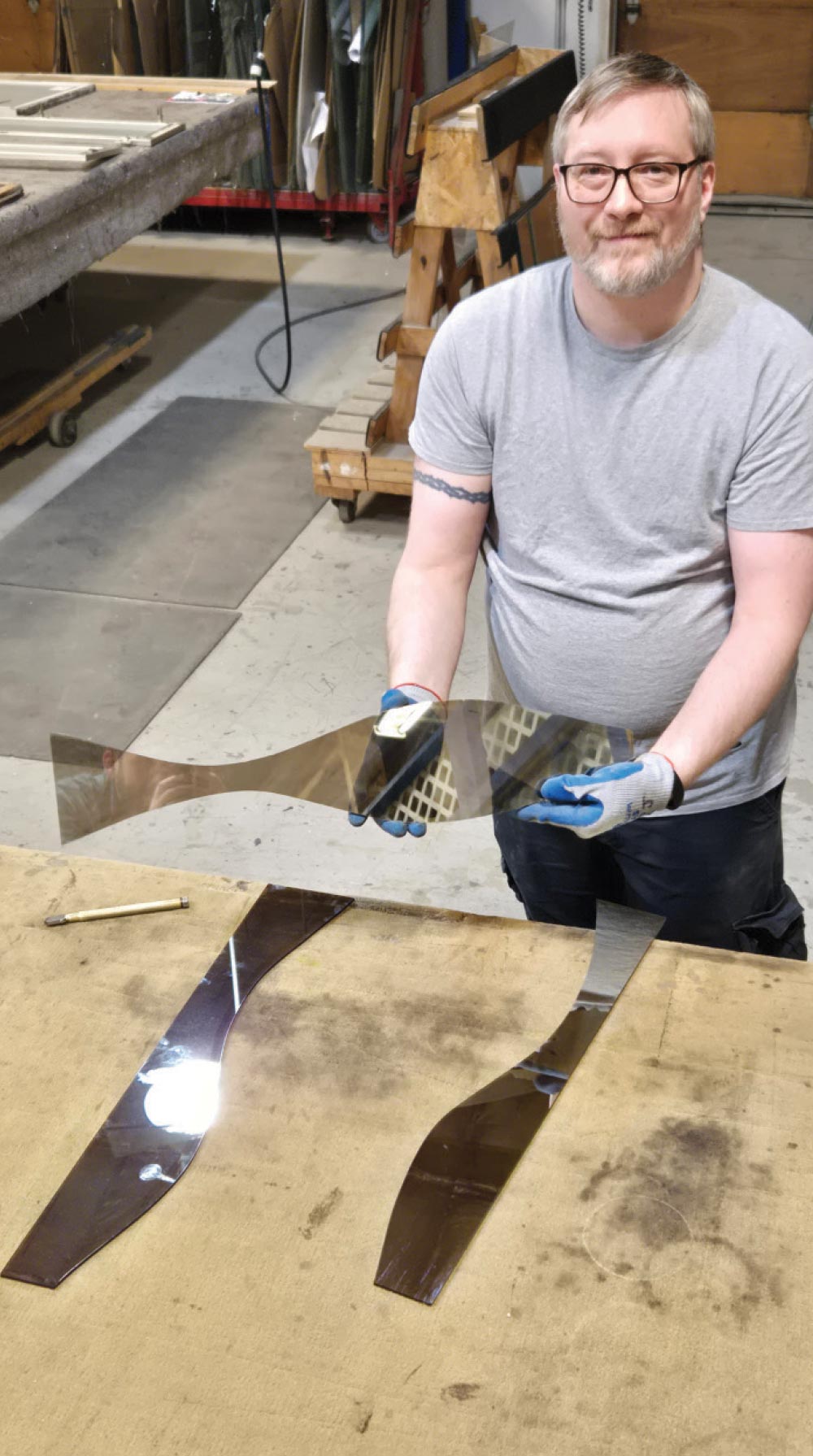
Throughout the changes, the Phelps family has stayed part of the company. Byron “BJ” Phelps Jr. grew up in the shop with his dad, Byron Phelps, and spent summers sweeping the shop floors. BJ joined the company as a full-time employee in 1997. Over his long career, BJ has done just about everything from delivery driving to glazing and auto-glass replacement. You can find him today as the lead on tablework, which is the art of hand-cutting custom glass and mirror orders.
Shelton has been GM at Capitol Glass for just over a year. He came from a background in big box retail management. He enjoys that with just twelve employees, the company provides “a great opportunity to get to know each other and enjoy the people you work with. A lot more responsibility is on each person to be a positive part of the team. When your crating person is out, you’ve got to help. When there’s a family emergency, we can all step in.”
Shelton appreciates the networking made possible by being part of the Associated General Contractors (AGC) of Alaska. “AGC has been good in helping build a network of local contractors and getting visibility into projects early. It’s been great to be a part of that.”
Shelton adds that he is always on the lookout for the right projects for Northerm’s quad-pane windows, citing its “fantastic thermal performance.”
After more than seventy years, Capitol Glass has not forgotten what glass is for. Shelton reflects, “There’s so much real estate that you’re paying a premium for because of the view.”



Business Enterprises
n October 3, 2025, the US Department of Transportation (DOT) issued an Interim Final Rule (IFR) that introduces substantial modifications to the Disadvantaged Business Enterprise (DBE) program, significantly impacting contractors in Alaska.
The DBE program was set up to, as the Alaska Department of Transportation and Public Facilities (DOT&PF) describes it on its DBE website, “level the playing field by providing small businesses owned and controlled by socially and economically disadvantaged individuals a fair opportunity to compete for federally funded transportation contracts.”
The IFR removes the automatic presumption of social and economic disadvantage based on race, ethnicity, or gender and now requires a “personal narrative” to prove disadvantage. The IFR required all currently certified firms, including those in Alaska, to complete a thorough, individualized re-evaluation to retain their certification status.
Now months later, DBEs remain in an awkward position, as all current DBEs were de-certified and must recertify. This pertains to any businesses working with the Department of Transportation, including the Airport Concessions program.
“The DBE program is still in law. The part that has changed is how a DBE is defined,” explains Lauren Little, DOT&PF Northern Region acting director and chief engineer. “Before the ruling, we could issue presumptive approvals based on gender, race, and other factors. Now, the business has to establish why it is disadvantaged. Fortunately, Alaska is race-neutral, which means we don’t have project-specific goals but a program goal to attain.”
Alaska Department of Transportation & Public Facilities

State agencies cannot set new DBE contract goals or count DBE participation toward existing goals until the Alaska Unified Certification Program (AUCP) finishes re-evaluating all firms.
Although Alaska Native corporations are recognized as socially and economically disadvantaged under federal law, the new IFR creates ambiguity. Native corporations may not be able to fully leverage their DBE status to meet program goals in the near term until the re-certification process is finalized.
Heightened competition among non-DBE contractors presents an additional concern. When DBE goals are suspended or reduced, non-DBE contractors may face increased competition for federal contracts.
“One of the confusing parts has been whether we should strictly enforce all of our DBE language from our contracts,” shares Little. “We’ve chosen to keep the forms the same but acknowledge that until all DBEs have been recertified no participation may be counted towards goals.”
Supporters of the changes argue that individualized determinations increase fairness and legal durability. Critics express concern that removing categorical presumptions may weaken participation by historically disadvantaged groups unless agencies agreeably pursue race-neutral outreach and support strategies.
The changes to acquisition regulations and other revisions have raised concerns and created uncertainty within the industry.
“With 8(a) contracts, the administration is not changing everything, but there is a focus on reducing regulations,” says Anne Marie Tavella, a partner at Davis Wright Tremaine LLP. “This is a very stressful time for the contractors, and I think there is a lot of fear and concern about the future of the program itself because it has been very publicly scrutinized. They’re worried about the future of their contracts and how they’re going to continue their business.”
This document outlines five principles to guide development of future initiatives supporting small and emerging contractors. AGC of America remains committed to monitoring the current programs and is preparing for the implementation of alternative strategies if warranted.
In the longer term, Alaska’s transportation sector may see a recalibrated DBE landscape, potentially smaller but legally reinforced, depending on how many firms successfully meet the new standards.
For now, Little and Tavella both believe the key takeaway is that the DBE and 8(a) programs remain operational, despite procedures that have seen substantial changes. For Alaska contractors, airport operators, and Native organizations, understanding and adapting to the revised framework will be critical to maintaining participation in federally funded transportation projects.




Dorsey & Whitney, LLP

Dorsey & Whitney, LLP

Regulatory Affairs Group

Mergers & Acqisitions Group

Mergers & Acqisitions Group
or many years, changes to the US Small Business Administration’s (SBA’s) Section 8(a) Business Development Program were slow and relatively uneventful—the typical product of lengthy notice-and-comment rulemaking. But recent rhetoric and conduct by the federal government suggests a riskier and uncertain time for Section 8(a) prime contractors, as well as the subcontractors who partner with them.
For example, the SBA recently announced new guidance regarding the 8(a) program that affects how contractors and Alaska Native corporations (ANCs) qualify for federal contracts—and the consequences of non-compliance.
These changes, along with increased scrutiny of the 8(a) program, may cause significant compliance risks. As a result, contractors should closely monitor changes to the 8(a) program, maintain rigorous compliance processes, and be prepared for potential contract terminations, investigations, and other legal claims.
The SBA also stated it will no longer rely on “Biden-era narratives of racial discrimination.” Accordingly, the agency removed the “Guide for Demonstrating Social Disadvantage” from its website.
Under the new framework, assessments of social disadvantage will focus instead on whether an individual has “been the victim of illegal or radical DEI [diversity, equity, and inclusion] policies or illegal affirmative action policies or has otherwise been the victim of discriminatory practices such as race-based quotas, set asides, or hiring targets.” As a result, participants’ narratives should avoid broad, categorical, or group-based statements tied solely to race. Instead, narratives should present clear, individualized accounts of specific events or circumstances demonstrating social disadvantage. Each claimed incident should be supported by precise facts and clearly explain how the event materially and adversely affected the participant’s ability to compete in the marketplace.
Following its document requests, the SBA purportedly suspended and terminated multiple 8(a) contractors from the 8(a) program. The SBA’s actions demonstrate the agency’s shifting priorities and focus on eliminating perceived DEI in the federal government.
Some may take comfort in the 8(a) program’s legal bases: it is both statutory (see 15 U.S.C. § 637(a), authorizing subcontracts to “disadvantaged small business concerns”), and regulatory, (see 13 C.F.R. § 124.101, describing the 8(a) program). Additionally, ANCs are deemed “disadvantaged” by regulation (see 13 C.F.R. § 124.109(a)(2)).
Accordingly, participants that are more than 51 percent owned by ANCs are not required to establish individual social disadvantage. But as we have seen with other efforts by the Trump administration, the existence of statutory appropriations or other provisions has not prevented the administration from terminating thousands of grants and contracts across a wide spectrum of federal programs and agencies.
Most federal contracts include express rights for termination for convenience. This is different than program termination and can be invoked on a contract-by-contract basis. There are legal grounds to challenge such a termination—known as a wrongful-termination claim—but the historical precedent for such actions is relatively sparse and generally favorable to the government.
In addition to potential legal challenges, contractors are generally entitled to recover allowable costs incurred up to the effective termination date, a reasonable profit on work performed, and costs directly associated with the termination, including settling subcontracts. This is sought through the preparation of a termination settlement proposal—and the process can take years to complete.
If the contractor and the agency cannot agree on a settlement, the contracting officer will determine the amount based on the Federal Acquisition Regulation criteria and properly supported cost data. To protect their interests, contractors should maintain contemporaneous records during contract performance of labor, material, subcontract costs, and other direct expenses to substantiate claims arising from a termination for convenience.
Given Secretary Hegseth’s comments and recent administration rhetoric about “widespread fraud and abuse” in the 8(a) program, we anticipate an uptick in investigations and scrutiny. This may include actions under the False Claims Act (FCA). The FCA imposes liability on any person who knowingly submits, or causes to be submitted, a false claim for payment or approval to the federal government, or who knowingly makes a false statement material to such a claim. Violators are subject to treble damages and civil penalties assessed on a per-claim basis. SBA’s new guidance—as well as its statements about fraud and abuse in the 8(a) program—increases the risk that whistleblowers may file qui tam lawsuits.
For Alaska contractors and ANCs, FCA risk underscores the need for strict compliance and accurate reporting. All submissions to the SBA should be complete, well-documented, and internally verified before filing. Engaging legal counsel early, particularly when responding to SBA inquiries, audits, or notices, can help mitigate potential FCA liability and protect both active contracts and 8(a) program eligibility.
In addition, Alaska contractors and ANCs that maintain thorough documentation, carefully substantiate eligibility, and respond promptly to agency requests not only reduce their risk of suspension, termination, and FCA liability but also strengthen their ability to compete for future federal contracting opportunities. Finally, when investigative requests for information come—whether informal requests for documents or civil investigative demands—contractors should ensure that those matters are prioritized, understood as potential precursors to litigation, and that your organization’s reply reflects the heightened risk environment.


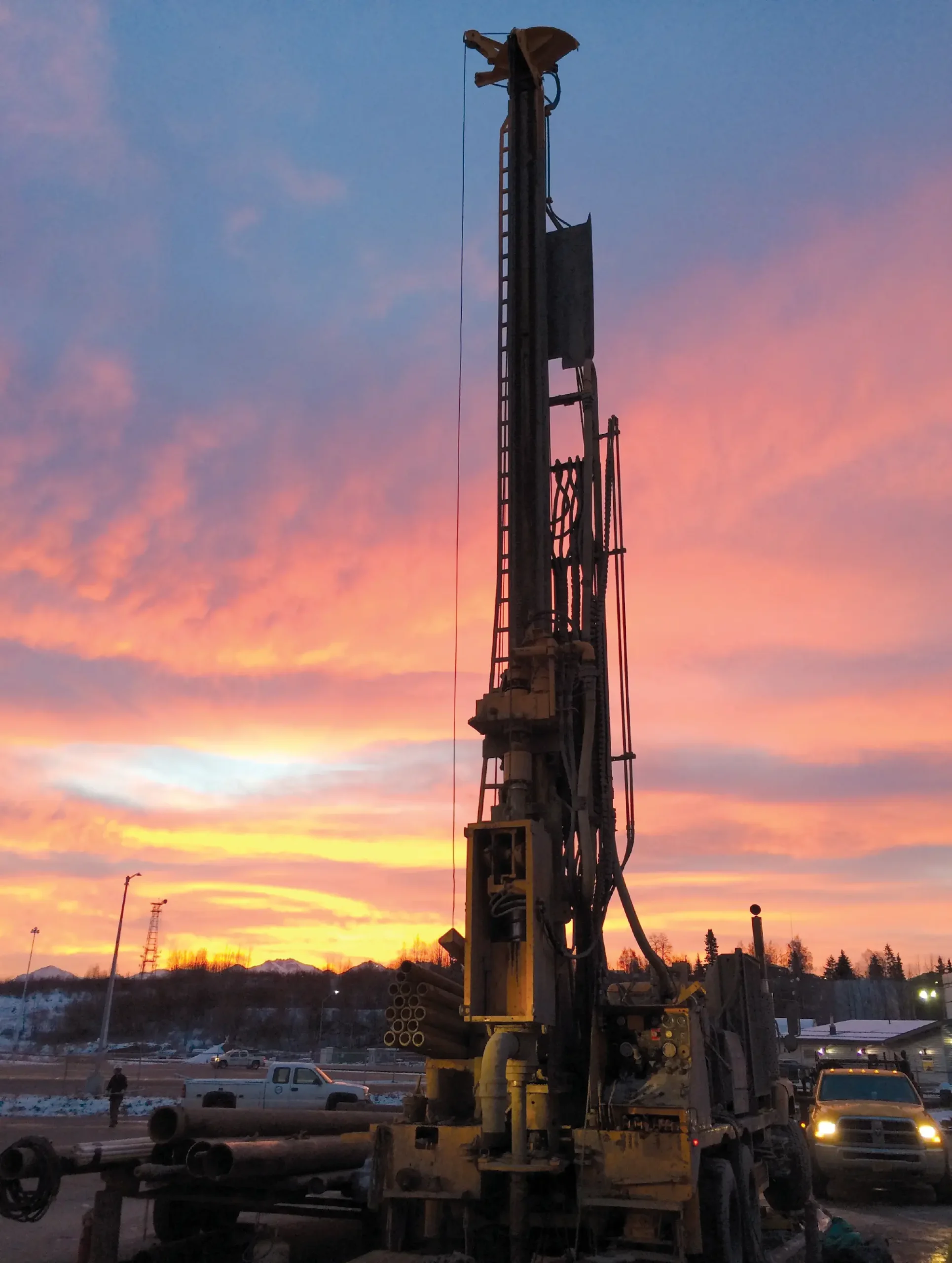
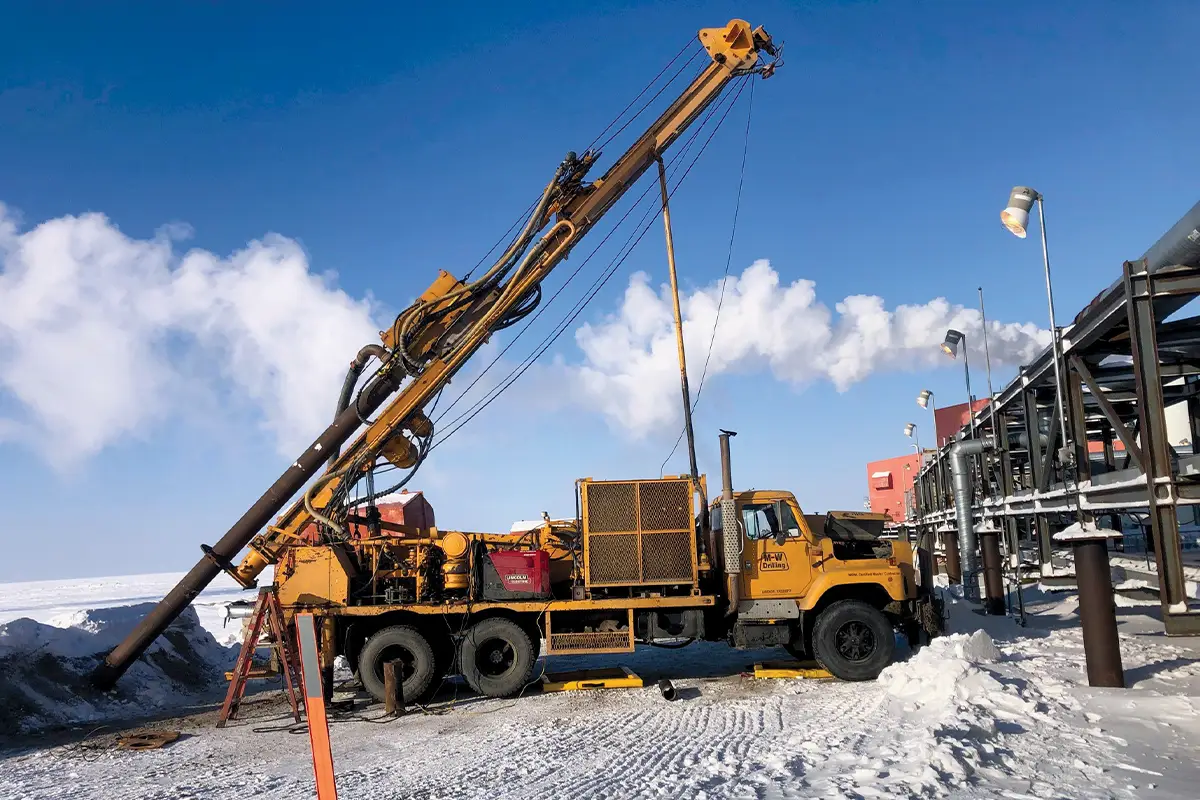
well being drilled at the Port of Alaska in Anchorage.
ayne Westberg had no idea a delay in construction of the Trans Alaska Pipeline System (TAPS) in the early ‘70s would launch the drilling company he’s still running almost sixty years later.
Westberg and business partner Mike Miller started M-W Drilling in 1968, buying their first drill rig with the intent to do foundation and piling work for the startup of TAPS. Miller dropped out of the partnership shortly after it was formed. Without an established reputation in Alaska, the fledgling drillers found themselves facing a hefty rig payment and no work to pay for it when pipeline construction was delayed. So, what to do, except start drilling water wells?
The company grew exponentially when TAPS construction resumed in 1974, and by 1976 it was operating three drill rigs full time. Wayne Westberg died in 2023 and M-W is now under the second-generation direction of his son, Kris Westberg.
“M-W Drilling is a very diverse company, specializing in drilling projects for the construction, mining, oilfield and pipeline industries,” says 49-year-old Kris Westberg, president and owner of the company. “We’ve completed over 5,000 new wells for private land developers, construction companies, oilfield companies, municipalities, and the federal government.”
In addition to drilling water wells, M-W also offers cathodic protection wells, as well as grounding, geothermal, cooling, and dewatering wells.
“When a thaw-bulb aquifer is identified, a drill rig can be set up on the bank of a lake or river and drill at an angle into the bulb to construct a producing water well,” Westberg explains. “We made it possible to construct wells in areas previously thought incapable of producing a viable subsurface source of water.”
Westberg has witnessed significant changes in the water well drilling profession since his father started the company.
Top drive rotary rigs have replaced the ‘60s-model cable tool drill rigs, resulting in safer, more efficient operation. However, the price tag for top drive rigs can run between $800,000 and $1.5 million.
Drilling commercial and public drinking water wells has also become more engineered and standardized, with emphasis on maximizing well efficiency and protecting aquifers from surface and cross contamination, Westberg says. Testing water quality after drilling a well is more common, too.

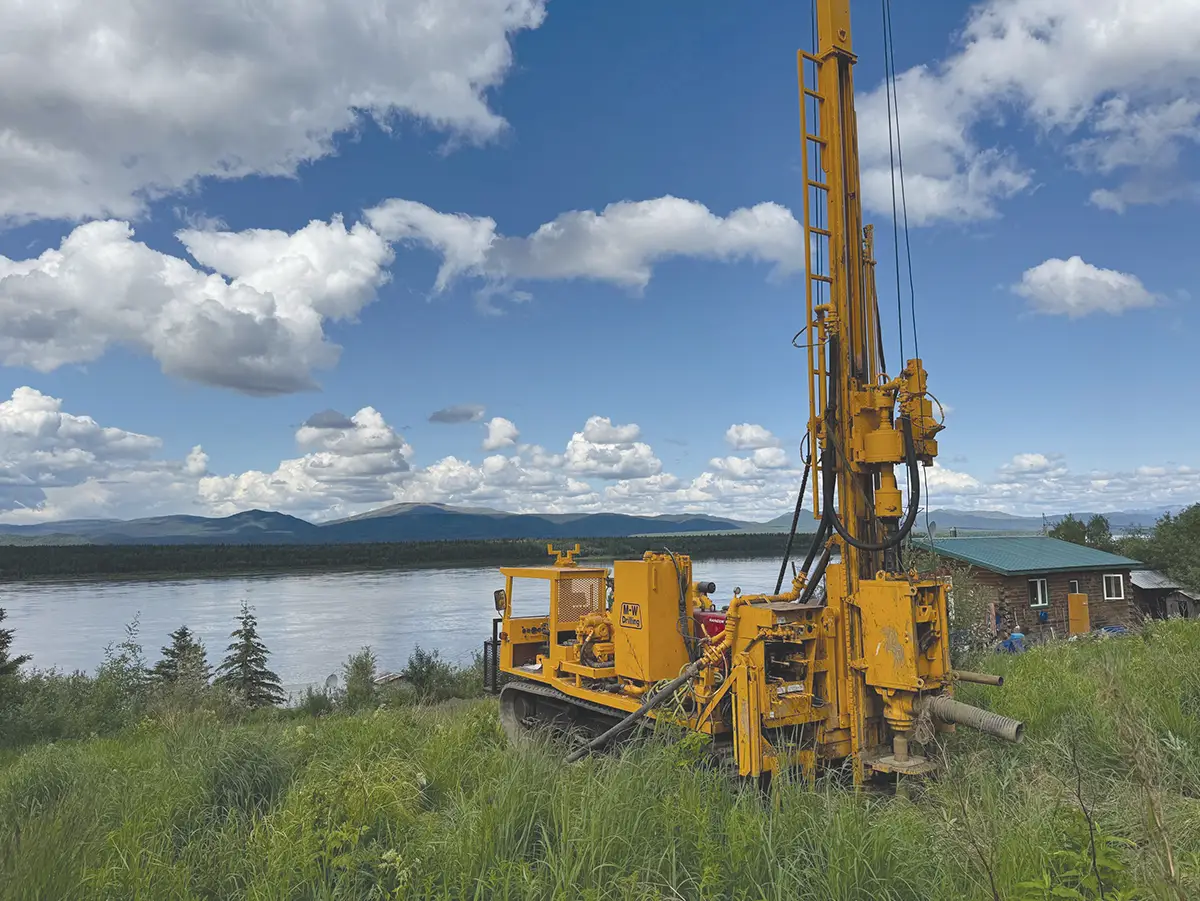
One challenging project was in the village of Koyukuk, located on the Koyukuk River, 90 miles south of the Arctic Circle.
“The project required careful planning and execution due to its remote location, limited access, and reliance on river transportation for personnel, equipment, and materials,” Caldwell recalls. “M-W Drilling’s crew demonstrated strong field experience and adaptability, successfully performing under constraints.”
“M-W Drilling’s knowledge and technical capacity is what keeps clients coming back for complex and highly technical projects where failure is not an option,” says Kranich.
M-W contracted with the Alaska Department of Natural Resources to drill three exploratory wells for the Nenana-Totchaket Agricultural Project, overcoming challenges of access to undeveloped areas, saturated soil conditions, and variable groundwater resources.
“M-W Drilling was highly communicative and professional throughout the test drilling process,” says Dan Jenkins, a natural resource specialist with the Division of Mining, Land, and Water (DMLW). “Kris also spent time with DMLW after the project was completed to debrief the project with state specialists.”
Tammy Kellard has held the job of office manager for the past eight years and works closely with the crew.
“M-W has a niche because we do the challenging logistics of getting our equipment and crews to rural villages,” says Kellard. “This includes coordinating short summer barge schedules, sparse village accommodations and resources, and crew travel with clashing flight schedules.”
“We have a great group of guys,” Kellard says of the company’s eight employees. “Well drilling can encounter all kinds of difficulties, whether within the well, the rigs and equipment, severe weather, and more. Oftentimes they are in remote locations with limited resources, yet with their vast skill-sets and creativity, they figure it out.”
“When I applied for this ‘specialty construction’ company, I envisioned winter vacations,” she adds. “Surprisingly, winter is great for well drilling with better access in some areas. We’re busy year-round.”

“It provides our company with critical advantages in safety, workforce development, and project execution,” says Westberg. “Membership also ensures access to industry specific training, regulatory guidance, and advocacy on contract and labor rules, helping us manage risk in Alaska’s challenging and remote environments. It also connects us to engineers, project managers, and peers, improving project planning, logistics, and bid competitiveness.”




QAP performed earthwork and construction of several culverts as part of the Deadhorse Airport renovations to mitigate against wildlife disruptions on runways and taxiways.
n July 2017, a Boeing 737 approached Deadhorse Airport on the North Slope. As the plane began its descent, the landing gear deployed.
Then the flight crew spotted the caribou on the runway.
The pilot aborted the landing and maneuvered the plane for a “go-around”—but not in time to avoid hitting the animal with the plane’s landing gear and killing it.
Nearly ten years after the incident, QAP is one year into a three-year project to control wildlife access to Deadhorse Airport. It’s an essential upgrade long in the making at an airport that serves as a crucial connection between the North Slope’s oil and gas industry and the rest of the state.
It’s a generally effective method, but it takes a lot of work, says Deadhorse Airport Manager Tim Parault.
“You have multiple people babysitting caribou, so it eats up all your manpower. You can’t get anything done.”
If it’s not caribou, it’s bears. Last year, when Matt Schram of QAP was on site as superintendent for the airport upgrade, he says he saw more bears than he’d ever seen in one place in his life, even compared to jobs he’s worked in Kodiak.
At one point, a pair of bears broke into several trucks and ripped them apart, adds Steve Oswald, construction project engineer with the Alaska Department of Transportation and Public Facilities.
Then there are the birds.
“It kind of shocked me,” Oswald says. “I mean, I grew up duck hunting. Watching people caribou hunt [in the region], I’m like, what are you caribou hunting for? There’s ducks everywhere!”
Migratory waterfowl of all kinds are drawn to the airfield by the infill ponds—which happen to be just 250 feet from the runway. When airport staff aren’t chasing caribou and bears off the runways, they’re shooing the birds from one pond, only to watch them land in the next one.
“You just chase them up and down all day long—the same birds—and then they cross in front of aircraft,” says Parault. “You can’t really do much with them except modify the habitat and get rid of the water.”
Local fauna on the runway is a headache and a nuisance—but it’s also a danger for the planes, their passengers, and the animals themselves. For years, Deadhorse Airport has been awaiting the go-ahead to construct a much-needed fence on the east, west, and south sides of the airfield.
Parault estimates that roughly 130,000 passengers depart the airport annually, most of them on charter planes.
“I don’t think this airport would really be its size without the oil field,” he says. “We move a lot of people.”
Closing a runway—even temporarily—due to wildlife is a major disruption to the airport and the oil and gas industry. Parault says it’s been a few years since he’s had to close runways for a long duration, but brief closures due to wildlife happen every year, especially when caribou herds are migrating.
The 2017 caribou strike triggered action on a “correction item” the FAA had previously identified: the lack of a perimeter fence to mitigate against wildlife. An environmental impact analysis and further investigation to identify other FAA discrepancies at the airport led to a 2024 request for bids to build a perimeter wildlife fence and a maintenance service road, fill in ponds, complete drainage improvements, and complete associated work.
QAP won the $44.7 million contract and is performing the work alongside its subcontractors, which include Associated General Contractors of Alaska members Alaska Electrical Contractors and Pacific Asphalt.
Last year, a portion of QAP’s work focused on placing the first lift on a perimeter road that will flank the wildlife fence. FAA requirements prevent the placement of frozen material, so QAP must build the gravel perimeter road on thawed tundra during Alaska’s short summer season.
“Which isn’t necessarily the optimum time to do it, but we make it work,” Schram says. “It’s basically a swamp that you’re putting material on.”

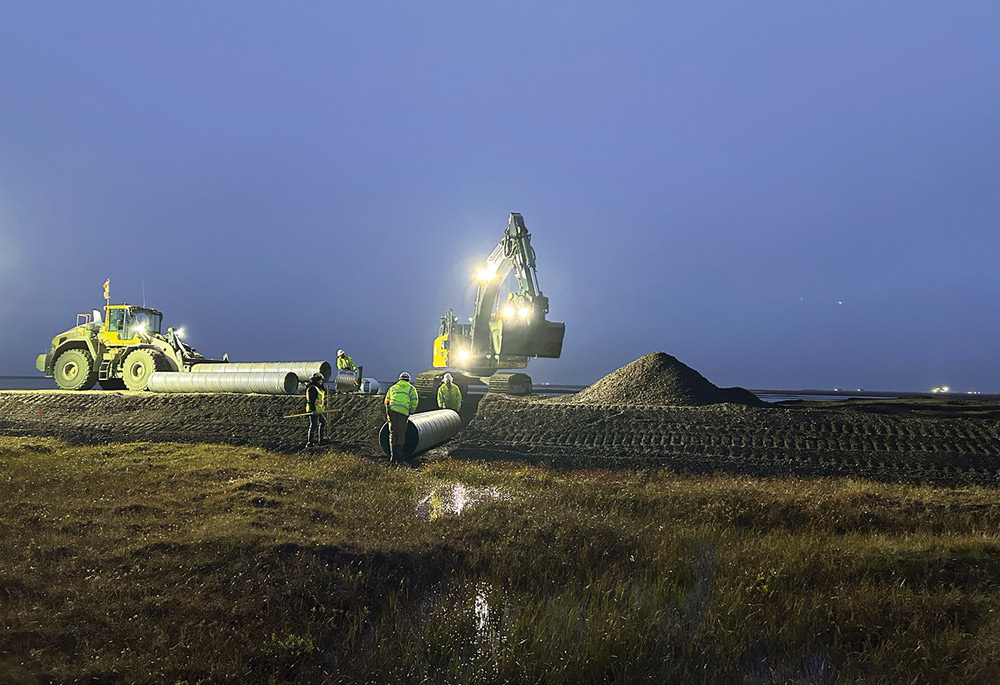
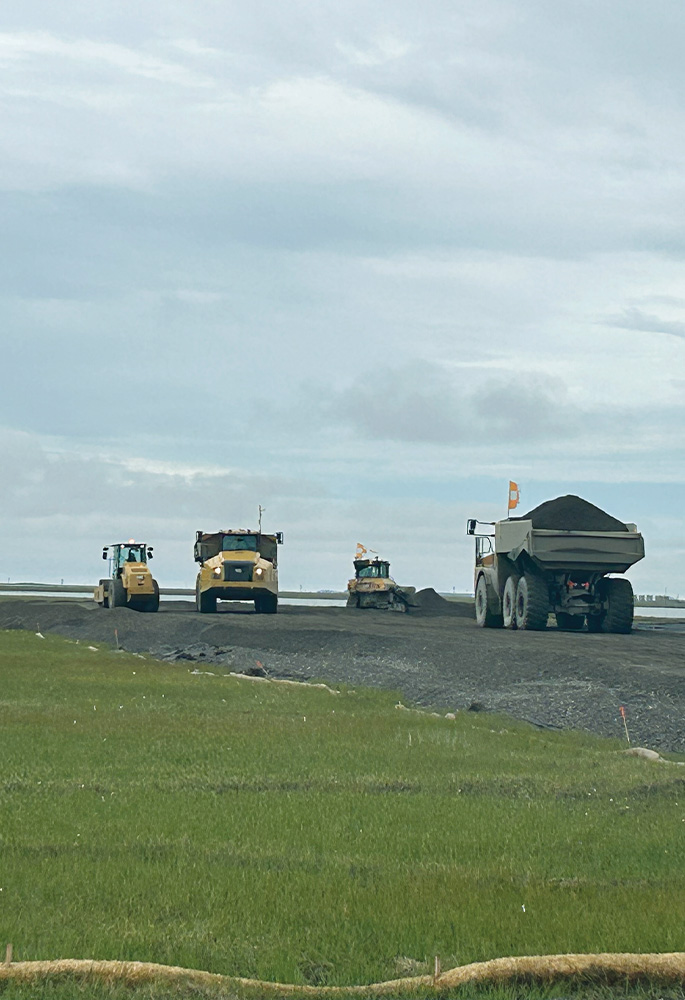


In addition to the complication of building a road on wet ground, the gravel QAP mines to pave the road is mixed with permafrost. Workers have to scrape layers of ice and gravel, let it thaw, then put the gravel in a pile and allow it to drain so it’s usable.
Last summer, contractors placed 160 “equalizer” culverts needed to prevent water from flooding on either side of the road. Thanks to some Alaska Department of Transportation and Public Facilities funding that was received unexpectedly early, QAP was also able to start placing fill in some of the infield ponds frequented by waterfowl.
The project has another complication beyond working on wet land with wet material; contractors must complete work at night to avoid interfering with air traffic.
“It shortens down your work window to haul that much material—1.2 million tons. It’s quite a haul,” Schram says.
When they’re able to return to work this year, QAP will continue building the perimeter road, letting it settle for a final season before completing it in year three of the project. The 9-foot perimeter fence will also be completed in year three. The contractor will also build a temporary taxiway for Alaska Airlines aircraft to access a hangar temporarily blocked by culvert work.
When work is complete in 2027, Deadhorse Airport may not look significantly different, but airport staff will feel palpably relieved.
“Wildlife has probably been the most stressful part of running this airport,” shares Parault. “With the new fencing and everything, we can breathe a sigh of relief working here.”



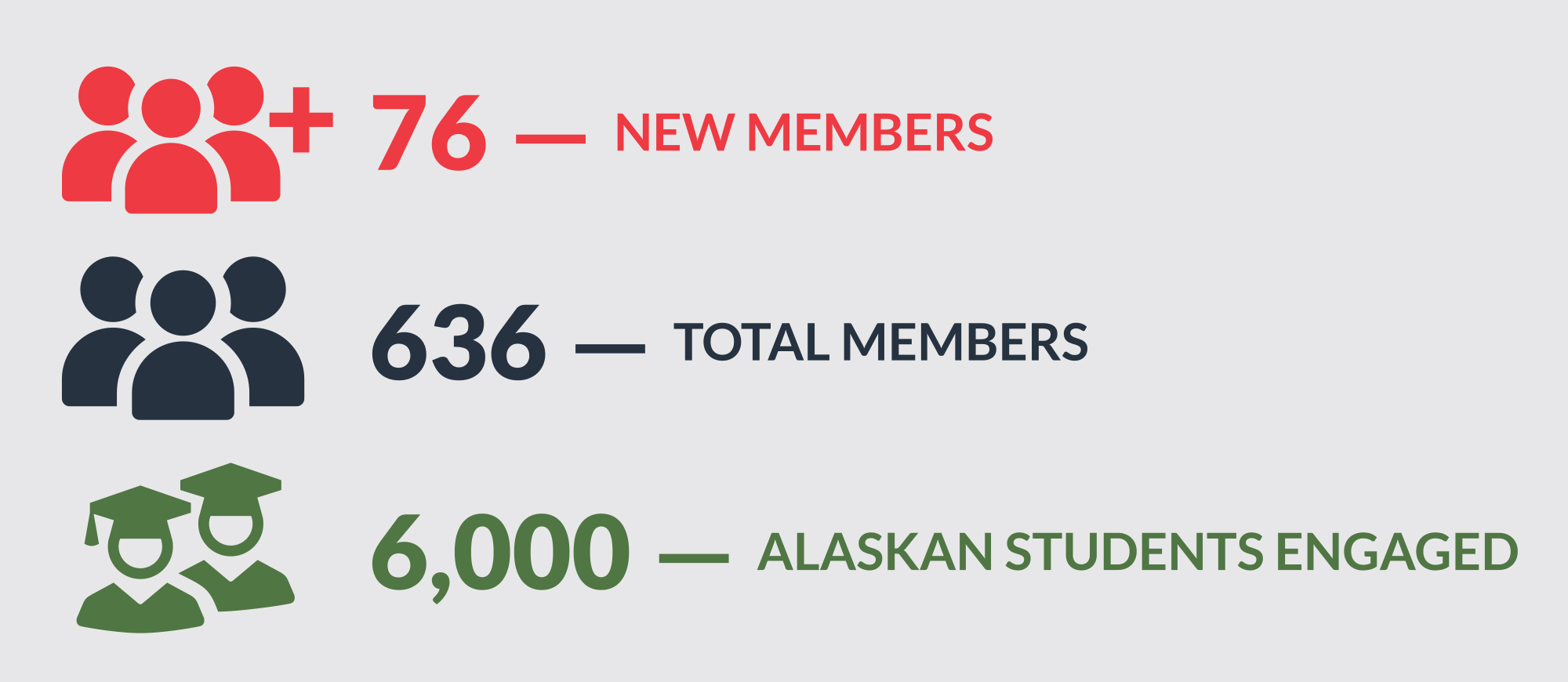
n 2025, AGC delivered meaningful results for Alaska’s commercial construction industry. Through strong advocacy, targeted workforce initiatives, and high-quality education and engagement, AGC continued to serve as the leading voice for the industry. As we reflect on the year’s progress, we remain focused on advancing shared priorities and positioning our members for success in 2026 and beyond.
AGC also supported hands-on learning and industry excellence by sponsoring Wasilla High School’s SkillsUSA team and the University of Alaska Steel Bridge Competition, reinforcing the importance of education, innovation, and technical skill development.
Meet the Match – Bringing $700 million into the construction economy for summer 2026.
- Advocacy & Industry Promotion – Advancing policies that promote safe worksites, fair contracting, and sustainable industry growth. Notably, AGC of Alaska’s “Meet the Match” campaign and AGC of America’s “America’s Moving Forward” campaign.
- Education & Professional Development – Delivering high-quality training, safety education, and leadership development programs.
- Member Engagement – Strengthening outreach, collaboration, and communication to elevate the industry’s role in Alaska’s economy.
- A New Space to Celebrate Members Achievements – Modernizing the Anchorage space to better serve the AGC community.



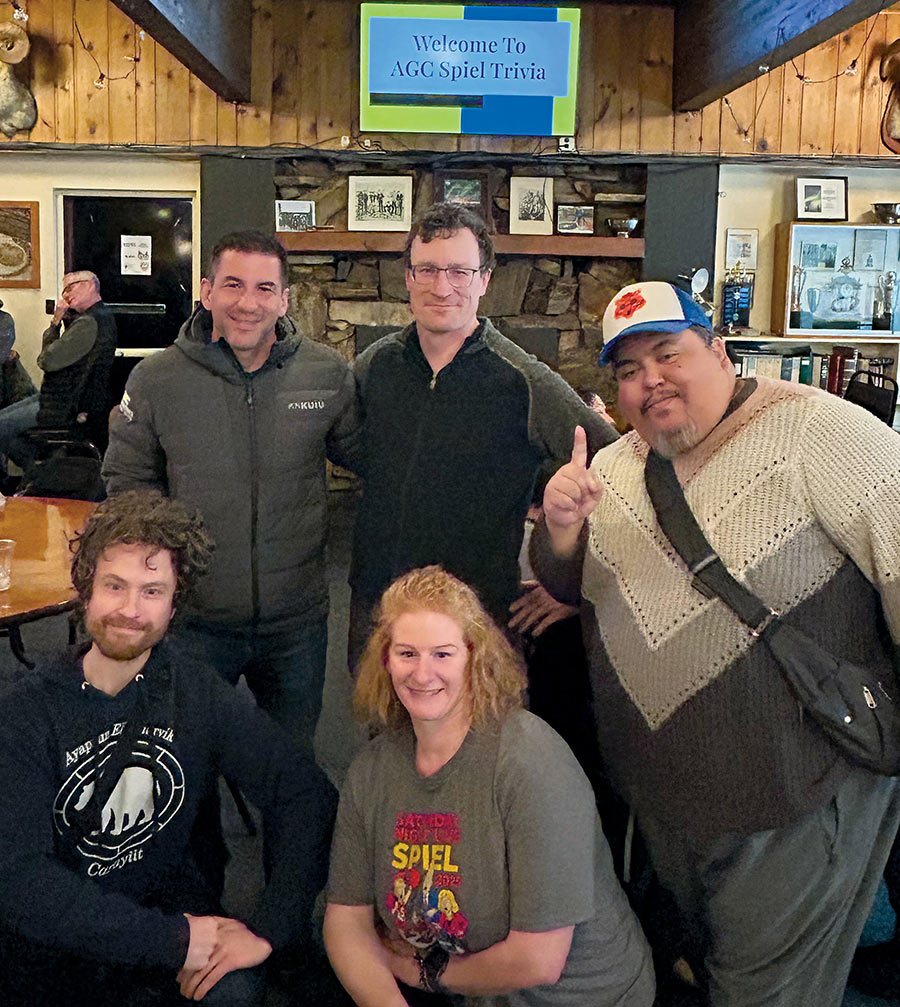
he Olympic Curling teams had nothing on the fifteen teams who hit the ice at the Fairbanks Curling Club January 31. Teams battled for bragging rights and trophies with good humor and plenty of competitive spirit.
Winners of the 2026 Curling Competition were North Star Equipment Services, which took home top honors; Great Northwest, Inc. in second; and Equipment Source, Inc. rounding out the top three.
For those who weren’t ready to hit the ice and spin rocks, Associated General Contractors of Alaska debuted a new event: the Construction Leadership Committee Trivia Competition, held on the mezzanine at the Curling Club. In that event the HC Contractors, LLC team, dubbed “We Just Hope Everyone Has a Good Time,” was head of class.
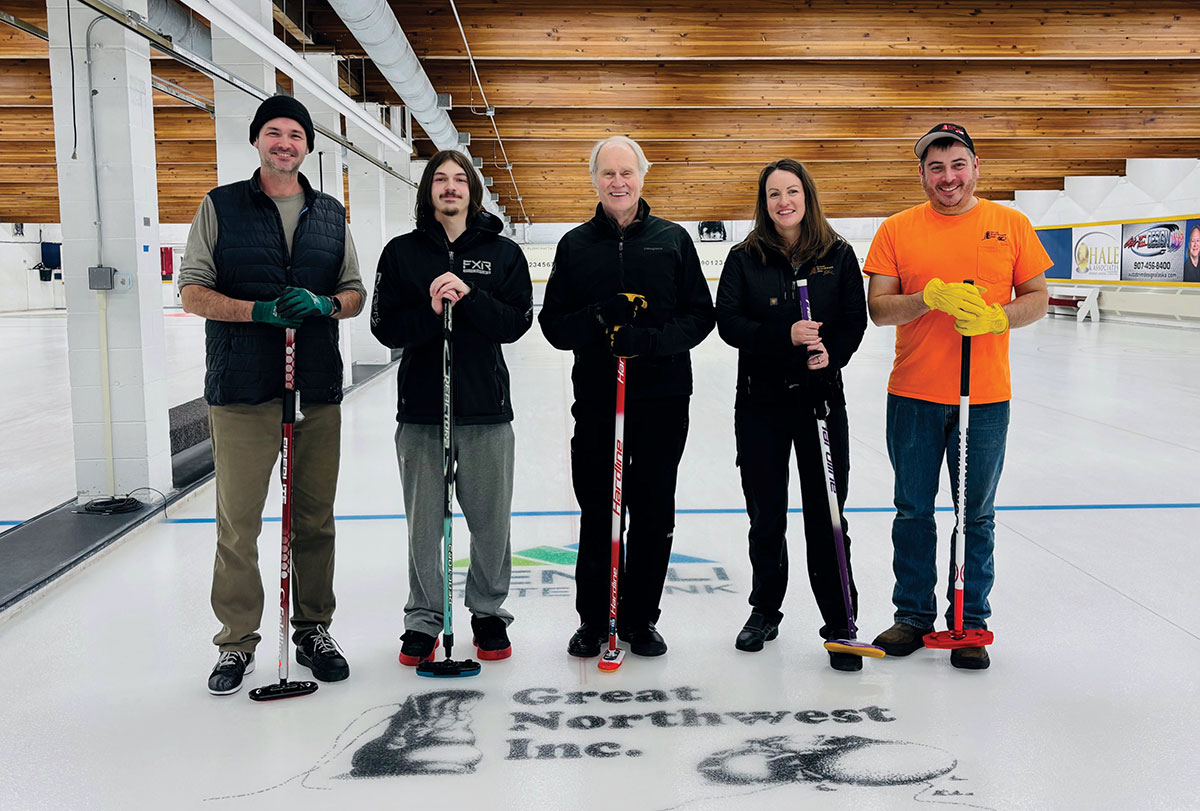
Fullford Electric, Inc.
Spenard Builders Supply
North Star Equipment Services





ach year, a small group of volunteers sits down with hundreds of pages of essays and recommendation letters—stories of ambition, planning, and pride in work. They come from students, apprentices, and working adults across Alaska, all seeking support as they take their next steps in construction-related careers.
Over the past five years, the Associated General Contractors (AGC) of Alaska has steadily expanded the scholarship program that supports those applicants—growing not just in size but in reach. What began as a $20,000 scholarship has increased to $50,000 in 2026. Alongside the growth in funding, AGC this year launched a new scholarship application system, replacing a process that has remained largely unchanged for more than a decade.
The scholarship is administered by AGC’s Workforce Development Committee and is designed to support Alaskans entering or advancing in construction-related careers, from construction management and engineering to skilled trades. Awards are funded by AGC and the Construction Industry Progress Fund.
Despite years of refinement, Bartel says the underlying system had become increasingly cumbersome.
“We’ve made minor changes to how we’ve operated the scholarship in my ten years of being a part of it,” Bartel says. “We’ve always used Excel, and we use a grading rubric that we’ve kind of tweaked over the past ten years to get to where we really like it. We’re really proud of how we do it. It’s very fair, and I think it’s a wonderful system we’ve developed over the years, but it is very archaic.”
Under the old process, applicants submitted six or seven separate PDF documents—including essays, letters of recommendation, and questionnaires—through a Dropbox link. AGC staff then manually consolidated, reformatted, and distributed the materials to scholarship reviewers.
Bartel says that responsibility largely fell to AGC Deputy Director Norma Lucero, whom he credited with pushing for modernization.
“She suggested finding a software more up-to-date that automates the process,” Bartel says.
“At the heart of AGC’s mission is our commitment to advocate, educate, and promote on behalf of our members,” explains Lucero. “One of our greatest strengths is learning from one another across the AGC family so we can continually raise the bar in how we serve. By collaborating with other chapters, we identified a more efficient and impactful way to deliver our scholarship program—one that expands access, supports education, and creates opportunity.”
Lucero notes that AGC is testing the new system on the scholarship application process, but if it works well, it will be adopted in other areas.
“Launching our new online AGC scholarship program is just the beginning. This platform will also allow us to further promote excellence by modernizing how we recognize achievement through our Excellence in Construction and Safety awards beginning this fall,” she says.
According to Bartel, it typically took about a week just to organize and disseminate applications before grading could even begin.
“And then, we’d have to go through, do our work, and then we have to send it all back. It was a very long process,” he says.
“We’re really excited about the workload that it’s going to take off of AGC staff and specifically Norma,” Bartel says.
From the applicant’s perspective, Bartel says the changes are subtle but beneficial.
“It’ll be similar enough that I don’t think anybody would ever notice the difference,” he says. “But honestly, it should be easier.”
The portal guides applicants step by step and restricts uploads to the correct file types, addressing a recurring issue under the previous system.
“We gave them very specific instructions, but you could submit the wrong types, and people would,” Bartel says. “Then it was a pain for everybody.”
While the technology is new, Bartel emphasizes that AGC is approaching the transition cautiously.
“Especially this first year, we’re going to be pretty cautious about how much we jump in with both feet,” he says. “Our old system was archaic, but it was extremely fair.”
That fairness remains central to the scholarship’s evaluation process. Applications are reviewed by a scholarship task force formed by AGC’s Workforce Development Committee, with reviewers dividing grading responsibilities across categories such as letters of recommendation, Alaska-focused intent, and literacy.
“For the first time ever, half of [the scholarships] went to trades,” Bartel says.
In 2025, AGC split its $40,000 scholarship pool between degree-seeking students and trade applicants, with funding support from both AGC and the Construction Industry Progress Fund.
“We’ve been wanting to do this for about five years,” Bartel says. “There’s a lot of details. How do you grade them? How do you be fair?”
Trade applicants are required to explain exactly how the funds will be used, and reviewers assess if those requests align with AGC’s mission and whether the request duplicates existing support.
For Bartel, the scholarship review process has become one of the most rewarding parts of his work with AGC.
“I told our group I kind of dreaded the work, but then while doing it—especially after doing it—I’m so happy I did, because it really kind of gives you faith back in humanity, that there are a lot of good people out there doing a lot of great things,” he says.
As AGC prepares to award $50,000 in scholarships this year, Bartel says the program’s growth reflects intentional choices by AGC leadership, staff, and funding partners.
“That’s a huge commitment,” he says. “There’s a lot of opportunity that we’re putting into workforce development, which is amazing.”






ow that the dust has settled around last year’s Paid Sick Leave law, most Alaska employers have put the work into creating policies that formally offer employees paid sick leave. But construction contracting remains a challenging area for implementation because, for many employers, sick leave has never been offered and, when it was, it was never offered as broadly as the new law mandates. Many contractors are still getting up to speed.
Alaska’s new sick leave law, codified at AS 23.10.066–23.10.069, requires employers to provide all employees with paid sick leave each year; employers with 15 or more employees must provide 56 hours each year, while employers with fewer than 15 employees must provide 40 hours each year. The leave may be used for a broad range of reasons, including for absences related to an employee’s own or their family member’s mental or physical illness, injury, or health condition; procuring a medical diagnosis, care, or treatment, including preventative medical care; and absences related to procuring medical or psychological attention, victim’s aid services, legal services, or relocation efforts or efforts to secure an existing home in cases involving domestic violence, sex assault, or stalking. It is a fool’s errand to try to determine whether an employee’s “family member” is really part of their biological family, as the law allows for almost any friend to be included in this definition. The only compliance carve-out applies to the construction industry; specifically, for Little Davis Bacon Act projects where prevailing wages are required, compliance only applies to those projects bid after July 1, 2025.
Especially in Alaska’s busy construction season, many companies have required long pre-approval processes before any leave was approved during the season. This law changes that, and employers must permit their employees to use sick leave as it is accrued, even allowing same-day requests. Employers cannot request or require documentation of this leave unless an employee is absent for more than three consecutive full days. The only type of documentation an employer may request is a doctor’s note stating that the employee needed sick leave for specified dates/times.
In cases of domestic violence, sex assault, or stalking related absences, employers cannot request more than a written statement from the employee affirming that the leave was taken for a qualifying purpose. Because employees’ use of this leave is protected, employers cannot discipline or otherwise retaliate against employees for their use of this leave. That means that compliance becomes a management and training issue for employers; it doesn’t matter if you have the best policy in the world if your foreman is denying your employees’ leave requests improperly.
- If you currently offer a general PTO bank, consider tracking sick leave separately. This new type of leave offers many protections beyond normal “vacation leave” and employers should avoid extending those protections beyond what is required.
- Remember that when seasonal employees separate at the end of the summer, you must maintain records of their accrued but unused leave. If you do not pay this leave out upon separation, and rehire these employees within six months, you must reinstate all of their leave. You also cannot force them to accept a payout of their accrued and unused leave entitlement, but this “carry over” requirement is eliminated if they voluntarily take the cash-out.
- If you suspect that an employee is not using sick leave for a permissible purpose or on a person who may not truly be “family,” you may be tempted to challenge their request. Think twice before doing so—employers do not have much leeway to push back on employees’ explanations in this context.
Hopefully your company and employees will enjoy healthy, productive summers. However, if they (or their family members) do fall ill, heed the above to ensure that they can take the time they need to recover and return to work as soon as possible.

Chenega Regional Development Group

Chenega Regional Development Group combines local knowledge and skill
nhancing the lives of shareholders. Investing in community and culture. Increasing economic development. Chenega Regional Development Group (CRDG) LLC is hoping to achieve all that and more for Chenega Corporation shareholders and Native Village of Chenega residents.
Formed in 2023 as a subsidiary of Chenega Corporation, CRDG operations largely take place in Prince William Sound. There, the company maintains and improves the infrastructure and quality of life in the village by providing construction, land management, and maritime services. It also contributes to the education and preservation of the traditional culture of the Chenega people. In addition to serving both the Native Village of Chenega and corporate-owned properties of the Chenega Corporation, CRDG also serves multiple native communities through its cultural and subsistence educational programs.
“We are in an ideal position with both marine transportation and construction capacity and a deep history and knowledge of Prince William Sound to grow development opportunities in the sound and to support contractors and others working in the area,” explains Project Manager Douglas Lipinski, adding that CRDG also owns a number of housing units and lodging facilities in western Prince William Sound to accommodate those working in or visiting there. “I don’t know of another company that offers the array of services that we provide under one umbrella.”
This synergistic, team-focused approach was demonstrated particularly well this past fall, Lipinski says, when Chenega was notified of the discovery of an old dug-out canoe on Montague Island.
“Our team was able to join our cultural, marine logistics, and construction expertise for a complicated and successful recovery of this important artifact,” he says.
Resiliency and Resourcefulness
While the Chenega Corporation consistently ranks among the top ten most successful Alaskan-owned businesses in the state, it has had to overcome numerous obstacles to thrive. The village of Chenega was devastated by the 1964 earthquake, in which 26 residents—one-third the community’s population—died. It was the largest loss of any community in Alaska. After rebuilding the village in a new location twenty years later, the Exxon Valdez oil spill occurred, creating more devastation to the ecosystem and severely impacting the subsistence lifestyle of the people in Prince William Sound and within the spill area.
“The people of Chenega have lived and subsisted in Prince William Sound for thousands of years, requiring innovation and resiliency through challenging times,” says Lipinski. “It is important in everything we do to always be respectful of our culture and the history of the indigenous people of our region. Resiliency and resourcefulness is what has kept the village and the Chenega people strong—and we exemplify those values in the work we do every day.”

The Chenega Regional Development Group construction crew is finishing up the fourth of six full-home renovations in the village, taking the buildings down to the studs to allow for the addition of energy-efficient improvements and providing access for necessary repairs.

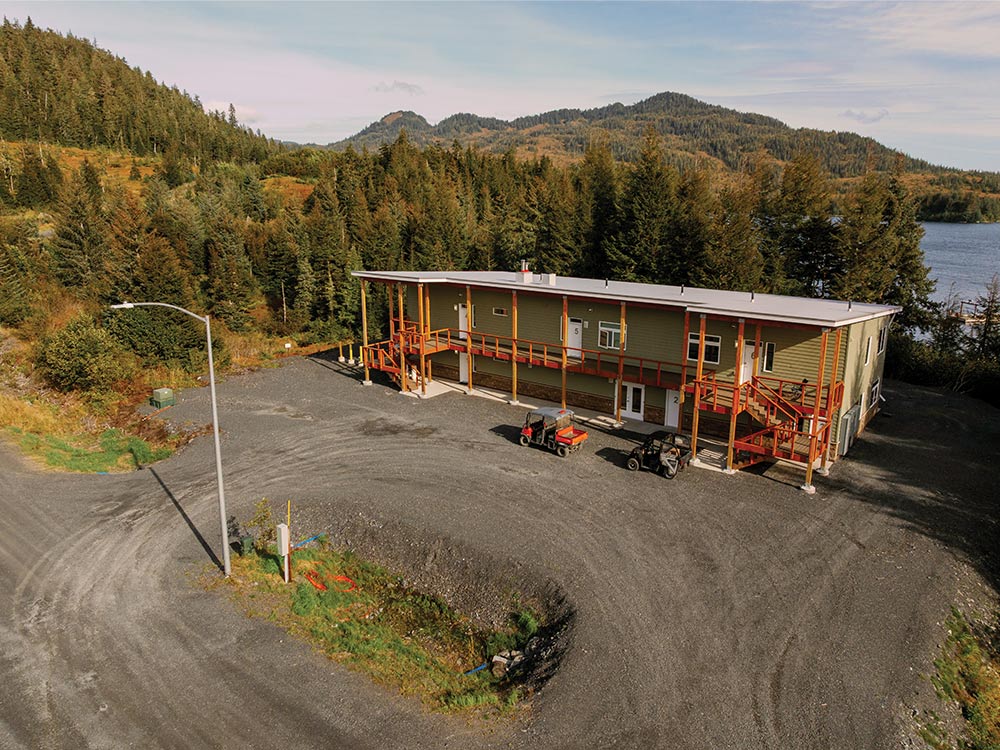
The six-plex Multipurpose Lodging Facility has capacity for 12 people in three different room layouts and a multiuse common area. Associated General Contractors (AGC) of Alaska member F&W Construction Company, Inc. completed the project. Lipinski notes F&W staff communicated consistently throughout the project and finished ahead of schedule. The building doubles the available overnight capacity in the village, allowing support personnel, contractors, and medical professionals to comfortably provide essential services.
“CRDG was our client on this design-build project, and their collaborative approach streamlined decision-making, which minimized change orders and ensured clear communication from conception through completion,” says Saigen Harris, project manager for F&W Construction. “We appreciated their professionalism and would enjoy an opportunity to work with them again in the future.”
According to Lipinski, the project with F&W Construction is a good example of the benefits that being an AGC member provides, in addition to access to educational opportunities and industry support.
“Coming out of the residential construction industry, and as a board member and president with the Anchorage Home Builders Association, I was very familiar with AGC,” says Lipinski. “In my new role with CRDG, they were an excellent fit to establish relationships that could benefit the development of Chenega and the surrounding area. They are a very professional and organized association with a great reputation.”
Projects in Motion
“The housing stock in the village was largely constructed in the mid-1980s and was showing its age in this tough marine environment,” says Lipinski. “The completed homes have allowed improved housing access for both existing and returning residents.”
Other projects CRDG has in motion include work at the Chenega Village bulk fuel tank farm, Eshamy Bay Lodge and Sawmill Bay Lodge improvements and tourism development, continued housing renovations, and a new housing subdivision development. The company is also providing support on Alaska Department of Transportation and Public Facilities ferry dock improvements, as well as the Beatson Mine reclamation project, a cleanup effort of the copper mine once owned by J.P. Morgan and the Guggenheim family and later sold to the Kennecott Utah Copper Corporation. The mine operated on Latouche Island between 1904 and 1930. The state learned of potential contamination in 2013 and Rio Tinto has been investigating the extent of the contamination since 2016. Rio Tinto and the Alaska Department of Environmental Conservation are working to develop a cleanup plan to address the contamination, which includes both surface and submerged tailings.




orkforce development has become a critical component of business strategy across the construction industry. In today’s competitive environment, organizations recognize that a skilled, motivated, and well-supported workforce directly influences project performance, operational efficiency, and long-term growth.
These elements significantly impact business outcomes, particularly in competitive bidding situations. A strong workforce enhances bid competitiveness by showcasing reliability and expertise, leading clients to favor contractors with stable staffing in their RFP evaluations. Moreover, a well-trained and supported workforce minimizes project risks, including schedule delays, quality issues, and safety concerns, ultimately contributing to a more successful and resilient business. By recognizing the interconnection between workforce and business development, organizations can cultivate an environment that drives both employee satisfaction and business growth.
A great example of a program leaning into team engagement and commitment is the “Client Care League.” This program engages all company divisions in an annual competition for client care excellence. It awards points for proactive client interactions, including those from superintendents and field project managers, all tracked in Salesforce, a customer relations management software program. This initiative has fostered cross-functional engagement, professional growth in client relationship management, and improved client satisfaction through personalized introductions. The program reinforces client-focused culture and has proven a win-win for workforce development and business growth, creating better connections between office and field staff.
Some organizations have found success by establishing initiatives focused on creating clear career paths and robust training programs for both office and field personnel. The objective is often to cultivate a supportive culture by investing in teams and equipping them with the tools needed for growth and success. A critical aspect of this approach includes proper task delegation to prevent staff overload. Such efforts often lead to positive trends in morale, professional growth, and organizational stability. However, the high demands prevalent in many industries today can make long-term workforce stability challenging. Despite these pressures, a continued focus on development and support remains essential to strengthening teams and sustaining progress. Ultimately, companies strive to ensure their current and future staff are well-informed about available career paths and the stability offered within the organization.
In the modern workforce, employees increasingly value work-life balance and prioritize key factors that enhance their overall well-being. These include:
- Schedule flexibility: The ability to tailor work hours to fit personal commitments.
- Company culture: A supportive and inclusive environment that fosters collaboration and respect.
- Burnout prevention: Strategies and resources aimed at reducing stress and promoting mental health.
- Family and personal support: Programs that assist employees in managing family responsibilities and personal needs.
- Predictable hours and workload management: Consistency in work schedules that helps employees plan their lives effectively.
- Paid time off: Generous leave policies that allow for rest and rejuvenation.
- Focusing on these elements is essential not only for attracting talent but also for retaining a committed workforce, making them crucial topics in discussions about strengthening organizational culture and supporting employees.
Across Alaska, the Associated General Contractors (AGC) of Alaska chapter has demonstrated strong leadership in this area. Notable initiatives include the Contractor’s Classroom Playbook: A Blueprint for Contractors to Connect with Alaska’s Schools, which supports industry–education engagement, and the We Build Alaska website, a comprehensive resource highlighting construction career pathways. These tools help raise awareness and inspire the next generation of trades professionals.
In essence, fostering a strong and capable workforce is more than just good human resources practice; it is a strategic imperative. By recognizing that investing in people directly yields measurable project and financial benefits, businesses elevate workforce development from a departmental function to a core business strategy, ensuring enduring success and competitive leadership.
This article first appeared on the Associated General Contractors of America Business Development Forum Showcase page on LinkedIn on January 29, 2026. Reprinted with permission.




Photo provided by Great Land Trust.
Photo provided by Great Land Trust.
ust beyond Valdez’s downtown and ferry terminal, a forested hill that once sat quietly in private ownership has been transformed into one of the city’s newest public assets.
Known today as Nayurluku Park at Meals Hill, the 184-acre site is now a four-season recreation area shaped by years of planning, layered funding sources, and a construction phase that required flexibility. The name, agreed on through discussions with Alaska Native groups who live in the area, is pronounced “neigh-og-lou-goo”. The name is from the Sugpiag people, who fished and traded on the land for centuries. Nayurluku means to “guard” or “keep safe.”
Completed in September 2025, Phase 1 of the park is designed to serve both the Valdez community and the growing number of visitors arriving by cruise ship just steps from the park’s entrance.
That changed in November 2019 when Great Land Trust purchased the property using Exxon Valdez Oil Spill (EVOS) settlement funds and placed it under a conservation easement. The agreement preserved the land and set aside funding for a future master plan.
Valdez City Manager Nathan Duval, who previously served as the city’s capital projects and facilities director, said conservation alone was not the goal.
“It had been a recreation area, kind of an informal recreation,” Duval said. “Putting in the conservation, the intent was not to just be a nice thing to look at but also something that we could actually use and enjoy.”
The master planning process began in 2020, during the height of the COVID-19 pandemic, and focused on opening the land to public use while respecting ecological constraints and long-term stewardship. Great Land Trust led the effort, working with partners including The Port Valdez Company, Exxon Valdez Oil Spill Trustee Council, and multiple federal, state, and local agencies.

Photo provided by Great Land Trust.

Photo provided by Great Land Trust.
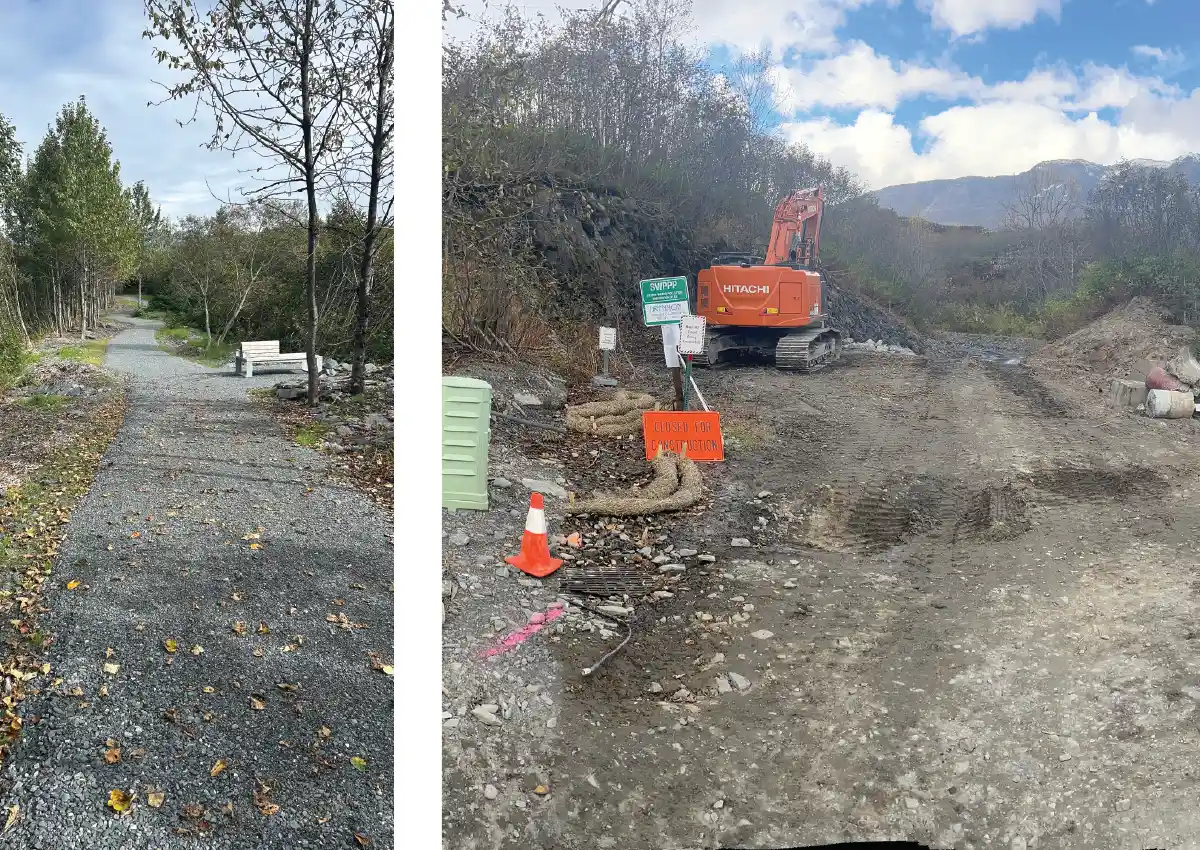
Photo provided by City of Valdez
“Community input made it clear that people wanted to experience Meals Hill regardless of age, ability, or confidence level,” said Lucy Baranko, who worked on construction administration for the project.
To address that, the master plan centered on a regraded, multi-use spine trail that follows an existing road alignment originally intended for subdivision access. The first quarter mile meets universal design standards, says Baranko, creating a consistent and manageable grade for a wide range of users.
“This decision influenced everything from trail widths to surfacing and even where viewpoints were located,” Baranko said. “Key experiences, like harbor overlooks and forest canopy views, were intentionally placed along accessible routes so that users don’t have to choose between ease of access and meaningful scenery.”
From the spine trail, narrower routes branch out to serve more specific uses, including purpose-built mountain bike singletrack, hiking trails, and winter ski and snowshoe routes. The layered system allows users to choose their experience while minimizing conflicts.
As the primary contractor, Drennon was responsible for both trail design-build work and the physical construction of Phase 1, including trails, bridges, park amenities, and hard-surfacing components.
The work required careful trail layout to fit proposed routes within tight corridors, all handled “in a safe and aesthetic way,” says Drennon president Roy Drennon. It was a challenge to maintain access on the ridgeline where crews were often working in multiple areas with a single access point in and out.
Trail construction required advance planning to keep materials moving while preserving access throughout the site, says Drennon. Crews worked with specialized materials, including yellow cedar for fences, rail caps, and posts, and performed rock excavation into solid bedrock by hand to build stair access to key viewpoints.
“Working in Valdez added another layer of complexity,” says Drennon, “with long lead times to fly or truck in materials and narrow weather windows due to heavy precipitation.”
With a fixed grant budget, not every element of the master plan could be built at once.
“From the beginning, Phase 1 needed to do two things well: establish access and set the tone for the park’s long-term identity,” says Baranko. “That meant prioritizing the primary access route, early trail connections and visible improvements that help people understand how the park works.”
That also meant making some decisions on the fly, such as routing mountain bike trails.
“We didn’t have a lot of subsurface or geotech information,” says Duval. “They had to be kind of creative with the layouts and the routing of the trails.”
Natural springs and drainage issues led to real-time decisions in the field, including removing roughly a quarter-mile of trail to avoid costly structures, such as bridges.
“The design team worked closely with Drennon and city staff to problem-solve in the field,” says Baranko.
Drennon says the collaborative approach with the City of Valdez and the design team was one of the most rewarding aspects of the project, pointing to the finished trails and overall beauty of the site as a source of pride from a construction standpoint.
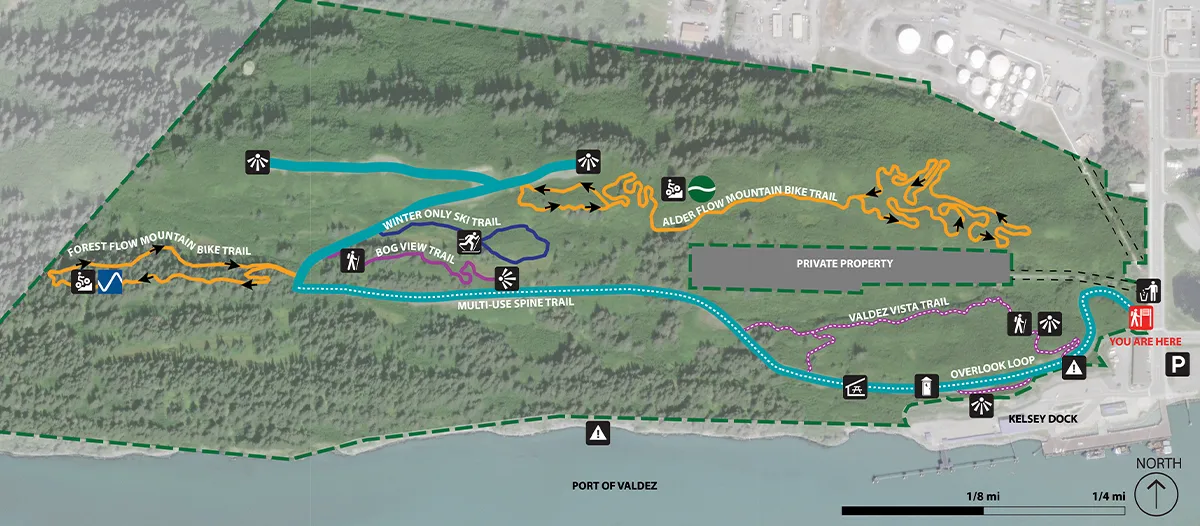
“Every time I went up there for a site visit,” says Duval, “I had to kick people off, saying, ‘Hey, we’re still running a loader up here.’ People were chomping at the bit.”
The official ribbon cutting took place September 11, 2025, in conjunction with a state parks conference in Valdez. The ceremony included the unveiling of an entry plaza artwork honoring the Meals and Hazelet families, Alaska Native history, and the Exxon Valdez oil spill restoration funding that helped make the project possible.
Once opened, the park saw immediate use.
“The next weekend was beautiful,” says Duval. “It was mountain bikes up and down the hill all day. The cross-country teams from the middle and high schools were running up there doing their laps.”
For Cole Beck, Valdez’s Park Maintenance Supervisor, Phase 1 marked the transition from construction to daily operations.
“We are just getting into our management and maintenance of the property,” says Beck. “It’s been fun to use the snow to create new winter recreation opportunities.”
Valdez’s heavy snowfall has allowed the city to lean into winter recreation. The main spine trail is groomed with a PistenBully, while the Alder Flow mountain bike trail is groomed with a snowmachine and rollerpacker and remains open to non-motorized use.
“The view stations have worked well and are the focal point of the park, with a beautiful cedar fence and high-quality informational signs,” he says.
The park’s proximity to downtown, the ferry terminal, and cruise ship docks will influence city operations.
“I’m interested in seeing how the summer tourist season impacts the park,” says Beck. “With such beautiful views and easy-access trails so close to the dock, I’m expecting it will be highly used.”
Without EDA and EVOS funding pieces, a project like this would probably never happen, Duval says. Coordinating the funding added complexity, but he says the result was worth it.
“It’s going to have a return on investment from a tourism and community perspective,” he says.
With Phase 1 complete and future phases identified, Nayurluku Park at Meals Hill stands as a working example of how organizations can come together to deliver long-term public value just steps from the heart of Valdez.




laska’s diverse workforce, which spans many industries, operates in one of the most unforgiving environments on the planet. The state’s extreme weather swings—in some areas, 24-hour daylight in summer to prolonged darkness and sub-zero temperatures in winter—pose significant safety hazards related to sun exposure, cold stress, and insects. These risks can lead to immediate injuries such as sunburn, frostbite, and irritation or long-term issues such as skin cancer or chronic health conditions. According to the Alaska Occupational Safety and Health (AKOSH) program, which pulls from the federal Occupational Safety and Health Administration (OSHA) guidelines, employers must mitigate these hazards to ensure a safe workplace. Preparation and prevention are essential, especially for outdoor workers who may also be isolated.
Understanding these hazards requires recognizing Alaska’s unique climate: summers with intense and prolonged UV radiation, winters with wind chills nearing -100°F in some locations, and a brief but aggressive insect season. By implementing proper gear, training, and protocols, workers can minimize risks and maintain productivity.
To prepare, employers should conduct heat risk assessments, provide the proper gear, and consider providing acclimatization periods for new or returning workers.
Key sun exposure injury prevention measures include:
- Sunscreen and protective gear: Apply broad-spectrum sunscreen with SPF 30 or higher often, focusing on exposed areas such as the face, neck, and hands. Wear UV-blocking sunglasses, wide-brimmed hats, and long-sleeved, lightweight clothing rated for UPF (Ultraviolet Protection Factor) 50+.
- Work scheduling: When you can, shift strenuous tasks to cooler morning or evening hours, avoiding peak UV times (10 a.m. to 4 p.m.). Provide shaded rest areas and encourage frequent breaks with access to cool water. Workers should drink at least one cup every fifteen to twenty minutes.
- Training and monitoring: Educate teams about symptoms such as dizziness, nausea, or rapid heartbeat, and use the buddy system for early detection. In high-risk jobs such as road maintenance, consider integrating heat-index monitoring tools.
Preparation begins with site-specific plans, including emergency response for remote areas. OSHA recommends providing engineering controls such as radiant heaters or wind barriers, but personal protection is vital.
Effective cold exposure injury prevention includes:
- Layered clothing: Use moisture-wicking base layers, insulating mid-layers (wool, synthetics, down, and the like), and waterproof, windproof outer shells. Avoid cotton, which traps moisture, and try to leave no skin exposed. Use safe chemical warmers and/or heated articles of clothing as needed.
- Breaks and nutrition: Schedule frequent warm-up breaks in heated shelters. Provide warm, high-calorie foods and preferably non-caffeinated drinks to maintain energy and hydration because dehydration worsens in dry winter air.
- Symptom awareness: Train employees to recognize early signs such as shivering or numbness, and consider limiting substances that impair circulation such as alcohol and tobacco. For high-risk roles, consider having employees use wearable body temperature monitors.
Core insect exposure prevention strategies:
- Repellents and clothing: Apply Environmental Protection Agency-approved repellents such as DEET in concentrations of between 20 and 30 percent, picaridin, or oil of lemon eucalyptus to skin and clothing. Treat gear with permethrin for lasting protection. Wear long sleeves, pants tucked into boots, and light-colored fabrics to spot insects easily.
- Site management: When possible, eliminate standing water at campsites to curb breeding. Schedule work during windy times or use fans or smoky fires (safely) to deter swarms. For field researchers, head nets and bug jackets are indispensable.
- Post-exposure checks: Perform daily body scans for ticks, removing them promptly and safely. Monitor for reactions and carry epinephrine for known allergies.

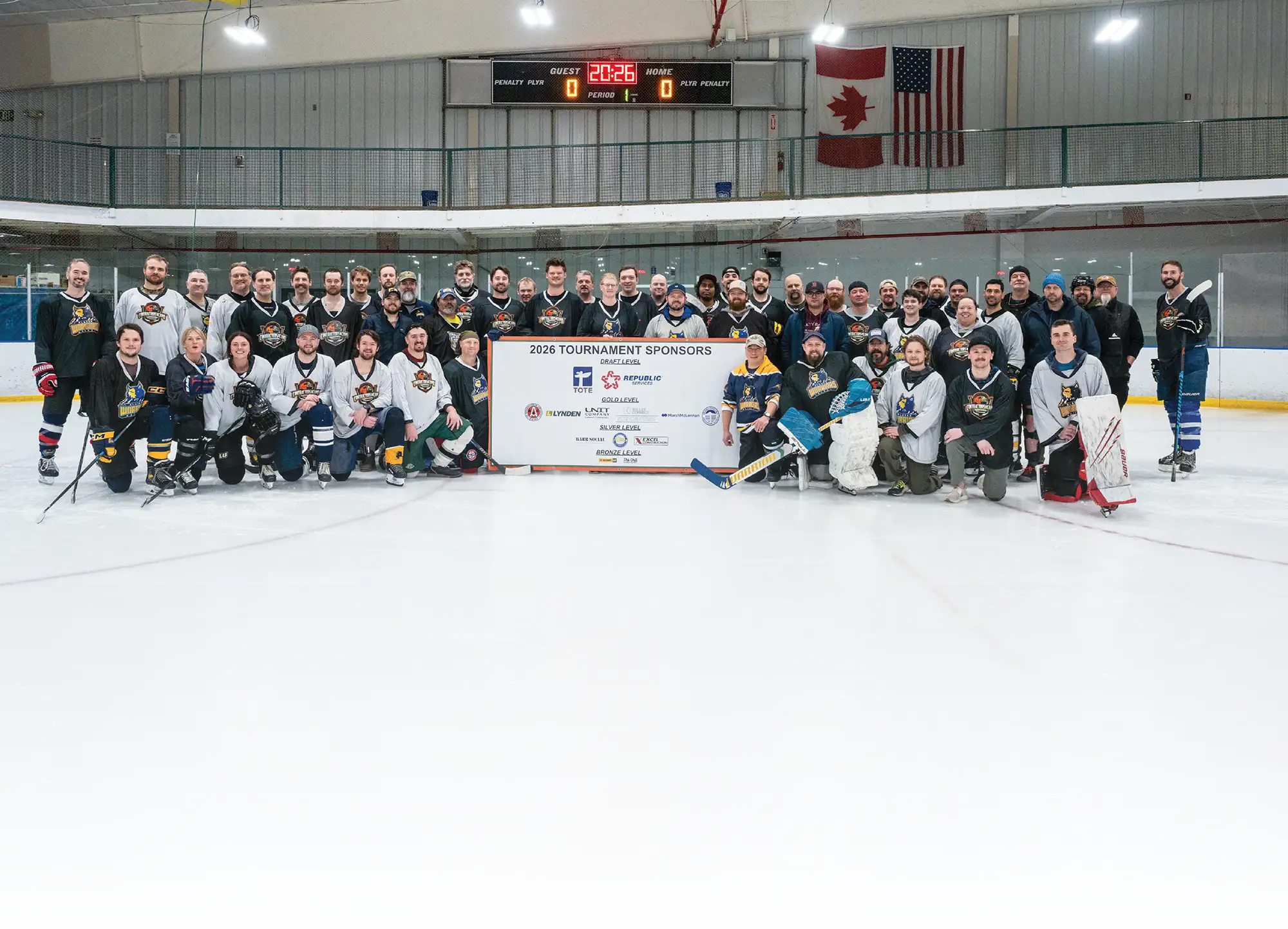


n what’s become the hottest ticket on January ice, the 2026 Contractors & Camo Hockey Tournament January 10 performed a hat trick for winning team Delta, Challenge Alaska, and the Alaska Warriors Hockey team.
The tournament is an annual event that benefits Challenge Alaska and Alaska Warriors Hockey. This year’s event raised $10,000, which will go directly to the Alaska Warriors hockey program to help pay for ice time, equipment, travel to competitions, and more.
- Marsh McLennan Agency
- TOTE Maritime Alaska, Inc.
- Republic Services
- Excel Construction
- Denali Drilling, Inc.
- Barr Social Creative
- Kelley Create Ice Center
- The Chill Hockey League
- N C Machinery Co.
- Lynden
- UNIT Company
- Anchorage Sand & Gravel

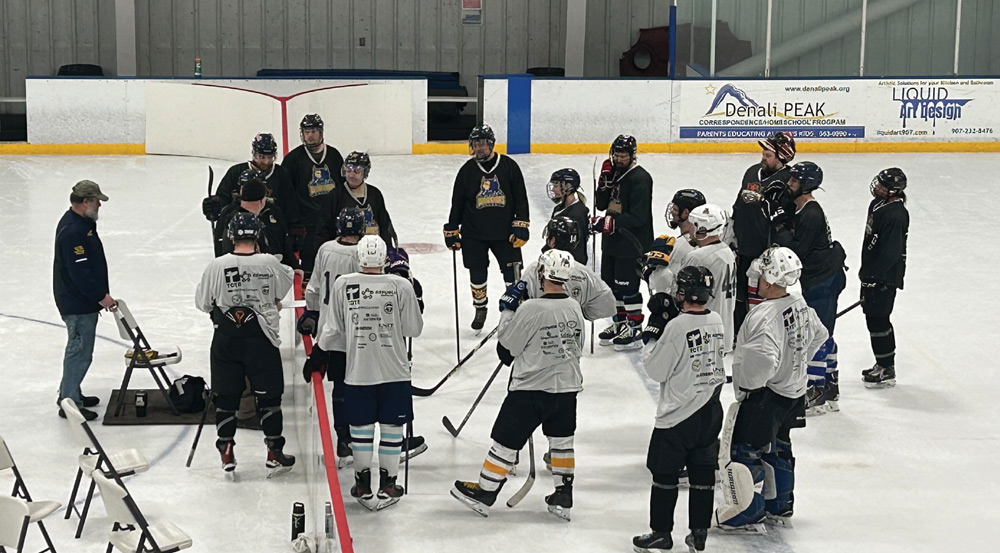
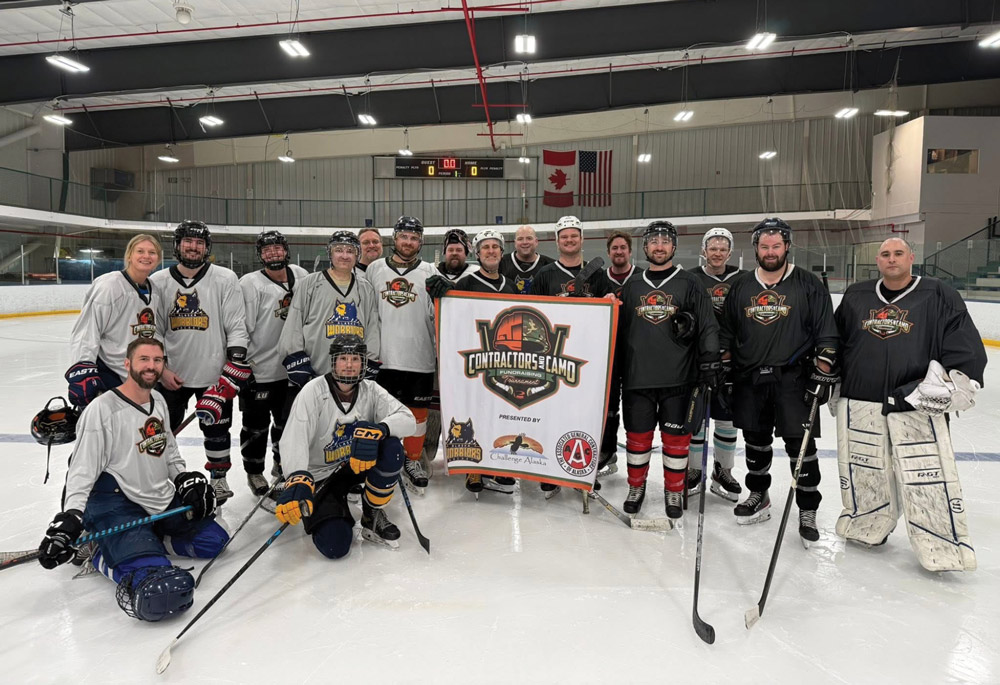


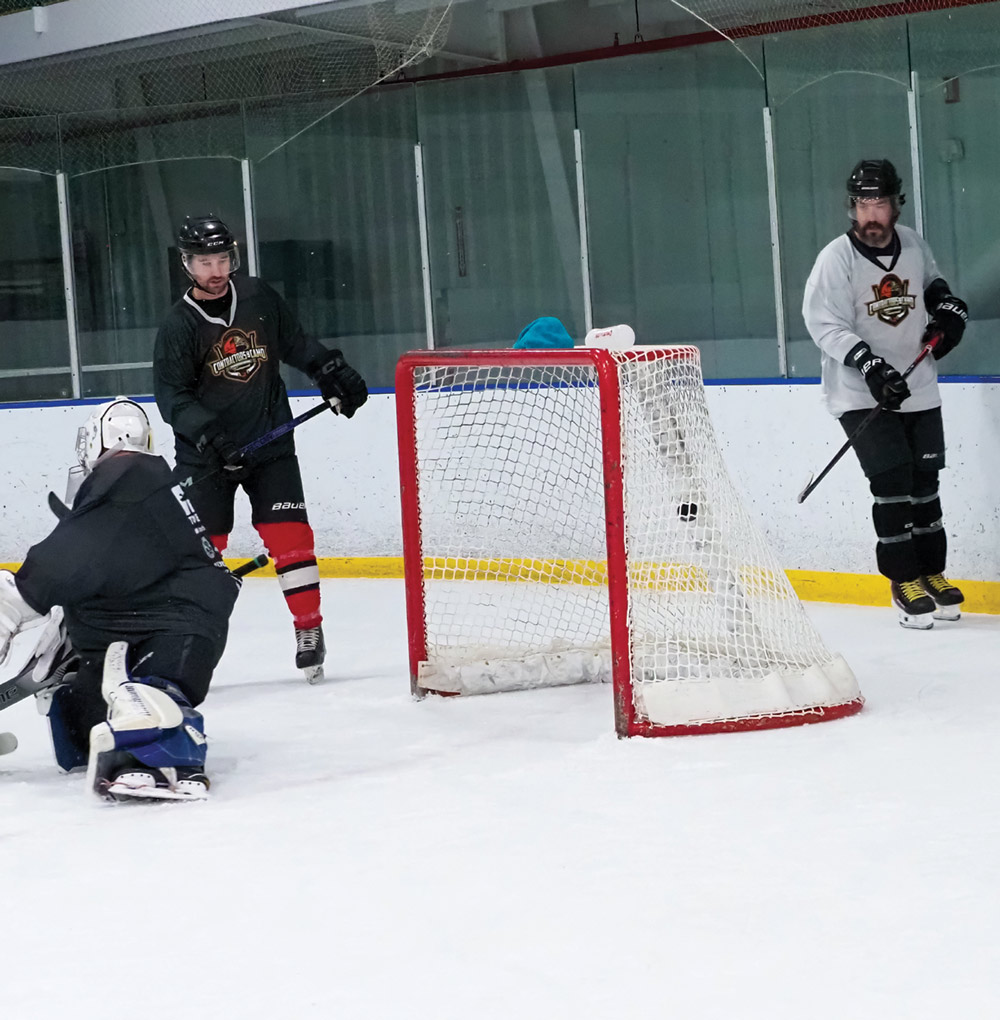




s Alaska’s contractors lace up their boots for the 2026 season, the path ahead looks a lot like a long walk down the storied Yellow Brick Road—promising, but full of flying monkeys. Tariffs, interest rates, and regulations are the trio leaping from the shadows, each capable of reshaping budgets, schedules, and strategy from Ketchikan to Kotzebue. The good news? With brains, heart, and courage—the Scarecrow’s planning, the Tin Man’s resilience, and the Lion’s bold execution—contractors can still make it to the Emerald City.
Beyond price tags, tariffs ripple through the supply chain like a twister—extending lead times for switchgear, distribution transformers, and specialty metals and heightening bid uncertainty. Affordable housing is hit hardest: narrow margins and layered financing cannot absorb repeated change orders or escalations. A 2 percent increase in a Lower 48 materials index can translate to far more once transportation and remote logistics are factored in, especially for jobsites in places like Naknek or Nome.
Commercial and office sectors remain the haunted forest, marked by selective capital, persistent vacancy, and cautious lenders. However, lower rates create a window to refinance COVID‑era debt maturing in 2026, strengthening balance sheets and restoring bonding capacity.
On the brighter side, federal funding, especially for infrastructure and utilities, continues to support a robust civil and horizontal pipeline. But incentives tied to clean energy or advanced manufacturing are evolving, and contractors should prepare for rules to tighten or sunset. Expect more digital permitting, stronger cybersecurity expectations for firms touching critical infrastructure, and sustainability reporting appearing in more RFPs—even in midsize work.
The Scarecrow, Tin Man, and Lion Playbook
- Scarecrow’s wisdom: operational discipline. Alaska’s 2026 winners will be the contractors who embrace true operational discipline—the “brains” that keep projects moving despite tariffs, rate pressures, and regulatory turbulence. That means treating cash flow forecasting as a real management tool, producing WIP reports that expose risks early rather than later, and tightening billing practices to reduce DSO and protect working capital. Strong discipline turns unpredictable conditions into manageable ones.
- Tin Man’s heart: culture and workforce. Build apprenticeship pathways, invest in technology, and show clear career ladders early. Younger entrants want impact and modern tools—pair mentorship with tech‑forward workflows such as tablets, reality capture, and AI‑assisted takeoffs. Outsource higher‑level finance or IT leadership when hiring is not feasible—strategic guidance beats going without.
- Lion’s courage: technology and change. You don’t need every shiny object—but you do need a roadmap. Audit your ERP, estimating, scheduling, and field apps: What problems do they solve today, and what remains manual? Prioritize integrations that eliminate double entry, deliver real‑time cost data to the field, and automate submittals and closeout. Pilot AI where it is already strong—document control, queryable specs, and other automated systems.
In short, the road is winding, but it leads somewhere. Tariffs may rattle the tin, rates may murmur behind the curtain, and regulations may whirl like a cyclone, but contractors who blend brains, heart, and courage will find their way. Click your heels three times, then step onto the bricks. The Emerald City is built by those who keep walking.


ith the turning of the new year, AGC member company Drake Construction began a new chapter. NANA Regional Corporation Inc. announced on January 6 that it had acquired the Kotzebue-based general contracting firm, which has spent more than forty years delivering complex infrastructure projects in some of Alaska’s most remote and challenging environments.
The acquisition enhances NANA’s ability to serve energy, commercial, natural resources, and federal markets while reinforcing its long-term commitment to infrastructure development across the region.
n recognition of its consistent efforts demonstrating community involvement and exemplifying leadership, AGC Member company STG, Inc. in September was awarded the Alaska Chamber’s Rita Sholton Large Business of the Year award.
The award is given annually to an Alaska business with more than 100 employees.
unning a commercial plumbing and heating company can be a tough job in Alaska, particularly in winter. Try juggling that with the rigorous training schedule required to be a top competitor in the world’s toughest snowmachine race.
Ryan Sottosanti, owner of AGC member company Big State Mechanical, didn’t let challenges get in his way. An Iron Dog veteran with fourteen races to his credit, he and partner Chris Olds, a four-time Iron Dog champion, crossed the finish line Sunday in third place.
n February, AGC member company Stratus Services announced it had achieved Level 2 certification under the US Department of War’s Cybersecurity Maturity Model Certification (CMMC). This certification strengthens Stratus’ commitment to their clients seeking federal contracts while maintaining similar compliance requirements in house––effectively leading by example.
Achieving CMMC Level 2 certification for Stratus’ managed services platform is a major milestone and a distinction that sets Stratus apart from most Managed Services Providers. This isn’t a consulting exercise or a theoretical framework; the platform is built, operated, and audited to the same CMMC Level 2 requirements that clients must meet to protect Controlled Unclassified Information (CUI). Because this platform is used to deliver services to clients every day, the controls are proven, operational, and audit-ready. For current and prospective customers, Stratus staff say that means fewer unknowns, faster paths to compliance, and a partner delivering services on infrastructure that has already met the CMMC bar.
ssociated General Contractors (AGC) of Alaska member company R&M Consultants expanded its Alaska footprint from three to four offices with its new Wasilla office at 2002 East Bogard Road, Suite B.
Company leaders say establishing a permanent presence in Mat-Su improves local responsiveness; enhances collaboration with clients and partners; and positions the firm to better support infrastructure, land development, and community projects throughout the region. R&M also has offices in Anchorage, Fairbanks, and Juneau.


- Alaska Industrial Hardware
- Alaska Mechanical Contractors Association, Inc.
- Alaska Quality Septic
- Alaska Railroad
- Alyeska Pipeline Service Co
- Alyeska Tire
- Anchorage Sand & Gravel
- Birch Horton Bittner & Cherot
- Bob’s Services, Inc.
- Chugach Electric Association Inc.
- Combs Insurance Agency, Inc.
- Construction Machinery Industrial
- Cornerstone General Contractors
- Craig Taylor Equipment
- Crowley Fuels
- Cruz Companies
- Davis Block & Concrete
- Davis Constructors & Engineers Inc.
- Denali Drilling Inc.
- Dorsey & Whitney LLP
- ENSTAR Natural Gas Co.
- Equipment Source, Inc.
- Excel Construction
- F&W Construction Company Inc.
- First National Bank Alaska
- Fountainhead Development
- Fullford Electric, Inc.
- GMG General, Inc.
- IMA Financial Group
- JD Steel Co. Inc.
- KLEBS Mechanical
- Loken Crane, Rigging and Transport
- Lynden
- Matson Inc.
- Michels Corporation
- MT Housing Inc.
- N C Machinery
- NECA Alaska Chapter
- Northern Air Cargo
- Northrim Bank
- Personnel Plus Employment Agency
- Petro Marine Services
- PND Engineers Inc.
- Polar Supply Company
- Port Mackenzie
- R & M Consultants Inc.
- Rain for Rent
- Rain Proof Roofing
- Roger Hickel Contracting Inc.
- Rural Energy Enterprises
- Sheet Metal Inc.
- Sourdough Express, Inc.
- Span Alaska Transportation LLC
- Spenard Builders Supply
- Stratus Services
- Sullivan Water Wells
- Swalling General Contractors, LLC
- Systemcenter
- TOTE Maritime Alaska LLC
- Tutka, LLC
- Yukon Equipment Inc.